Two-faced catalyst improves hydrogen production
The catalyst demonstrated hydrogen production several times higher than that of conventional photocatalysts.
Photocatalysis, in which sunlight breaks down water molecules to produce hydrogen, offers a sustainable route to clean energy.
Janus structures are an emerging class of nanomaterials that can potentially boost photocatalysis. Named after the Roman two-faced god Janus, these nanomaterials have opposing sides with distinct physical and chemical properties.
Interactions between the two faces facilitate the movement of light-generated charges, a critical step in splitting water to produce hydrogen.
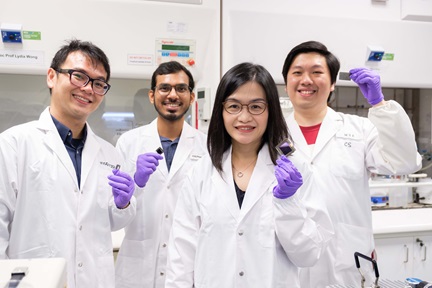
A research team headed by Asst Prof Edison Ang of the National Institute of Education at NTU has designed a novel Janus photocatalyst with enhanced photocatalytic activity.
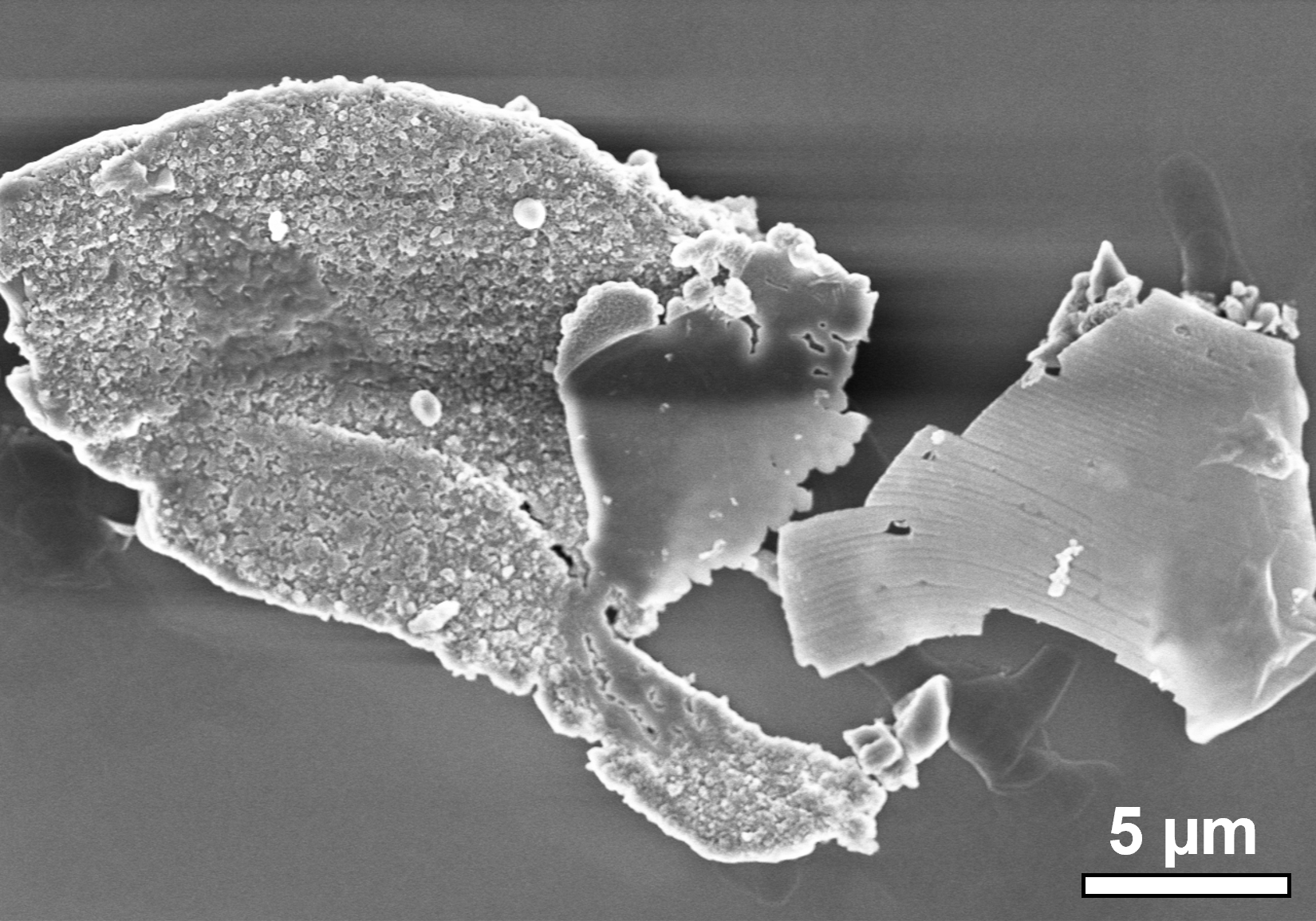
The new catalyst has contrasting sides: a nitrogen-rich rough side that resembles a honeycomb and a carbon-rich smooth side made up of ultrathin nanosheets.
This dual-faced design demonstrates superior hydrogen generation – around five to fourteen times higher than that of conventional photocatalysts.
Get more details in “Harnessing Janus structures: enhanced internal electric fields in C3N5 for improved H2 photocatalysis” in Materials Horizons (2025), DOI: 10.1039/D4MH01316F.
The article appeared first in NTU's research & innovation magazine Pushing Frontiers (issue #26, May 2026).