Prof Lu Wei leads Computational Linguistics to highest impact factor in the Linguistics category of Clarivate’s 2026 Journal Citation Reports
Under Prof Lu Wei’s leadership, Computational Linguistics has ranked first in the Linguistics category of Clarivate’s 2026 Journal Citation Reports.
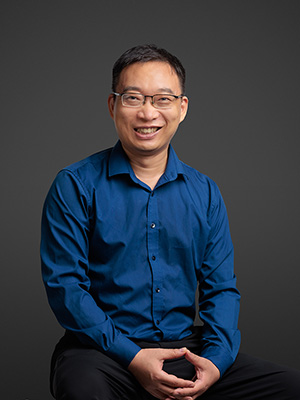
Helmed by Prof Lu Wei of NTU’s College of Computing and Data Science, as its Editor-in-Chief, Computational Linguistics has topped the Linguistics category of Clarivate’s journal impact factor rankings in the 2026 Journal Citation Reports.
Journal Citation Reports is an annual publication by information services and analytics company Clarivate Analytics that evaluates and compares the impact of academic journals based on citation data.
It is widely regarded as the gold-standard benchmark for the global research community to critically assess the influence of journals, since its first publication over 50 years ago.
Driving excellence in academic publishing
Published by MIT Press on behalf of the Association for Computational Linguistics, Computational Linguistics is the longest-running publication dedicated exclusively to the computational and mathematical properties of language and the design and analysis of natural language processing systems.
Its impact factor has risen from 3.7 to 5.3 to 13.4 across the three Journal Citation Reports editions published since Prof Lu’s appointment in 2024. Over the same period, the journal has introduced several editorial changes, such as refreshing its vision to embrace large language models, introducing new article types and strengthening its peer review process. This is the first time in recent years that Computational Linguistics has the highest impact factor in the Linguistics category.
An established expert in natural language processing and large language models, with more than two decades’ research experience in artificial intelligence (AI), Prof Lu heads the BREATHE AI Laboratory in NTU, which develops trustworthy and efficient AI technologies that can be deployed responsibly. His team was among the early developers of open-source small language models such as TinyLlama, and continues to advance research on making smaller AI models reason more reliably.
He is also a lead principal investigator of an ongoing project funded by the AI Singapore National Multimodal LLM Programme, where he heads a team designing efficient model architectures for regional languages.
“This result belongs to the journal's editors, reviewers and authors, whose work over the past few years has raised what the field expects of itself,” says Prof Lu. “I am also grateful to NTU for the support and the environment to pursue this alongside our research.”
“Language and computation are converging faster than at any point in the journal's fifty-year history. Our job is to make sure the scholarly record keeps pace – and keeps its standards.”