
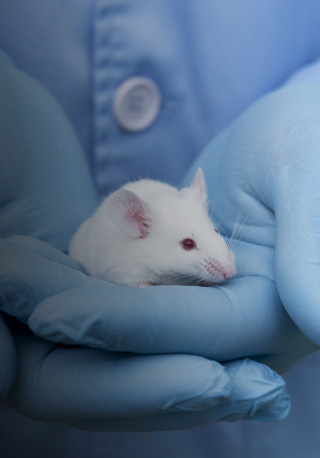
Institutional Animal Care and Use Committee (IACUC)
NTU-IACUC, under the Research Integrity and Ethics Office (RIEO), is committed to the responsible care and use of animals in the University by ensuring that all Animal Use Protocols adhere to the NACLAR (National Advisory Committee for Laboratory Animal Research) Guidelines, and to international best practices.
Key functions of NTU-IACUC include, but are not limited to:
- Review NTU's animal care and use programme regularly so as to ensure that these programms adhere to the Guiding Principles.
- Review and approve submitted AUP applications.
- Inspect housing and research facilities to ensure animal welfare is well taken care of.
- Investigate concerns involving the care and use of animals.

NTU is an AAALAC-accredited institution, signifying our commitment towards the responsible and humane treatment of animals in science.
June 2026
Nanyang Technological University continues its support for AAALAC International as a Member Organization
Nanyang Technological University (NTU) continues to support the mission and work of AAALAC International by serving as an AAALAC “Member Organization.” NTU was recently represented at AAALAC’s annual meeting in May along with nearly 80 other prestigious scientific, professional and educational groups from around the world that have an interest in advancing animal well-being in science.
AAALAC International is the world’s largest accrediting body for animal research and education programs. Currently more than 1,175+ companies, universities, hospitals, government agencies and other research institutions in 52 countries/regions have earned AAALAC accreditation, demonstrating their commitment to responsible animal care and use. These institutions volunteer to participate in AAALAC's program, in addition to complying with all applicable local and national laws that regulate animal research. Those that meet or exceed applicable standards are awarded accreditation—a mark of quality assurance recognized around the world.
NTU’s continued participation as an AAALAC International Member Organization demonstrates our commitment to responsible animal care and use. It's an opportunity to join with other respected organizations to communicate that excellence in animal welfare is critical to quality science and education.
For more information on AAALAC visit www.aaalac.org.

Chair's Message
The NTU Institutional Animal Care and Use Committee (IACUC) was established to uphold the University’s responsibilities for the ethical and responsible use of animals in research and education. Since 2017, the IACUC has operated under the oversight of the NTU Research Integrity and Ethics Office.
The Committee comprises a diverse and multidisciplinary membership, including a licensed veterinarian, scientific and non-scientific faculty, and representatives from the public. This composition ensures balanced, independent oversight and reflects the University’s commitment to animal welfare, scientific integrity, and public accountability.
The IACUC is responsible for ensuring that all research involving laboratory animals at NTU complies with the guidelines issued by the National Advisory Committee for Laboratory Animal Research (NACLAR). All animal research protocols are reviewed and approved by the Committee prior to commencement, and approved activities are subject to ongoing oversight. Animal research is conducted in purpose-built, well-maintained facilities located at NTU’s Yunnan and Novena campuses.
In addition to its review and oversight functions, the IACUC works collaboratively with researchers to support compliance with NACLAR guidelines. Through consultation, education, and guidance on protocol design and animal welfare considerations, the Committee and its administrative office assist investigators in developing ethical, scientifically sound, and compliant animal research, while maintaining independent oversight responsibilities.
In carrying out its mandate, the IACUC is guided by the principles of the “Three Rs”:
- Reduction, to minimize the number of animals used;
- Replacement, to employ suitable alternatives whenever scientifically feasible; and
- Refinement, to optimize procedures and animal care to minimize pain, distress, and suffering.
The Committee also ensures that all researchers and animal care personnel are appropriately trained and qualified to perform their roles, thereby supporting high standards of animal care, regulatory compliance, and responsible conduct of research.
Associate Professor Tan Nguan Soon
Chairperson, NTU IACUC
Contact Us
For general IACUC enquiries, please write to IACUC@ntu.edu.sg
For specific queries, please contact a member of the IACUC team below.
Contact UsReport A Concern
The responsible conduct of research covers research behaviour in all its aspects, and commits the researcher to conduct his research with care, rigour, honesty and respect. These are the hallmarks of good scholarship and are in accordance with the Singapore Statement on Research Integrity.
There is also an obligation to report observed, suspected or apparent misconduct, malpractices and/or non-compliances with the University’s codes of conduct and discipline. This includes research that involves the use of human subjects and animals in research, including issues with husbandry care of animals.
Special Note
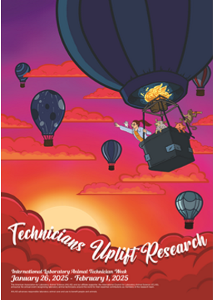
Recently, the annual International Laboratory Animal Technician Week (26 Jan 2025 – 1 Feb 2025) was observed globally in recognition of the invaluable contributions of laboratory animal technicians to animal research.
Click here to view the Singapore Association for Laboratory Animal Science’s (SALAS’) message on their plans to commemorate this event
