Singapore’s first homegrown electric aircraft takes off
The electric vertical take-off and landing aircraft designed, engineered and built by NTU successfully completed a flight-test campaign in Germany.
In July this year, Singapore’s aviation industry made history.
The nation’s first homegrown electric aircraft - designed, engineered and built by NTU Singapore researchers and engineers - took to the skies in Germany.
The electric vertical take-off and landing (eVTOL) aircraft completed a month-long flight-test campaign in Cochstedt, Germany, marking a new milestone for Singapore’s aerospace capabilities.
Working with flight-test specialists from the German Aerospace Center (DLR), which provided flight-test expertise and facilities in Germany, the NTU team put the two technology demonstrators through their paces at DLR’s National Experimental Test Center for Unmanned Aircraft Systems in Cochstedt.
The larger aircraft, with an eight-metre wingspan, climbed above 90 metres, while the smaller three-metre prototype exceeded speeds of 120 km/h. The research teams collected critical performance data while demonstrating the aircraft’s ability to hover, transition to forward flight and fly using its fixed wings.
“This is a historic feat for an aircraft designed, engineered and built in Singapore. Reaching these heights, and going from hover to forward flight, marks a new milestone for Singapore-made electric aircraft,” said Prof James Wang, Director of NTU’s eVTOL Research and Innovation Centre, who led the research project.
NTU team leveraged expertise of DLR scientists
During the tests, the prototypes were remotely piloted by Prof Wang and NTU alumnus Lu Weiyao, Co-founder and Technical Director of Flare Dynamics Pte Ltd. Martin Laubner, Research Scientist from the DLR Institute of Flight Systems, also took to the flight controls.
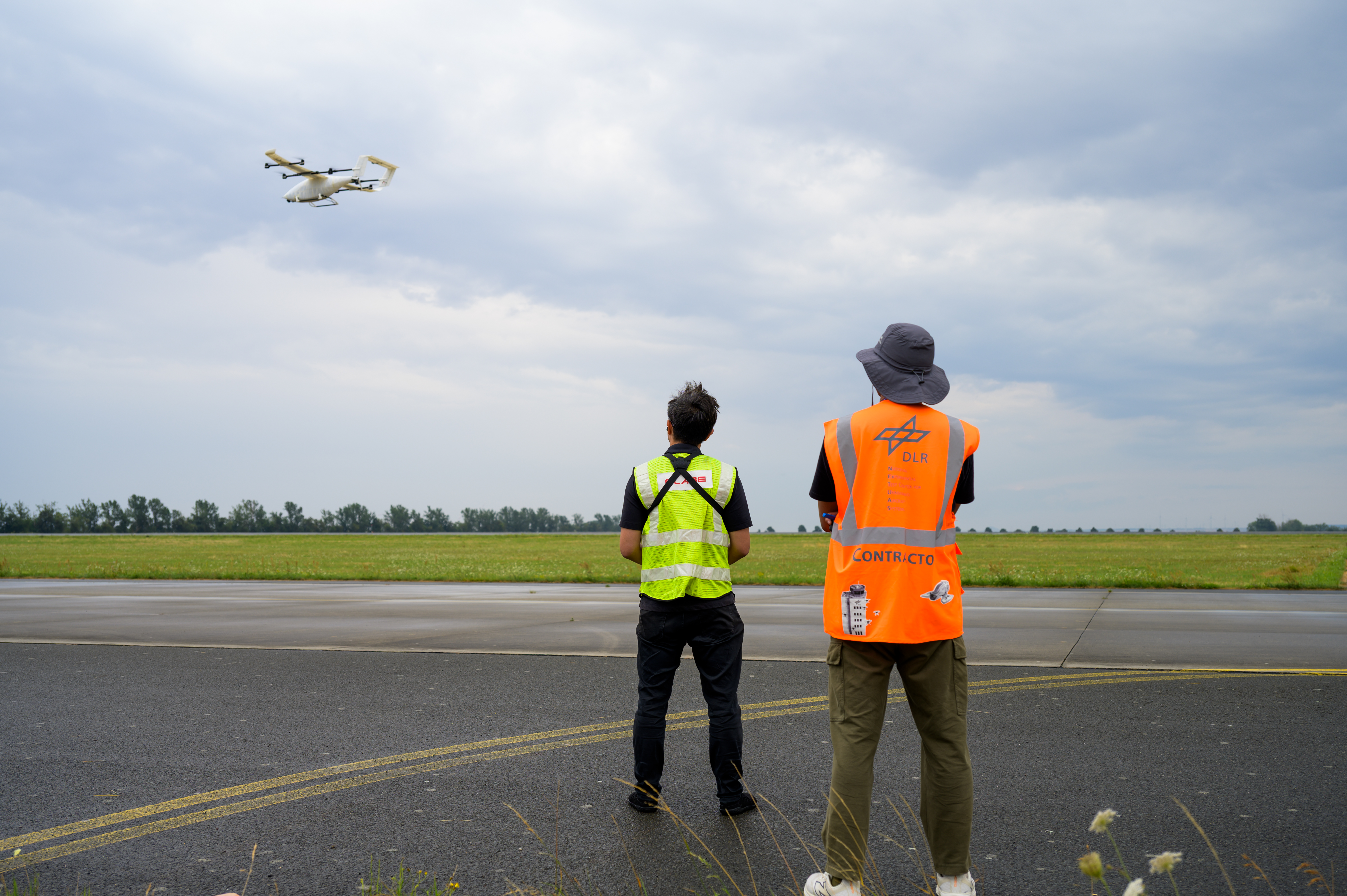
During the flights, DLR scientists studied the noise generated by the eVTOL during hover and fly-over tests. The collected data will contribute to international research and yield insights into a key challenge facing urban air mobility, informing engineers how to develop quieter electric aircraft and what is needed for future certification.
The aircraft uses eight electrically powered lift rotors mounted on its wings to take off vertically and hover. A rear propeller then pushes it forward. As it gains speed, its wings generate enough lift for the eight lift rotors to switch off, allowing the aircraft to fly more efficiently like a conventional aeroplane.
Making that handover work is one of the design’s biggest technical challenges. The flight-control system must continually manage changes in propulsion, aerodynamic forces and stability as the aircraft switches from rotor-borne hovering to wing-borne flight.
NTU’s eVTOL success helps shape global aviation industry
Behind the successful flights were more than three years of engineering at NTU.
A team of about 30 research engineers designed and engineered the aircraft from the ground up, developing new electric motors and integrating the complex systems needed to make a complete electric aircraft fly.
The expertise gained across the entire development cycle strengthens Singapore’s ability to develop new technologies and contribute to the emerging global electric aviation industry.
However, having an entirely new aircraft design also meant overcoming unique challenges. With no suitable open-air zone in Singapore large enough for extensive flight testing, the team travelled to Germany, and faced cold temperatures, shifting winds and limited testing windows.
The team also encountered motor faults, system glitches and hard landings along the way. Each setback, however, provided valuable data and lessons that could be fed back into the aircraft’s design, flight controls and operating procedures.
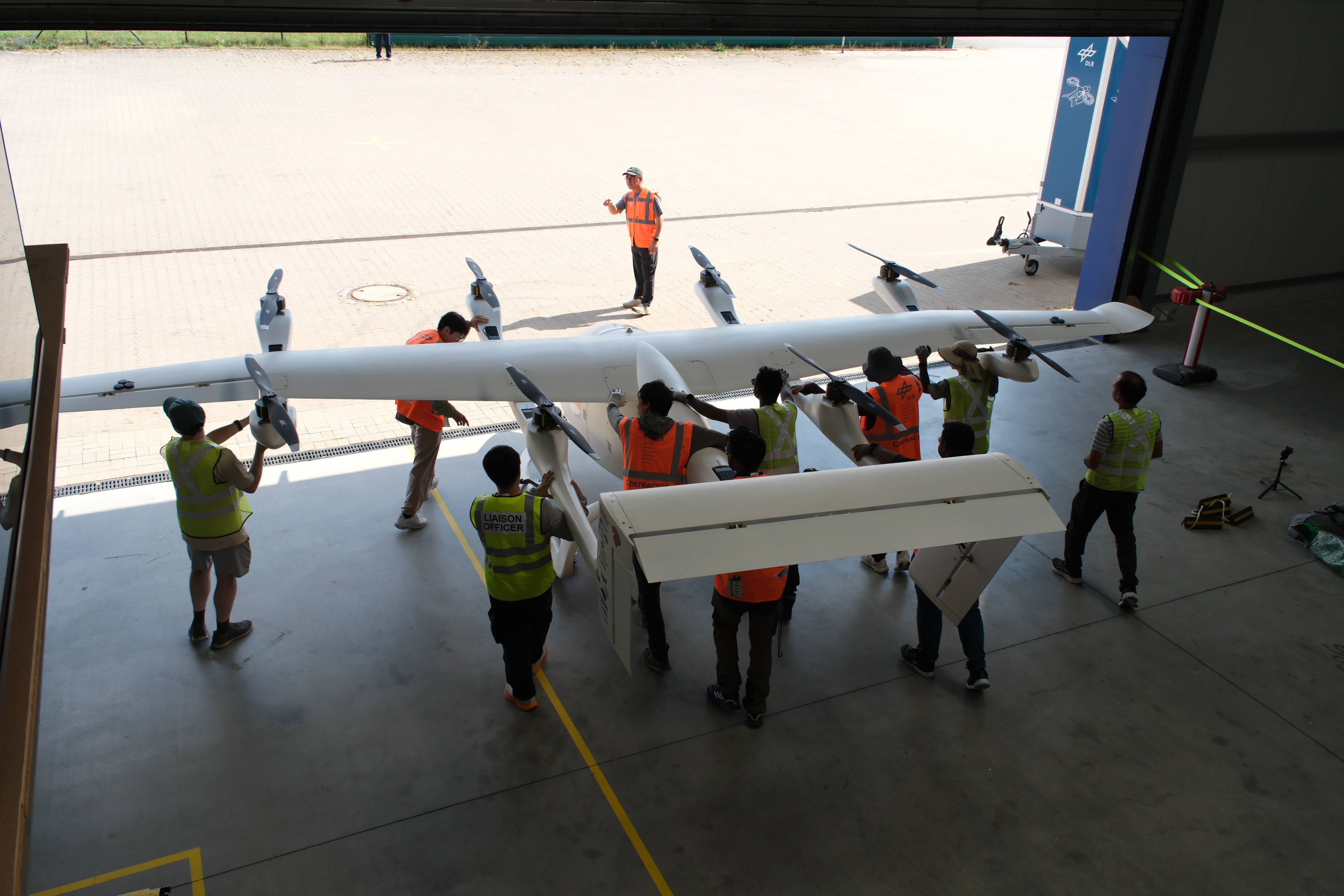
For Prof Wang, successfully flying Singapore’s first homegrown electric aircraft is only the beginning. The next step is to build on the expertise developed through the programme and grow Singapore’s capabilities in electric aviation.
The team is now in discussions with investors and industry partners to scale up the aircraft and advance it through further flight testing, paving the way towards industry adoption and potential use cases such as cargo delivery.
“As our team motto says, ‘Failure is not an option.’ The journey from zero to one has been made. Now, the journey from one to the future begins,” added Prof Wang, a faculty at the School of Mechanical and Aerospace Engineering.