What brings the world’s leading minds to NTU Singapore?
Discover what inspired these distinguished academic leaders to choose NTU and the opportunities they see in Singapore’s thriving research and innovation landscape.
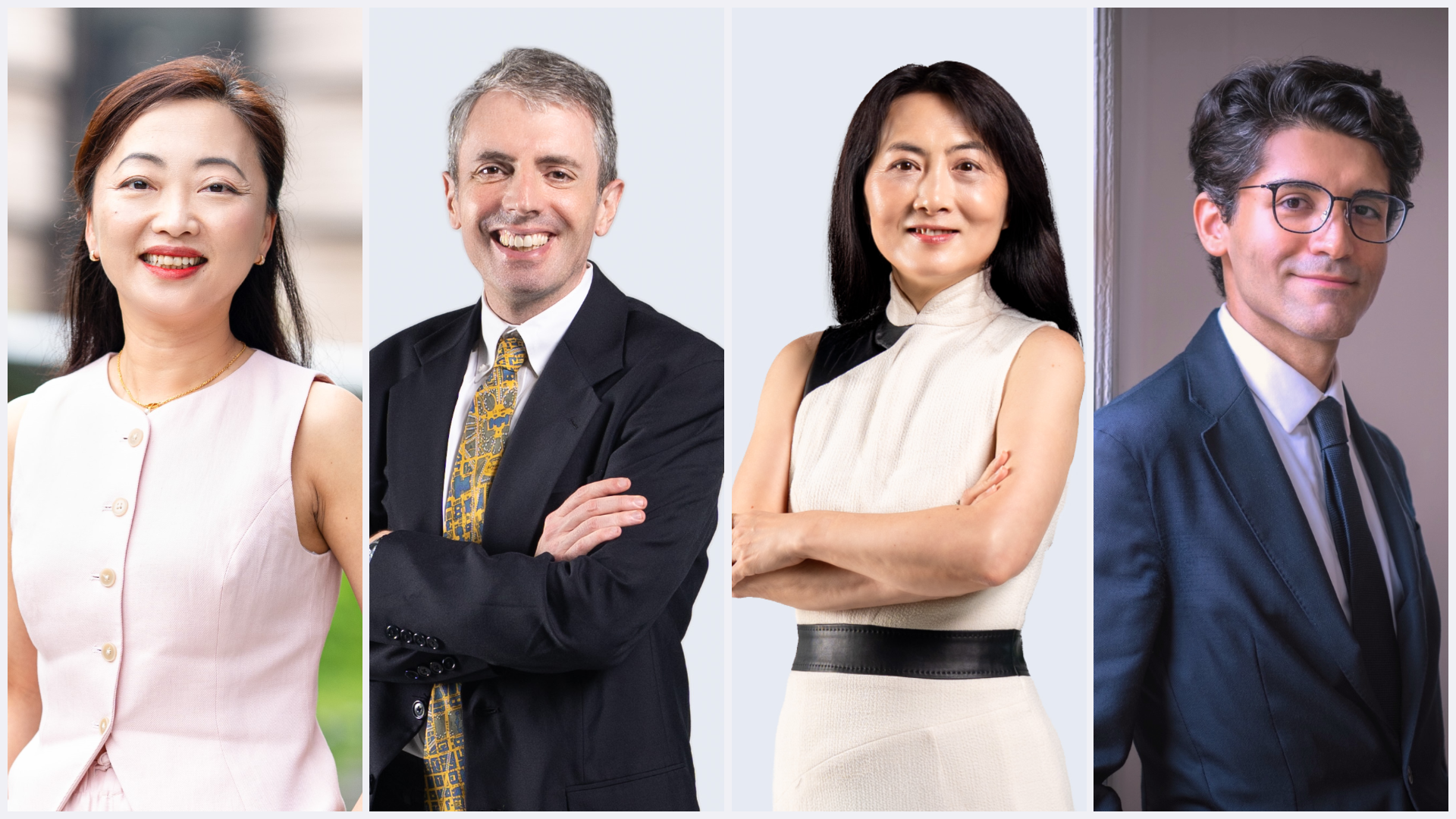
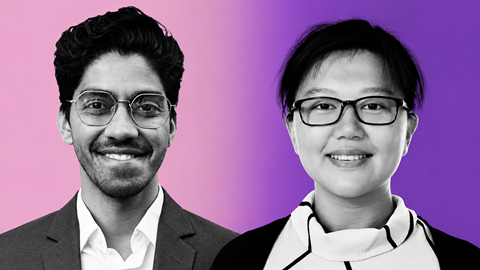
Professor Shirley Meng
Vice President (Industry and Global Engagement)
Distinguished University Professor
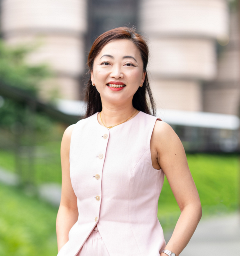
Twenty-five years ago, Prof Shirley Meng left Singapore for the United States, beginning a journey that shaped her life as a scientist and an educator at leading US universities.
A renowned energy storage scientist, she has now returned to her alma mater, NTU, as Vice President (Industry) and Distinguished University Professor.
The recipient of several highly prestigious accolades, including the Faraday Medal from the Royal Society of Chemistry and the Electrochemical Society Battery Division Research Award, Prof Meng chose to come back to the university that equipped her for her career.
“After spending twenty years working in US universities, I am ready to come home to contribute to my alma mater.”
In her new role, she will help NTU’s researchers turn their work into tangible change.
“My main role is to empower faculty and researchers at NTU to translate their research and development work into real-world impact. The partnership I am looking forward to build is with the entire deep tech sector including AI, Quantum, Energy and more,” she says.
Professor Jordan Boyd-Graber Ying
College of Computing & Data Science
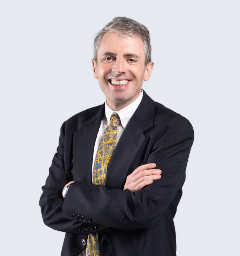
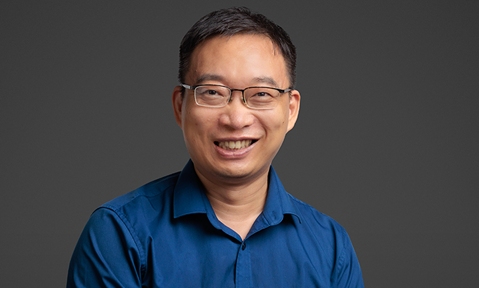
Prof Boyd-Graber is an AI researcher working to separate intelligence from knowledge in AI models, so that they can be trained more flexibly and understood more easily.
What drew him to NTU was an environment that supports researchers in taking on big projects.
“Leadership is taking the right priorities when it comes to fundamental challenges like AI and restructuring education given those challenges. I’m also impressed by the broad society-wide emphasis on developing and reinforcing educational infrastructure.”
The former professor at the University of Maryland said Singapore also appeals beyond the campus.
Prof Boyd-Graber is drawn to Singapore itself, a society known for planning ahead and for bringing many cultures together. Singapore’s position between the West and Asia is central to his plans as he hopes to draw on its rich cultural mix to study the cultural challenges of using AI, where models must adapt to languages and cultures that are not widely represented in their training data.
“I am looking forward to taking advantage of Singapore’s rich cultural milieu to better understand the cultural challenges of using AI in contexts where models must adapt to languages and cultures that are not widely represented in training data.”
At NTU, Prof Boyd-Graber hopes to take bigger risks than in the past and to tap the university’s deep expertise for more fundamental contributions to AI.
Professor Yang Shao-Horn
Vice President (Research)
Distinguished University Professor
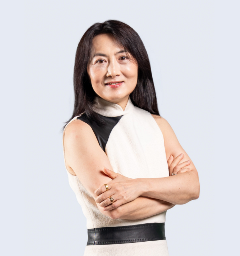
Prof Shao-Horn is a scientist who turns atoms and molecules into answers for the world’s biggest energy and climate problems.
From January 2027, she will steer NTU’s research agenda and strategic directions, and she will hold NTU’s highest faculty rank, Distinguished University Professor.
What drew her to NTU was its “exceptional talent, agility and scale, as well as Singapore’s bold investments in areas such as artificial intelligence, sustainability, biotechnology, materials and quantum technologies”.
“NTU has built a remarkable foundation of research excellence and interdisciplinary collaboration and is uniquely positioned to turn the pursuit of knowledge into meaningful national and global impact.”
In her lab at Massachusetts Institute of Technology (MIT), where she has spent over 24 years, her work has earned her a place as an elected member of the US National Academy of Engineering and as a Fellow of the US National Academy of Inventors.
She has worked here through research collaborations including Singapore-MIT Alliance for Research and Technology (SMART), and several of her former group members now teach at NTU and National University of Singapore.
At NTU, Prof Shao-Horn hopes to help create an environment in which faculty, students and researchers can pursue curiosity-driven, ambitious ideas across disciplinary boundaries and translate their discoveries into meaningful impact.
“NTU’s breadth of expertise and coordinated leadership, together with Singapore’s agility and commitment to research and innovation, give us a distinctive ability to move quickly from ideas to action,” she says.
Assistant Professor Cyrus Mostajeran
Nanyang Assistant Professor, School of Physical & Mathematical Sciences
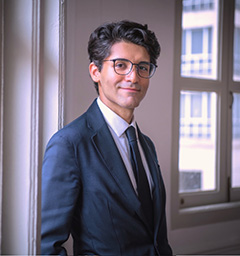
Originally arriving at NTU for a two-year fellowship, Assistant Professor Cyrus Mostajeran soon found an academic environment where he could see himself building a long-term career.
Based in the Division of Mathematical Sciences, he was drawn to NTU’s interdisciplinary research culture, which encourages academics across different fields to exchange ideas and develop collaborations.
“More than once, a casual conversation over coffee or lunch with a colleague from another School has led to an email a few days later and a productive collaboration a few months down the line,” he says.
Asst Prof Mostajeran is a recipient of NTU’s Nanyang Assistant Professorship (NAP), a scheme that attracts outstanding early-career researchers from around the world with the potential to become leaders in their fields.
In 2026, he was also awarded a Singapore National Research Foundation (NRF) Fellowship, which supports promising researchers in pursuing independent, potentially groundbreaking research.
At NTU, he has built research collaborations spanning mathematics, biology, engineering and materials science. These include exploring how surface geometry influences the collective behaviour of bacteria, developing quantum algorithms based on geometric optimisation and investigating shape-morphing systems and chiral nanoparticle structures.
Looking ahead, Asst Prof Mostajeran hopes to help shape mathematical research in an era of increasingly powerful artificial intelligence (AI).
“NTU’s interdisciplinary ethos and resources make it an exceptional place to help define those challenges and build the collaborations needed to tackle them,” he says.