Taking a leaf from nature
NTU scientists invent self-folding devices inspired by bamboo leaves.
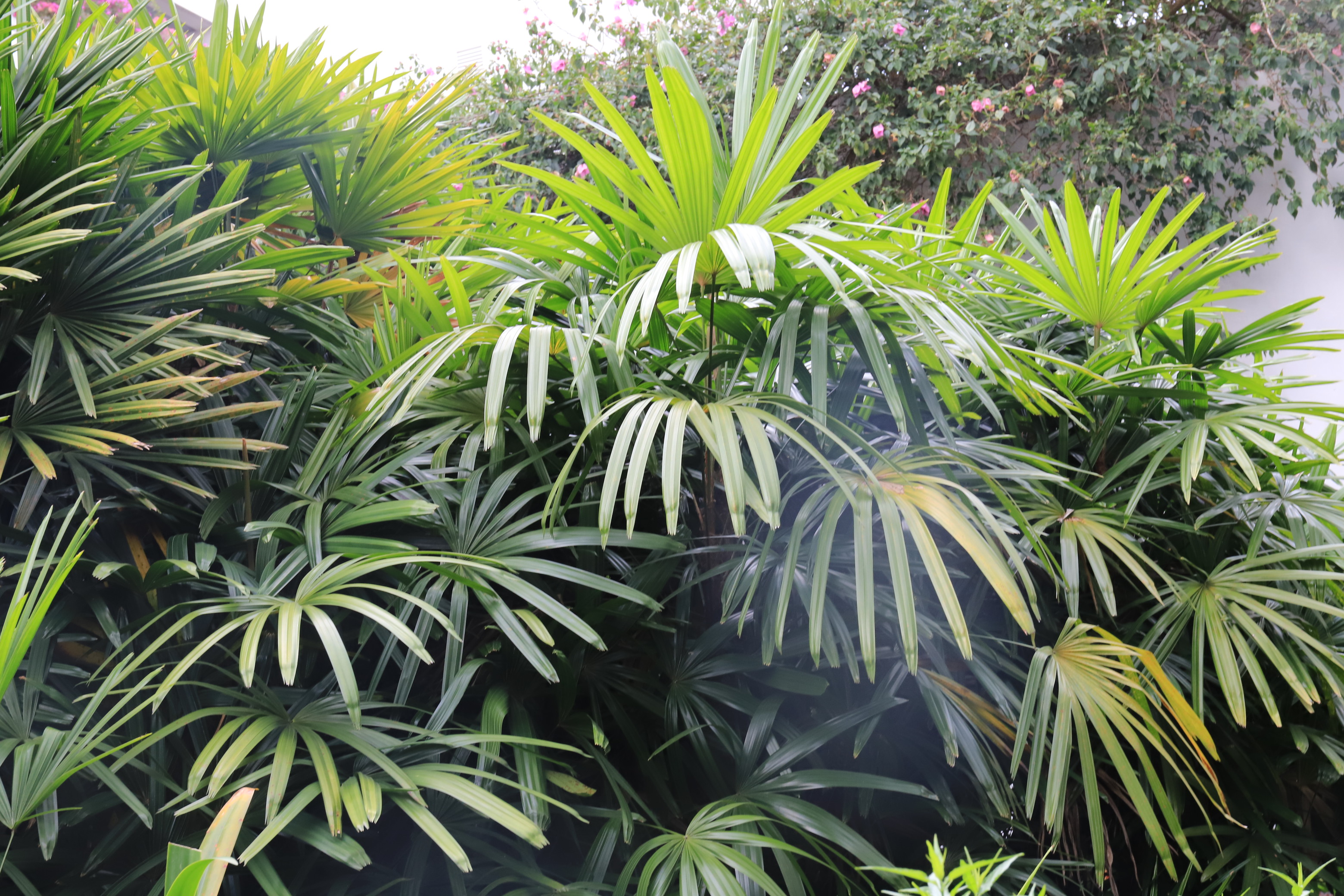
Some plant leaves respond to environmental cues, such as humidity or touch, by changing shape. Bamboo palm (Rhapis excelsa) leaves, for instance, fold into corrugated shapes consisting of a series of parallel ridges and grooves when they lose water.
These adaptations enable plants to survive in their natural surroundings. They also inspire the design of foldable components for potential applications in flexible electronics and soft robotics.
Through experiments, mechanical analysis and mathematical modelling, scientists co-led by Prof Jimmy Hsia of NTU’s School of Mechanical and Aerospace Engineering and School of Chemistry, Chemical Engineering and Biotechnology demonstrated that mechanical and mathematical rules underlie the complex folding behaviour of bamboo palm leaves.
By examining the leaves under a microscope and modelling the leaf folding process, the scientists found that special cells called hinge cells located on the top and bottom of leaf veins are responsible for the folding. When the leaves lose water, these hinge cells shrink more than the surrounding cells, causing the leaf to fold.
The folding of the leaves into corrugated shapes increases their rigidity and may reduce water loss.
Inspired by this natural mechanism, the team created a hinge-folding device and an umbrella that closes when dry and opens when soaked. Such structures could lead to the design of next-generation soft machines.
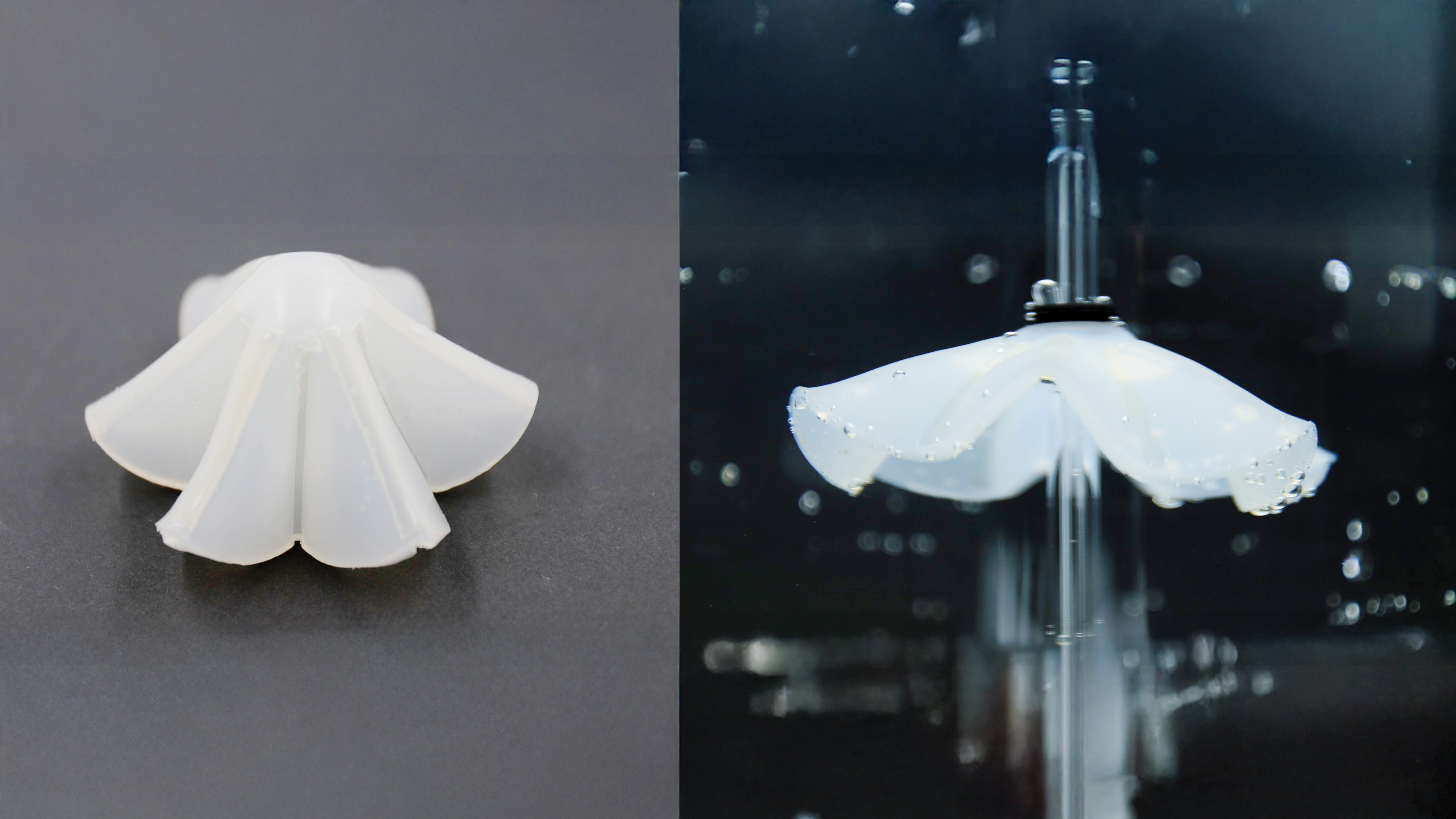
Find out more in “Dehydration-induced corrugated folding in Rhapis excelsa plant leaves” in the Proceedings of the National Academy of Sciences of the United States of America(2024), DOI: 10.1073/pnas.2320259121.
The article appeared first in NTU's research & innovation magazine Pushing Frontiers (issue #25, August 2025).