AI assistants could double productivity
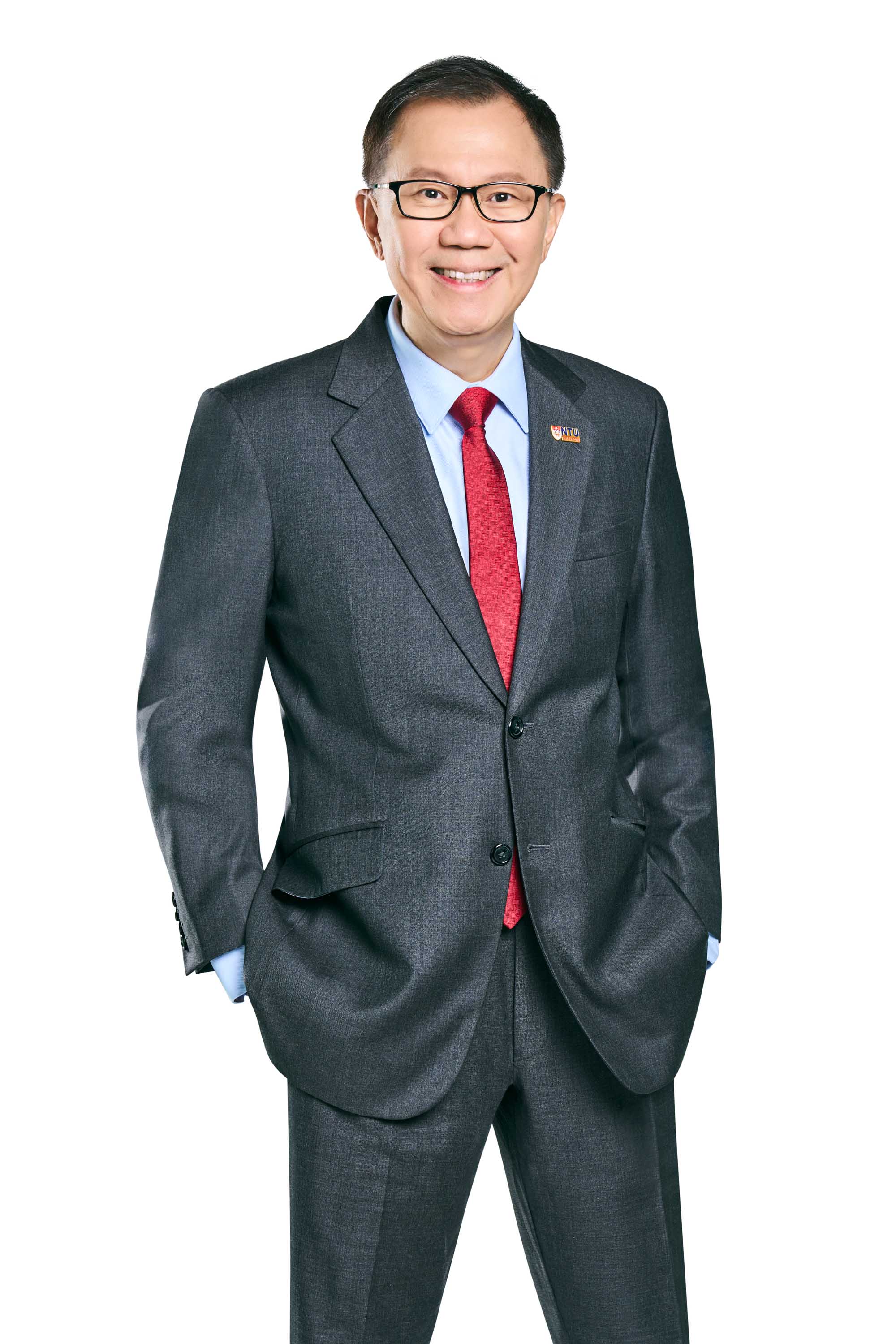
NTU President Prof Ho Teck Hua shares his expectation that artificial intelligence (AI) is becoming a fixture in our lives, with Singapore playing an important role in AI development.
AI agents that function as virtual assistants, answer our questions, and help us with various tasks will become increasingly common and essential to daily life. In fact, if every working Singaporean adult were equipped with an AI agent, labour productivity could double.
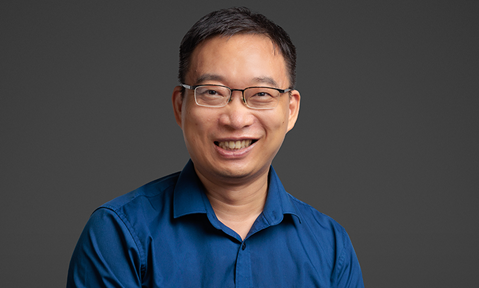
This is according to Prof Ho Teck Hua, President of NTU and Executive Chairman of AI Singapore, a national initiative to bolster Singapore’s AI capabilities. He made this prediction in an exclusive, wide-ranging interview on AI with Han Yong May, Executive Editor of Singapore’s Chinese-language broadsheet Lianhe Zaobao.
His forecast comes amid expectations by many technology experts and firms that full-scale development of AI agents, also called AI assistants, could happen this year. In recent months, major companies such as Google and OpenAI have launched their own AI agents.
In cities where population growth is slowing, AI assistants, if used widely, could alleviate a potential labour crunch and improve productivity.
Prof Ho is of the opinion that if every Singaporean has one AI assistant, the country’s productivity growth rate could reach 5%. This is more than double the annual growth of 2.4% in labour productivity in Singapore from 2016 to 2023.
“If everyone had nine AI assistants with different functions, Singapore’s effective population would not be 6 million; it would feel like 60 million, in line with Singapore’s vision of becoming a smart nation,” he explains.
AI EVERYWHERE ALL AT ONCE
Prof Ho is convinced that AI will become a fixture in everyday activities in the future.
“AI will become as ubiquitous as smartphones. This is certain,” he says. “Once AI is fully integrated with our smartphones, as Apple has done with Apple Intelligence, I believe it will completely change our way of life. Whether it is work, life, learning, socialising or entertainment, AI-enabled smartphones will become an indispensable part of our daily lives.”
Prof Ho reckons that in the next three to five years, AI systems will help augur breakthroughs in cancer research and medicine, with many cancer drugs being developed thanks to AI.
Another important application of AI is in predicting extreme weather events like earthquakes and floods. “Let’s say an earthquake is about to occur. We could know about it a week in advance because AI can predict it,” he says. “Thanks to the prediction, people can evacuate quickly.”
He personally places a lot of importance on such predictions because these events affect lives and property.
“The damage caused by such events can be very severe. So, I believe AI can make a huge contribution in this area,” he adds.
LEADING THE WAY IN AI
Despite its small size, Singapore is well positioned to be among the global leaders in AI. United Kingdom-based media outlet Tortoise Media’s 2024 Global AI Index ranked Singapore third overall for two years in a row, behind the United States in pole position and China in second place.
Prof Ho is under no illusion that Singapore can become a dominant AI power in the world. However, he thinks the country can still play a vital role.
“It’s like playing an important supporting role in a movie. You may not be the protagonist, but as a key supporting character, the story wouldn’t feel right without you,” he elaborates.
By focusing on a few areas to excel in, Singapore can remain among the top five in AI internationally, says Prof Ho, adding that when it comes to the quality of AI publications, Singapore already ranks first in the world.
“Mainly, it’s about being No. 1 or No. 2 in a few areas,” he shares. “How do we do that? One way is by developing responsible AI. We also do well in AI governance, thanks to a robust framework adopted by the Singapore government. Companies developing or implementing AI systems are guided by principles to ensure they stay within ethical boundaries and avoid missteps.”
The most important principle for developing responsible AI systems is to ensure they are centred on humans, with AI complementing people instead of replacing or harming them, says Prof Ho.
AI systems also need to be fair and transparent rather than black boxes. We need to be able to understand their logic and principles, he adds.
A TRUSTED HUB
Another advantage Singapore has in the field of AI is the trust it enjoys from other countries. Leveraging this trust, Singapore developed a large language model, called SEA-LION, or Southeast Asian Languages in One Network, in partnership with other countries in Southeast Asia.
Most models, like OpenAI’s GPT-4 which powers ChatGPT, use data largely sourced from Western countries. SEALION, on the other hand, is trained on Southeast Asian languages to better represent the region’s rich cultural and linguistic diversity.
Additionally, as the AI competition between the United States and China intensifies, Singapore’s consistent neutrality stands it in good stead.
Prof Ho describes Singapore as a safe harbour that cooperates with both countries without taking sides: “We welcome AI talent from around the world to come here and develop their careers. In Singapore, a talented individual can collaborate with US experts, Chinese experts, as well as European and Indian experts.”
“Every AI system we develop is not designed to serve the interests of any one country, but to benefit the people at large, especially in Singapore. We are happy to share our innovations with our neighbours,” he adds.
“I believe this places us in a favourable position amid the competition between major powers, because we truly can be a trusted hub for international collaboration.”
The article appeared first in NTU's research & innovation magazine Pushing Frontiers (issue #25, August 2025).