Mighty microsized robots for biomedical applications
Tiny bots that perform surgery and deliver drugs.
By Lum Guo Zhan and Yang Zilin
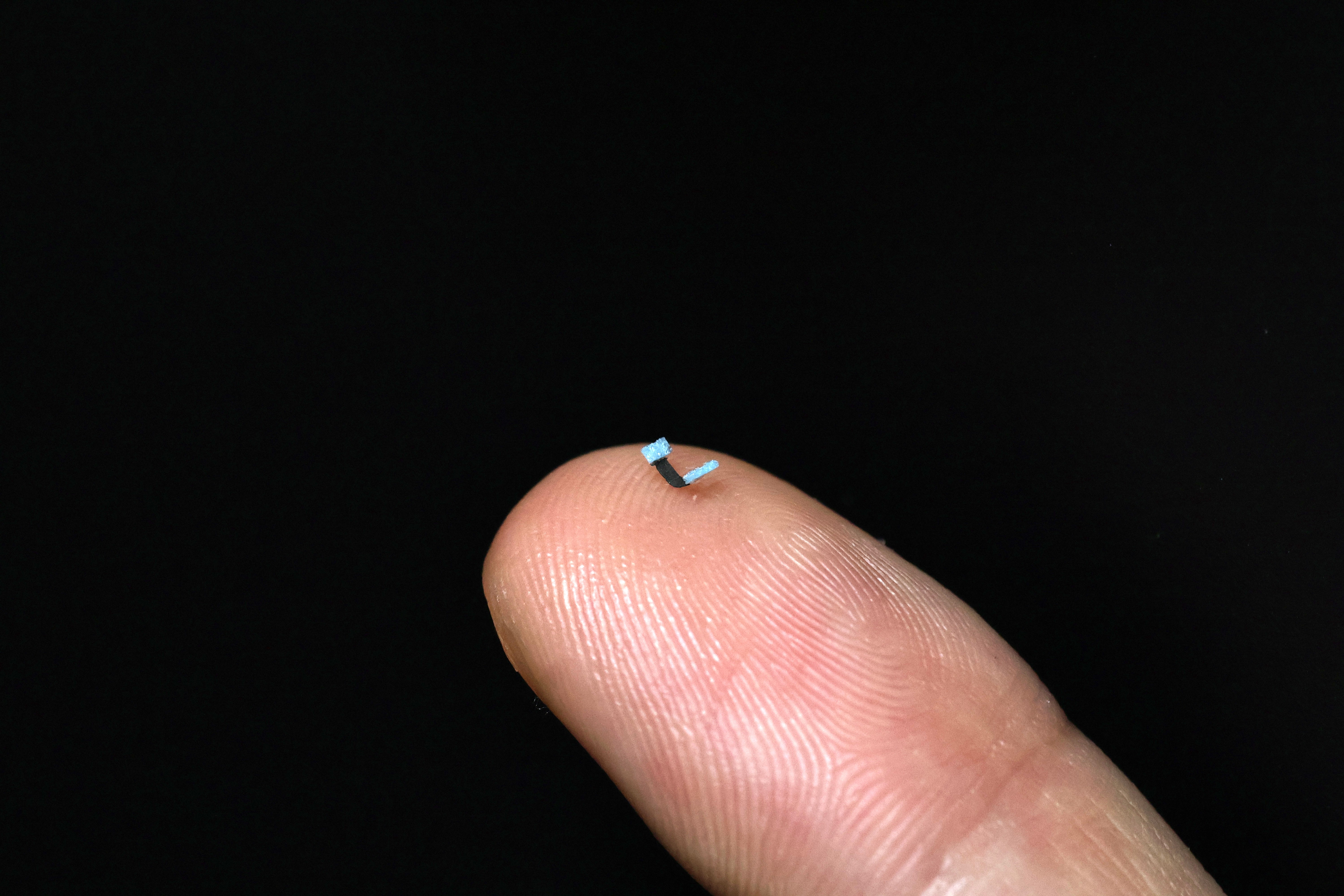
Imagine tiny robots, smaller than grains of rice, manoeuvring inside the human body to deliver medicines precisely to where they are needed. We are making this futuristic scenario a reality through our research in soft robotics.
Controlled remotely by magnetic fields, our miniature robots are uniquely capable of moving in tight, inaccessible spaces within the body. Magnetic fields safely and effectively penetrate human tissues, enabling precise control of the robots without causing harm. This makes our robots especially promising for medical applications like minimally invasive surgery and targeted drug delivery.
Small robots are usually limited in their manoeuvrability and movement, which hampers their usefulness in medical and other precision applications. To overcome these challenges, we developed a novel method to magnetise the robots, enabling them to achieve the full range of motion. Our robots can move forward and backward, left and right, as well as up and down. They can also rotate freely around all three spatial dimensions – pitch, roll and yaw.
Surgical marvels
Our novel method has enabled us to devise different types of robots with various capabilities. We created a robot that swims like a jellyfish through intricate obstacles that were previously impassable for similar devices.
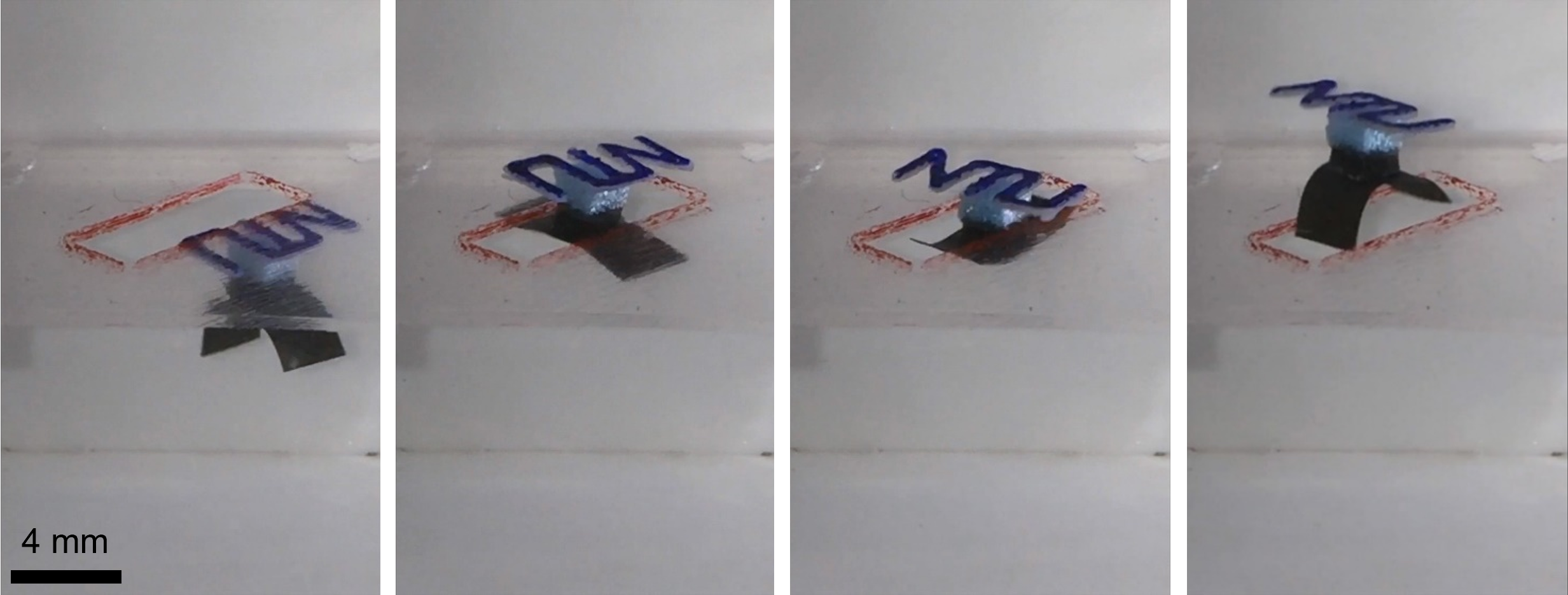
In this series of photos, a jellyfish robot rotates and swims through a rectangular opening in a barrier. Credit: NTU.
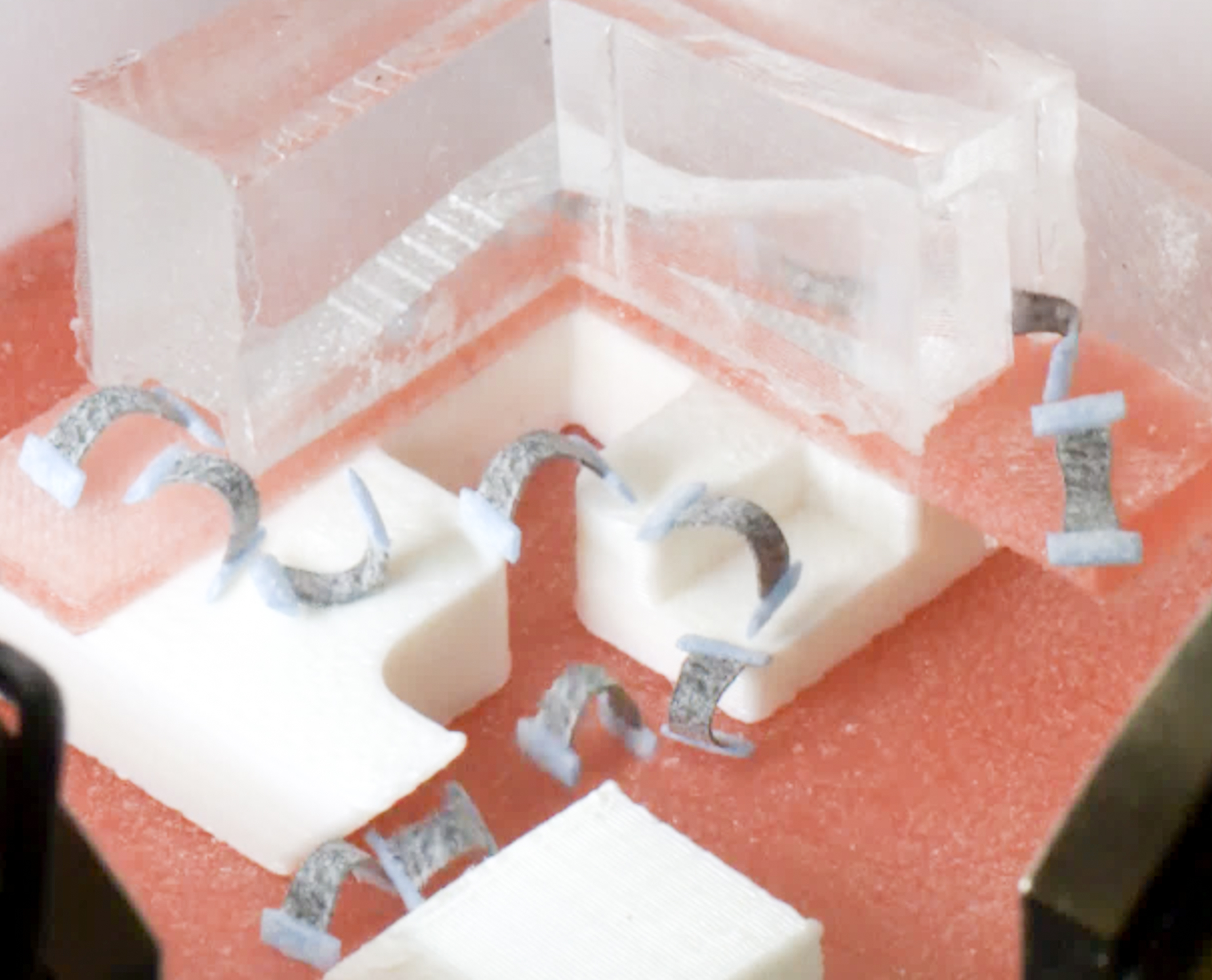
We also developed a highly efficient robotic gripper that can perform small-scale assembly tasks up to 20 times faster than other miniature robots.
Another robot that we developed can jump through narrow slits to reach higher ground as well as roll, crawl and swim through tight openings. Such robots have potential applications in minimally invasive surgery, such as to clear clogged arteries.
Dexterous drug delivery
For targeted drug delivery, we devised a soft grain-sized robot built from smart composite magnetic materials that are biocompatible and non-toxic. While existing miniature robots usually transport only up to three types of drugs, our innovative robot can carry and precisely dispense four. The robot features four drug modules – each carrying a different drug – that are programmed to eject drugs when triggered by alternating magnetic fields of a certain strength.
The robot can move to various sites in the body to dispense different dosages of drugs in a specific sequence, greatly expanding its potential medical applications. For example, the robot can be used to precisely deliver therapies to treat various complex diseases like brain, colorectal and ovarian cancers.
Small bots, big impact
We are currently using medical imaging techniques to observe the position and orientation of our robots as they operate in enclosed in vivo environments. We are also exploring automation to increase their speed and positioning accuracy.
In the future, miniature robots that traverse the body may no longer be figments of science fiction. They could revolutionise precision medicine. Our goal is for these robots to be used in personalised treatments to reduce side effects and improve patient outcomes.
---
applications in fields such as healthcare and lab-on-a-chip analyses.
Yang Zilin is a PhD student at MAE, supervised by Asst Prof Lum. He works on using magnetic fields to control soft robots.
Systems (2022), DOI: 10.1002/aisy.202100259 and Advanced Materials (2021), DOI: 10.1002/adma.202100170.
The article appeared first in NTU's research & innovation magazine Pushing Frontiers (issue #25, August 2025).