
NTU Singapore-led study decodes how diet shapes health in Asia
-and-professor-john-chambers-from-ntu-singapore's-lkcmedicine.jpg?sfvrsn=d4bf868c_1)
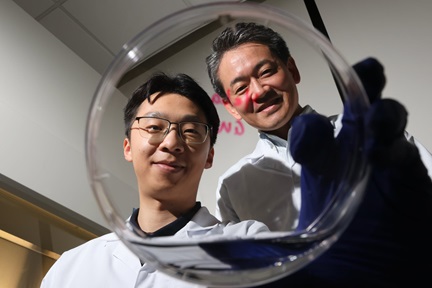
Dr Dorrain Low (left) and Professor John Chambers (right) from NTU Singapore's Lee Kong Chian School of Medicine (Credit: NTU Singapore)
Can you remember what you had for lunch? Chances are that you may find it hard to recall the specifics. Others who feel guilty may even lie about what they have eaten.
Such subjective recall can create problems for doctors trying to understand whether patients are eating healthily, and for scientists trying to analyse the relationship between diet and the risk of developing medical conditions such as diabetes and heart disease.
An international team led by Nanyang Technological University, Singapore (NTU Singapore), in collaboration with Imperial College London in the United Kingdom and leading biotech firm Metabolon in the United States, has now found a way to solve this issue.
By measuring and analysing the biochemical traces of people’s meals found in their blood, the researchers objectively deduced exactly what kinds of food and beverages – as well as how much – were consumed.
This allows clinicians to conduct more accurate research on how people’s diets affect their health, leading to better insights that can empower doctors to tailor their recommendations for patients such as adjusting their diet.
The pioneering research involved more than 8,000 adults in Singapore who were from the Health for Life in Singapore (HELIOS) population study, which has participants from different ethnicities and communities. HELIOS is Singapore’s largest and one of the most deeply characterised population health studies in Asia, integrating data on genomics, diet, imaging, lifestyle and environmental exposures.
In the latest study, published in Nature Metabolism, the biochemical traces found in the participants’ blood plasma are called metabolites, which are small biomolecules produced from the metabolism of the food and drinks that a person has consumed.
Scientists from NTU’s Lee Kong Chian School of Medicine (LKCMedicine) found that different foods and beverages commonly consumed in Southeast Asia each result in different combinations and types of metabolites being produced.
Leveraging artificial intelligence, the researchers analysed these combinations and developed a unique “metabolic signature” for each food and beverage type – 20 in all, such as for noodles, chapati (Indian flatbread), red meat, fish, cabbages, papaya, coffee and tea.
The metabolic signatures also capture the chemical complexity of Asian diets, where single dishes or beverages often contain multiple ingredients and are prepared using various methods.
Many of these meals are not represented in Western nutritional databases too, making the NTU-led work significant for global nutrition and metabolic research.
More accurate clues about people’s health
Another significant aspect of the research is that the metabolic signatures gave more accurate clues about people’s health.
The researchers asked the participants of the study to self-report what they ate and drank daily, weekly or monthly, as well as how much and how often they consumed.
The scientists also measured the participants’ metabolites in their blood and checked if they had heart and metabolic issues like high blood pressure.
Metabolite levels suggesting participants had unhealthy diets – such as taking a lot of red meat and deep-fried food – were associated with conditions, such as high blood pressure and clogged arteries, that they had.
But the participants’ self-reported diet was not linked with their heart and metabolic problems. This suggests that the metabolic signatures are more objective and precise indicators of people’s health.
There was also a link between the metabolic signatures and the participants’ clinical health outcomes.
For those with metabolic signatures suggesting they had a high intake of fruits, vegetables, whole grains, legumes and fish, there was an association with lower insulin resistance, reduced obesity markers and lower risk of vascular disease.
But metabolic signatures suggesting participants ate more processed meat and deep-fried food were correlated with increased risk of type 2 diabetes, high blood pressure and clogged arteries.
-and-professor-john-chambers-from-ntu-singapore's-lkcmedicinea454c10f-a685-4a45-8f67-4dfb015509f3.jpg?sfvrsn=67d13041_1)
Dr Dorrain Low (left) and Professor John Chambers (right) from NTU Singapore's Lee Kong Chian School of Medicine (Credit: NTU Singapore)
LKCMedicine’s Professor John Chambers, principal investigator of HELIOS, said: “Culturally diverse diets in Asia have long been difficult to assess with Western-developed tools. By mapping the metabolic signatures of foods eaten in this region, we now have an objective and highly accurate way to quantify what Asians consume. This enables deeper insight into how diet interacts with biology to influence diseases in Singapore and across Asia.”
He added that the findings have global relevance: “Countries investing in population genomics can now incorporate metabolite markers to improve risk prediction and tailor national health strategies. This study provides a blueprint for integrating nutrition, the study of metabolites and precision medicine.”
Dr Dorrain Low, Senior Research Fellow at LKCMedicine and co-lead author of the study, said that the findings can guide public health planning, as different communities have different dietary patterns. “Studying metabolites gives policymakers the evidence needed to design targeted nutrition programmes and preventive strategies to improve a population’s health.”
The research marks an important step towards personalised nutrition and population-level precision health by laying down a scientific foundation for improving metabolic and cardiovascular outcomes across Singapore and the region.
Read more: “Metabolic variation reflects dietary intake in a multi-ethnic Asian population”, published in Nature Metabolism on 17 September 2025. DOI: 10.1038/s42255-025-01359-x


.tmb-listing.jpg?sfvrsn=8d60272d_1)