Bridging disciplines to extend human health and wellbeing
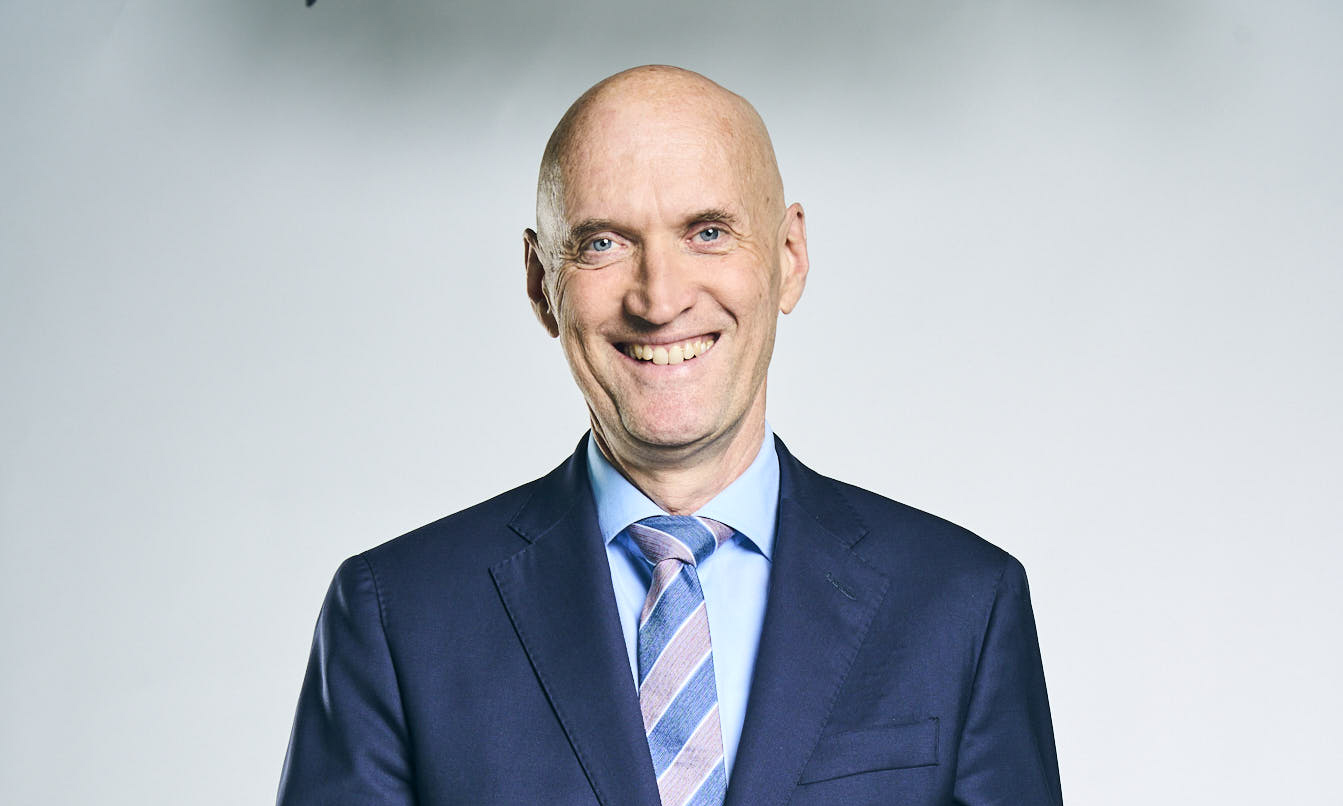
Interdisciplinary research collaborations that address issues from multiple perspectives hold the key to enabling healthy and productive lives, says Prof Ernst Kuipers, NTU’s Vice President (Research) and Distinguished University Professor.
In recent years, several threats to human health and wellbeing have emerged, such as climate change and infectious disease outbreaks. Solving these multifaceted issues requires expertise from different domains.
With experts from various fields all under one roof, NTU is well positioned to find long-term solutions to these challenges, says Prof Ernst Kuipers, NTU’s Vice President (Research) and Distinguished University Professor.
Prof Kuipers is a renowned gastroenterologist who was Minister of Health, Welfare and Sport for the Netherlands from 2022 to 2024.
He shares his vision for interdisciplinary research at NTU and why international connections and collaborations are essential to resolving complex global issues.
Q: What is your vision for research at NTU and what do you think is the future of the University’s research?
A: NTU’s journey over the past 30 years has been amazing. To have started as a new university, set up all the different teaching programmes and, at the same time, developed world-leading research within this short period is truly astounding. In the latest QS World University Rankings by Subject, NTU had 11 subjects ranked top 10 in the world. Our accomplishments place us on a par with universities that have considerably longer histories.
We have outstanding opportunities at NTU because we are embedded in a strong ecosystem, together with other institutions. The programmes in our various schools are rigorous and well structured. We are also investing heavily and doing research in areas such as artificial intelligence, and data and computer sciences.
Now, we need the different expertise at NTU to converge to solve problems. An example of such a problem is climate change, which involves various areas, such as climate science, earth science, social science, communications, international studies and medicine. We also need financial experts to think about the systems to finance the measures required to tackle climate change. As such, we must create opportunities for people at NTU to interact and find one another.
It is like a sports team. Every player needs to be good at what they do to win.
Q: What perspectives do you bring to your role as Vice President (Research) from your experiences as a medical doctor?
A: I have seen healthcare change drastically over my 30 years as a medical doctor. Many of these changes come from the interactions of disciplines. For example, I have done extensive research with mathematicians on healthcare modelling to determine which healthcare interventions are the most effective.
This interdisciplinary collaboration is important because the many challenges that NTU researchers are solving are not unique to Singapore – others around the world face the same issues.
Through my international connections and networks, we can learn how others deal with pertinent challenges like ageing populations and labour shortage.
As the former Minister of Health in the Netherlands, I also bring leadership and governance experience to my role at NTU.
Q: What are some of the most urgent and pressing challenges and threats to human health and wellbeing currently?
A: There are several. Firstly, although advancements in healthcare have increased life expectancies, healthy lifespans have not really changed. People are spending more years living with disease instead of living longer in good health.
Also, healthcare has remained very labour-intensive. Unfortunately, with ageing populations and people living longer with disease, the current system will not be able to keep up. We need to reinvent the way we provide healthcare.
Furthermore, the World Health Organisation has listed climate change as a significant threat to health. The effects of climate change are not just limited to severe weather events like heat waves. Large bush fires will cause the quality of air to deteriorate, resulting in a spike in respiratory conditions. Rising temperatures and sea levels will increase the occurrence of severe flooding events, which impacts water quality and the spread of infectious diseases.
Climate change will also accelerate the development of antimicrobial resistance. Due to the overuse of antimicrobials, the number of people suffering from infectious diseases that cannot be treated with existing drugs is exponentially growing. Changes in climate cause more severe flooding events, which fuel the spread of microorganisms from sewage. It also impacts migration and, consequently, the spread of microorganisms when people bring them from one place to another. These issues raise the incidence of infectious diseases, driving up the frequency of antimicrobial usage and thus the rise of antimicrobial resistance.
Antimicrobial resistance may bring us back to before 1928, when Alexander Fleming discovered the first antibiotic, penicillin. By 2050, drug-resistant infections are projected to kill more people than all cancers combined, unless we take specific measures.
These issues show how the challenges are interrelated and underscore how complex they are to solve.
Q: What role can NTU play in mitigating these issues?
A: We have the expertise, the young talents and the infrastructure for working on these issues for the long term. For instance, we have the capabilities to develop and implement health monitoring that can be done by yourself and at home. We can also find ways to make healthcare less labour-intensive, while improving healthcare prevention and self management.
Additionally, we can mitigate and adapt to the effects of climate change on our health, and at the same time reduce the carbon footprint of healthcare. This footprint is substantial – by providing care to patients today, we unfortunately contribute to creating the patients of tomorrow through the impact on climate.
Q: With climate change and antimicrobial resistance fuelling the spread of infectious diseases, how can we prevent the next infectious disease crisis?
A: International collaboration is the only way to prevent infectious disease epidemics. We need to develop new treatments as well as protocols and guidelines to ensure that everyone works in the same way as much as possible.
To reduce antimicrobial resistance, we need to use new antimicrobials in a targeted and restrictive manner.
International surveillance systems are crucial in containing the spread of infectious diseases because other areas can be informed if an outbreak has occurred. There is also a need to monitor closely the use of antimicrobials in agriculture and livestock to prevent the emergence of antimicrobial resistance in these areas.
Q: What lessons can we learn from COVID-19 that can be applied to managing future infectious disease outbreaks?
A: We did quite well during the COVID-19 pandemic – we adapted to new circumstances and adopted new ways of working. The transition to digital and remote healthcare, for instance, took only a few weeks, not years as previously estimated.
It is important that countries inform one another about infectious diseases that have the potential to cause pandemics, before travellers spread them worldwide. Countries that do not comply with international surveillance guidelines will increase the likelihood of infectious disease spread.
Q: As populations age, what more can we do to address chronic diseases such as cancer?
A: There are two important principles to recognise when addressing chronic diseases: prevention as well as early detection and targeting. Most think that health screening and disease detection are only for the elderly. But we cannot focus only on people with the highest risk.
To effectively tackle chronic diseases at the population level, we need to target the largest group with the lowest risk instead of the small high-risk group. This is known as the prevention paradox.
The prevention of chronic diseases should start at a young age. In fact, healthy ageing starts before birth. Healthy pregnancies and being healthy in the first years of life are crucial for wellbeing later in an individual’s life.
Q: What are some elements of a good quality of life? How is research at NTU enabling us to lead long, healthy and productive lives?
A: A common universal aspect of a good quality of life is having a strong social network of family and friends. Another indicator is good health. The third important aspect is to have adequate access to food, housing and education.
NTU either contributes or delivers in these aspects. The University provides quality education programmes and is home to the National Institute of Education, Singapore’s teacher education institute.
We also have world-class research aimed at increasing food supply and improving the quality of food.
Q: How can we leverage technologies – such as artificial intelligence, robotics and data science – to develop every individual to their fullest potential and to improve human health?
A: Researchers at NTU are working towards making our society better. Research done at the University benefits all areas. For example, artificial intelligence, robotics and data science will enable digital and remote monitoring of health. These technologies also facilitate the production of our food, the way we teach and learn, and so on.
Q: How can researchers at NTU work together to advance human health and wellbeing?
A: We should have our eyes and ears open to connect in whatever way possible. It could be by actively reaching out, going to a meeting or reading. NTU is an environment with many opportunities, so let’s make full use of them.
I know everyone is busy, but if you are approached by a colleague at NTU for collaboration, be open and have that conversation. Collaboration will expand your knowledge and bring new horizons.
The article appeared first in NTU's research & innovation magazine Pushing Frontiers (issue #25, August 2025).

.tmb-listing.jpg?sfvrsn=8d60272d_1)