

Flexible crystal for more efficient bendable electronics
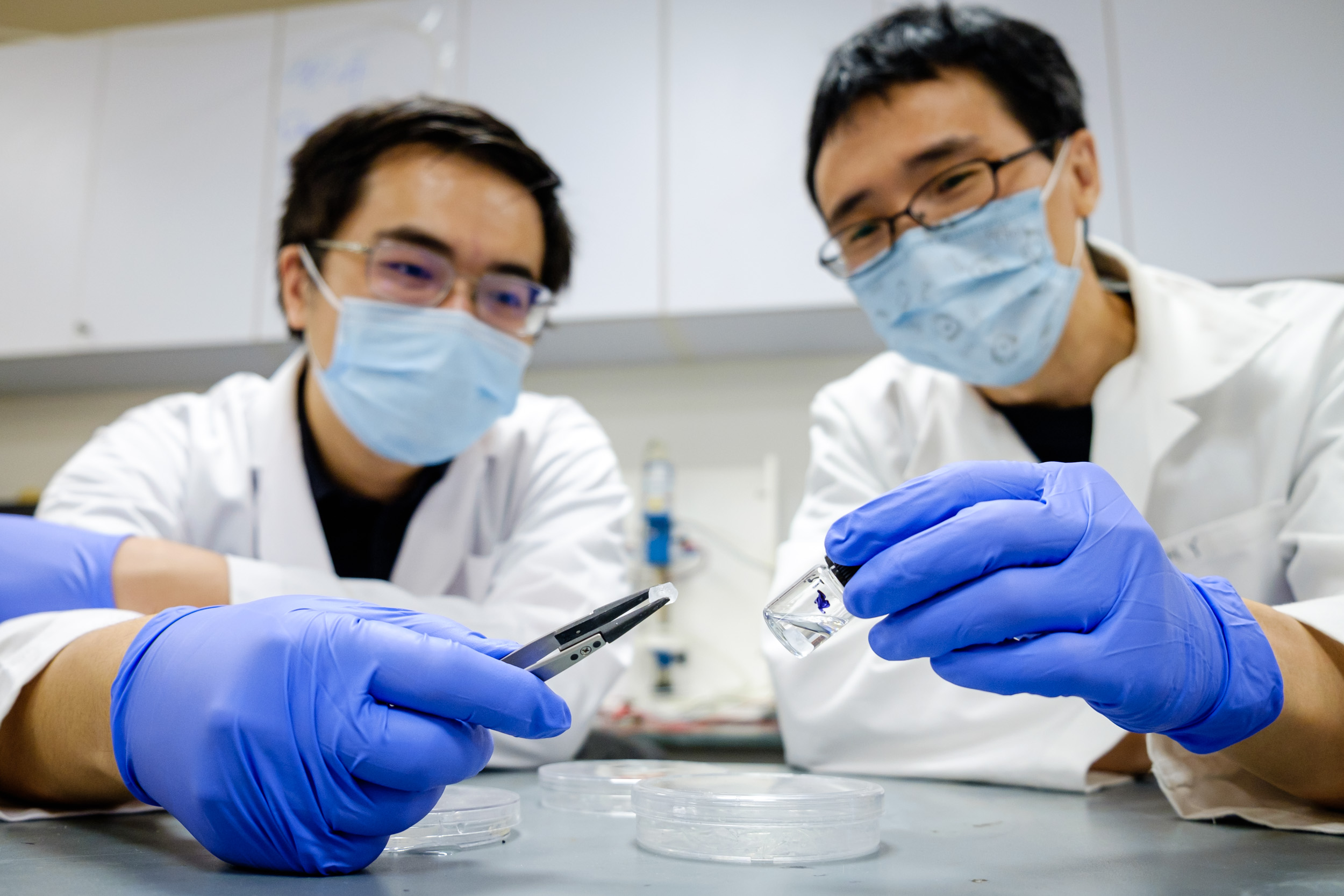
NTU Singapore researchers have developed a flexible crystal that can flex and bend 40 times more than its competitors when electricity is applied to it, paving the way to improved micro machines.
Conversely, when it is bent, it generates electricity more effectively and could be used for better “energy harvesting”, which can potentially recharge batteries such as those in wearable devices.
Known as a piezoelectric material – commonly used in modern-day electronics, such as electric guitars, earthquake seismometers, heart rate monitors and the accelerometer in smartphones – this new crystal could flex up to 22 per cent, far more than the usual 0.5 per cent for conventional piezoelectric materials.
The new material is also more energy-efficient than other piezoelectric and electrostrictive materials. It is also easy to manufacture, requiring only solution-based processing in which the crystal forms as the liquid evaporates, unlike typical ferroelectric crystals that require the use of high-powered lasers and energy to form.
Published in the scientific journal Nature Materials in January 2021, the new material was created at NTU by Professor Fan Hong Jin from the School of Physical & Mathematical Sciences and his team, including his PhD student Mr Hu Yuzhong who is the first author of this paper. Also part of the team is Professor Junling Wang from the Southern University of Science and Technology, China, a former NTU professor at the School of Materials Science and Engineering.

.jpg?sfvrsn=d512790f_0)

.tmb-listing.jpg?sfvrsn=ecbd1c2d_1 "Nanyang Asst Prof Wu Dongshuang (NTU Singapore research)")
.tmb-listing.jpg?sfvrsn=a9c05adf_2 "Measuresments taken with a classical spring gravimeter (NTU Singapore research)")
-cropped.tmb-listing.jpg?sfvrsn=4ef22100_2 "Prof Lydia Wong")
.tmb-listing.jpg?sfvrsn=abbd2980_1 "Prof Gao Weibo (NTU Singapore research)")
.tmb-listing.jpg?sfvrsn=5b527752_2 "Prof Warren Chan from NTU Singapore")
-2.tmb-listing.jpg?sfvrsn=8f9b6bc7_2)
.tmb-listing.jpg?sfvrsn=48f38a24_2)
.tmb-listing.jpg?sfvrsn=a1456c00_2)
.tmb-listing.jpg?sfvrsn=d16821ec_2)
.tmb-listing.jpg?sfvrsn=e543a521_2)
.tmb-listing.jpg?sfvrsn=83fa0b1d_2)
-and-professor-hu-xiao-from-ntu-singapore.tmb-listing.jpg?sfvrsn=d0bcffec_2)