Faces: Nanotech innovations for the circular economy
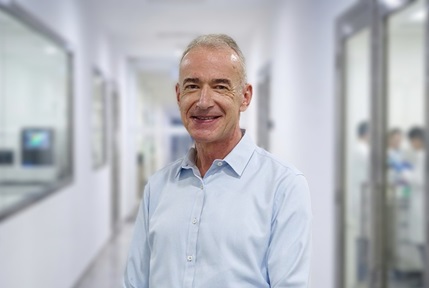
Prof Lydia Wong is harnessing the power of collaboration to solve sustainability challenges.
.jpg?sfvrsn=5338305c_1 "Full body shot of Prof Lydia Wong")
For Prof Lydia Wong of NTU’s School of Materials Science & Engineering, collaboration is key to finding solutions to real-world sustainability issues such as environmental pollution.
“Sustainability challenges are often multifaceted, and individuals with different expertise can solve them much more effectively when they work together,” the sustainable development advocate and NTU alumna says.
Prof Wong is optimistic about the potential of materials at the nanoscale in facilitating the transition to clean energy, as they can accelerate reactions involved in the production of green fuels without carbon emissions. As only small amounts of nanomaterials are required, less waste is also generated in the process.
She works with researchers around the world to develop nanomaterials that improve the generation of renewable energy. With collaborators in Switzerland and the United States, the materials scientist developed iron oxide nanostructures that improve how sunlight splits water molecules to produce clean hydrogen. In another project, she used gold nanorods to accelerate how perovskite solar cells convert sunlight into electricity.
Prof Wong has won teaching awards and serves on the editorial boards of several journals. In 2023, she was elected Fellow of the Royal Society of Chemistry, the world’s oldest chemical society.
She is Director of the Global Alliance of Industries @ NTU (GAIN) and Executive Director of the Indonesia-NTU Singapore Institute of Research for Sustainability and Innovation (INSPIRASI).
GAIN catalyses industry-university collaborations to create innovative solutions from the University’s research advances. To date, over 700 industry partners have collaborated with NTU in various ways.
INSPIRASI, formed by NTU and Indonesia’s leading universities, brings together students and faculty to tackle key challenges in mitigating climate change. The institute's projects span advanced energy storage, solar energy harvesting, hydrogen technologies, carbon capture and circular bioeconomy innovations. Its flagship initiative is a renewable energy integration demonstrator in Indonesia that is a testbed for next-generation solar and renewable energy solutions.
By nurturing talent and fostering partnerships, Prof Wong hopes that INSPIRASI will lay the foundation for long-term impact in Southeast Asia’s sustainability landscape.
Outside the laboratory, she is a firm advocate for girls and women pursuing careers in science, engineering and mathematics. She believes the scientific community is strengthened by diversity and unique perspectives.
“Pushing the boundaries of knowledge through research is not only for personal achievement, but also about contributing to the greater good of society,” she says.
The article appeared first in NTU's research & innovation magazine Pushing Frontiers (issue #26, May 2026).