Faces: Devising catalysts to generate clean energy
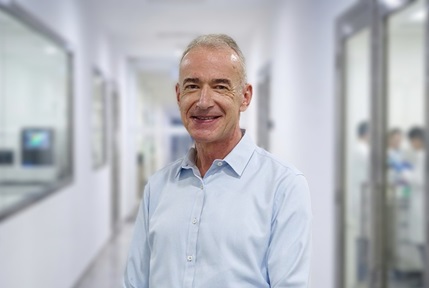
Nanyang Asst Prof Lee Hiang Kwee is designing nanocatalysts that drive a sustainable future.

From generating green energy to monitoring environmental pollutants, nanomaterials are opening new pathways to applications that address sustainability challenges.
Combining chemistry, nanotechnology, material sciences and molecular analysis, Asst Prof Lee Hiang Kwee is designing next-generation catalysts for energy production and other environmental applications.
“I am interested in making chemical reactions more efficient, cheaper and faster for a sustainable tomorrow,” says Asst Prof Lee, who is from NTU’s School of Chemistry, Chemical Engineering & Biotechnology.
The catalysts he develops, ranging from individual particles to complex arrays of molecules, achieve efficient catalysis by concentrating the energy used to power chemical reactions or by bringing reacting molecules closer together to promote those reactions.
“Nanocatalysts are a crucial component of green chemistry as they enable us to speed up chemical reactions substantially using renewable resources and without requiring harsh conditions,” he adds. “It’s almost like making chemicals from thin air.”
Ammonia and hydrogen are clean energy sources that could one day replace fossil fuels. One of Asst Prof Lee’s research interests is developing nanocatalysts to generate environmentally friendly ammonia and hydrogen under everyday conditions.
The nanocatalysts split water molecules to release hydrogen using light or electricity. With nanomaterials, nitrogen can be converted into ammonia without the need for high temperatures or pressure.
By integrating silver nanoparticles with photonic crystals, Asst Prof Lee developed a novel catalyst that concentrates light and enhances the generation of hydrogen from the splitting of water molecules. He also designed a catalyst made up of silver nanoparticles arranged in a lattice structure, which accelerates the conversion of nitrogen into ammonia using light.
Another of Asst Prof Lee’s nanocatalysts features surface molecules that disrupt the bonds between water molecules and promote closer interactions with the catalyst, boosting hydrogen production through electrocatalysis. Using a similar electricity-driven approach, he also created a catalyst that enhances the conversion of nitrogen into ammonia.
Besides using nanomaterials to generate clean energy, Asst Prof Lee is exploring other sustainability applications, such as monitoring contaminants in the environment. For example, he developed microlitre-sized liquid marbles that detect organic pollutants in water with high accuracy and sensitivity. Additionally, he created microbots that can be deployed in water treatment to break down organic contaminants.
A rising young researcher and NTU alumnus, Asst Prof Lee has been recognised with several national accolades. As a Nanyang Assistant Professor, he is also on an NTU programme that provides exceptional young researchers and scholars with opportunities to take on research leadership roles at the University.
He envisions an eco-friendly future shaped by advances in nanotechnology and hopes to draw further inspiration from biological catalysts such as enzymes to transform complex chemicals.
“Nanotechnology holds great promise for sustainable development and I am excited to be part of this green revolution,” he shares.
The article appeared first in NTU's research & innovation magazine Pushing Frontiers (issue #26, May 2026).