Unlocking Nature’s Pharmacy: An Interview with Nobel Laureate Prof Sir Gregory Winter
An interview by Saglik Kivanc, Cho Zenhan (Graduate Students' Club of MSE) and Kestrel Teng (CCEB) | Organised by the Institute of Advanced Studies NTU
Though he never set out to be a scientific celebrity, Prof Sir Gregory Winter’s work has quietly revolutionised the way we treat disease. In a field where even modest breakthroughs take years, his pioneering approach to engineering antibodies ushered in an entirely new era of biomedicine — one that has already saved millions of lives.
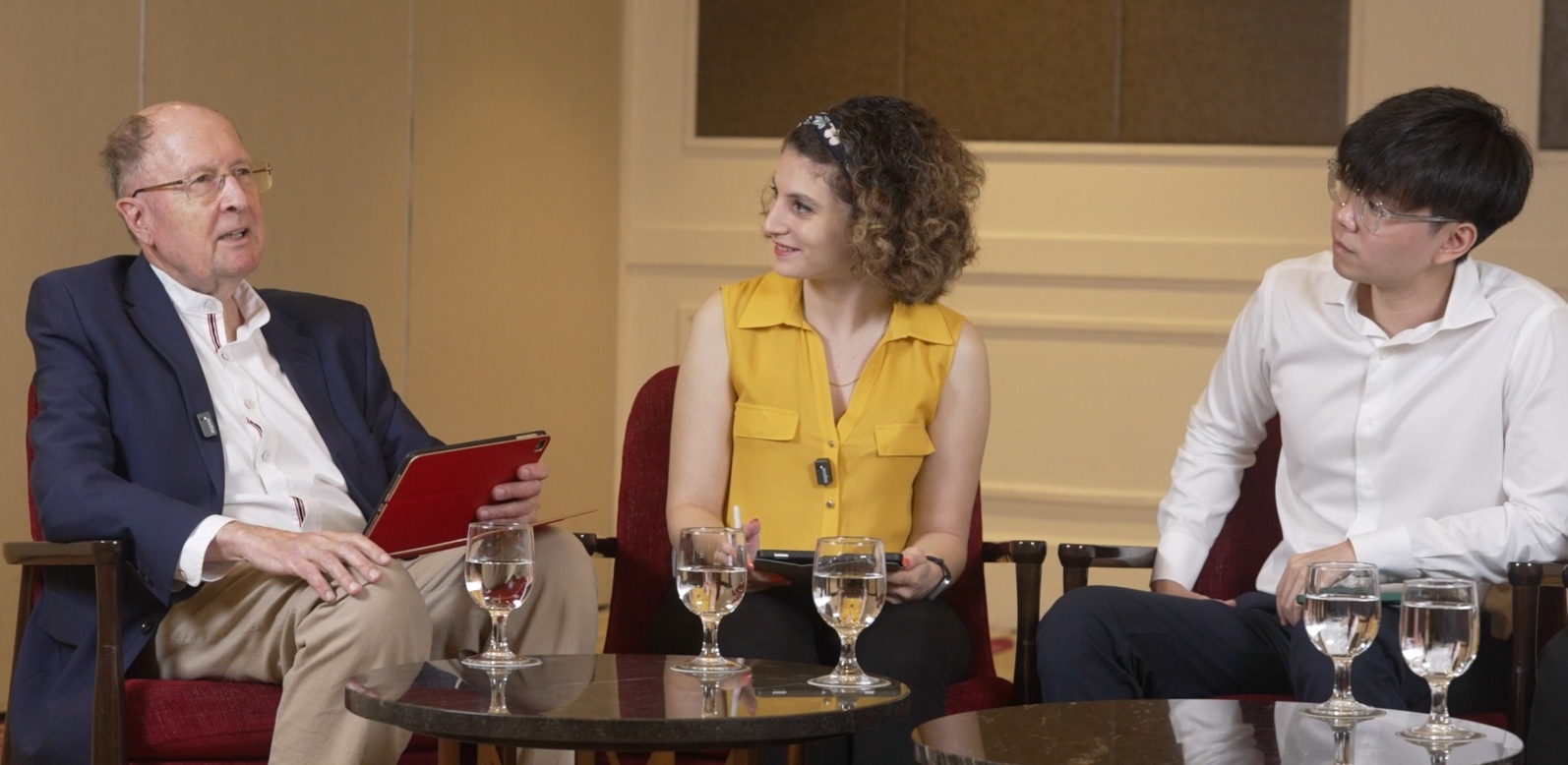 Prof Sir Gregory Winter’s antibody engineering revolutionises medicine, transforming disease treatment and saving countless lives.
Awarded the 2018 Nobel Prize in Chemistry for his work on the phage display of peptides and antibodies, Prof Sir Winter didn't so much plan the future as stumble upon it with curiosity and precision — the kind of intellectual tinkering that defines many great scientists. “It followed on like most ideas,” he says, recalling the early days of his research. “We were trying to make large antibody libraries... and George Smith had just published this method called phage display. We thought — maybe we could use it too.”
It wasn’t an obvious path. Displaying full antibodies on the surface of phages was an ambitious technical gamble. “There were so many reasons it might not have worked,” he admits. “The phage could have deleted the insert, the antibody might not fold, or it could interfere with infectivity altogether. But we took precautions, persisted — and got it to work.”
A Lock, a Key, and Billions of Tries
For those not steeped in the language of molecular biology, Prof Sir Winter finds a simple metaphor to explain the magic of his Nobel-winning work:
“Imagine you need to open a lock, but you don’t have the key. What do you do? You try a whole bunch of keys until one fits. If you have enough, you’ll eventually find the right one.”
In the molecular world, those “keys” are antibodies — proteins that can bind to disease targets. Phage display allowed researchers to create billions of variations, each displayed on a harmless virus particle. By washing these viruses over target cells (like cancer), researchers could see which antibodies stuck — and thus, which ones held promise as medicine.
The Unexpected Road to Science
Prof Sir Winter’s path into science wasn’t a straight line, but it was sparked by unforgettable moments. As a child growing up in the British colony of the Gold Coast (now Ghana), he remembers a visiting scientist demonstrating a Geiger counter to his primary school class. The excitement peaked when the device crackled wildly in front of a teacher’s watch — back then, illuminated with radioactive radium paint.
“She tore it off immediately — it had been a gift from her husband,” he recalls. “But for us kids, it was magical. The combination of curiosity and the unexpected… it caught our imagination.”
Later, another scientist visited with a large turtle writhing in a tank. A marine biologist, he explained that his job was to catch wild creatures and experiment on them. “I didn’t know what that meant,” says Prof Sir Winter, “but I thought: That’s what I want to do — go into the wild unknown and experiment on it.”
From there, science became his playground. With his brother, he staged chemistry experiments in the garden — even testing how wasps responded to oxygen and carbon dioxide. “It was all learning. It was freedom. I was hooked from primary school.”
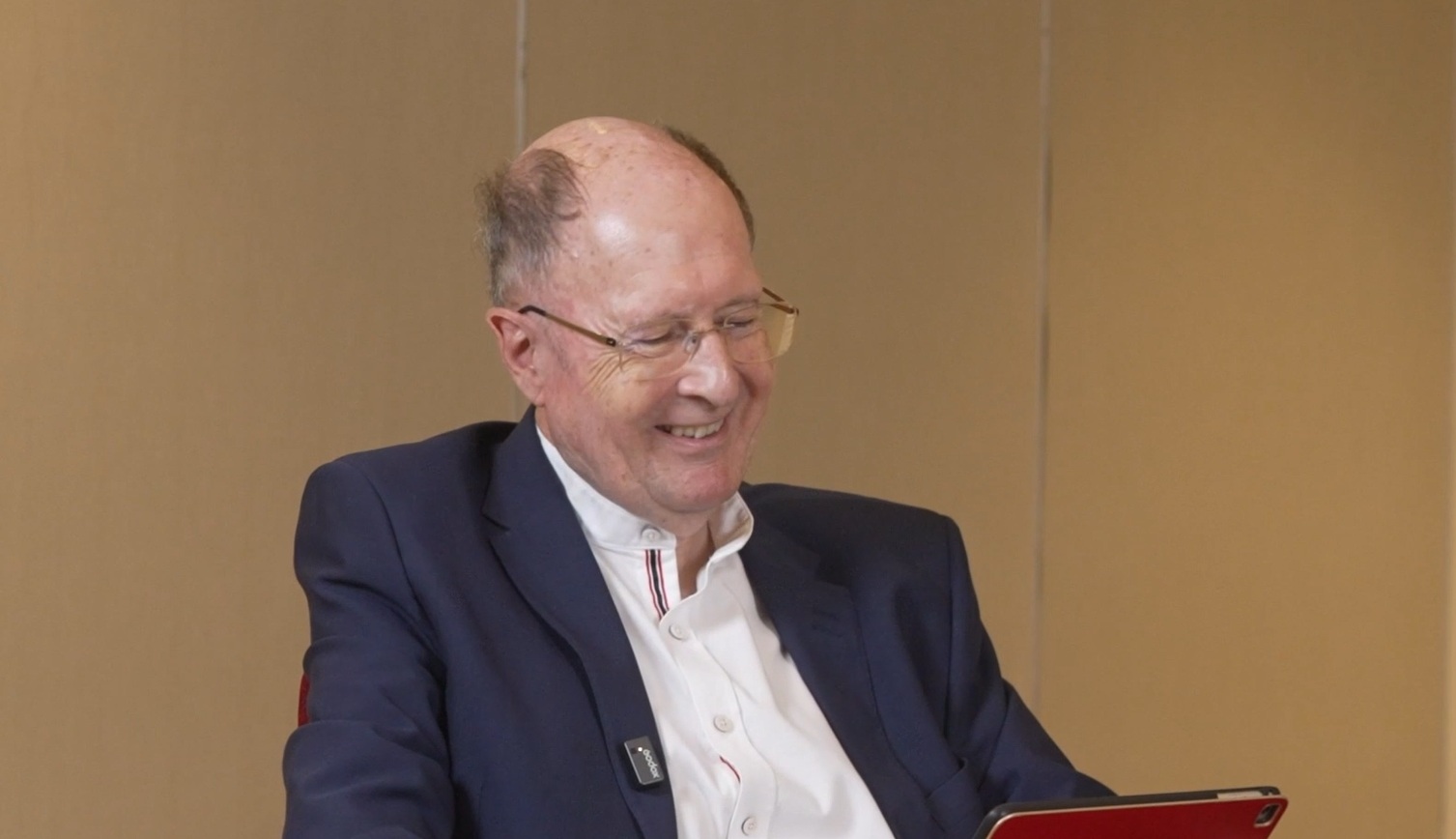
Prof Sir Winter reflects candidly, embracing mentorship and science with freedom and renewed purpose.
A Career of Mentorship — Now on His Own Terms
In his later years, Prof Sir Winter continues to engage with science, but in a new rhythm. Reflecting on his honorary appointment as Lee Kong Chian Distinguished Professor at NTU’s Institute of Advanced Studies (IAS), he shares:
“I suppose I’ve had a fulfilling and exciting career in science. And I do consider engagements with institutions or individuals, irrespective of their age or any formal appointment. In fact, appointments usually come with expectations or obligations — and to the extent possible, I prefer to avoid those,” he says candidly.
Now retired, he describes himself with a smile: “I’m in charge of myself.” But even so, he feels a deep sense of duty to engage — particularly with younger scientists. “I want to tell them how great science is, and what its applications can be.” Places like NTU, though younger institutions, offer a dynamic space for open exchange — one he’s glad to be part of, even if more informally than before.
Lessons in Failure (and a Tip from Fred Sanger)
Like many scientists, Prof Sir Winter has known the weight of failure. But he also knows how to walk through it. “I saw my path as a kind of medieval apprenticeship,” he says. “I kept things simple. I used controls. And when things didn’t work, I remembered Fred Sanger’s advice.”
The double Nobel Laureate and Prof Sir Winter’s mentor once told him, “If an experiment should work and it doesn’t, you usually just have to fiddle with the conditions.”
It became a guiding philosophy. “In my work, if it should work — then eventually, it usually does.”
What Young Scientists Need Today
When asked what qualities define a good scientist today, Prof Sir Winter pauses, as if reluctant to speak too boldly. Then with a modest grin, he says, “Curiosity, intelligence, hard work, practical skills — and passion.”
He speaks fondly of the intense, even heated debates he witnessed at the Laboratory of Molecular Biology, where scientists would argue over the details of protein transport with a kind of scientific ferocity. “It was like politics — but better,” he says. “You should be passionate about your subject.”
But more than that, he urges students to think for themselves. “Don’t always look for the answer online. Even if it’s not the best answer, working it out for yourself builds critical thinking — and that’s everything.”
A Simple Message to His Younger Self
If he could speak to himself at the start of his scientific journey, would he give grand advice? A list of dos and don’ts?
“I think I would just say… carry on,” he says simply.
It’s a fitting mantra from a scientist who has quietly changed the world — not through grand declarations, but by following curiosity wherever it led, embracing failure, and unlocking new ways to heal.
Watch the full interview here.
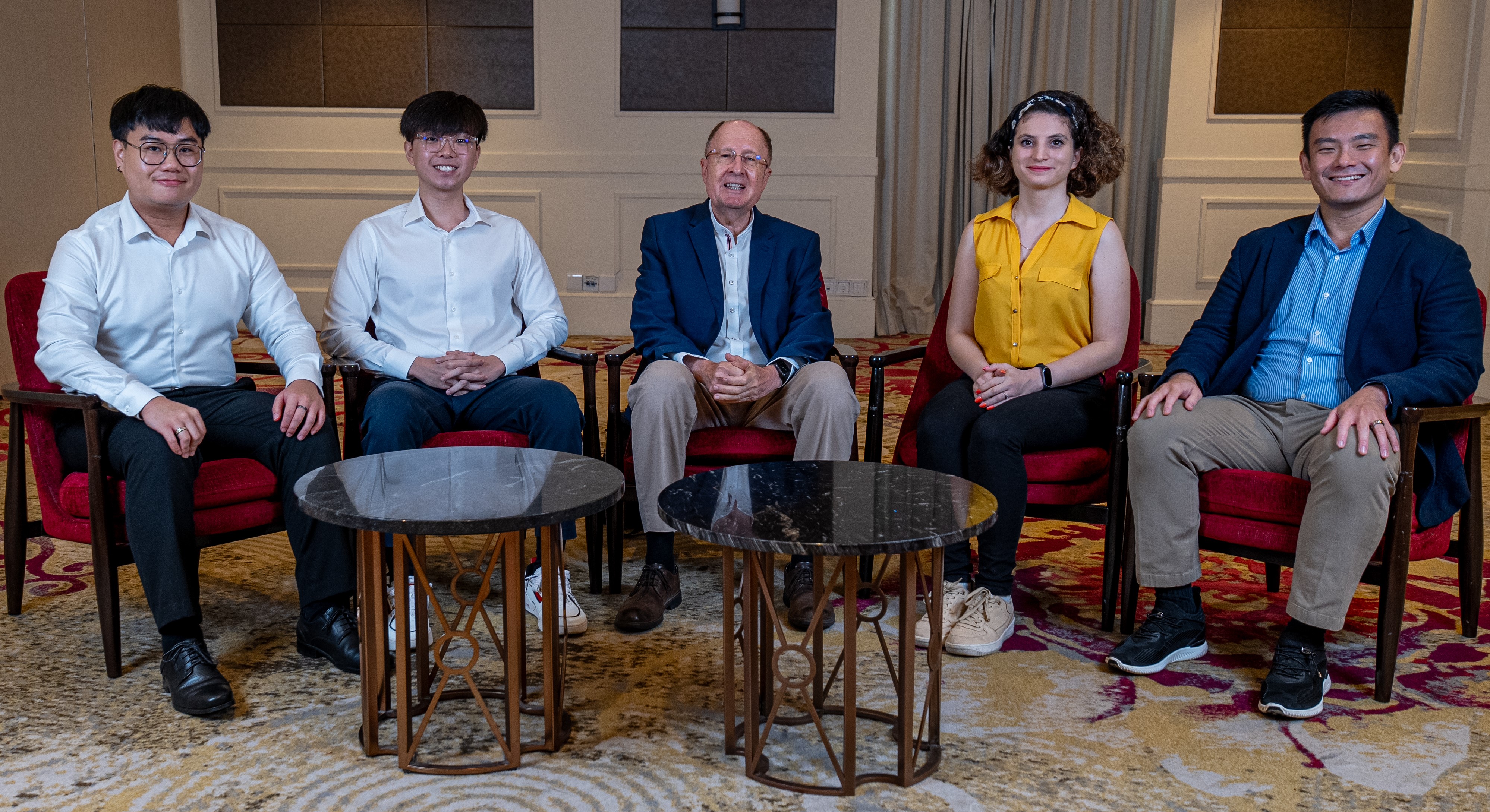
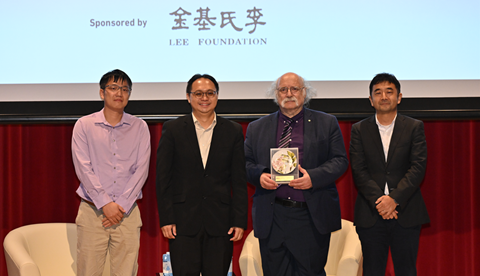
From left to right: Kestrel Teng (CCEB, NTU), Cho Zen Han (MSE, NTU), Prof Sir Gregory Winter, Saglik Kivanc (MSE, NTU) and Asst Prof Leonard Ng (MSE, NTU)