Unconventional Solar Solutions with Hybrid Perovskite Materials by Prof Lioz Etgar
IAS@NTU STEM Graduate Colloquium Jointly Organised with the Graduate Students' Clubs
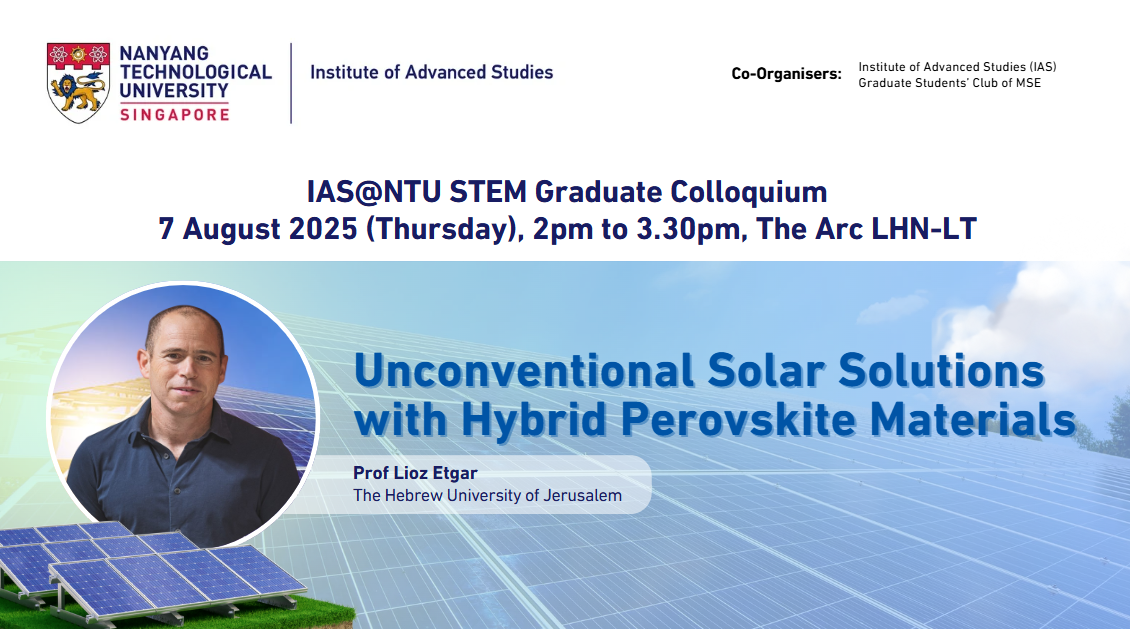
On 7 August 2025, the Institute of Advanced Studies (IAS) at Nanyang Technological University, in collaboration with the Graduate Students' Clubs of MSE, recently hosted an insightful colloquium "Unconventional Solar Solutions with Hybrid Perovskite Materials" by Prof Lioz Etgar from the Hebrew University in Jerusalem.
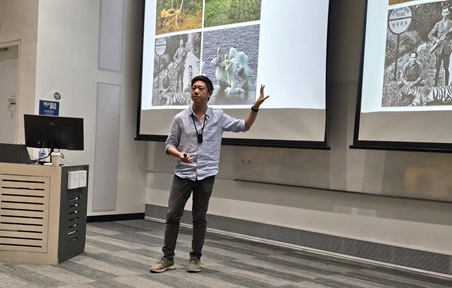
 Prof Lioz Etgar captivates the audience with insights on perovskite materials, highlighting their unique properties and potential to transform future energy solutions.
Prof Etgar began his presentation with a powerful question: “How can we generate the energy source?” This opening set the stage for an engaging discussion centered on advanced materials, with a strong emphasis on hybrid perovskites. He introduced the fundamental principles, their structure, and outstanding optoelectronic properties of perovskite materials, explaining why they have become a focal point of modern energy research. Their tunable optical properties, lightweight nature, mechanical flexibility, and simple processing methods were highlighted as key advantages.
He also discussed characterisation techniques for perovskites, including methods to study their functional groups, structural stability, and surface morphology.

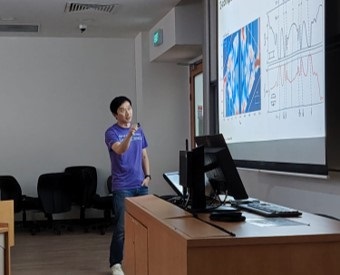
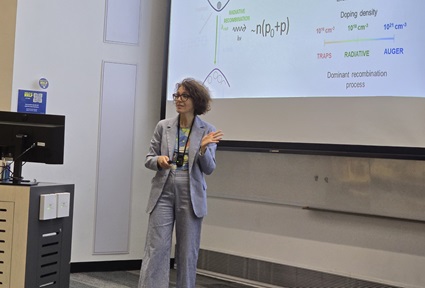
Prof Etgar discusses perovskite principles, properties, and characterisation techniques in modern energy research.
Prof Etgar presented two significant breakthroughs from his research on hybrid perovskite materials. First, he introduced a fully printable mesoporous ITO perovskite solar cell, where the perovskite infiltrates a triple-oxide structure instead of forming a separate layer. This design uses mesoporous indium tin oxide (ITO) as a transparent contact, enabling bifacial operation without additional layers or thin counter electrodes, resulting in a streamlined, scalable, and cost-effective solar cell architecture. Second, he explored the piezoelectric properties of metal halide perovskites, which arise from polarization effects and centrosymmetry breaking in PbX₆ pyramids. Using piezo-response force microscopy, his team investigated quasi-2D perovskites and demonstrated their potential application in pressure sensors, expanding the functional scope of perovskites beyond solar energy harvesting.
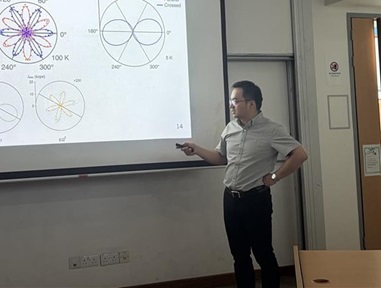
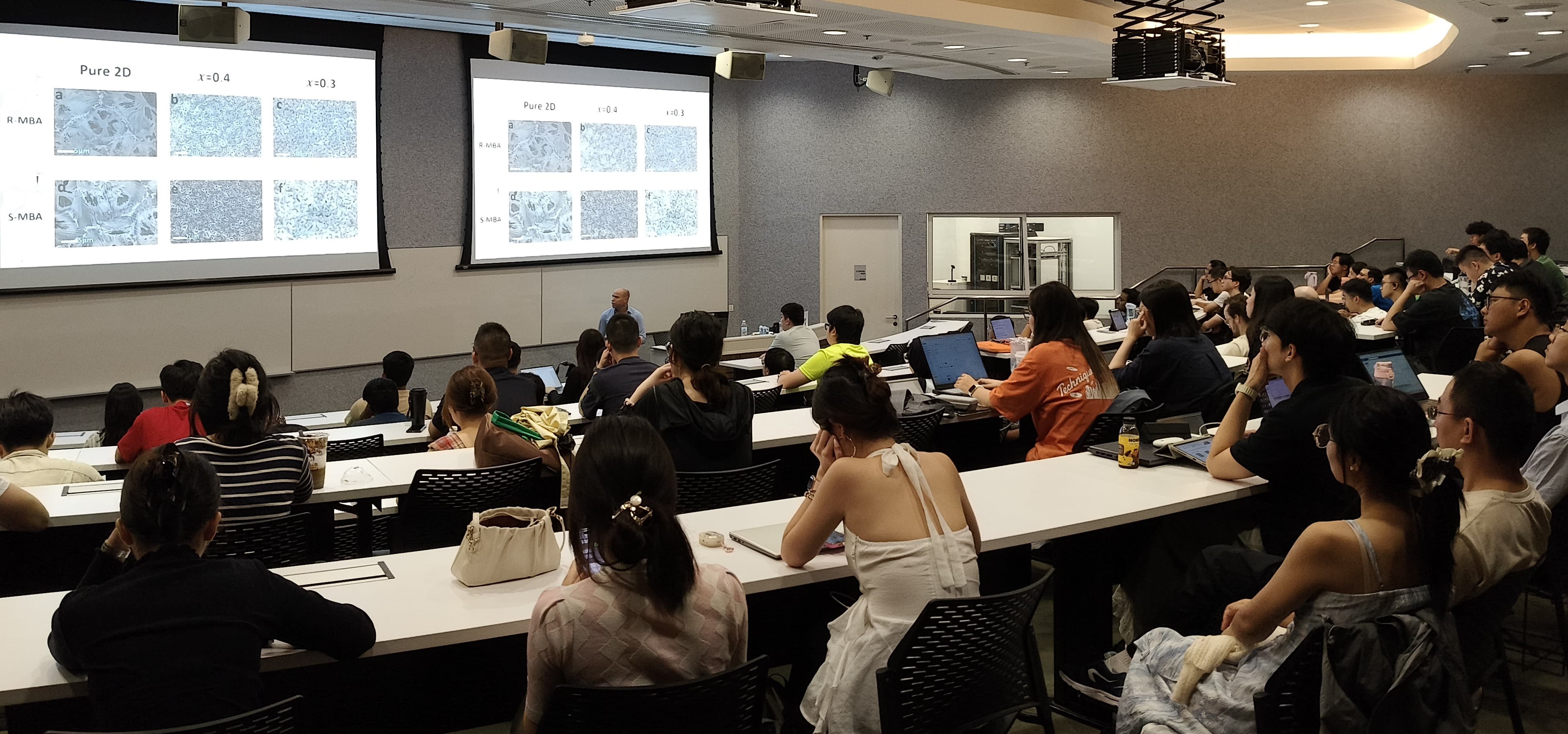 Prof Etgar shares breakthroughs in next-generation solar and sensor technology.
To address land scarcity and energy demand, especially in urban regions, Prof Etgar proposed integrating solar solutions within agricultural settings. Using tomato plants as a model, he discussed the RSF Synergetic Solution, a method that allows solar energy deployment on farmland without compromising crop yield. This innovative approach supports dual land use, enhancing sustainability and land-use efficiency.
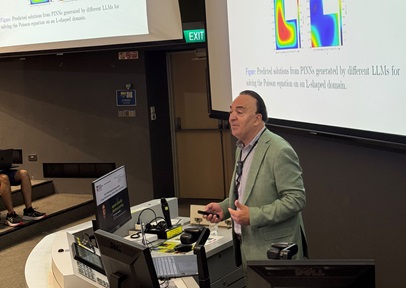
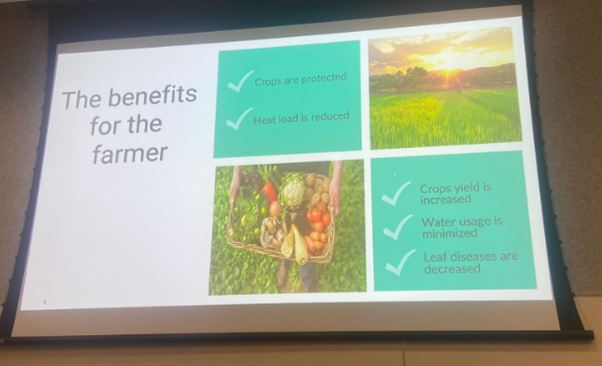 Innovative solar solutions which can potentially enable farmers to generate clean energy, boost income, and enhance land-use efficiency.
In the context of Singapore’s tropical rainforest climate, Prof Etgar emphasised the abundance of solar irradiance as a natural advantage. He proposed harnessing this potential through innovative solar solutions, such as solar mirrors and transparent solar panels integrated into buildings.
Moreover, he articulated a compelling vision of transforming urban infrastructure, “Turning buildings from energy consumers into energy producers, converting carbon liabilities into ROI-generating assets, all while enhancing their architectural aesthetics.”
He concluded with a summary of the perovskite photovoltaic (PV) technology developed at The Hebrew University over the past seven years. The team's patented method involves creating ‘gaps’ in the conductive layers to allow visible light transmission, producing transparent solar cells. Furthermore, the perovskite material has been converted into printable ink, enabling direct printing onto glass substrates. Their PV cells now achieve an efficiency of 10% at 26% transparency, marking a significant advancement toward commercially viable transparent solar technology.
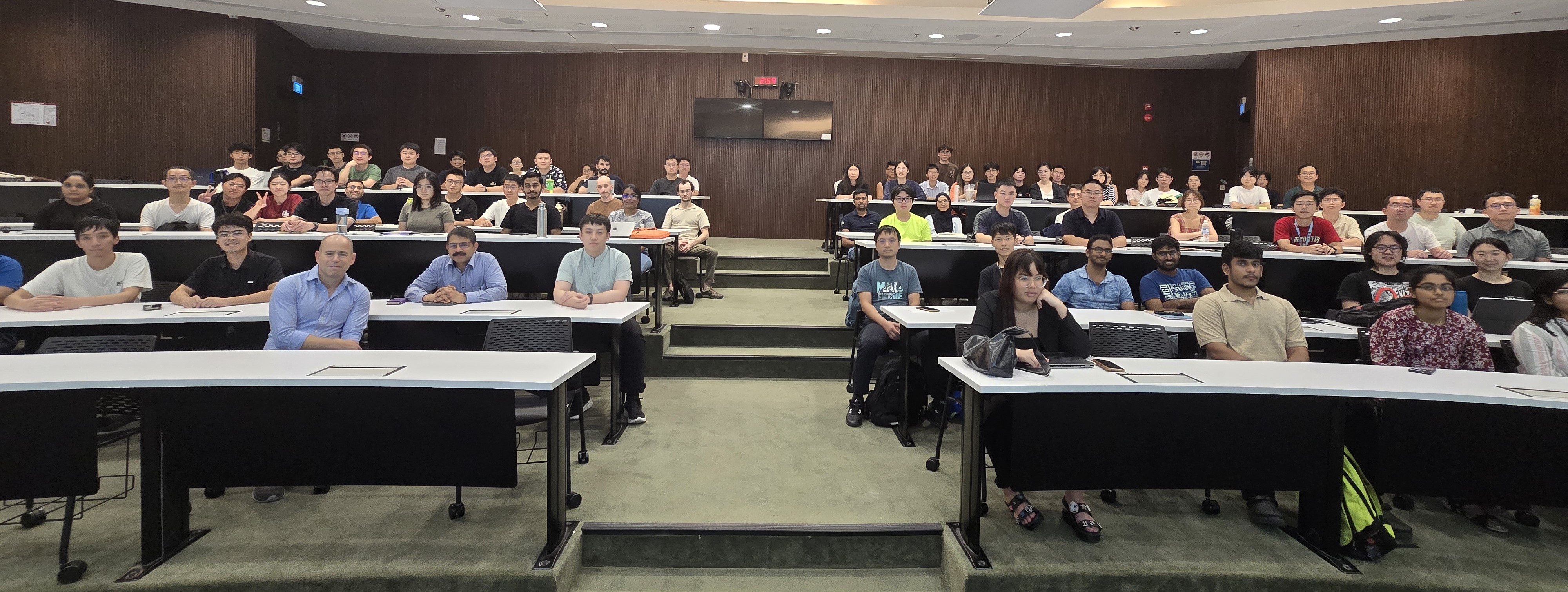
The session concluded with a lively Q&A, where participants asked about the long-term stability of perovskite solar cells in humid climates and the challenges of scaling up production for commercial use. Questions also explored the environmental impact of lead-based perovskites and the viability of non-toxic alternatives, and the economics of adoption in land-scarce cities like Singapore, and combining them with other renewable energy technologies. The exchange reflected strong interest in turning cutting-edge research into practical, sustainable energy solutions.
Written by: Nuchong Sirikanya | NTU School of Materials Science and Engineering Graduate Students' Club
“The newer applications integration with Agri tech and semi-transparent solar cells”- Nannapaneni Chandra Mouli (PhD Student, MSE)
“Introducing unconventional usage of solar cells”- Ji Chanhyoung (PhD Student, MAE)
Watch recording here