Singapore Bioscience Symposium 2025
Written by Dr Joseph Chen Yuanfeng | School of Biological Sciences, NTU
The Singapore Bioscience Symposium 2025, held from 10 to 12 December 2025 at the School of Biological Sciences (SBS), Nanyang Technological University (NTU), marked the successful launch of SBS’s inaugural flagship international symposium. Supported by the IAS Frontiers Conference Series, the event established SBS as an emerging hub for cutting-edge bioscience research in Asia, with a focused theme on Plant Biomolecular Condensation and Signalling.
In his opening address, Prof Kanaga Sabapathy, Chair of SBS, emphasised that the symposium was conceived not merely as an academic meeting, but as a strategic platform aligned with SBS’s vision to position Singapore as a regional nexus for transformative research and education in the life sciences. He highlighted SBS’s three strategic research pillars: Plant and Agrobiology; Structural and Cell Biology; and Disease, Development, and Target Discovery; and underscored their unifying philosophy: that fundamental discovery and applied translation are deeply interconnected and jointly essential for advancing human and planetary well-being. The symposium was framed as a tangible expression of this integrative ethos, bringing together molecular, cellular, organismal, and systems-level perspectives.
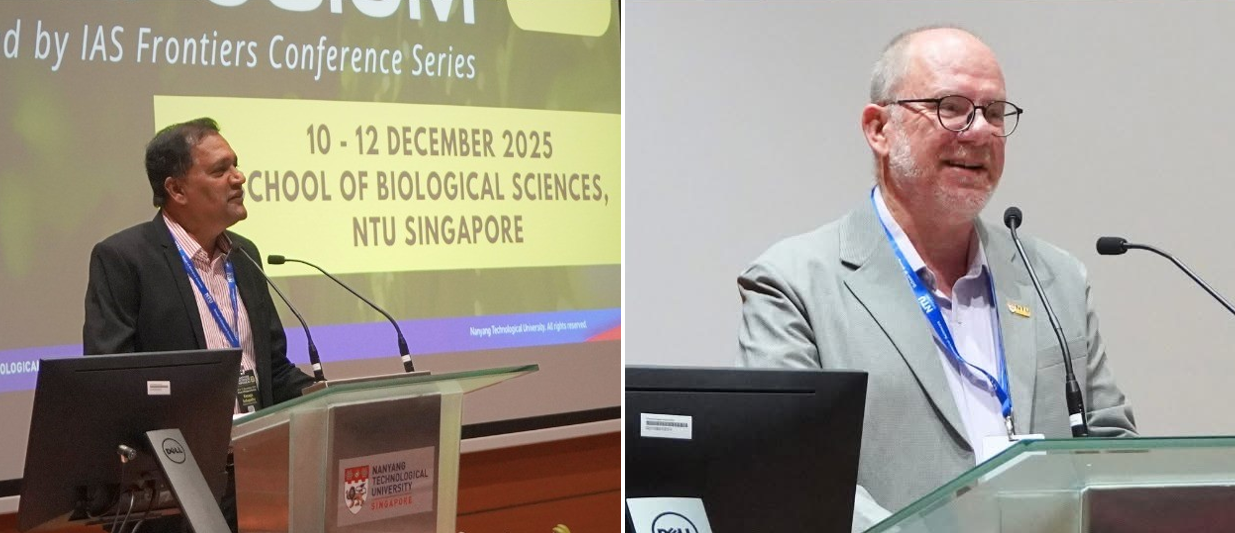
Prof Kanaga Sabapathy (Chair, SBS) and the Guest-of-Honour Prof Simon Redfern (Dean, College of Science) giving their opening speeches to kickstart the symposium.
Echoing this vision, the Organising Committee Chairs, Associate Professors Yansong Miao and Oliver Mueller-Cajar, situated the meeting within the rapid evolution of biomolecular condensation as a unifying conceptual framework across biology. Their opening remarks traced how phase separation and macromolecular self-organisation have reshaped modern cell biology and biochemistry, while noting that much of the field has historically focused on a limited set of canonical systems. In contrast, SBS and its Plant and Agrobiology Research Pillar have pursued a distinctive trajectory, leveraging plant systems to explore how condensation underpins photosynthesis, stress signalling, and adaptive responses to environmental change. The symposium was thus positioned as both forward-looking and field-shaping, bringing together international leaders and showcasing local excellence to drive the next phase of discovery.
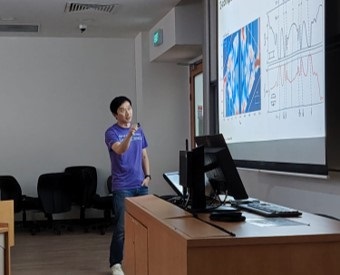
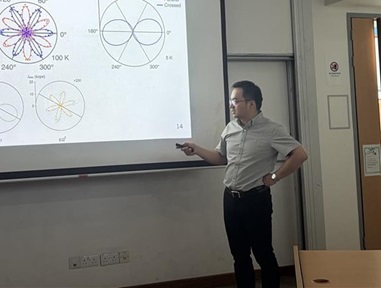
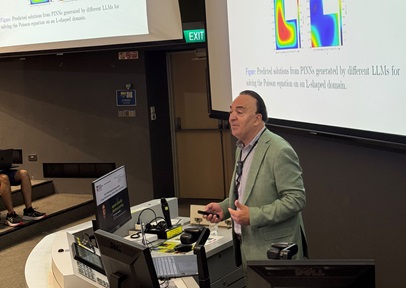
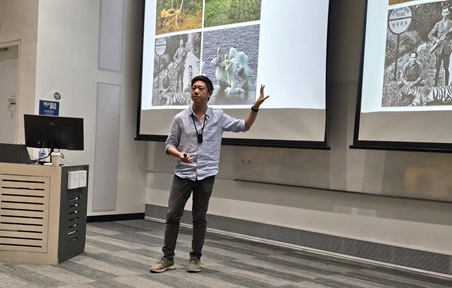
The scientific programme featured 26 world-class speakers, including 10 keynote and 16 invited speakers, representing leading institutions across the United States, China, the United Kingdom, Austria, Germany, Greece, Saudi Arabia, and Singapore. The speaker cohort included members of the US National Academy of Sciences, Howard Hughes Medical Institute Investigators, Chinese Academy of Science members, Future Science Prize laureates, EMBO members, and NRF Investigators, reflecting the symposium’s exceptionally high international standing. Keynote lectures by globally recognised leaders such as Lucia Strader (Salk Institute), Ji-Jie Chai (Westlake University), Sheng Yang He (Duke University), and José R. Dinneny (Stanford University) anchored the programme and drew strong engagement from both local and international participants.

Invited speakers and organising committee at the Singapore Bioscience Symposium 2025.
Over three days, the symposium delivered a tightly curated programme spanning systems biology, RNA regulation, biotic and abiotic signalling, plant stress responses, phase separation, and membrane-associated condensation. Sessions integrated structural biology, biophysics, live-cell imaging, genetics, and computational approaches, illustrating how biomolecular condensation provides a unifying lens across scales from nanoscale assemblies to organismal resilience. The breadth and depth of the programme reinforced SBS’s strength in interdisciplinary bioscience and its ability to convene diverse scientific communities around shared conceptual challenges.
Beyond scientific excellence, the symposium achieved significant strategic and institutional outcomes. It facilitated high-value networking among speakers, early-career researchers, and industry partners, catalysing discussions around future collaborations and joint initiatives. Notably, the event initiated exploratory dialogue with Peking University (PKU) regarding potential research collaborations and the development of a double master’s degree programme, underscoring SBS’s commitment to deep, sustained international partnerships. These engagements align with NTU’s broader internationalisation strategy and reinforce SBS’s growing global visibility.
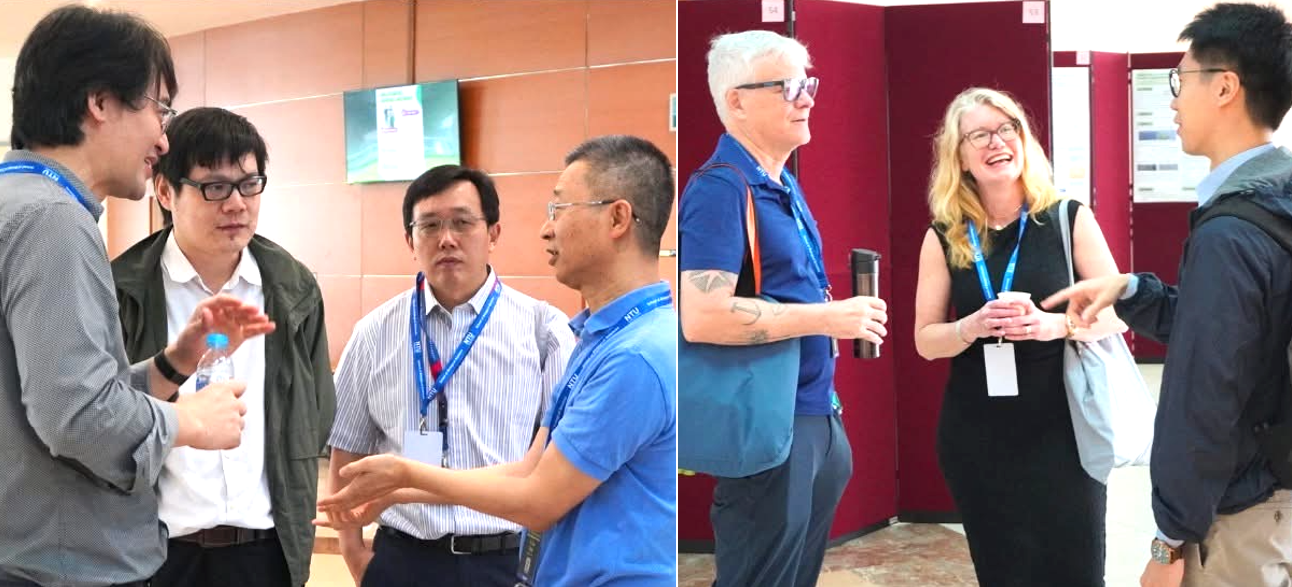 Deep discussions with guest speakers Prof Ji-Jie Chai (Westlake University), and Prof Amy Gladfelter (Duke University), during the symposium.
The symposium also served as a platform to highlight NTU and SBS as destinations for scientific talent and collaboration. The strong international turnout and positive feedback from participants affirmed the symposium’s success in fostering a vibrant, inclusive, and forward-looking research environment. Importantly, the event laid the groundwork for establishing the Singapore Bioscience Symposium as a recurring annual series, positioning SBS to shape future research agendas at the intersection of plant science, cellular organisation, and sustainability.
In closing remarks, the organisers reaffirmed the symposium’s core objective: to generate ideas and collaborations that extend well beyond the meeting itself. The Singapore Bioscience Symposium 2025 successfully fulfilled this ambition, delivering scientific excellence, strengthening international networks, and enhancing NTU’s reputation as a leader in contemporary bioscience research. As an inaugural event, it set a high benchmark and a clear trajectory for future symposia that will continue to advance discovery, innovation, and global engagement at SBS and NTU.