Semiconductors as the New Frontier: Convergence, Challenges and Startup Opportunities by Don Ong
IAS@NTU STEM Graduate Colloquium Jointly Organised with the Graduate Students' Clubs
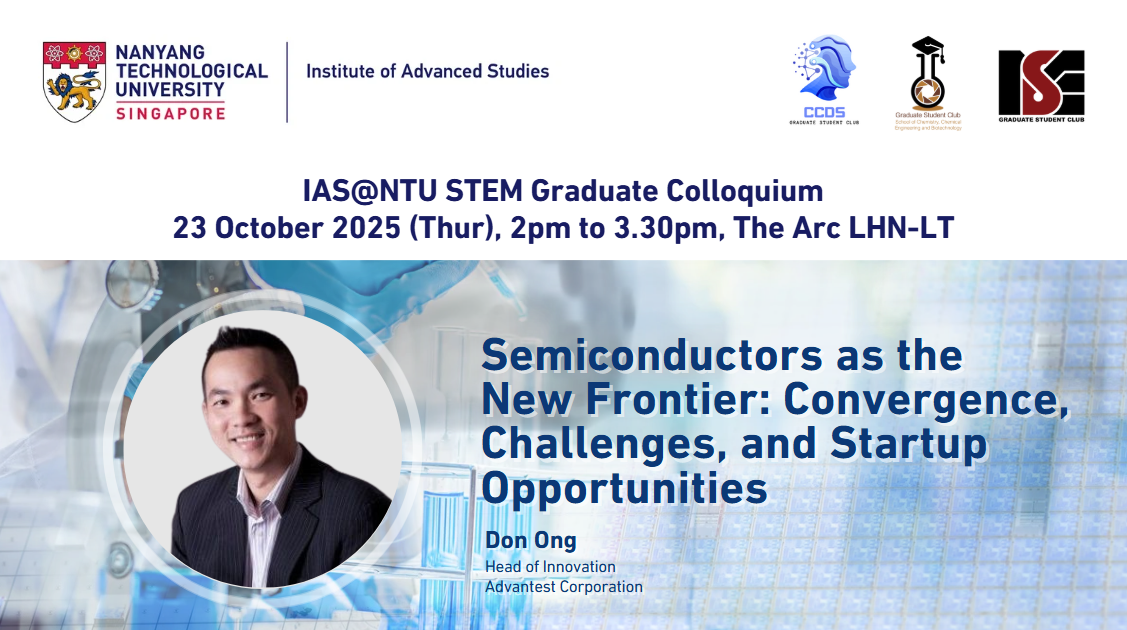
On 23 October 2025, Don Ong, Head of Innovation at Advantest Corporation, delivered an engaging colloquium at The Arc Lecture Theatre, in NTU, titled ‘Semiconductors as the New Frontier: Convergence, Challenges, and Startup Opportunities.’
Organised under the IAS STEM Graduate Colloquium Series, the talk examined how semiconductors have evolved from hidden enablers of modern electronics to core drivers of today’s transformative technologies -such as AI and Quantum computing to Neuromorphic design and Biotechnology. Drawing from his experience as technologist, innovator, and angel investor, Don discussed how the semiconductor ecosystem increasingly represents a convergence of science, engineering, and entrepreneurship, and how Singapore and Southeast Asia can position themselves at the forefront of deep-tech innovation.
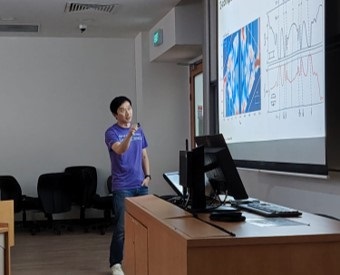
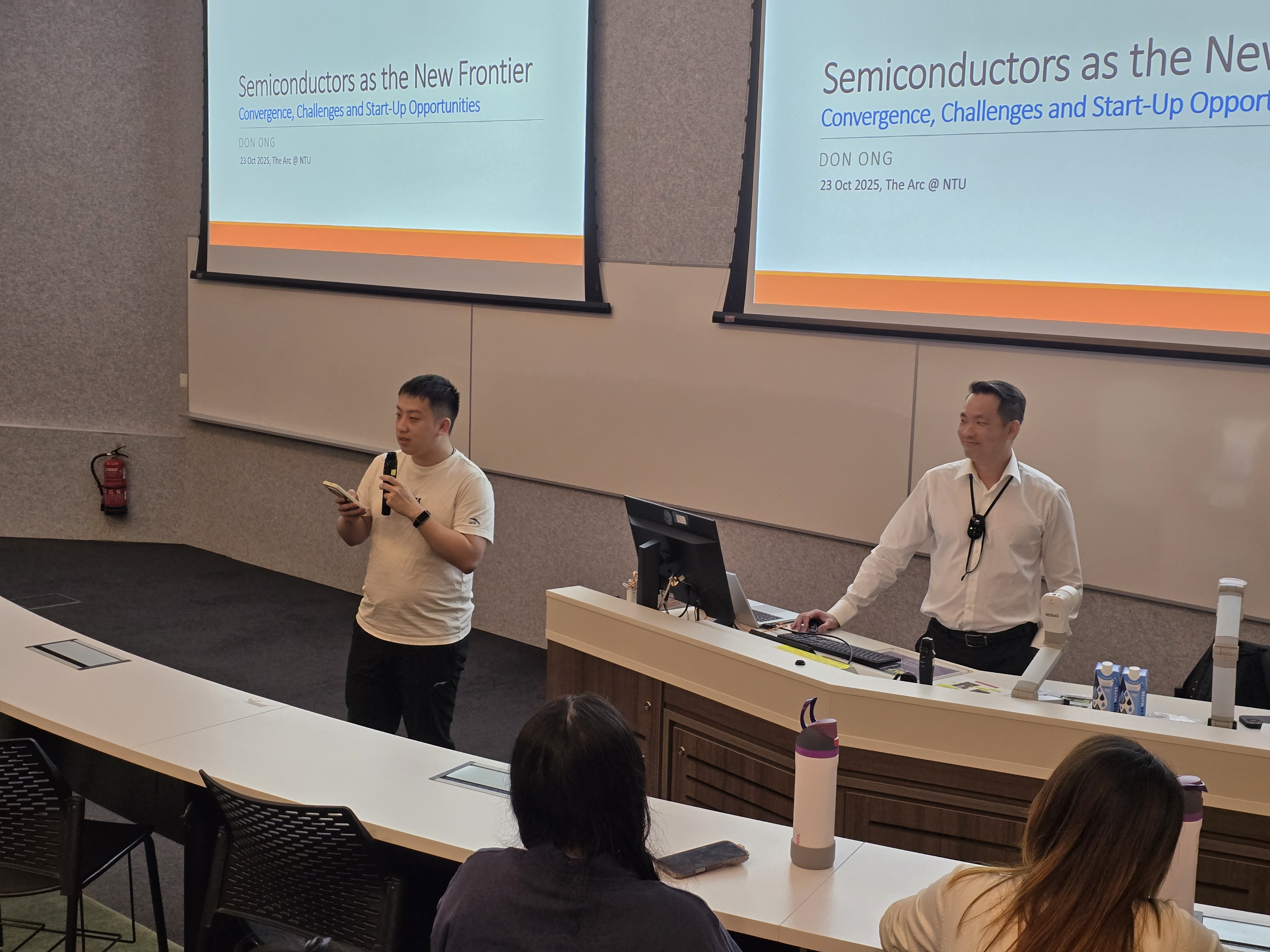 Yan Shangcheng (right) from the MSE Graduate Student's Club begins the colloquium with a warm welcome and brief introduction of our speaker, Don Ong (right).
From Hidden Infrastructure to the Core of Innovation
Don began by outlining the semiconductor industry’s rapid growth - from the PC era and smartphone era to the present ‘Age of AI Everywhere’. Global semiconductor revenue, he pointed, has surged towards USD 750 billion in 2025 and is projected to reach approx. USD 1 trillion by 2030. Yet, as device miniaturisation approaches the Angstrom scale, traditional CMOS-based approaches face physical and energy limitations, creating new challenges in advanced packaging, memory integration, and energy efficiency.
These bottlenecks, he emphasised, also represent fertile ground for innovation and research funding. As chip designs grow in complexity, emerging fields such as spintronics, silicon photonics, and AI - assisted chip design are redefining how performance, energy use, and functionality can scale together.
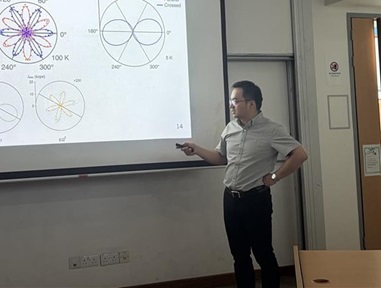
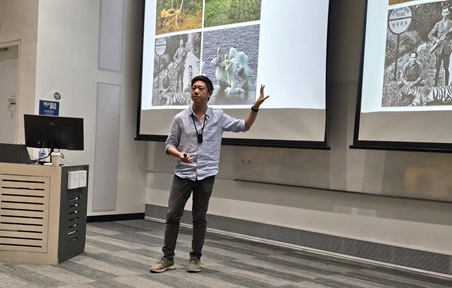
 Don presents a growth chart showing the semiconductor industry’s surge toward USD 1 trillion by 2030.
Convergence Across Disciplines: The New Paradigm
Highlighting the cross-disciplinary nature of modern semiconductor research, Don described a convergence of physics, data science, and manufacturing. He cited spintronics, pioneered by Prof. Stuart Parkin at NTU, as a path toward high-density 3D ‘racetrack’ memory; silicon photonics, enabling light-based computation at the nanoscale; and quantum computing, which demands breakthroughs in material science for room-temperature operation.
AI is also re-shaping chip design through large language models (LLMs) that accelerate design cycles from a period of weeks to hours - a trend demonstrated by NVIDIA’s AI-driven chip design workflow. Don urged researchers to look beyond laboratory breakthroughs to scalable, manufacturable solutions capable of industry impact.
From Lab to Market: Translating Deep Tech into Startups
A central theme of the talk was the constant gap between research discovery and commercialisation. Don argued that impactful innovation requires collaboration between academia, startups, and industry. He encouraged young researchers to pursue entrepreneurship education and to engage with accelerators such as SG Innovate, Cambridge Future Tech, and Stanford’s Frontier Technology Lab, which pair scientific founders with experienced business mentors and investors.
Drawing from his own experience as an angel investor, he emphasised that investors seek not only proof-of-concept but proof-of-manufacture technologies that can scale, yield, and integrate into existing industrial ecosystems well.
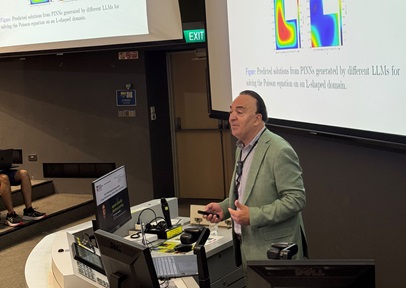
 From lab to market: Don showcases how research innovations in start ups can solve real-world semiconductor challenges.
Startup Deep Dives: Applying Technology to Real-World Problems
To illustrate how research can transition into practical ventures, Don presented three U.S.-based startups addressing semiconductor bottlenecks:
- Vinci4D - developing physics-informed LLM to model thermal dissipation and warpage in advanced chip packaging, reducing simulation times from days to seconds.
- Contextual AI - enabling companies to share contextual information across AI systems without exposing intellectual property, using retrieval-augmented generation (RAG).
- Open Infer - optimising edge AI inference to reduce latency and energy consumption, improving responsiveness for next-generation autonomous systems.
These examples demonstrated how targeted applications of existing technologies, combined with domain-specific insight, can create transformative value.
Singapore and Southeast Asia: A Region Poised for Growth
Don stressed that Southeast Asia’s traditional strength in manufacturing provides a foundation for leadership in advanced semiconductor technologies. With growing government support and venture capital interest, the region can move from a low-cost production base to a creator of deep-tech innovations. Areas such as advanced packaging, automation, and quantum hardware were highlighted as near-term opportunities for research translation and startup creation.
The lively Q&A session saw attendees pose thoughtful questions and share diverse perspectives, demonstrating their strong engagement with the topic.
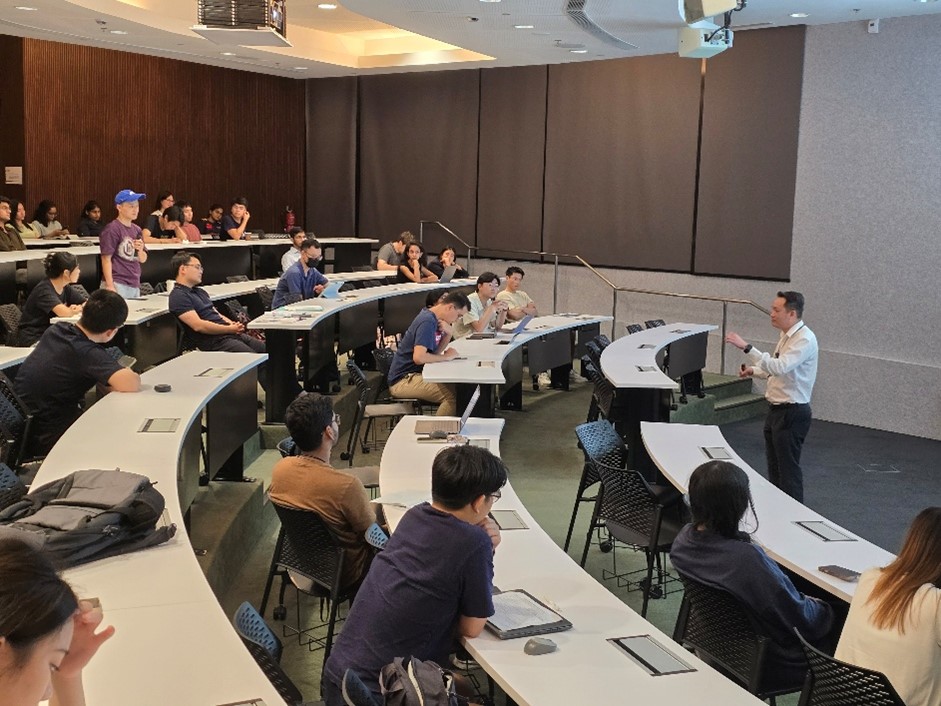 The lively Q&A session saw attendees pose thoughtful questions and share diverse perspectives on the various growth opportunities in the semiconductor industry.
Conclusion and Call-to-Action
In closing, Don urged researchers, industry leaders, and educators to collaborate across disciplines and sectors.
- Researchers should focus on manufacturable, high-impact work.
- Industry professionals must foster open innovation by sharing information securely while protecting IP.
- Entrepreneurs should identify “white spaces” in deep tech and execute effectively.
- Educators are called to bridge academia and industry by supporting lab-to-startup programs.
The seminar concluded with a dynamic Q&A session covering neuromorphic computing, the role of quantum materials, and the need for entrepreneurial mindset shifts among researchers.
Don’s talk resonated deeply with attendees, highlighting both the urgency and promise of semiconductor innovation in shaping the next technological era.
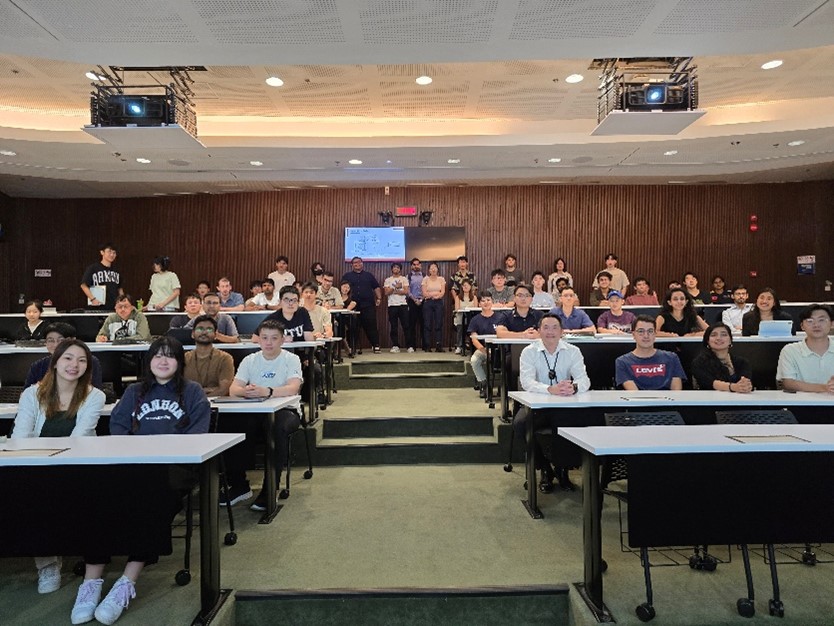
Written by: Thool Chinmay Sudhakar | NTU School of Material Science and Engineering Graduate Students' Club
"I enjoyed the emphasis on translating research too manufacturing while also learning a few concepts on entrepreneurship" - Choong Li Yan Anthony (PhD student, MSE)
"The practical visualised explanation on how to have research direction or focusing on a topic aligned with industry." - Li Zenong (PhD student, CCDS)
“I enjoyed the ideas about the valuable chain in AI industry” - Yan Shangcheng (PhD student, MSE)
Watch the recording here.