Rethinking Multi-Agent Systems in the Era of Large Language Models by Prof Michael Wooldridge
IAS@NTU STEM Graduate Colloquium Jointly Organised with the Graduate Students' Clubs
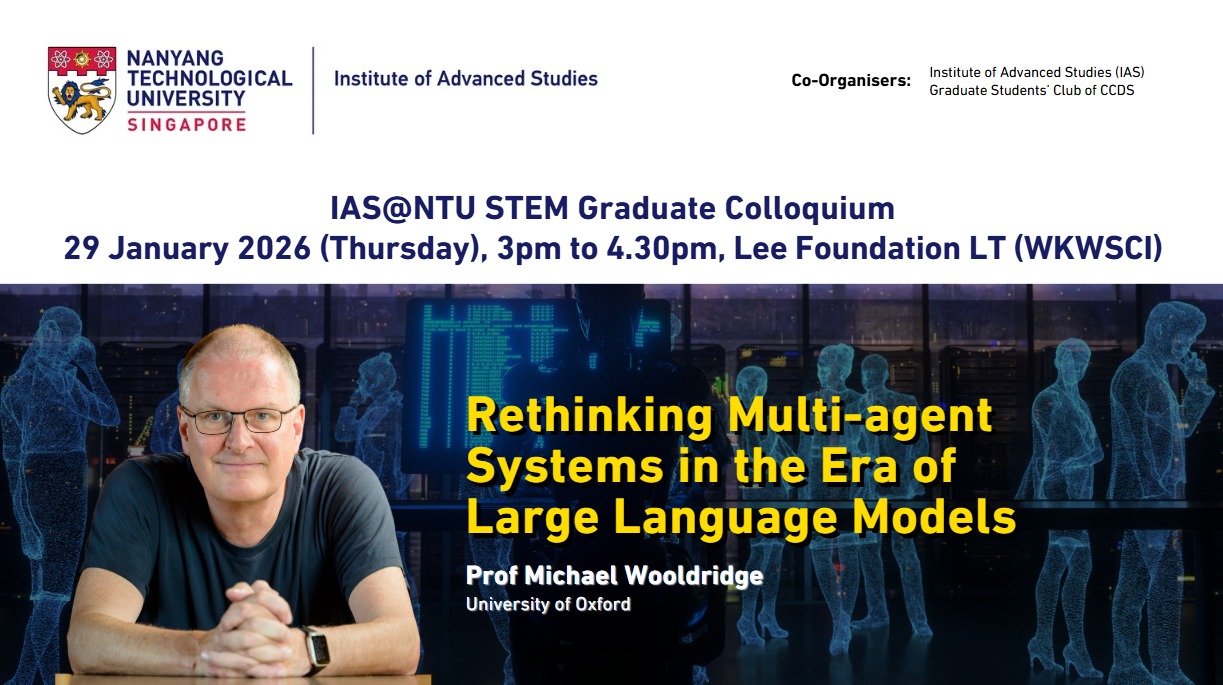
On 29 January 2026, the IAS@NTU STEM Graduate Colloquium hosted a compelling colloquium by Prof Michael Wooldridge (University of Oxford). In his talk titled “Rethinking Multi-Agent Systems in the Era of Large Language Models”, Prof Wooldridge examined how long-standing ideas in multi-agent systems (MAS) connect to today’s rapidly growing interest in LLM-based agents, and what challenges become more pressing when many agents interact and act on behalf of users.
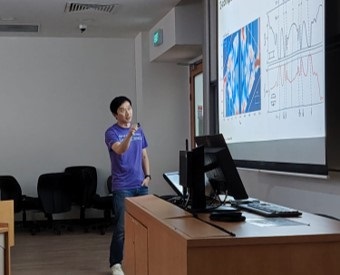
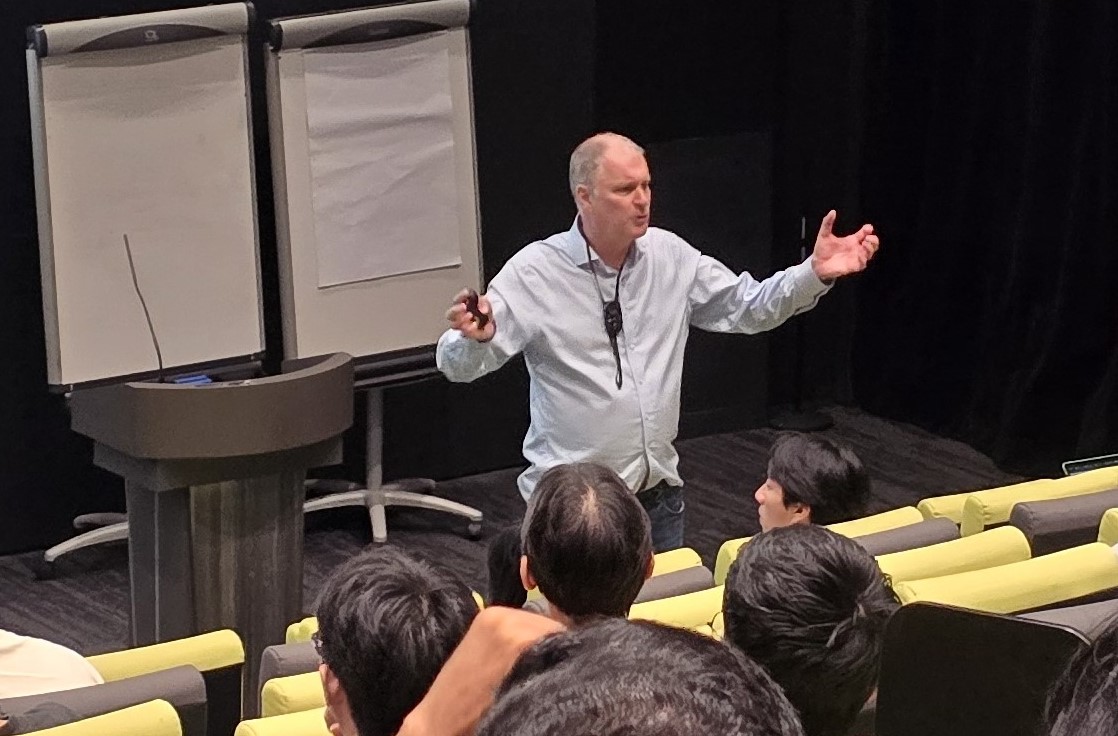 Prof Michael Wooldridge explores multi-agent systems and large language model agents with our colloquium audience.
Prof Wooldridge began by revisiting a “standard” perspective that has shaped much of the field: artificial intelligence can be viewed as the task of constructing agents that can act autonomously on our behalf once we communicate our preferences. This framing naturally leads to the core question behind agent design: what components are required, such as perception, reasoning, planning, and learning. And how these pieces should be combined to realise robust behaviour. He used this to motivate why “agent orchestration” matters: building capable agents is not only about individual modules, but also about how control and information flow are organised across the system.
 Prof Wooldridge outlines agent orchestration, explaining how perception, reasoning, and control integrate to enable robust autonomous AI behaviour.
A central theme of the talk was that multi-agent systems are not a new invention driven solely by LLMs, but a continuation of earlier research lines that explored cooperation, coordination, and distributed problem solving. By tracing several influential ideas that emerged across earlier decades, ranging from shared data structures for cooperative problem solving to models of interacting specialised entities, the talk highlighted how today’s agentic approaches echo older ambitions, while also introducing new practical constraints. In particular, when agents interact with one another and with an environment, questions of communication, coordination, and system-level reliability become unavoidable.
.jpg?sfvrsn=ecc08bae_1) Exploring the possibilities of Large language models reviving intelligent agents, enabling active assistants and highlighting challenges of multi-agent collaboration.
Exploring the possibilities of Large language models reviving intelligent agents, enabling active assistants and highlighting challenges of multi-agent collaboration.
Against this backdrop, Prof Wooldridge discussed why LLMs have revitalised the “dream” of intelligent agents. LLMs offer a flexible interface for understanding and generating natural language, and they have made it easier to prototype agents that can operate as active assistants rather than passive tools. At the same time, the talk emphasised that moving from single-agent behaviour to multi-agent collaboration raises additional issues: agents may depend on one another’s outputs, negotiate responsibilities, or operate in loosely coupled chains where errors and misunderstandings can propagate.
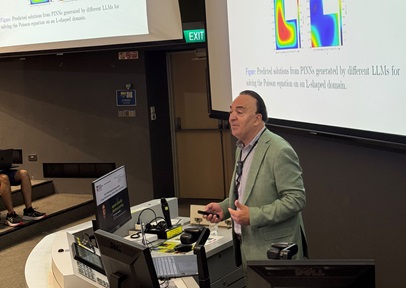
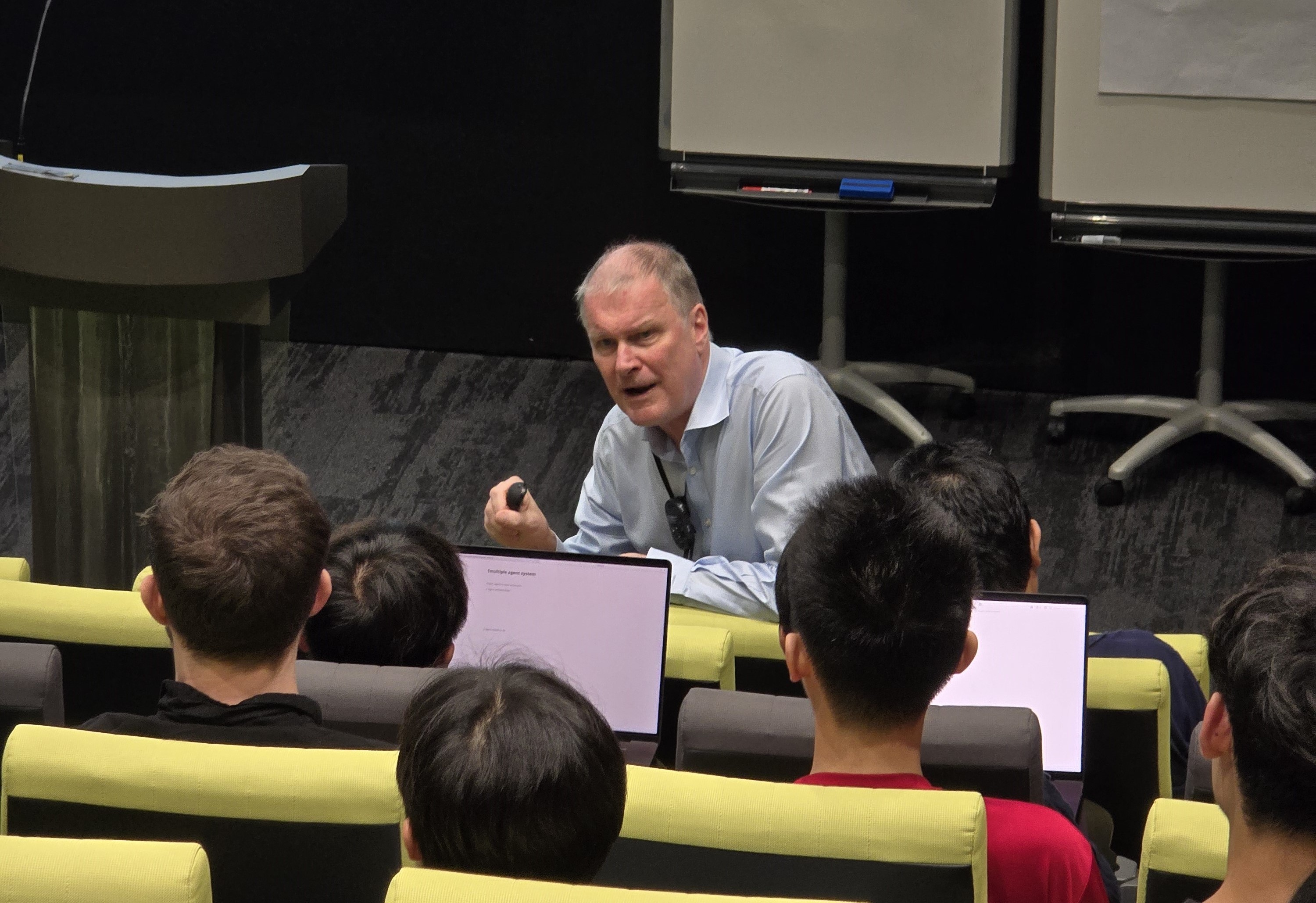
.jpg?sfvrsn=7d15a914_1) Audience Q&A explores practical foundations for trustworthy multi-agent AI, spanning security, accountability, coordination, and evolving agent goals over time.
Audience Q&A explores practical foundations for trustworthy multi-agent AI, spanning security, accountability, coordination, and evolving agent goals over time.
The session concluded with an audience Q&A that broadly focused on the practical foundations needed for trustworthy multi-agent AI. Discussion touched on the prospects for more secure and robust agent-to-agent communication, how trust and credibility might be established in systems where multiple agents coordinate over time, and how accountability could be supported when a multi-agent workflow fails and one needs to localise the point of failure. Participants also raised the longer-term challenge of how a multi-agent system might prioritise goals and skills over time as tasks and environments evolve, an area that remains open and actively explored.
.jpg?sfvrsn=692dd291_1)
This colloquium was held in conjunction with the IAS Frontiers Conference on Artificial Intelligence.
Written by: Huang Zihao | NTU College of Computing and Data Science Graduate Students' Club
“I enjoyed the simplicity of the presentation and clarity of ideas and problems presentation.” – Nguyen Pham Minh Quan (PhD student, CCDS)
"The Q&A session and addressing the explainability issue." - Hirashima Shunya (PhD student, SPMS)
"The professor was interactive and took time explaining our questions." - Kodakkal Ujwal Ramachandran (Masters student, CCDS)
Watch the recording here.