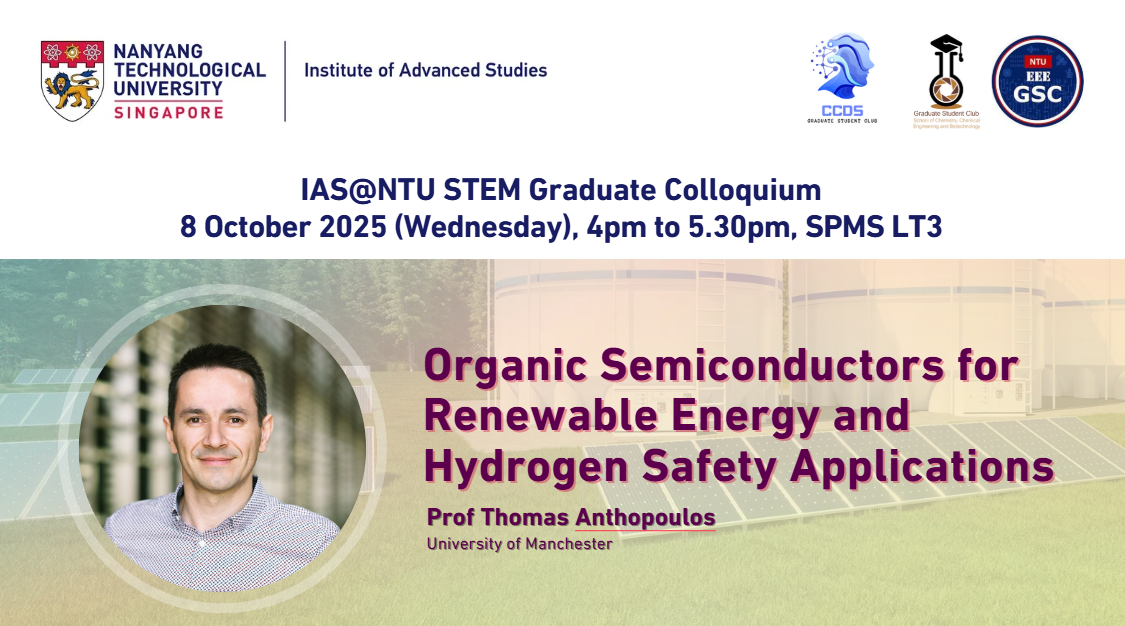
Organic Semiconductors for Renewable Energy and Hydrogen Safety Applications by Prof Thomas Anthopoulos
IAS@NTU STEM Graduate Colloquium Jointly Organised with the Graduate Students' Clubs
On 8 Oct 2025, Prof Thomas Anthopoulos (University of Manchester) delivered the IAS STEM Graduate Colloquium at SPMS LT3, titled "Organic Semiconductors for Renewable Energy and Hydrogen Safety Applications". In a fascinating talk that bridged the worlds of renewable energy and industrial safety, Prof Anthopoulos showcased how organic semiconductors can be engineered to both efficiently capture sunlight and detect hazardous gases with unprecedented speed and sensitivity. The presentation charted a route from fundamental molecular engineering to the development of practical, high-performance devices that address critical global challenges.
 Prof Anthopoulos sets the stage with a journey through the evolution of solar technologies, tracing breakthroughs that redefine renewable energy efficiency.
The Promise and Structure of Organic Photovoltaics (OPVs)
Prof Anthopoulos began by contextualising his work using the NREL chart, which tracks record solar cell efficiencies. He highlighted the rapid progress of "third-generation" technologies like perovskites and organic photovoltaics (OPVs). The primary focus was on OPVs, which he argued have the potential to be as "clean as hydropower" in terms of their lifecycle carbon emissions.
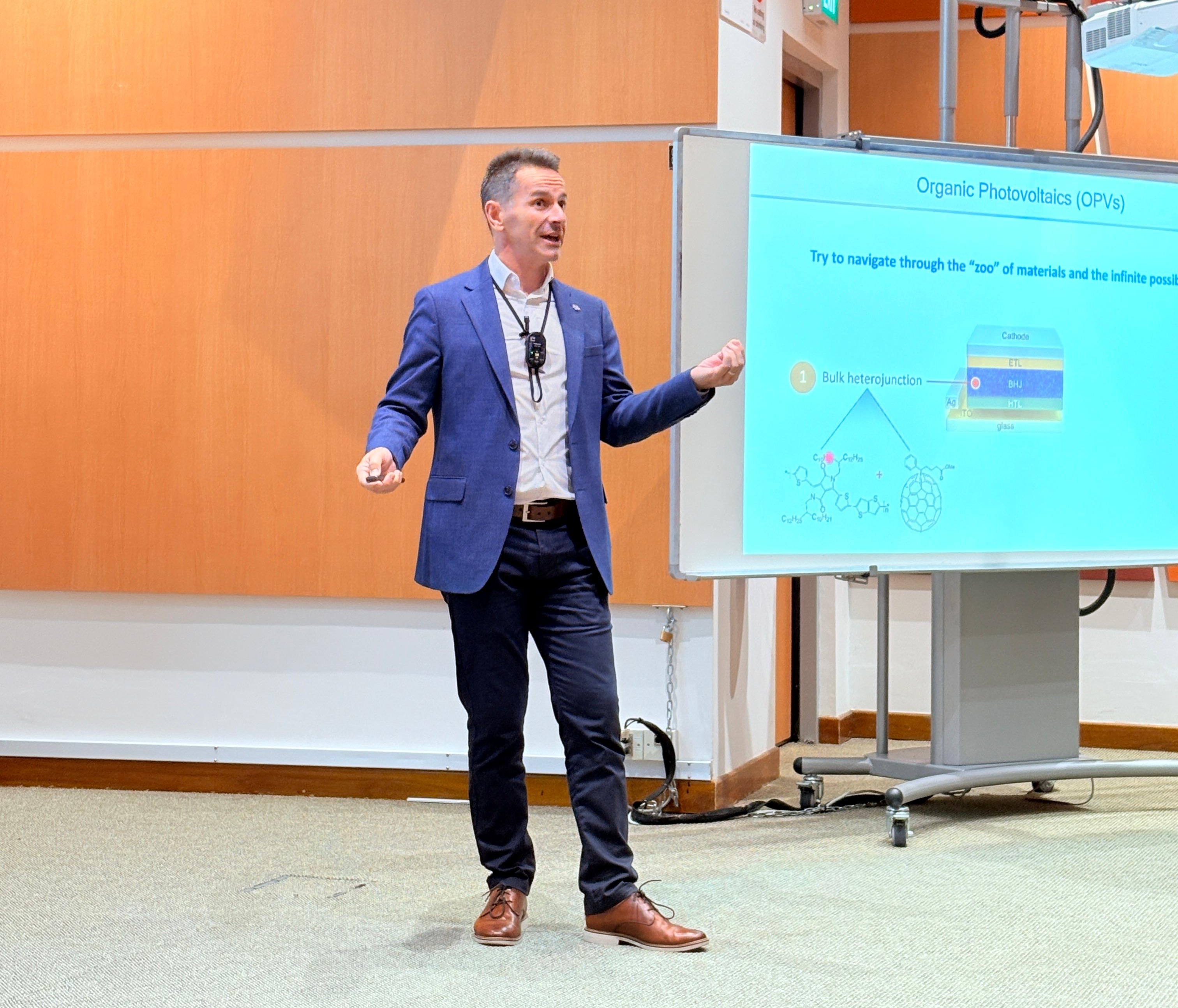
He then broke down the typical structure of an OPV device, explaining the function of each layer: the substrate, the transparent indium tin oxide (ITO) electrode, the charge transport layers (HTL and ETL), and the crucial light-absorbing active layer, known as a bulk heterojunction.
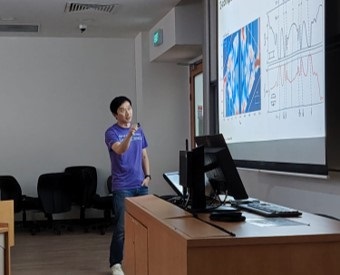
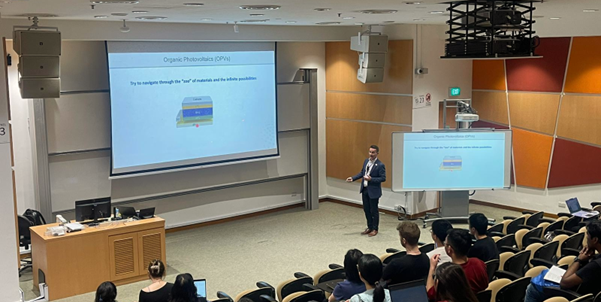 Prof Anthopoulos demonstrates the typical structure of an OPV device.
Molecular Engineering at the Interface: Self-Assembled Monolayers (SAMs)
The core of the OPV research presented revolved around perfecting the device's interfacial layers. The speaker introduced his group's key innovation: using ultra-thin, 1-nanometer self-assembled monolayers (SAMs) as highly effective hole transport layers. He described this as achieving "atomic precision" in device engineering, where the chemical structure of these single-molecule layers can be tuned to precisely control the electronic properties of the electrode.
A striking example demonstrated how simply annealing a device could alter the orientation of the SAM molecules on a gold electrode, changing its work function by a full eV and transforming it from an anode to a cathode. To prove the robustness of this interface control, the speaker showed how these SAMs were successfully used to build high-performance n-type and p-type organic transistors, which were then integrated into a functional logic circuit (a NOT gate).
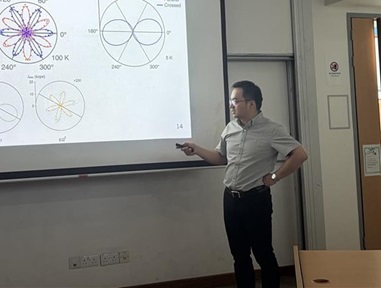
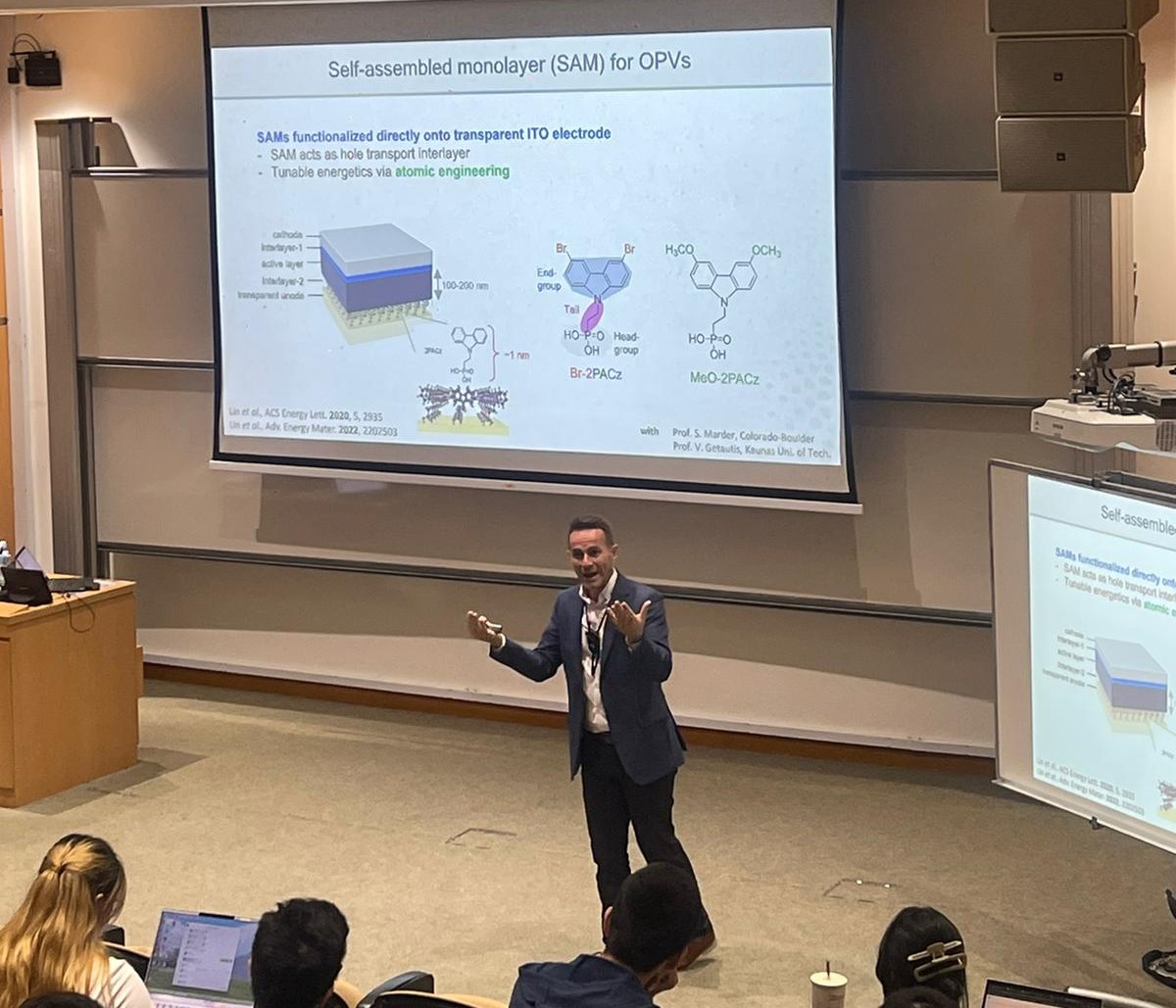 Prof Anthopoulos shares key metrics of SAM devices.
Synergistic Strategies for >20% Efficiency
Having established the power of SAMs, Prof Anthopoulos detailed the synergistic strategies used to push OPV efficiency to its limits. The next step involved incorporating a small amount of a molecular n-type dopant into the active layer, which was found to universally improve charge transport and device performance.
The final breakthrough came from combining all these innovations. By using an optimised SAM interlayer, molecular doping, a carefully chosen ternary blend for the active layer, and photonic engineering in the form of an anti-reflection coating, the group successfully fabricated OPV devices with certified efficiencies exceeding 20%.
A New Frontier: Organic Semiconductors for Hydrogen Safety
In the final section of the talk, Prof Anthopoulos pivoted to a new and exciting application: hydrogen sensing. He highlighted the significant safety challenges of the emerging hydrogen economy, noting that current technologies are often too slow, bulky, or power-hungry to manage the significant safety risks of hydrogen, which has a very wide flammability range and low ignition energy.
The group's innovative sensor is elegantly simple, consisting of an organic semiconductor on platinum electrodes. Its novel sensing mechanism is based on a reversible doping/de-doping cycle.
The sensor is extremely fast (sub-second response), highly sensitive (sub-PPM detection), and highly selective to hydrogen. The talk concluded with compelling video demonstrations of the sensor detecting hydrogen leaks, tracking hydrogen flows in a room in real-time, and outperforming commercial sensors, showcasing its vast potential for real-world safety applications.
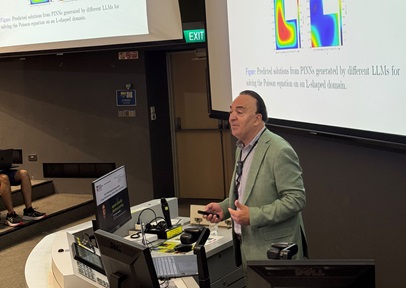
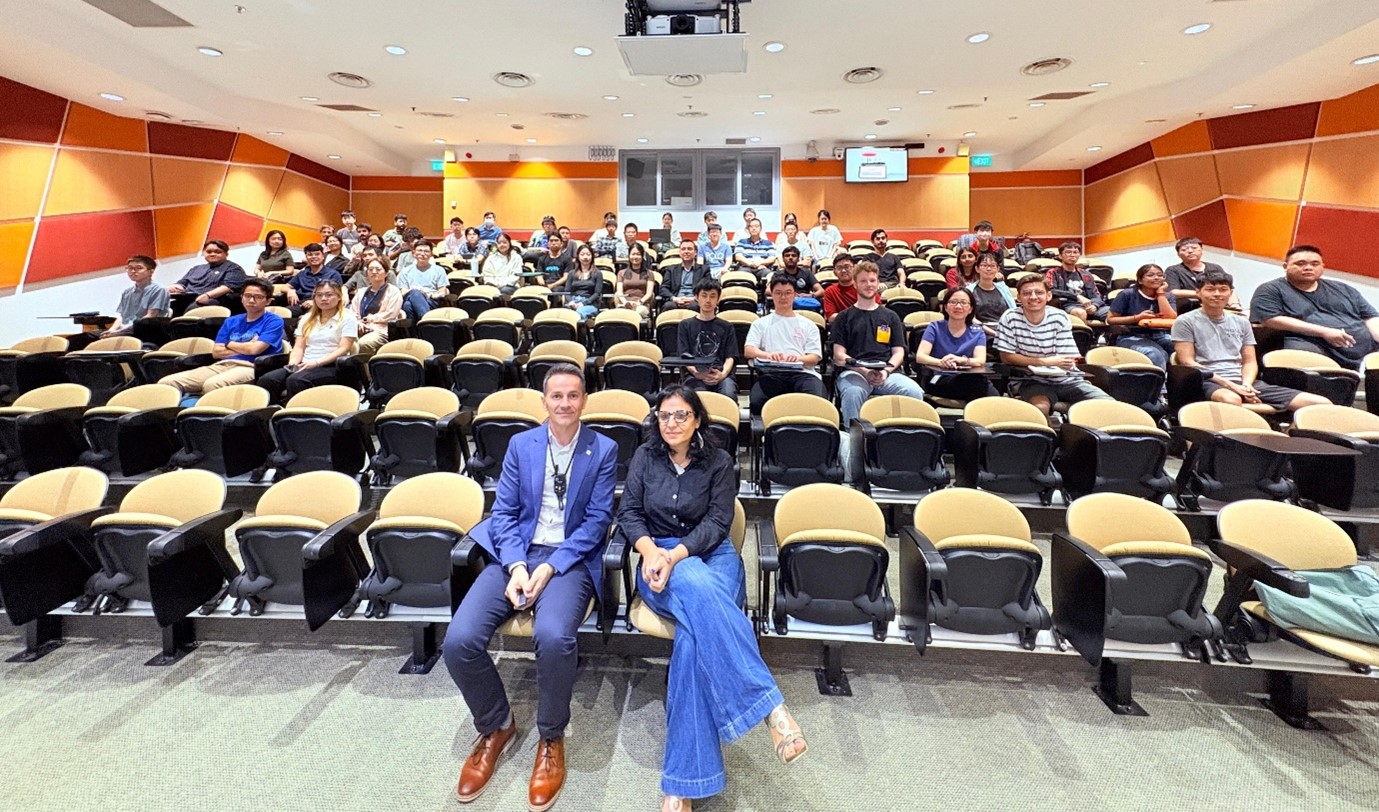
.jpg?sfvrsn=f8df66ab_1) Attendees exchange insightful questions and perspectives during the lively Q&A, reflecting the audience’s deep engagement with the research.
Attendees exchange insightful questions and perspectives during the lively Q&A, reflecting the audience’s deep engagement with the research.
Closing Reflections
The colloquium concluded with an engaging Q&A session, a testament to the audience's interest in the groundbreaking work presented. Prof Anthopoulos effectively bridged the gap between fundamental molecular science and real-world application, showing a clear pathway from engineering "atomic precision" interfaces in solar cells to developing a best-in-class safety sensor. The presentation was not just a summary of results but a story of scientific inquiry, highlighting how a deep understanding of one phenomenon (p-doping) could be repurposed to solve a completely different and critical challenge. Ultimately, the talk left the audience with a strong impression of the immense and sometimes unexpected potential of organic electronics to provide practical solutions to some of the most pressing technological challenges of our time.
Written by: Xiong Zhongshu | NTU School of Electrical and Electronic Engineering Graduate Students' Club
"The topic of hydrogen sensor is inspiring!" - Zhou Dingtao (PhD student, IGP-ERI@N)
"I enjoyed the application of novel organic hydrogen sensors, as it relates to my research." - Yoel Imanuel (PhD student, CCEB)
“A lot of unexpected discoveries by the speaker’s team made it all the more enjoyable for us to discover alongside” - Goh Shu Wen (Undergraduate student, MSE)
Watch the recording here.