Inventing the Future of Memory: A Conversation with Millennium Technology Prize Winner Prof Stuart Parkin
An Interview by Don Ong, Advantest | Organised by the Institute of Advanced Studies NTU
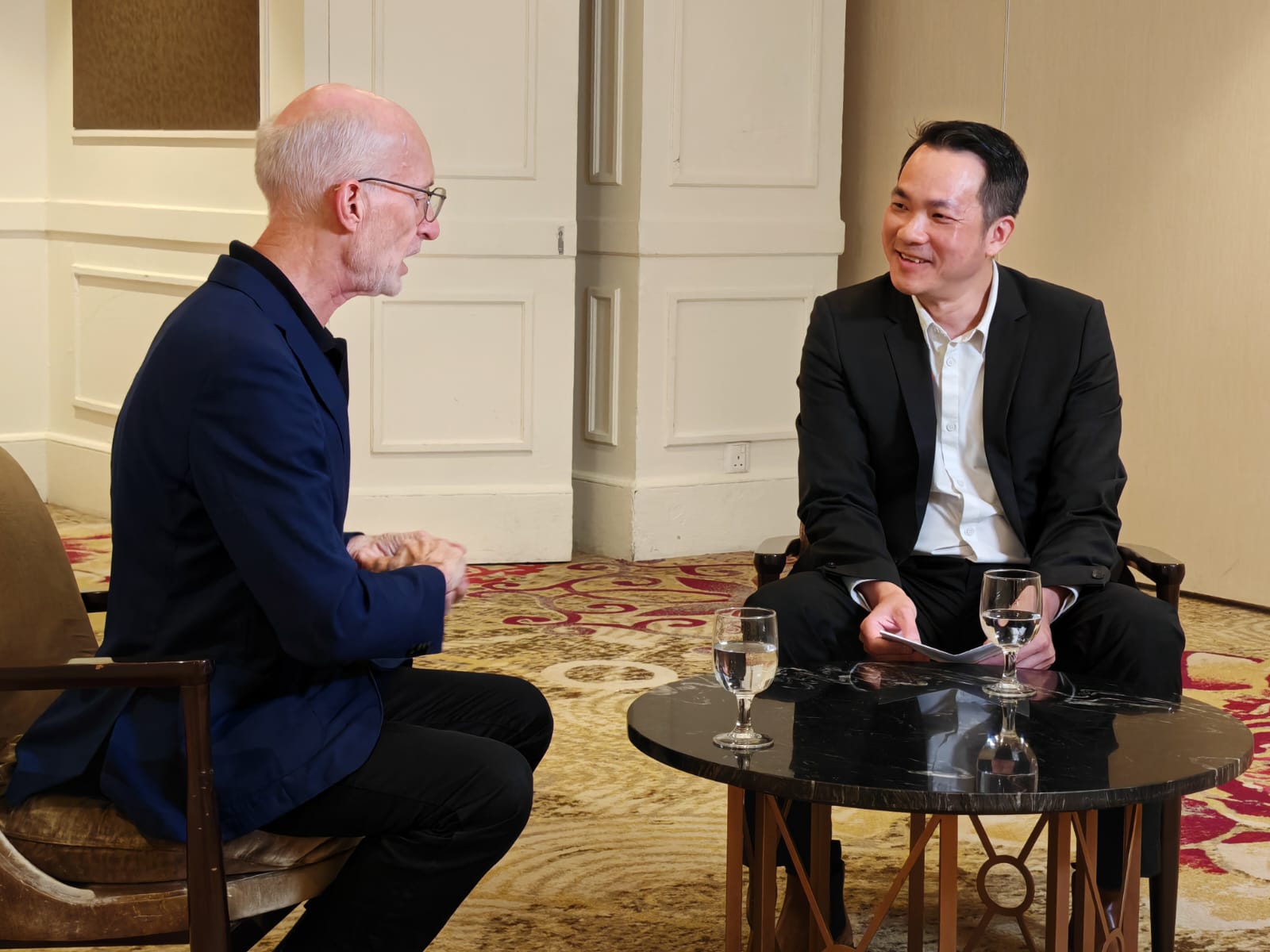
I had the rare privilege of sitting down with one of the most brilliant minds in modern science, a quiet force behind the technologies we now take for granted. His discoveries laid the groundwork for the computers we use every day, the digital cameras that capture our memories, and the generative AI systems that are reshaping the future.
What made this conversation even more meaningful was the shared connection Stuart and I have with Cambridge, where we both began our academic journeys. And fittingly, this interview was held for NTU, my alma mater, where Professor Parkin now serves as the IAS Lee Kong Chian Distinguished Professor, helping to shape the next generation of scientists and innovators.
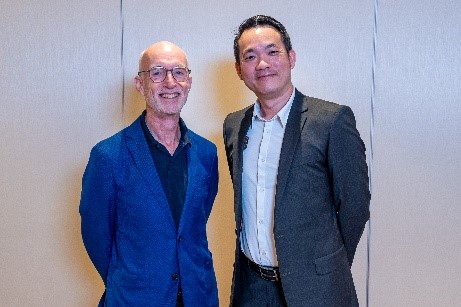
I came prepared to dive into the wonders of spintronics, a term that still sends shivers down the spine of many engineers. I expected hard science from a towering figure in modern physics. What I received was far more human. Professor Stuart Parkin, quietly one of the most influential scientists of our time, began not with formulas, but with childhood cactus gardens, a lesson learned while jumping the coffee queue, and a habit of treating the word impossible as an open invitation. This is Parkin’s story as seen through my interviewer’s lens and the unexpected life lessons tucked inside the physics that powers our digital world.
1. A Boy and His Cactus
Stuart Parkin’s first laboratory wasn’t a high-tech cleanroom. It was his parents’ backyard. As a child, he spent hours collecting cacti and succulents, captivated by their strange and beautiful forms. He wondered why some grew in spirals, others in triangles, and what hidden rules shaped the world around them. That simple question, how is matter put together, became the seed of a lifelong scientific journey.
The lesson:
Great discoveries often begin not with complex theories, but with quiet curiosity. You don’t need a lab coat or a degree to start asking meaningful questions. Sometimes, the spark that leads to world-changing innovation is simply a child, a cactus, and the courage to wonder why.
2. One Sentence That Changed a Career
When Stuart Parkin arrived at Cambridge, he had every intention of studying chemistry. But during an early conversation, a tutor quietly pulled him aside and said, “If you really want to understand the world, try physics.” That simple, honest suggestion landed with such clarity that Stuart changed his major the very next day. It was a small moment but one that shaped the entire trajectory of his career.
The lesson:
Sometimes, it only takes one sentence to change a life. A well-timed word of guidance, especially from someone who sees your potential, can open doors you didn’t even know existed. Stuart’s story reminds us to stay open to unexpected advice and to never underestimate the quiet power of someone who dares to nudge us in a new direction.
3. IBM’s Curveball
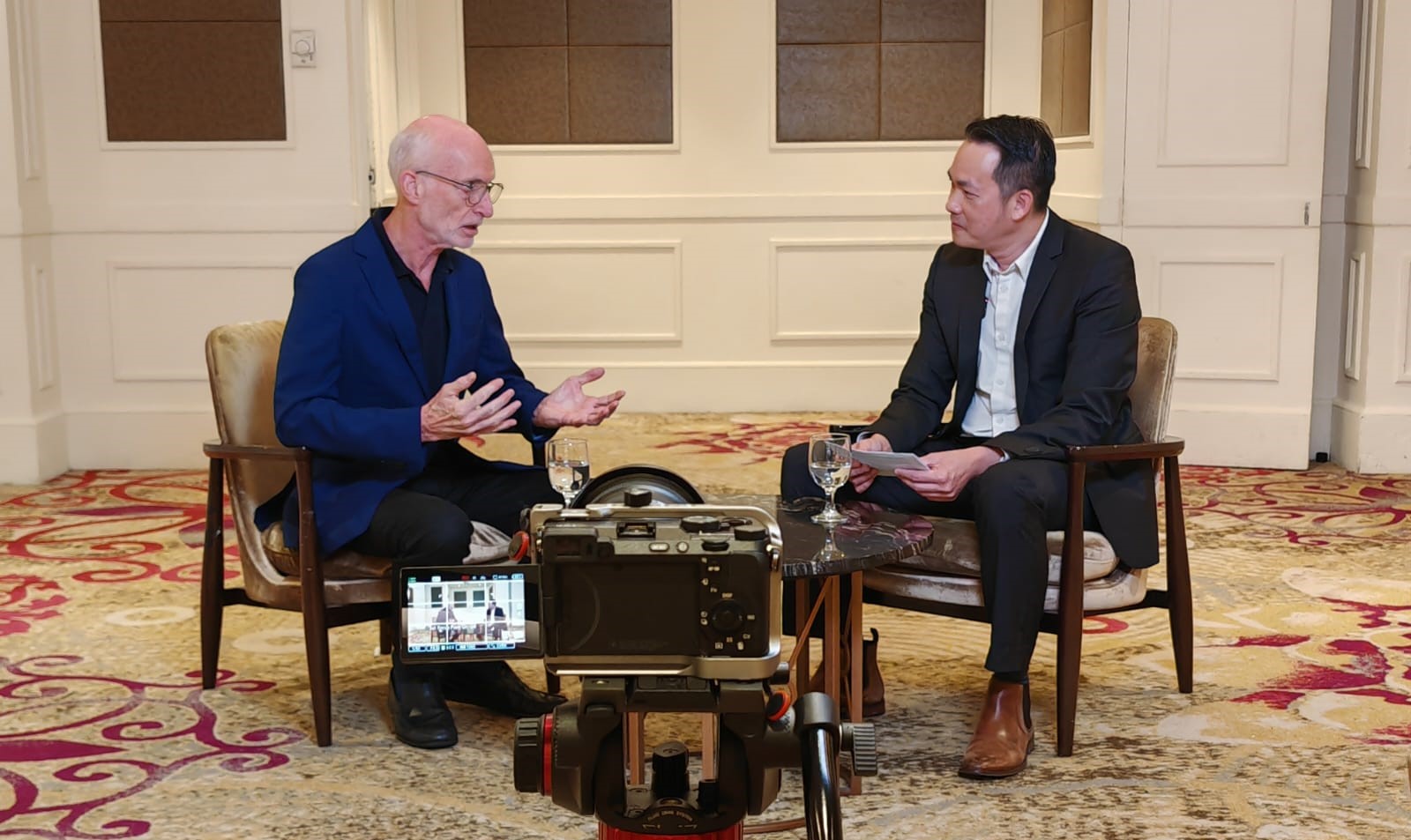
After a post-doc in Paris studying exotic superconductors, Stuart Parkin arrived at IBM in California, ready to dive deeper into his research. But almost immediately, the project was scrapped. IBM had a more pressing need. Magnetic storage, the technology behind their disk drives, was under threat and they needed fresh ideas fast.
As luck, or preparation, would have it, Stuart’s PhD had been on magnetic materials. Rather than walk away, he embraced the unexpected challenge. On a quiet hilltop, he set up a small thin-film lab and a few years later, invented the spin-valve read head. That tiny device became the heart of modern hard drives and still powers how we store and access information today.
The lesson:
Opportunity doesn’t always knock politely. Sometimes, it crashes through the door dressed as failure. Stuart’s cancelled project could’ve been a career setback. Instead, by staying open and adapting to what the moment needed, he found his way to a discovery that shaped the digital age. His story reminds us that setbacks often hide our biggest breakthroughs and that being ready to pivot can turn a curveball into a career-defining swing.
4. The Next Big Leap: Racetrack Memory
Even after revolutionizing data storage once, Stuart Parkin wasn’t ready to stop. For the past 15 years, he’s been chasing his next big idea: racetrack memory.
Imagine your data not spread out flat like cars in a parking lot but stacked vertically like apartments in a skyscraper. Tiny magnetic “tracks” race up and down those towers, moving information faster and more efficiently than ever before. The promise?
- Speed beyond today’s flash memory
- Storage density greater than current hard drives
- A dramatic reduction in energy use for data centres
It’s not just theory. Stuart believes a small commercial racetrack chip could be ready within three to five years. And if the right investments follow, hard drives as we know them might be a thing of the past within a decade.
The lesson:
Real innovation doesn’t rest on past success; it keeps pushing forward. Even after a career-defining breakthrough, Stuart chose to start again, chasing a new vision with patience, grit, and belief. His journey reminds us that progress isn’t a destination but a mindset. The future doesn’t arrive fully formed, it’s built, one bold idea at a time, by those willing to dream beyond what already works.
5. How He Thinks (and How We Can Too)
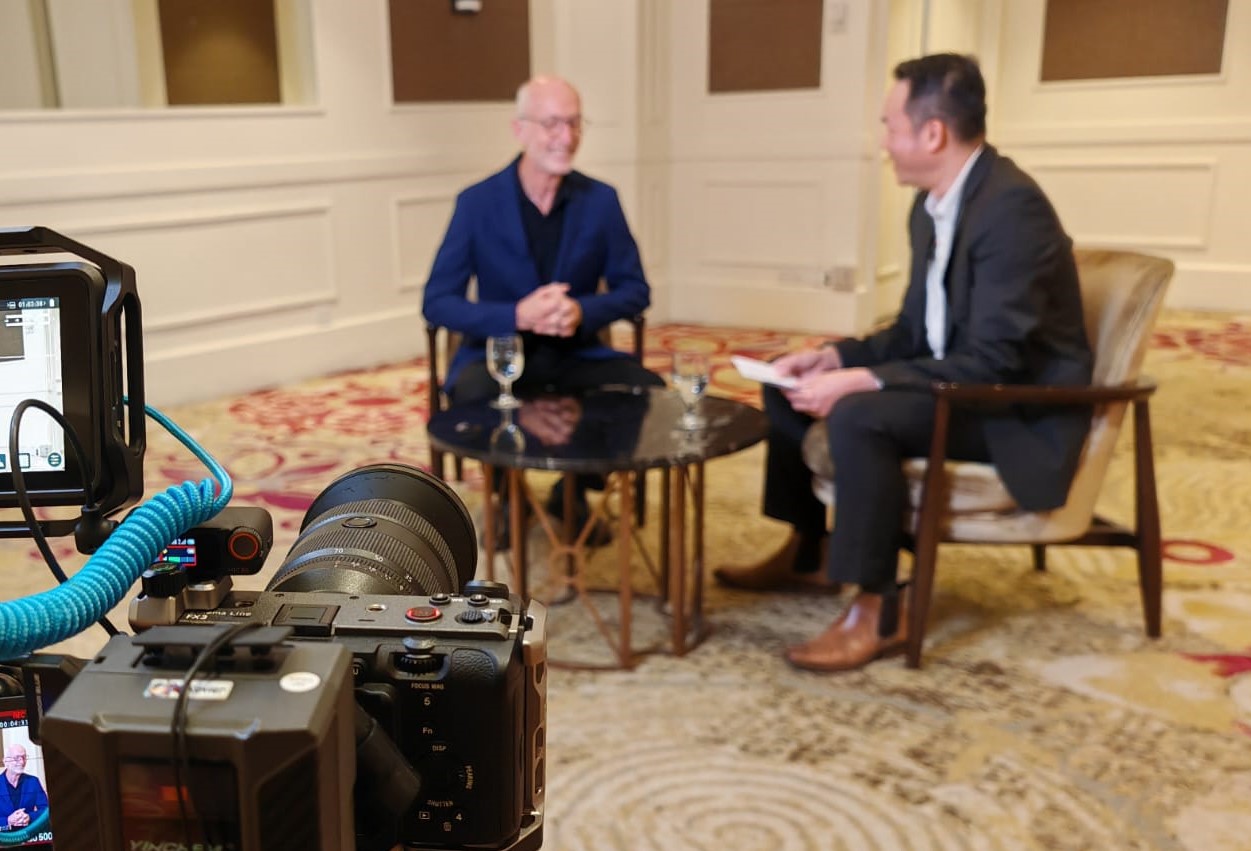
As our conversation unfolded, I found myself jotting down insights, little phrases and habits that revealed how Stuart Parkin approaches the world. They weren’t just technical; they were deeply human. Beneath the scientific brilliance was a way of thinking we can all learn from.
First, he told me what he would say to his younger self: “Do the impossible.”
Not because it sounds heroic, but because impossible goals generate the kind of energy and resilience needed to endure long stretches of trial and failure. Safe goals don’t get you far.
Second, he protects his attention like a rare resource.
He holds only one or two big ideas in his head at any time and lets everything else go. For him, focus isn’t just a productivity hack. It’s the fuel behind his most important breakthroughs.
Third, he believes deeply in collaboration.
His favourite moments happen in small group “huddles” with students, crowded around a whiteboard, voices overlapping, ideas clashing and connecting. Breakthroughs, he says, are rarely solo acts. They’re built in dialogue.
Fourth, there’s kindness.
At IBM, early in his career, he once cut a coffee line. A colleague leaned in and gently said, “It takes time to be polite.” That quiet correction stayed with him. In a world that often celebrates speed and genius, he never forgot that character leaves the deeper legacy.
And finally, there’s joy.
You can hear it in his voice when he talks about his experiments, a quiet, steady excitement that runs deeper than quick wins or viral moments. For Stuart, science isn’t just a job; it’s a lifelong thrill. “There’s nothing better,” he told me, “than adding a brick to human knowledge.”
The lesson:
Behind the inventions and accolades is a mindset we can all borrow from. Stuart Parkin’s way of thinking, bold, focused, collaborative, humble, and joyful, isn’t just a recipe for scientific discovery. It’s a way to live and work with purpose. He reminds us that the future isn’t built by brilliance alone. It’s shaped by the values we hold, the people we share ideas with, and the courage to chase something that doesn’t yet exist.
6. People Matter
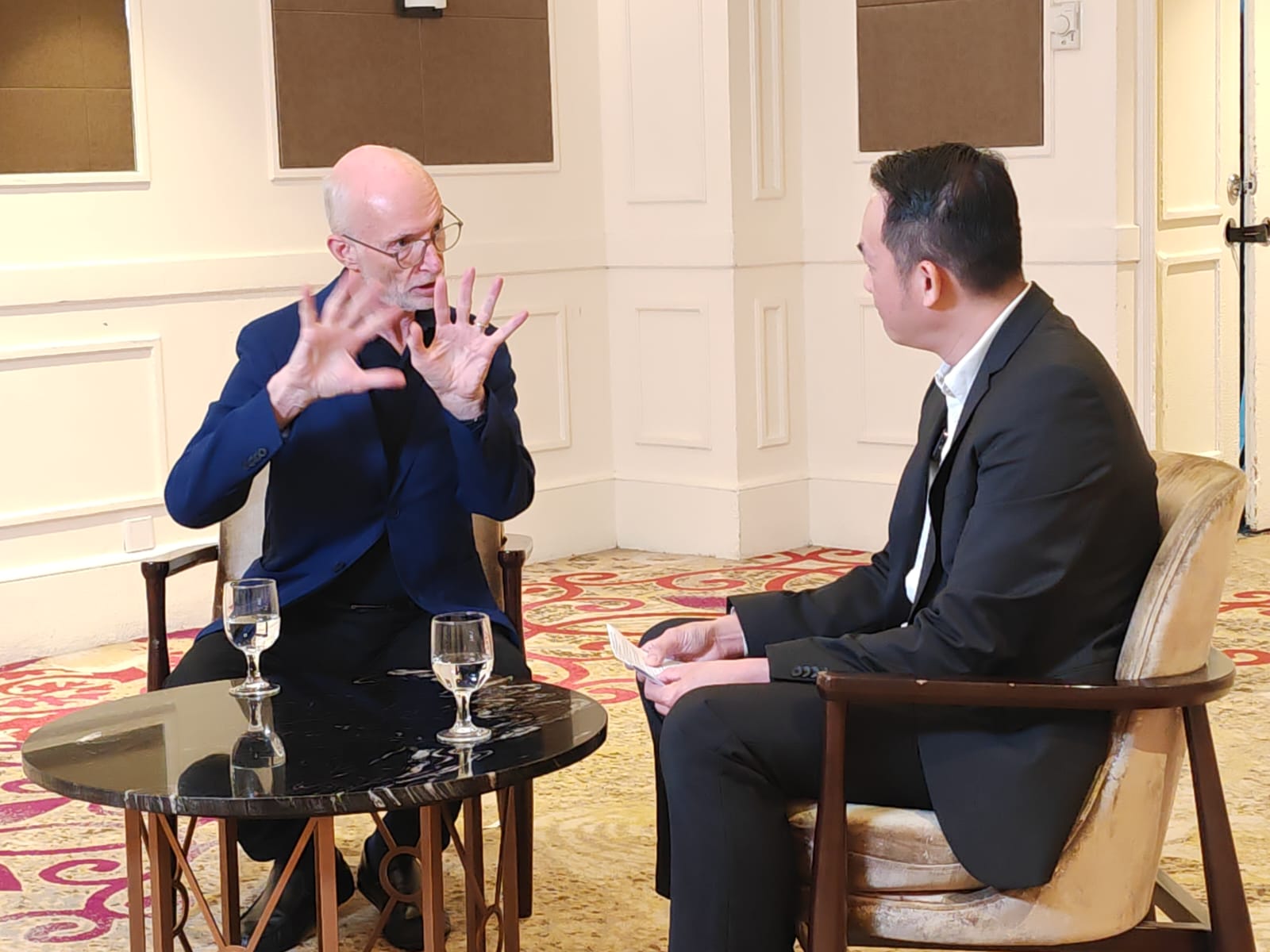
Stuart Parkin knows that racetrack memory, the revolutionary technology he’s spent over a decade developing, won’t succeed on physics alone. It’s not just about equations or lab experiments. To become real, it needs a team: bold investors willing to take a chance, young minds with fresh perspectives, and skilled hands to push the work forward.
As a Distinguished Professor at NTU, Stuart is actively building that bridge. He’s mentoring the next generation of talent and creating pathways for them to join his team at the Max Planck Institute in Germany. For him, innovation isn’t a solo act, it’s a relay race, where seasoned scientists pass the baton to emerging ones, and progress is carried forward through shared effort.
The lesson:
Behind every breakthrough is a community. Even the most groundbreaking ideas need people. People with vision, courage, and curiosity to take the next step. Stuart’s approach reminds us that lasting progress comes not from individual brilliance alone, but from the connections we build and the opportunities we create for others. The future belongs to those who invest not just in ideas, but in each other.
7. Doubt and Data
When I asked Stuart Parkin if he ever felt like giving up on racetrack memory after years of research, his answer was clear:
“No, but I’m ready to pivot the minute data prove me wrong.”
It wasn’t a defensive reply. It was calm, thoughtful, and revealing. He believes deeply in his vision, but not blindly. For Stuart, belief is important, but evidence is everything. He trusts the science, even if it contradicts his own hopes. That ability to hold strong conviction while remaining open to being wrong might just be his most remarkable trait.
The lesson:
Real wisdom isn’t about always being right, it’s about knowing when to let go. Stuart’s approach shows us that the strongest leaders don’t cling to their ideas at all costs. They listen. They adapt. They grow. In a world that often confuses confidence with certainty, he reminds us that the most powerful stance is to believe boldly and to be ready to change when the data tells you it’s time. It’s this balance of confidence and humility that keeps innovation honest and moving forward.
8. Walking Out of the Studio
As I stopped the recording and packed up my notes, I noticed something unexpected: I felt lighter and braver. Not because I had just interviewed one of the most brilliant minds in modern science, but because Stuart Parkin’s story didn’t feel distant or unreachable.
From a childhood spent marvelling at cactus spirals, to a career that spanned Cambridge, IBM, and the cutting edge of memory innovation, his path was marked not just by intelligence, but by wonder, courage, and an unshakable sense of humility. Whether it was listening to a quiet piece of advice, pivoting after a cancelled project, or staying grounded in kindness, Stuart’s way of moving through the world left a deep impression.
The lesson:
Extraordinary innovation doesn’t always begin with a grand plan. It often starts with a question, a nudge, or a spark of curiosity. What carries it forward is the courage to follow where it leads, the discipline to stay focused, and the grace to treat others well along the way. Stuart Parkin’s journey reminds us that reshaping the future isn’t just about what you build, it’s also about how you build it. And sometimes, the most powerful tools we have aren’t technical at all, they’re human.
Closing Thoughts: What Stuart Parkin Teaches Us About Building the Future
Look closely, because the next big idea might be hiding in something as ordinary as a cactus.
Listen carefully, because one honest sentence can reroute a lifetime.
And when the plan falls apart? Take a breath. That closed door might just be a shortcut in disguise.
Set goals that stretch you. Dream just far enough that it feels a little ridiculous.
Keep the team small, the conversation real, and the coffee line polite.
And above all, do the work with joy, because energy like that is contagious.
If racetrack memory does end up powering our devices by 2035, we’ll owe some of that progress to a boy who once wondered why plants spiral and never stopped asking why.
The rest? That’s on us.
So here’s the real question: What “impossible” dream will you chase next?
Watch the full interview here.