From Surgery to Science: The Unstoppable Curiosity of Nobel Laureate Prof Aaron Ciechanover
An Interview by Charmaine Lim (IAS Representative), Bah Yirou and Damien Chua (LKC School of Medicine) | Organised by the Institute of Advanced Studies NTU
“I never listened to any noise around me. I listened only to my gut feeling and did what I should have,” Prof Aaron Ciechanover says of his career history.
From army physician to Nobel Prize winning biologist for his discovery of how cells use ubiquitin to break down and recycle proteins, he chose never to limit himself to a single path, instead focusing on what inspired and excited him the most.
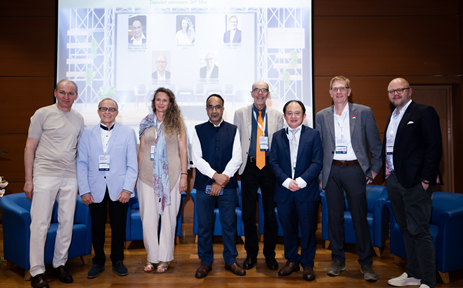
Prof Aaron Ciechanover (Nobel Prize in Chemistry 2004), an IAS Lee Kong Chian Distinguished Professor, was in Singapore at the end of July 2025 as a guest speaker at Nanyang Technological University’s (NTU) Institute of Advanced Studies (IAS) 20th Anniversary Symposium. The following day, he sat down with NTU representative Charmaine Lim and Lee Kong Chian School of Medicine PhD students Bah Yirou and Damien Chua to discuss his career, medicine and advice he has for rising scientists.
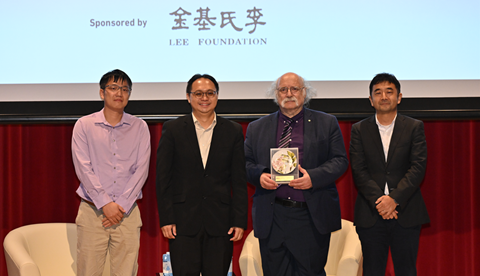
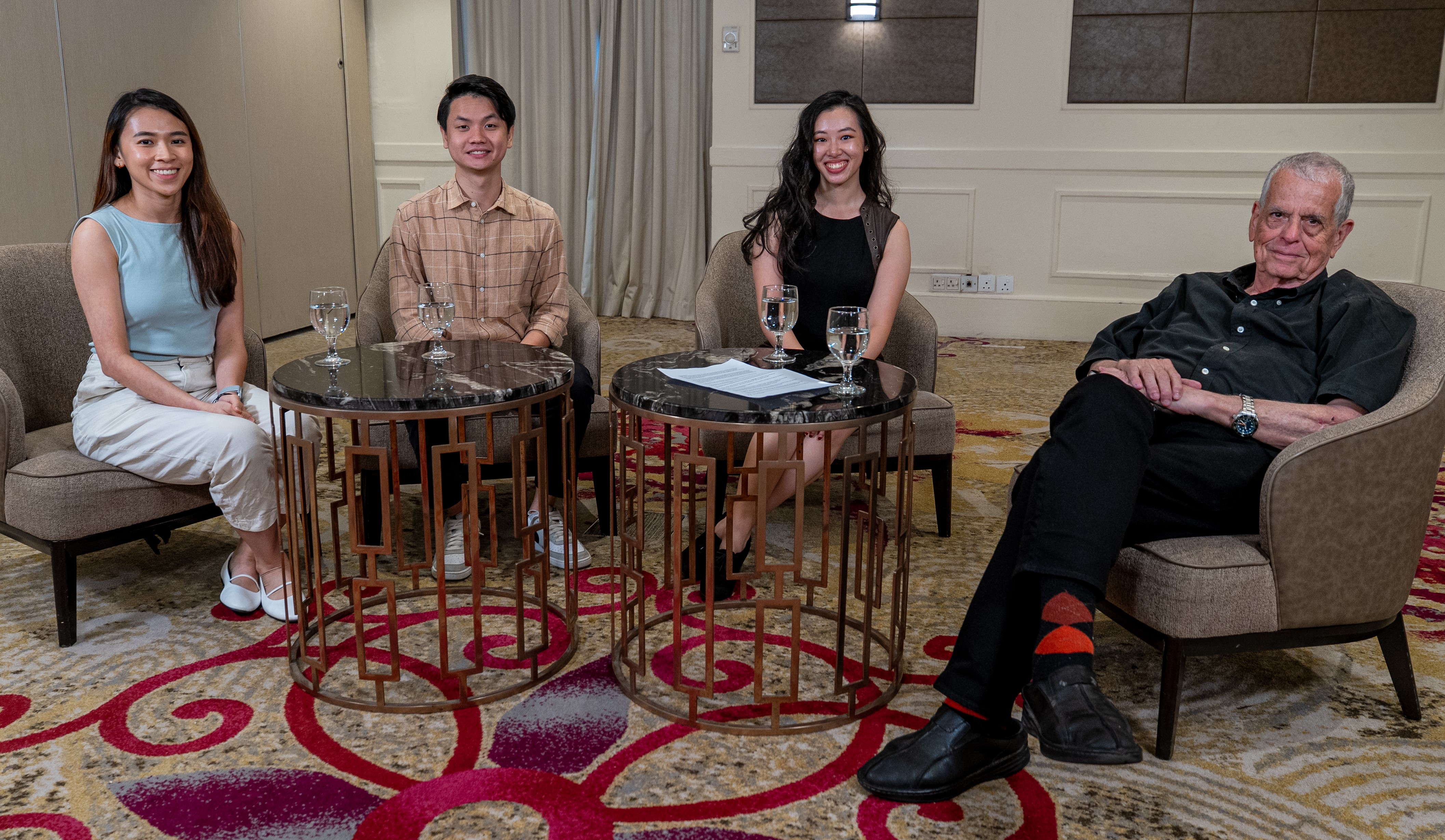 [From left]: Bah Yirou and Damien Chua (PhD students, LKC School of Medicine), Charmaine Lim (IAS representative), and Prof Aaron Ciechanover.
He says: “I abandoned surgery, I abandoned medicine. The only person I consulted was my wife when I said ‘Listen, next month, we’re not going to have a salary. On the contrary, we’re going to take all our savings and waste it on tuition fees.’ That’s it. That’s what I wanted.”
Such a career pivot required him to uproot his wife and son from their home in Israel to spend time in Boston, Massachusetts while he attended the Whitehead Institute at the Massachusetts Institute of Technology (MIT). To make the transition easier, Prof Ciechanover ensured that his wife Menucha, a senior physician in her own right, was able to find a job. Eventually, she attended the Harvard School of Public Health for her Master’s in Public Health.
“We always made sure that she had a place and that the family was stable. But it’s (the move) a decision. I didn’t feel good, so why should I torture myself going to see patients that I hate?” Prof Ciechanover says. He adds with a chuckle, “In retrospect, I think she saw the wisdom in it after I got the Nobel.”
Born in Haifa, Israel to an English teacher mother and law office worker father, Prof Ciechanover was always encouraged to explore his sense of curiosity. Though his family lived humbly with little food, his parents ensured that he would never lack knowledge.
“The walls were covered with books and I went to the library. They registered me [for a library card] and I read all kinds of books voraciously. I could only take one book a day, so they registered my cousin (for a library card) and he took books for me,” the now 77-year-old professor says. From Jules Verne’s Around The World In 80 Days to encyclopedias, he read anything that interested him. Even now, the professor remains an avid reader of biographies of figures like Winston Churchill, Steve Jobs, Mao Zedong and others who have left an impact on the world. This love of literature functions not only as a hobby, but also as a means through which he satisfies his curiosity and understands other people.
Prof Ciechanover, now 77, explains, “I think that curiosity, passion and perseverance are the key to success in anything you’re doing. Let it be medicine, ballet, playing music or anything. If you’re not passionate about what you’re doing, you come to work at 8AM and look at your watch the whole day.”
Food, music, travel and a solid relationship with his family are other ways he seeks to understand more of the world. Travelling, though mostly for various speaking engagements and lectures, has also led him back to his parents’ homeland of Poland. The couple immigrated in the 1920s when whispers of anti-Semitic views began circulating. Fearful due to their Jewish heritage, they fled to Israel and proceeded to build a new life, later welcoming their son into the world.
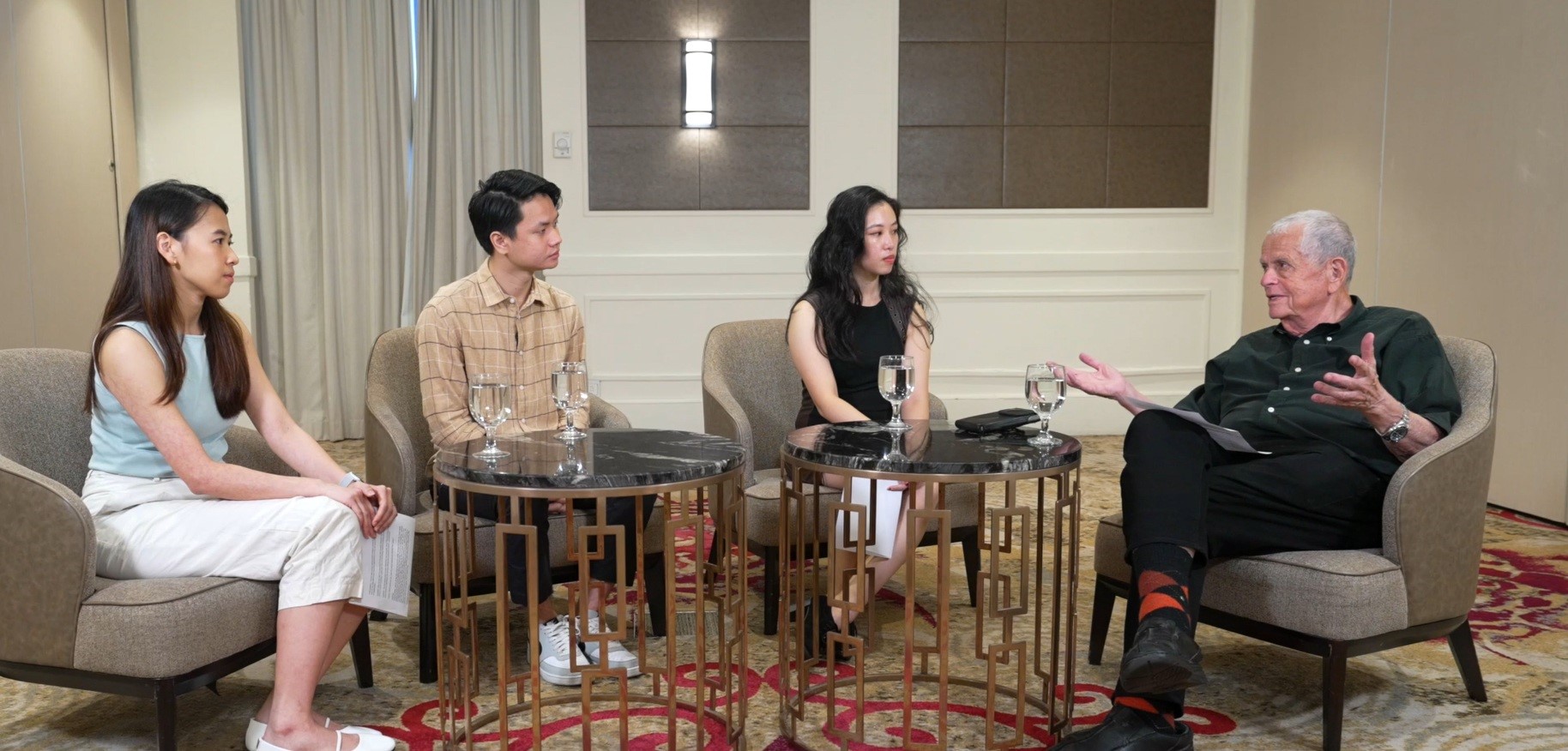
Curiosity, passion and perseverance drive Nobel Laureate Prof Aaron Ciechanover, whose life bridges science, family, music and history.
As a child, Prof Ciechanover learned English from his mother and Hebrew from his father, becoming fluent in both at an early age. Despite his father speaking six other languages as well, the only use of Polish in the house occurred when the couple did not want their son to understand them. “It was a bit sensitive in the beginning because Poland was a very anti-Semitic country during World War II,” Prof Ciechanover says of his first visit to the country, “3.5 million Jews in Poland were exterminated, so it was a little bit difficult, knowing the history. I never suffered and my parents didn’t either because they came to Israel before the Holocaust, but somehow the Polish identify me with their history.”
Although this painful history exists and was prevalent during his early childhood, it has not affected how the biologist views his work. “I think the basic ethical principle in science is that in medicine, people are people,” he says. The professor further explains that people “shouldn’t be discriminated against by religion, gender, skin colour or anything. If they suffer, as a physician, you make an oath to treat them equally.”
It is this philosophy that has also led him to make the discovery of the role ubiquitin plays in the degradation and recycling of proteins in the human body. He sought to understand why proteins within the human body were not affected by heat in the same way other proteins were, like how meat or cheese begins to rot if left at room temperature.
“We have a mechanism that degrades, destroys and replaces them (proteins) as we speak, which is essential because if the damaged ones are not destroyed, diseases like cancer and Alzheimer’s can form. Ubiquitin is the quality control system that removes damaged, faulty proteins, replacing them all the time with new ones,” Prof Ciechanover explains easily.
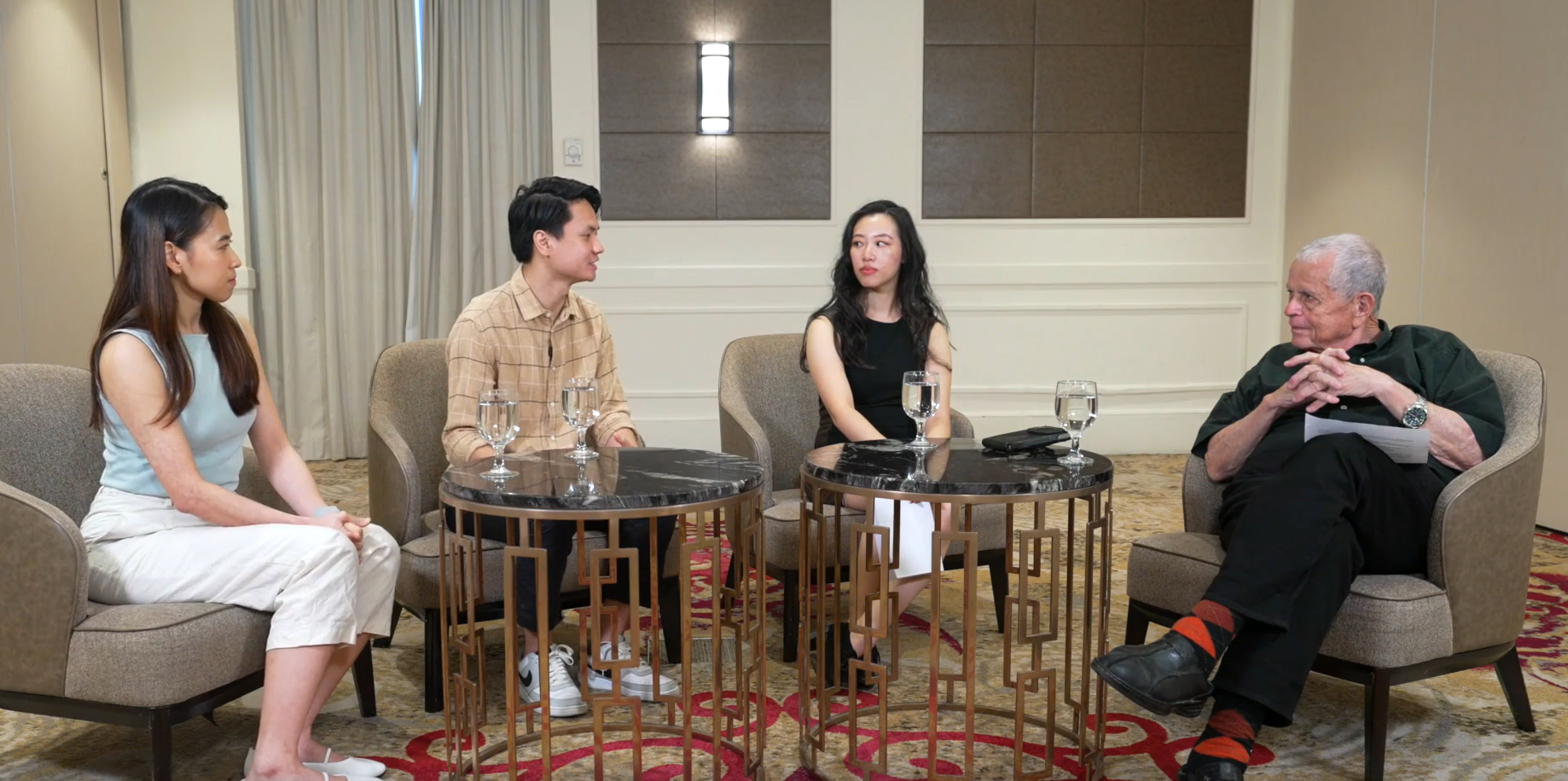 PhD student Damien Chua (2nd from left) engages Prof Aaron Ciechanover with probing questions on risk, curiosity and discovery.
His pursuit of science and knowledge is ultimately about satisfying his own curiosity rather than striving for accolades or major scientific discoveries. Though he would go on to win the Nobel Prize in Chemistry in 2004 for his work with ubiquitin, such an achievement was never an aspiration for him. Prof Ciechanover says, “To think about the Nobel Prize, you must be nuts. We didn’t even think about it when we started because to get a Nobel Prize, you have to do something that is completely novel.”
Having a willingness to try something new and challenging is what Prof Ciechanover believes is another key to success. “If you’re an A student all the way, it means you didn’t encounter any difficulties, so maybe it was too easy. When I went to do my PhD, I was interviewed by several potential mentors who told me exactly what they would be working on and I thought that was boring because they already knew everything,” he says.
It was Prof Avram Hershko, his medical school and graduate school advisor, who first presented the idea of studying protein degradation. "He told me that he didn’t even know if a system that degrades proteins existed, but it didn’t matter, we had to find out. It was a hypothesis, so already we took a risk. We didn’t know what we were going to work on, and then gradually, like an onion, you peel back the layers,” Prof Ciechanover adds. Years of research eventually led to the discovery of how ubiquitin played a role in that process, resulting in the Nobel Prize in 2004.
Such a view has certainly benefited him in the long run, as he has begun cancer-related research more recently.
He elaborates, “We started working on this not because we wanted to cure the disease, but because we’re asking basic questions and that led us to this. I think that if you’re a young student looking to cure cancer, you’re on the way to failure because you have to understand the disease. If you cannot understand the normal process, how can you understand abnormal processes?”
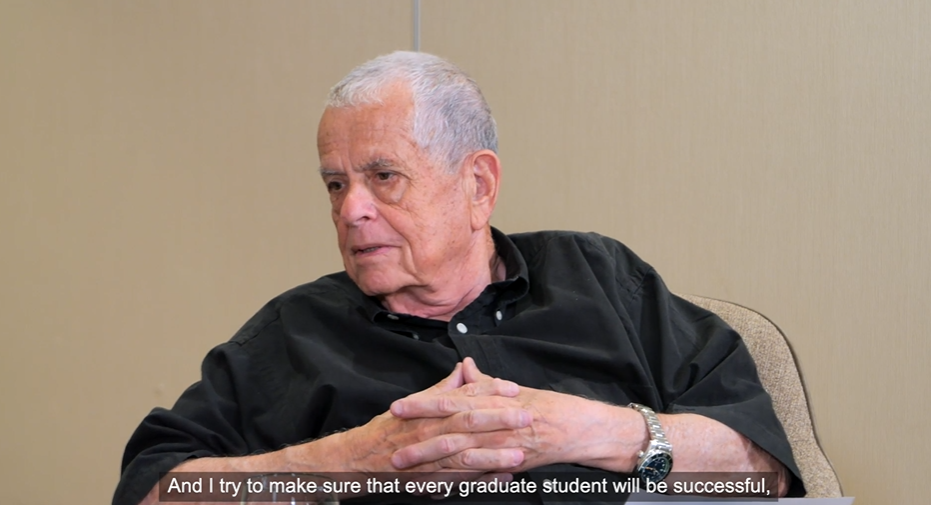 Prof Aaron Ciechanover urges students to embrace global experiences, ensuring they return enriched and ready for success.
In his final piece of advice to students and young scientists, Prof Ciechanover emphasises the importance of diversifying one’s experiences. “Diversifying means going abroad,” he says, “If you do your PhD in Singapore, that’s perfect. Go to Europe or the US for your post-doctorate pursuits. Be in another culture, speak a different language, see how other people think. Leave and then come back.”
“Singapore is very small and the people are much the same. It is a very uniform place. I come from a tiny country too, so I always thought that I should go to a different place and diversify my network, and that was extremely helpful,” he adds. Rather than approaching it as a checklist, he speaks to the value of viewing these experiences as a form of personal and professional enrichment. This also includes carefully choosing mentors who can provide the right kind of push and encouragement.
Jokingly, he chuckles that “I don’t know if I’m an inspiring person, but when talking about my own experiences, I can only tell people that I always chose to surround myself with good people no matter my career. I picked teachers and mentors who promised me a hard life. I went to MIT to be under one of the most famous biologists to ever walk the face of the Earth. I always make sure I’m in the right environment with the right people because they’re inspiring.”
Lastly, he tacks on a final piece of advice: “The culture in the East is a little bit strange to me. People are too nice, they’re very obedient and do not challenge authority. I think you should be a little more chaotic, rude and daring. Singapore has such good universities but there is a glass ceiling. Singapore is a bit too well organised and the people are not too daring. It’s a very good place, but I think that if you bring a new culture with you, you will benefit the country.”
Written by: Charmaine Lim, IAS Representative
Watch the full interview here.