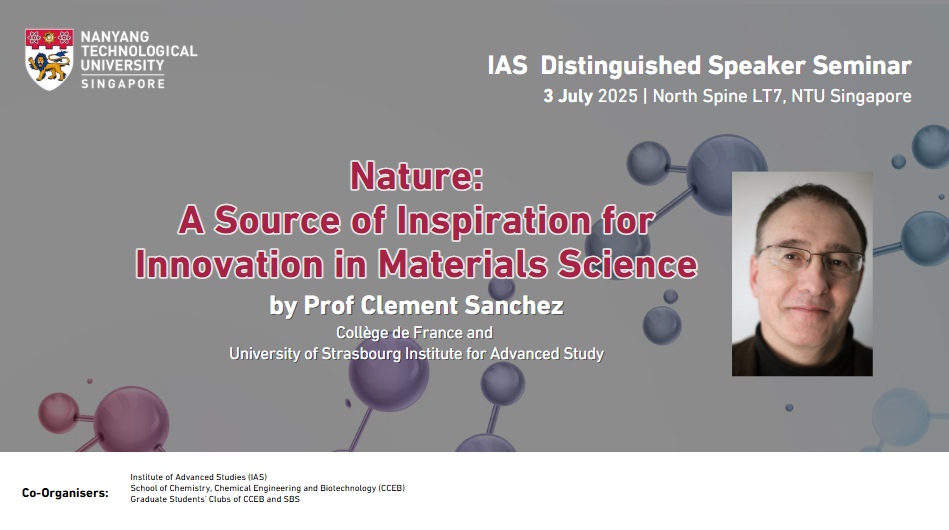
Nature: A Source of Inspiration for Innovation in Materials Science by Prof Clément Sanchez
IAS@NTU STEM Graduate Colloquium Jointly Organised with the Graduate Students' Clubs
The Institute of Advanced Studies (IAS) at Nanyang Technological University, in collaboration with the Graduate Students' Clubs of CCEB and SBS, recently hosted an insightful colloquium by Prof Clément Sanchez from Collège de France and the University of Strasbourg Institute for Advanced Study. Prof Sanchez shared pioneering research in his lecture titled "Nature: A Source of Inspiration for Innovation in Materials Science" showcasing nature-inspired approaches to developing advanced materials and technologies.
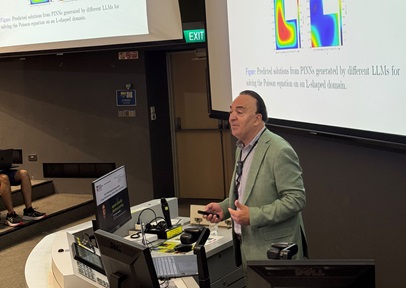
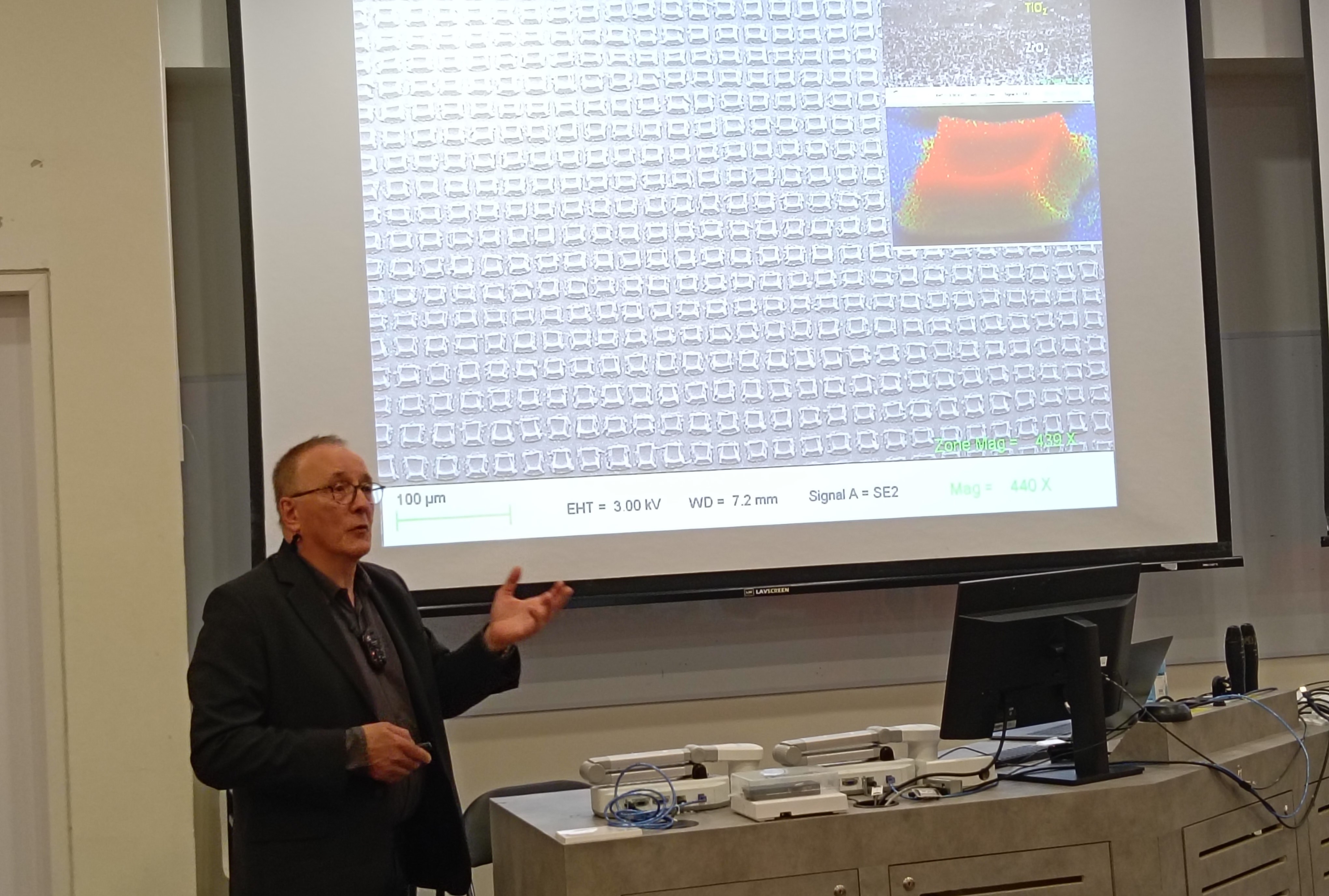 Prof Sanchez discusses biomimetic strategies in soft chemistry innovations.
Prof Clément Sanchez is an Emeritus Professor at the Collège de France and Professor at the University of Strasbourg Institute for Advanced Study (USIAS). Renowned globally for his seminal contributions to the field of soft chemistry, Prof Sanchez has extensively researched hybrid organic-inorganic materials, exploring their unique properties and applications in catalysis, optics, sensors, and biomedical fields. His work is characterised by the innovative use of low-temperature chemical processes that mimic nature's intricate mechanisms, particularly focusing on biomimetic and bio-inspired strategies for creating functional materials. Prof Sanchez previously directed the Laboratory of Condensed Matter Chemistry in Paris (UMR 7574) and served as Director of Research at CNRS and Professor at École Polytechnique. He holds an engineering degree from Chimie ParisTech, a PhD from the University of Paris VI, and conducted postdoctoral research at UC Berkeley. His groundbreaking work has earned him numerous prestigious national and international awards, and he is a member of several Academies of Sciences.
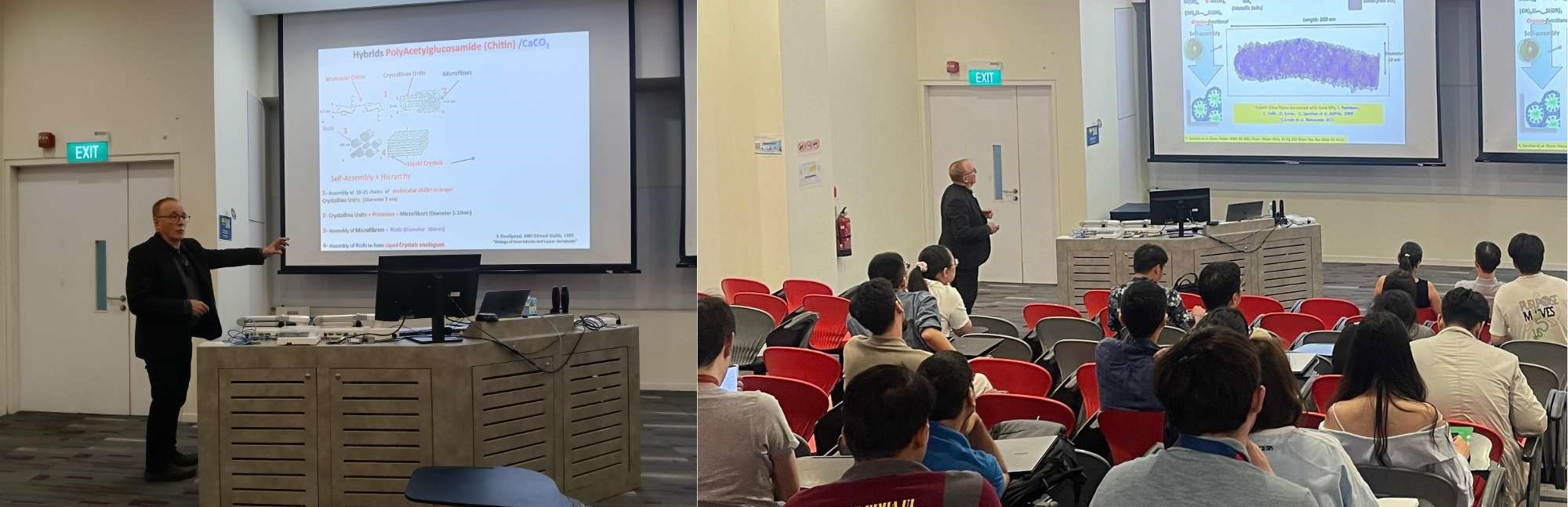
Prof Sanchez reveals nature-inspired designs shaping next-generation hybrid materials through soft chemistry innovations.
The colloquium comprehensively explored how nature’s diverse evolutionary adaptations have inspired breakthroughs in material science, opening up innovative approaches for the creation of novel hybrid materials. Prof Sanchez began by presenting captivating examples such as the aerodynamic design of Japan’s Shinkansen trains inspired by the Kingfisher bird, highly adhesive surfaces mimicking Gecko lizard feet, and robust, self-healing fibers inspired by mussel byssus. He elaborated on soft chemistry methods for synthesising hybrid nanomaterials through low-temperature mineral polymerization reactions, closely imitating natural biomineralisation processes. Sanchez extensively detailed hierarchical hybrid architectures observed in biological structures, which combine organic and inorganic elements through precisely controlled self-assembly and genetically induced cascades of phase separations across meso, micro, and macro scales. He also explained advanced templating strategies, illustrating processes such as the formation of crystalline units of molecular chitin into microfibers, the creation of cylindrical micelles organised into hexagonal liquid crystalline phases, and the multifunctional "Quantum Rattles" comprising gold quantum dots encapsulated within silica shells for biomedical imaging and targeted drug delivery.
An exciting aspect was the demonstration of advanced biomimetic materials such as gold-silica "Quantum Rattles," multifunctional nanocarriers integrating gold nanoparticles and quantum dots within silica shells, ideal for medical imaging and drug delivery. These quantum rattles demonstrated near-infrared photoluminescence, controlled drug release, biodegradability, and stability in blood plasma. Experimental use for colorectal carcinoma detection through near-infrared fluorescence and MRI imaging was particularly impressive.
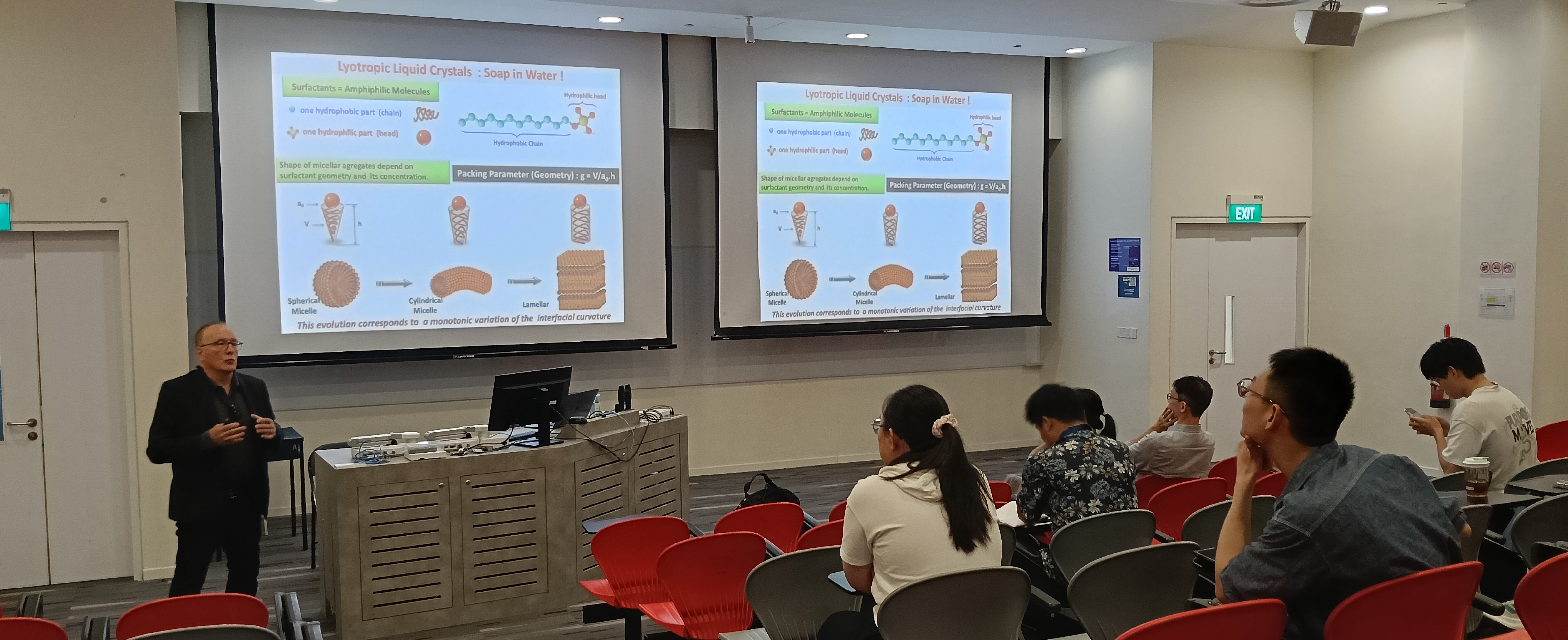 Nature-inspired hybrid structures and “Quantum Rattles” reveal new frontiers in biomedical applications.
Prof Sanchez elaborated on mesoporous nanosilica protocells combined with lipid bilayers, Prof Sanchez further discussed mesoporous nanosilica protocells combined with lipid bilayers, highlighting their superior performance compared to traditional liposomes in drug loading, release control, and selective cancer cell targeting. Additionally, he introduced innovative bio-inspired camouflage technologies derived from animal camouflage mechanisms, demonstrating the potential for new stealth materials. Sanchez also presented cutting-edge hybrid membranes for Proton Exchange Membrane Fuel Cells (PEMFC), developed using electrospinning and spray-coating techniques, emphasizing their outstanding proton conductivity and mechanical stability.
Highlighting other innovative materials, Prof Sanchez described click chemistry-functionalised mesoporous microdot arrays with applications as multisensors, artificial noses, and biosensors. He elaborated on novel hybrid materials involving colloidal particles, nanoparticles, and mesoparticles, emphasizing versatile self-assembly techniques like dip-coating. Further, he showcased hybrid catalysts, specifically nested enzymes within inorganic hollow particles, demonstrating their effectiveness in chemoenzymatic cascade reactions. Sanchez concluded by emphasizing advancements in sustainability-focused catalytic materials for CO2 methanation through sol-gel chemistry and robust, self-healing hybrid copolymers inspired by mussel byssus. He wrapped up by outlining versatile colloidal and polymeric processing methods, including electrospinning, dip-coating, spray-coating, 3D printing, and aerosol processing, underscoring their broad applicability in designing advanced, functional hybrid materials.
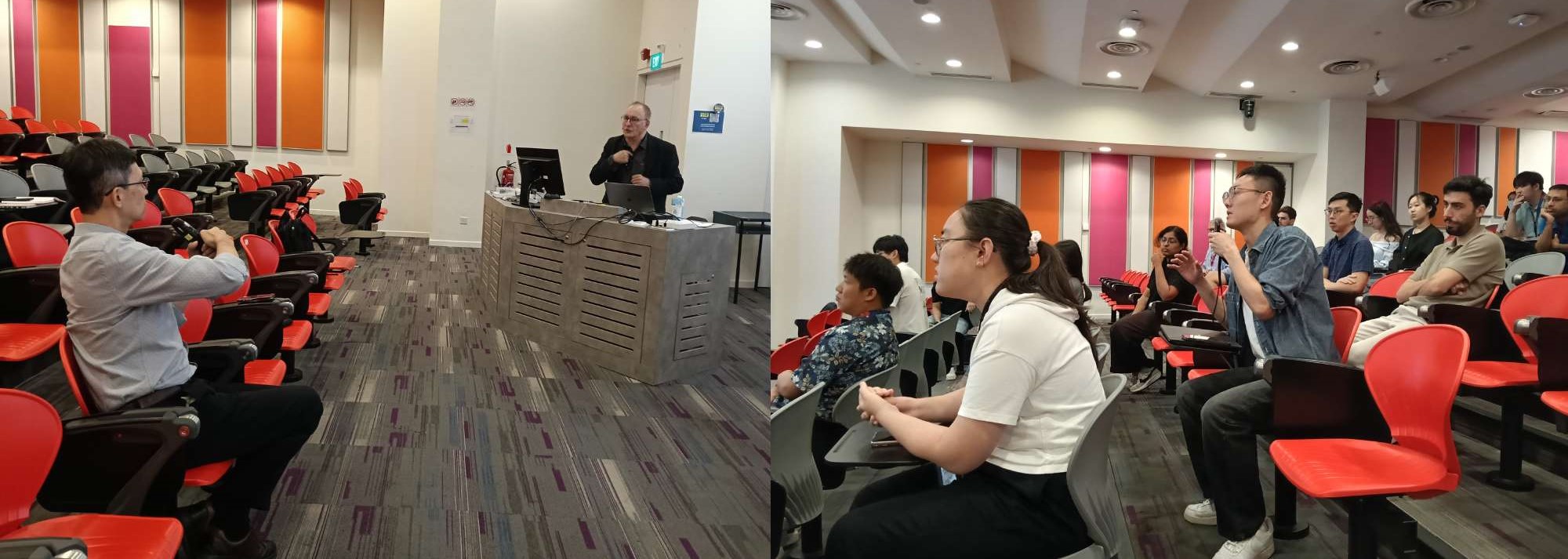
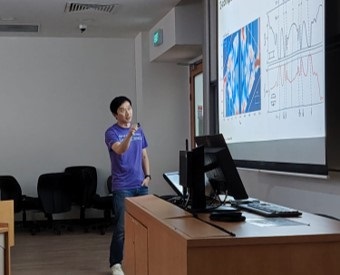
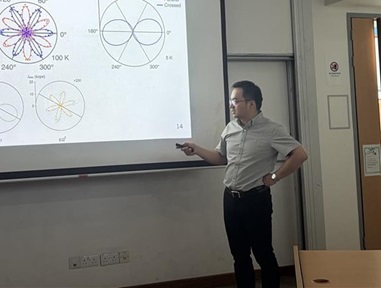
The audience explored scalability, impact, and clinical translation in a lively, interdisciplinary Q&A session.
The engaging Q&A session afterward allowed the audience, comprising researchers and students from diverse disciplines, to delve into topics such as scalability, environmental impact, and clinical translation of these advanced hybrid materials, highlighting significant interdisciplinary interest.
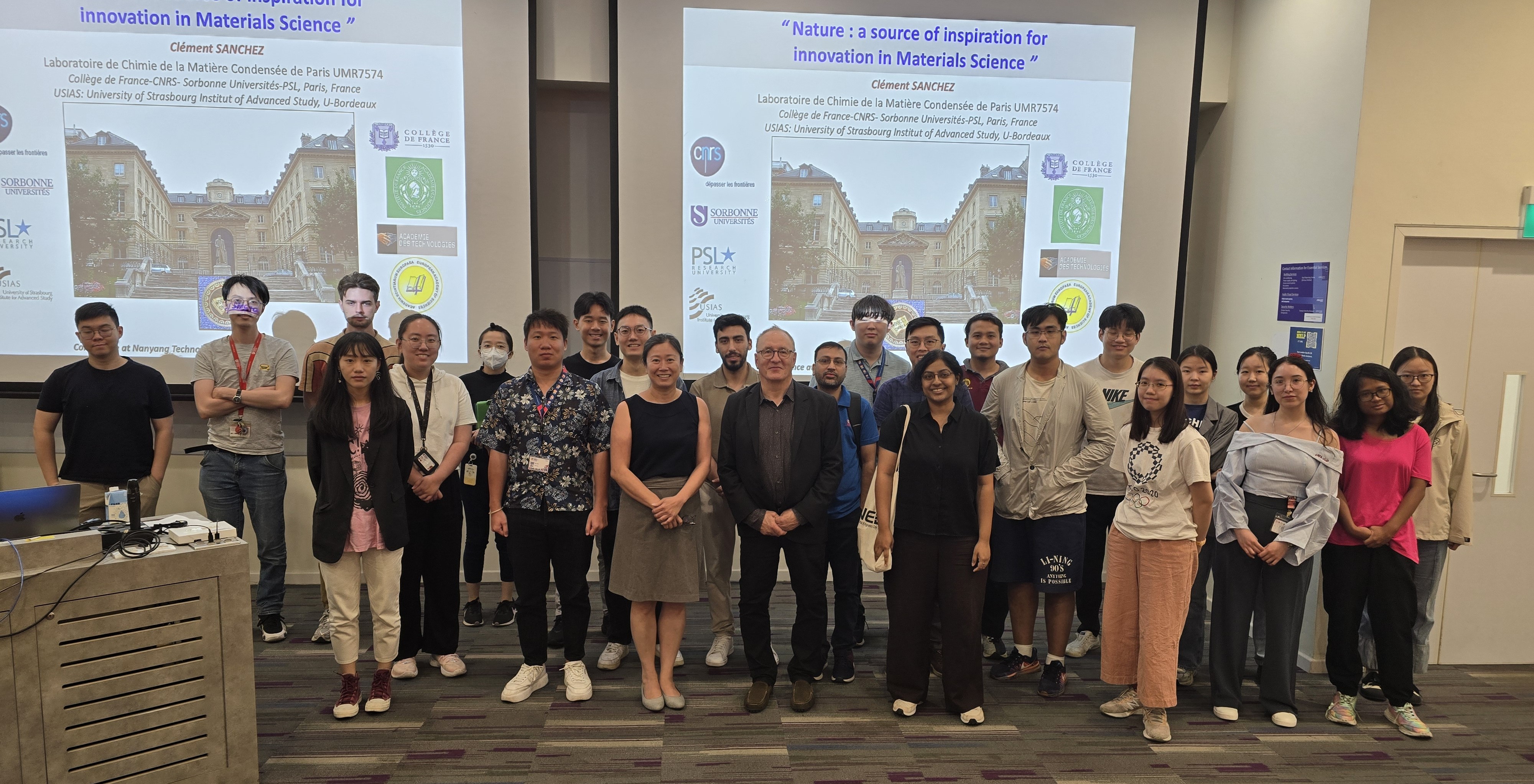
Overall, Prof Sanchez’s colloquium provided a comprehensive and inspiring overview of biomimetic and bio-inspired materials, demonstrating how studying nature’s evolutionary designs can lead to innovative technological solutions. The insights and advancements presented underscore the immense potential of interdisciplinary research in developing materials that address complex scientific and societal challenges.
Written by: Qi Yuxia | NTU School of Biological Sciences Graduate Students' Club
"I got to understand and learn different nanomaterial applications inspired from nature." - Lim Lui Lung (MEng Student, CCEB)
"I enjoyed the explanation of using chemical methods and processing to formulate the nanoparticles with porous structure from the bottom up." - Zhou Hongyu (PhD student, MAE)
"How natural materials can be used for different "industrial" and research applications at nanoscale" - Diana Arredondo Bernal (PhD student, CCEB)
Watch recording here