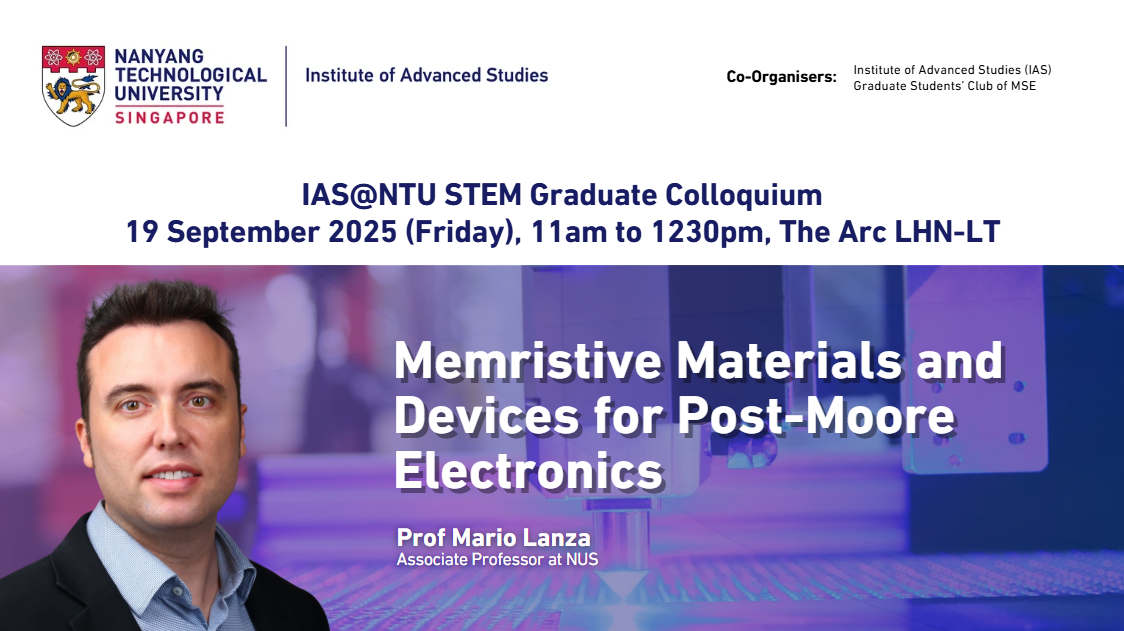
Memristive Materials and Devices for Post-Moore Electronics by Prof Mario Lanza
IAS@NTU STEM Graduate Colloquium Jointly Organised with the Graduate Students' Clubs
On 19 September 2025, the Institute of Advanced Studies (IAS) at NTU hosted a colloquium by Prof Mario Lanza, Associate Professor of Materials Science and Engineering at the National University of Singapore, in collaboration with the Graduate Students' Clubs of MSE. The session attracted graduate students, researchers, and faculty members interested in the latest advances in electronic devices and neuromorphic computing.
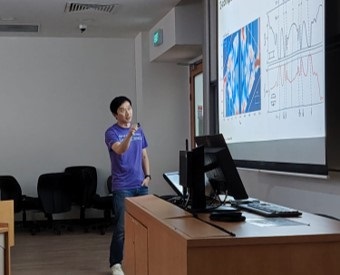
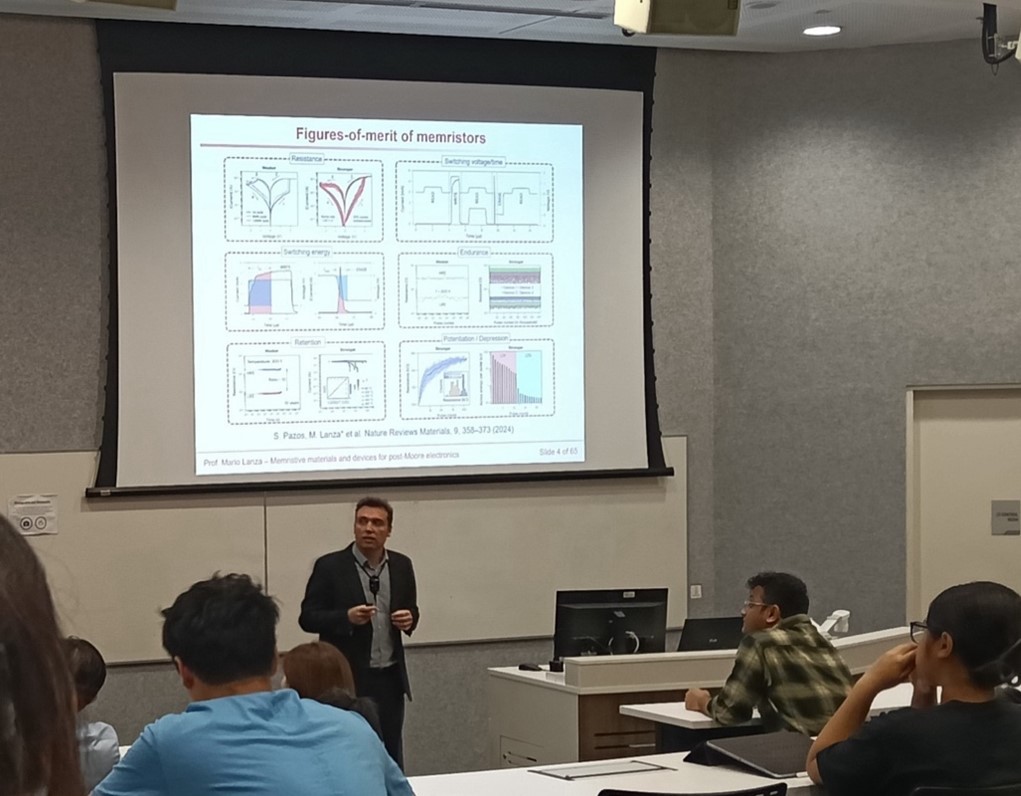 Prof Mario Lanza captivates the audience with insights on memristors, highlighting their unique properties such as resistance and endurance, and potential on industry outlook.
The semiconductor industry is at a turning point, facing scaling challenges in transistors while adapting to the growing demands of artificial intelligence (AI) and the Internet of Things (IoT). Prof Lanza’s seminar addressed this transformation, spotlighting memristive devices and circuits as a promising path toward more compact, energy-efficient, and higher-performance computing systems.
Prof Lanza started with the memristor industry outlook by reveiwing the current status and prospects of memristor technology and highlighting commercially available products and prototypes with high technology readiness levels that may shape the future electronics market. He then introduced his group’s recent advances in 2D-material-based memristors, especially in integrating multilayer hexagonal boron nitride (hBN) on silicon microchips containing CMOS circuits, achieving hybrid 2D/CMOS microchips that could enable new functionalities in nanoelectronics. In the prospective of overcoming challenges in memristive hardware for AI – Prof Lanza presented the Neuro-Synaptic Random Access Memory (NSRAM), a novel two-transistor cell with adjustable neural and synaptic responses. The NSRAM offers 100% yield and ultra-low variability, representing a short-term solution for implementing efficient artificial neural networks.
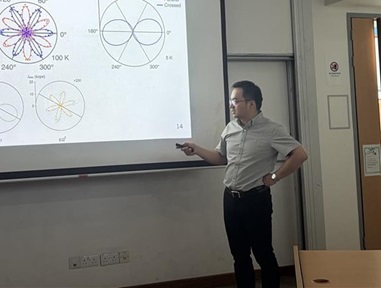
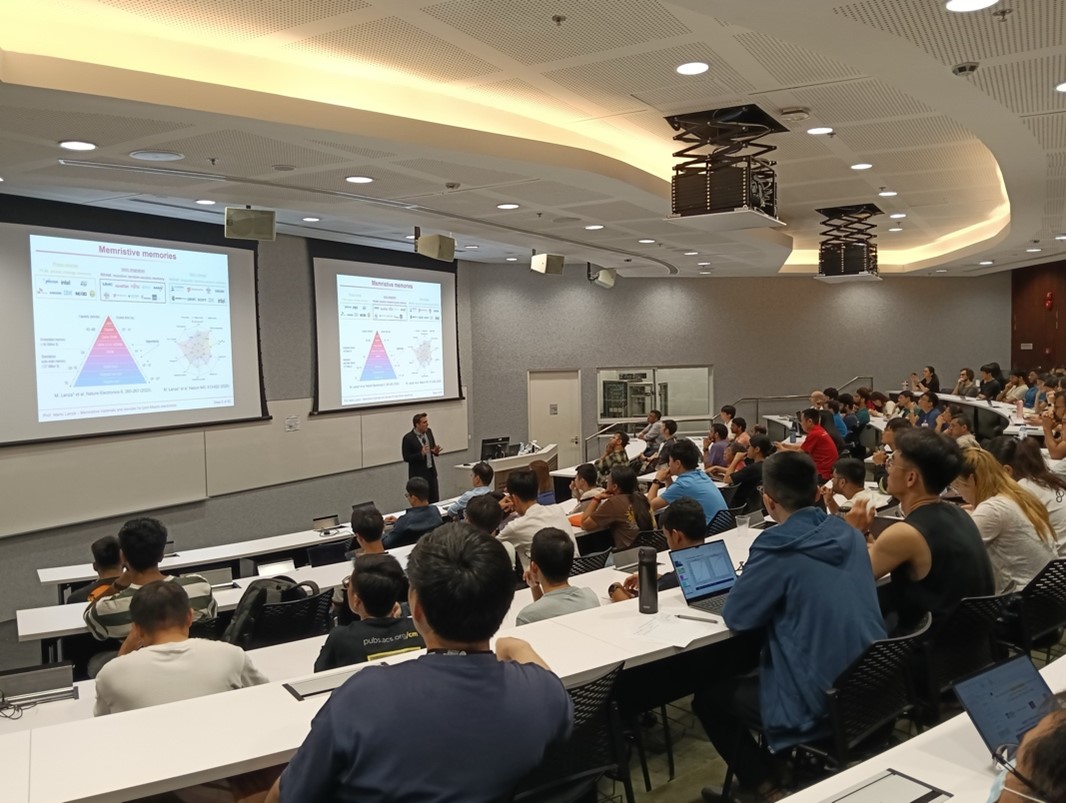 Prof Lanza discusses the recent progress in the memristor industry.
At the end of the talk, he concluded with the introduction of Web of Talents (https://weboftalents.com), an innovative platform designed to connect students and postdocs with academic and industrial opportunities worldwide, while assisting universities and companies in recruiting top talent.
The seminar drew enthusiastic participation from the audience, who posed questions on the scalability of memristive devices, the integration challenges of 2D materials with CMOS technology, and the potential of NSRAM in neuromorphic applications. Discussions also touched on the broader implications for semiconductor manufacturing and the role of academia-industry collaboration in driving innovation.
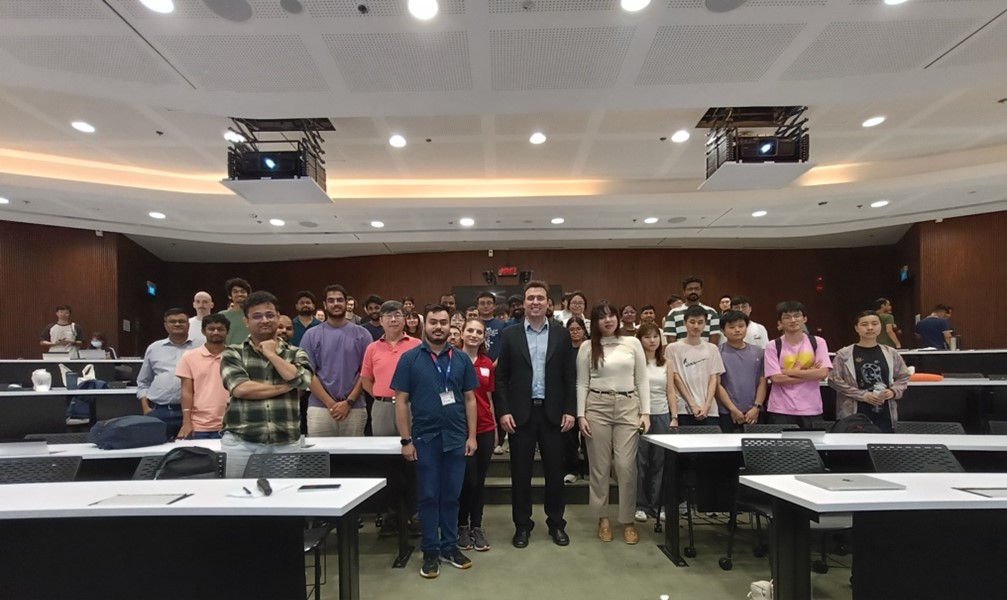
.jpg?sfvrsn=9f53adeb_1) A lively Q&A on overcoming memristor technical challenges wraps up the session.
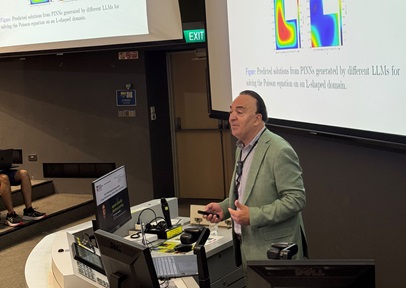
A lively Q&A on overcoming memristor technical challenges wraps up the session.
Overall, Prof Lanza’s seminar provided a comprehensive overview of the challenges and opportunities in memristive devices, from industry trends to cutting-edge academic research. His insights into hybrid 2D/CMOS microchips and innovative neuromorphic architectures underscored the transformative potential of these technologies for the future of computing.
By providing a unique platform for knowledge exchange and interdisciplinary networking among the graduate community, this colloqium emphasised NTU's commitment to fostering research excellence at the intersection of materials science, electronic device industry, and potential infastructure for artificial intelligence.
Written by: Li Yujia | NTU School of Materials Science and Engineering Graduate Students' Club
“Speakers’ experience with the industry gave some background information, which made me enjoy this talk.” - Wong Jia Wei (PhD student, EEE)
“I have learned about new improvements in memristics.” - Lau Yi Teng (PhD student, IGP-IDMXS)
"The talk is quite inspiring for my own research." - PhD Student, MSE
Watch the recording here