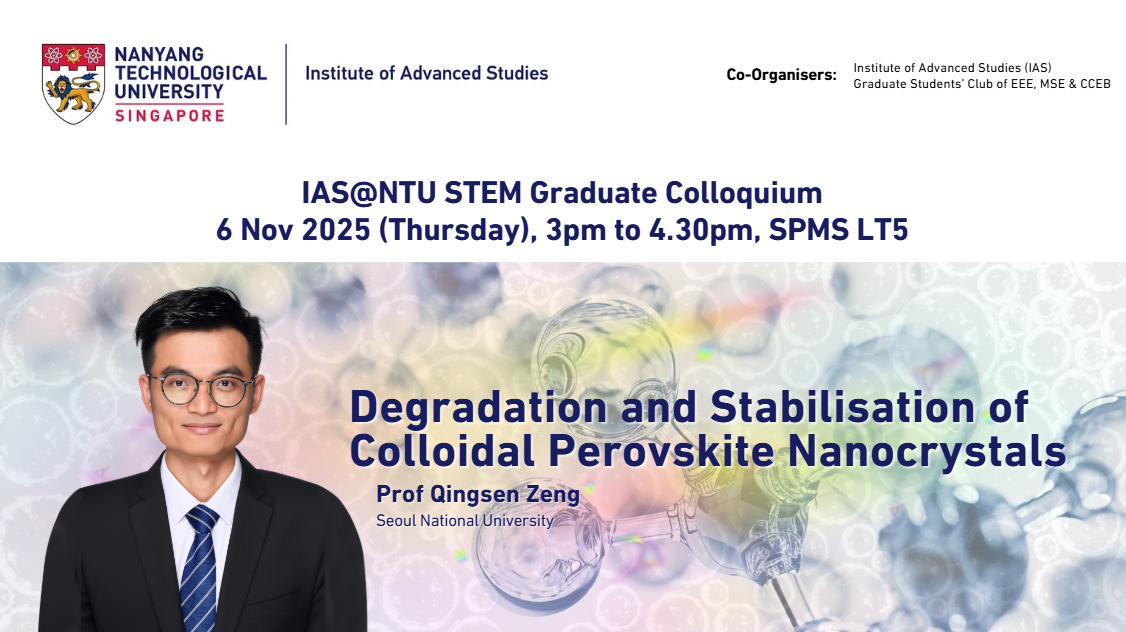
Degradation and Stabilisation of Colloidal Perovskite Nanocrystals by Prof Qingsen Zeng
IAS@NTU STEM Graduate Colloquium Jointly Organised with the Graduate Students' Clubs
On 6 November 2025, the Institute of Advanced Studies (IAS), in collaboration with Graduate Students’ Clubs of the School of Electrical and Electronic Engineering (EEE), the School of Chemistry, Chemical Engineering and Biotechnology (CCEB), and School of Materials Science and Engineering (MSE), jointly hosted a colloquium, titled “Degradation and Stabilisation of Colloidal Perovskite Nanocrystals" by Prof Qingsen Zeng from Seoul National University. The colloquium contained an overview of the previous and current states of light-emitting materials, as well as his team’s innovative research venturing into new applications of perovskite nanocrystals in display technology.
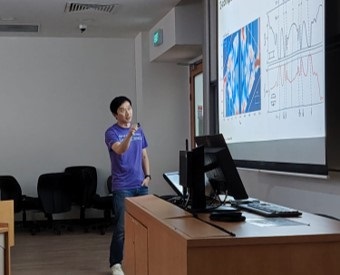
.jpg?sfvrsn=139b9012_1) Prof Zeng starts the colloquium by introducing light-emitting technologies, and the motivations behind studying new materials.
Prof Zeng starts the colloquium by introducing light-emitting technologies, and the motivations behind studying new materials.
Prof Zeng started his colloquium by indicating the core challenges of the light-emitting materials, which are the inefficiency in lighting and display technology, causing energy waste, and a small color range on the current display, causing non-high-purity color. He highlighted that these are the reasons for studying new materials. Perovskite nanocrystal is introduced for dealing with those issues since it has a unique crystal structure that can produce high-vivid colors with broader color regions at a very low cost, making it the ideal candidate for the next generation of displays.
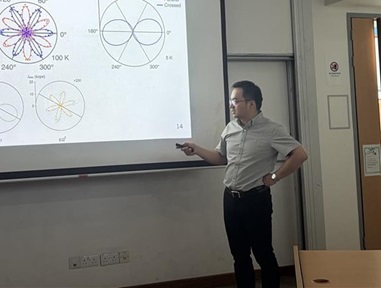
Next, he explained Perovskite Nanocrystals (PeNCs), from their initial to current states, and the challenges faced. Researchers have innovated a lot on PeNCs, from being a material that could only emit light in very low temperatures, to now being light-emitting under room temperature. However, due to the critical drawback of PeNCs and their fragility, they have low efficiency and stability in light emission in the primary stage. Although PeNCs were developed with many methods such as polymer films, and later achieved higher efficiency and stability in steady environments, accelerated degradation was found after it was induced with heat, humidity, and blue light; thus resulting in a largely lower lifetime (lower than 20 hours). Consequently, the efficiency and the stability in several environments remained a big challenge for PeNCs.
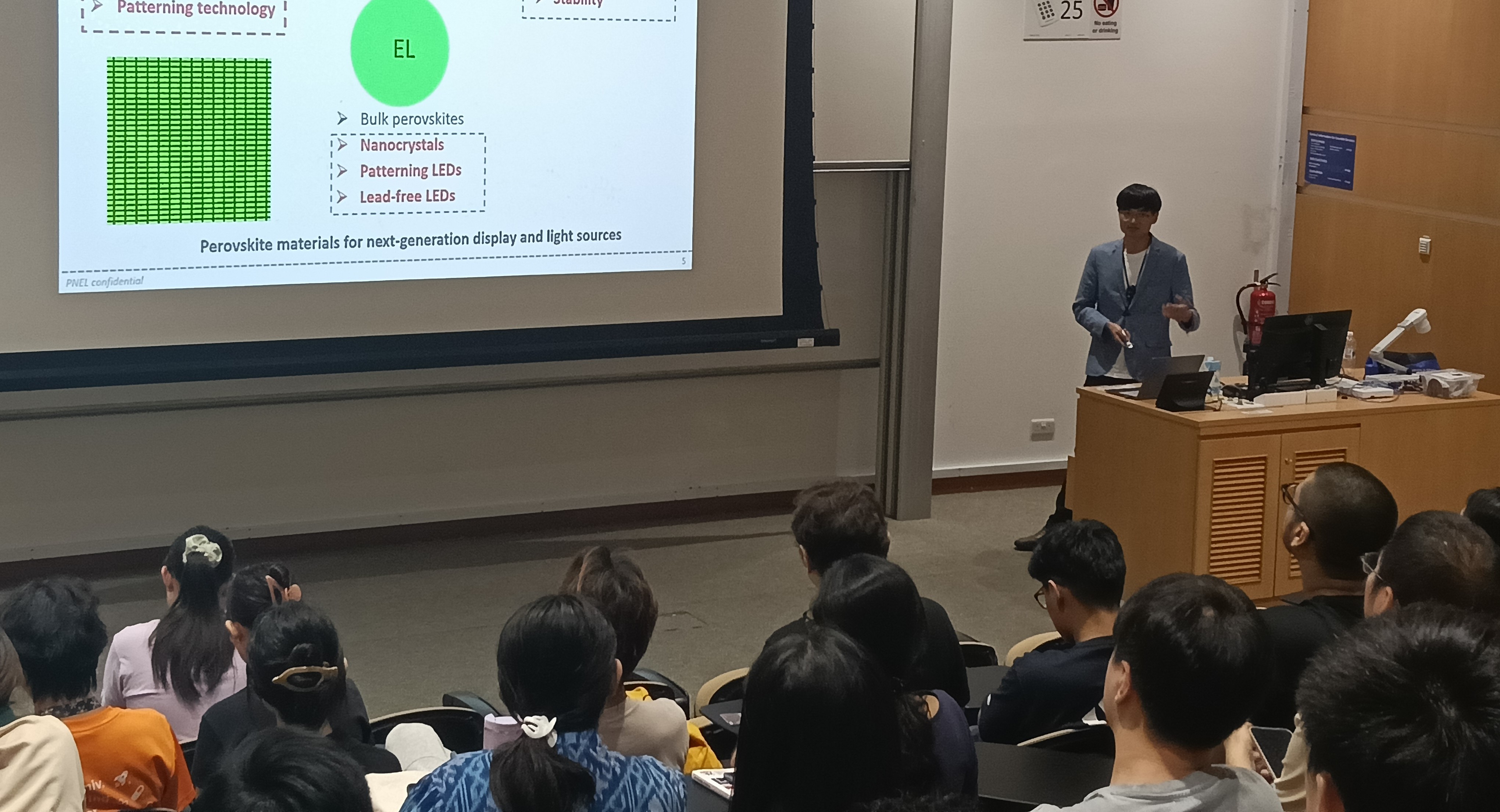 Prof Zeng explores the evolution of PeNCs, from initial limitations to current challenges in light emission.
Prof Zeng then shifted the colloquium's focus to his team’s breakthrough solution to the stability crisis. After explaining their research journey through many solution possibilities, such as through chelating diamine ligands AHDA, Siloxane-Crosslinked PeNCs to enhance and protect the PeNCs, he proposed his team’s most recent method - a “Double-Shelled (DS) PeNCs structure. This contains two shells to cover the PeNCs, the passivation as the first shell for high-quality yield; and then the encapsulation as the second shell, for longevity.
Prof Zeng highlighted that results have been surprisingly successful in enhancing efficiency and maintaining the lifetime of PeNCs due to the protective shield of the DS-PeNCs. It achieved a perfect 100% quantum yield and obtained excellent stability, with lifetimes of more than 10,000 hours, even after multiple accelerated degradation tests. These findings surpassed the commercial standards along with the broader colour range and solved the long-term stability problem. He also suggested that this new material could be used with PeNCs-resin ink to make roll-to-roll printing for large-area uniform down-conversion films. To demonstrate the final quality, he also showed an example video of a PeNCs-built television, which illustrated high-quality color. Moreover, this material was tested with a water stability test to ensure that there is no lead leakage and has no toxicity.
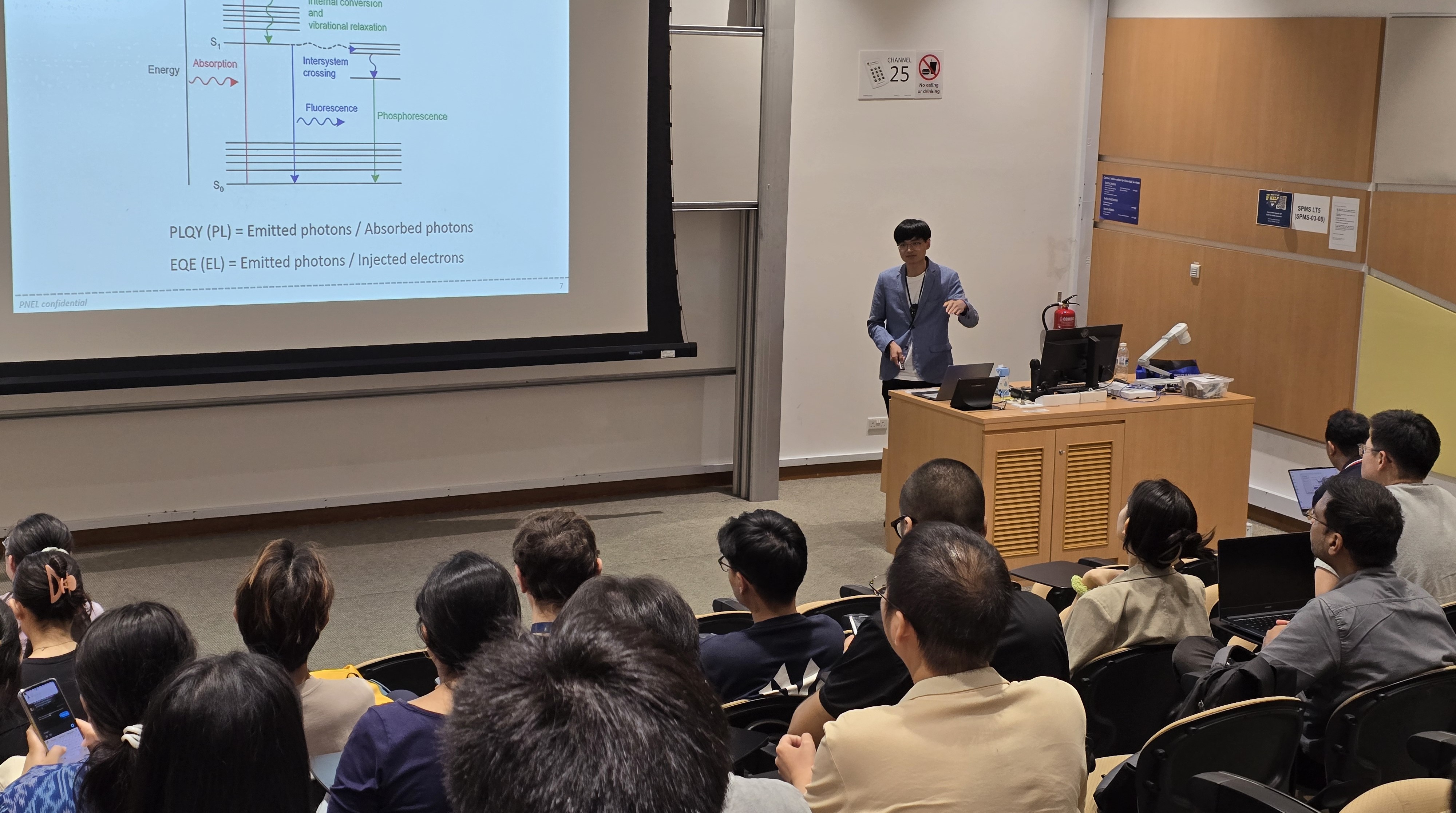 Prof Zeng’s shares his team's current focus on stretchable displays, Micro-LEDs, and quantum light sources, shaping brighter and colorful technological applications.
Looking to the future, Prof Zeng shared that his team is now also focused on developing PeNCs for other innovative applications, including stretchable displays, advanced color-conversion Micro-LEDs for VR/AR devices, and perovskites for quantum light sources. His work demonstrates a clear and exciting path toward a new era of brighter, more efficient, and vividly colorful displays.
The seminar concluded with an engaging Q&A session, where audiences explored deeper into the technical and practical aspects of the research. He answered questions on the specifics of the double-shelled structure, its effect on the material’s photonic properties, and key concerns about toxic safety. He particularly reassured the audience by explaining that the experiments confirmed any potential lead leakage was well below EU regulations, highlighting the material’s viability and low toxicity.
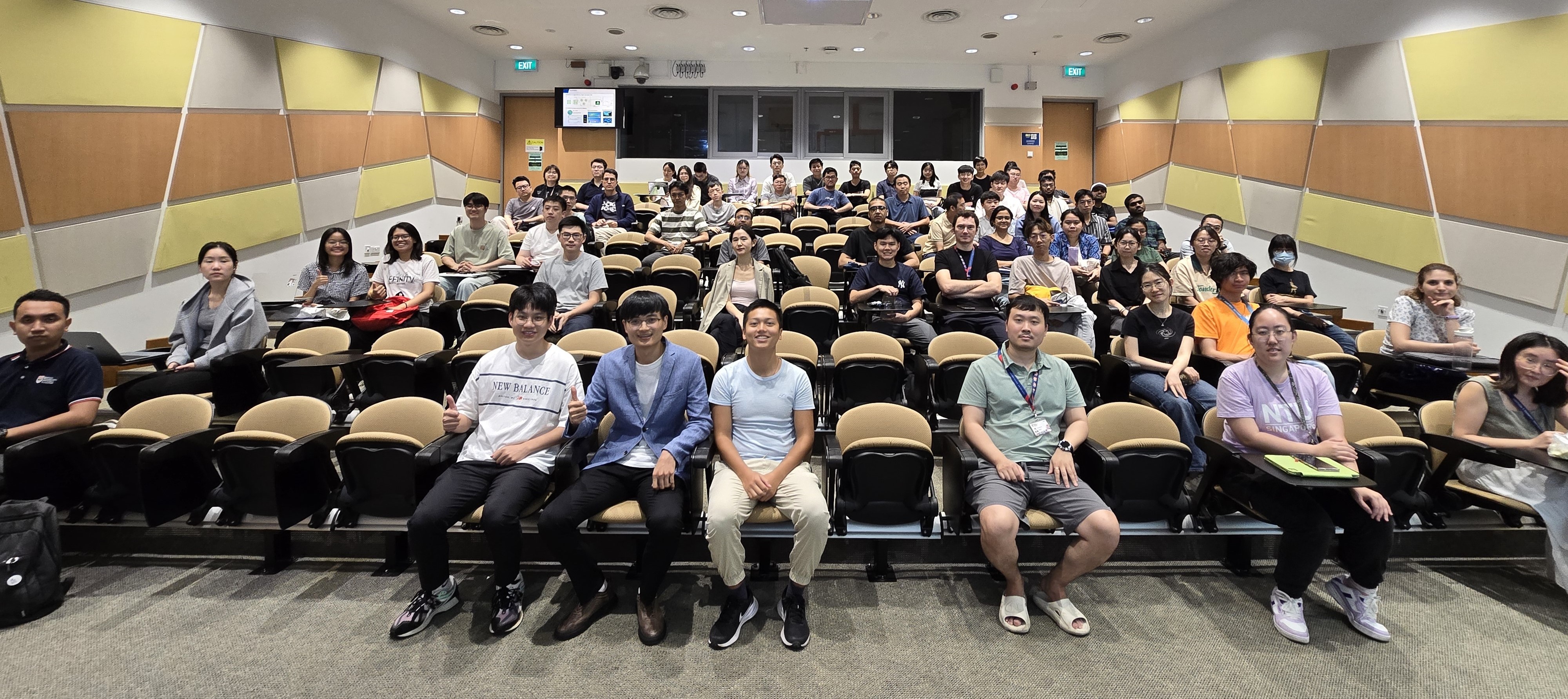
Written by: Sooksatra Sasi | NTU School of Electrical and Electronic Engineering Graduate Students' Club
"Application of perovskites nanoparticles for LEDs was interesting" - Seow Wai Keat Elliot (PhD student, EEE)
"Brilliant Structure-Property-Application implementation." - Kevin Manuel Setiawan (PhD student, Graduate College)
“The topic was more interesting than I'd anticipated. Good talk, good slides” - Thura Kaung Htet (Masters Student, SPMS)
Watch the recording here.