A Candid Tea Time Exchange with A. M. Turing Laureate Prof Jack Dongarra
Written by Shrikant Ameya Sunil | PhD student, CCDS NTU
On 8 July 2025, the Institute of Advanced Studies (IAS) at Nanyang Technological University hosted an afternoon tea session with Prof Jack Dongarra, recipient of the 2021 A.M. Turing Award. Following his public lecture on scalable computing, the informal gathering provided an opportunity for selected students and researchers to engage in an intellectually enriching exchange with one of the leading figure in high-performance computing.
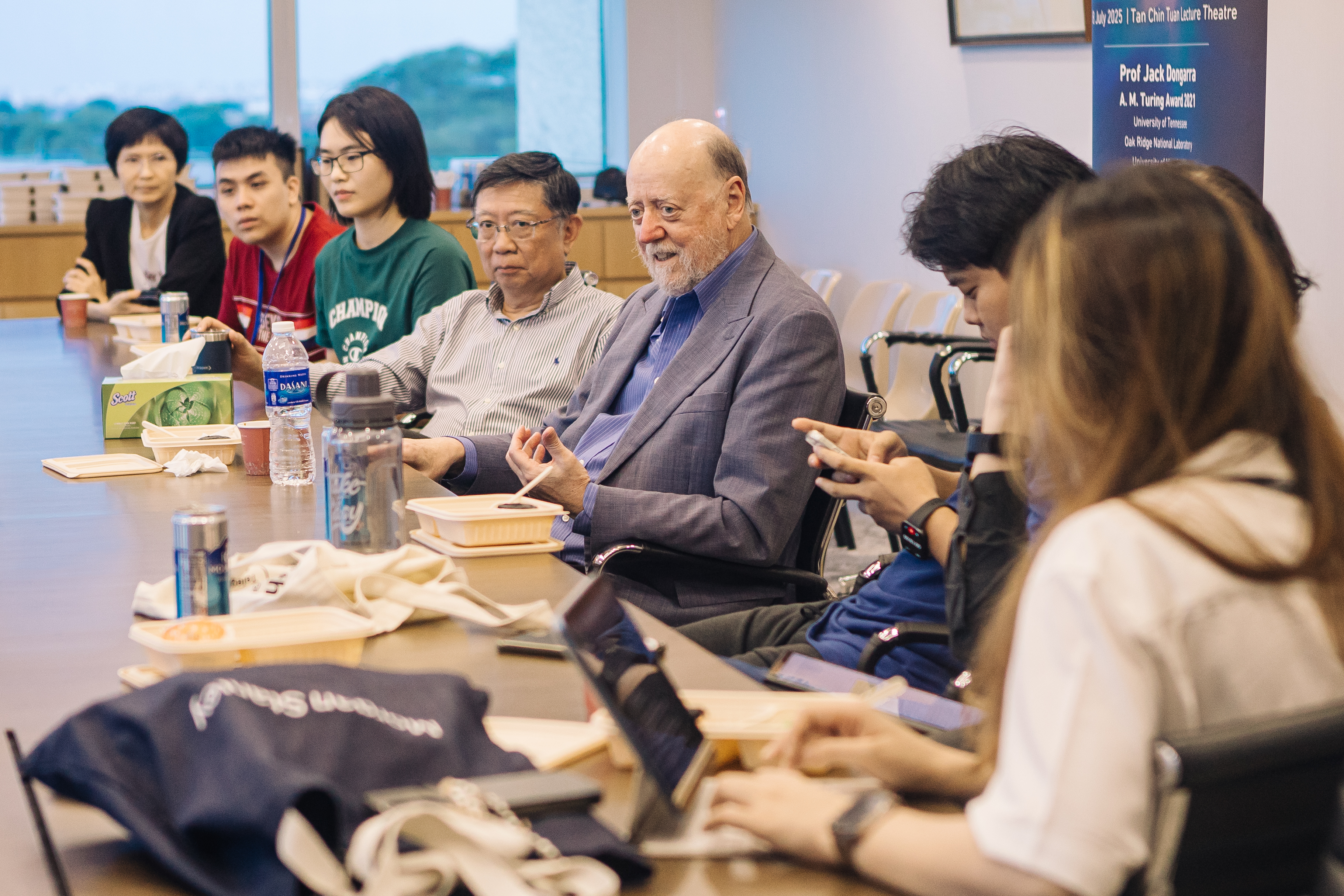
The session starts with reflections on building foundations before exploration.
The discussion opened with reflections on the methodological frameworks adopted when approaching unfamiliar problems in research, emphasising the importance of building upon foundational knowledge before exploring advanced methodologies. In cases where prior expertise is lacking, a deliberate effort toward understanding the underlying principles was recommended. This structured approach allows researchers to orient themselves more effectively in evolving research domains.
Significant attention was given to Prof Dongarra’s contributions to the Message Passing Interface (MPI) — a standardised and portable message-passing system designed to function on parallel computing architectures. MPI has played a critical role in enabling efficient communication among distributed systems and has formed the computational backbone of numerous scientific applications in climate modelling, astrophysics, and large-scale simulations. By defining consistent protocols for inter-process communication, MPI has allowed high-performance applications to scale effectively across thousands of processors, thereby accelerating the pace of computational science.
Complementing this achievement was his foundational work in numerical linear algebra, where significant advancements were made in the development of software libraries such as LINPACK, LAPACK, and ScaLAPACK. These libraries provided efficient portable, and numerically stable solutions to key problems including matrix factorisation, eigenvalue computation, and the resolution of linear systems. Prof Dongarra’s work facilitated the translation of theoretical algorithms into high-performance code capable of leveraging modern hardware architectures, including multicore and GPU-based systems. His leadership in this domain has been instrumental in establishing standardised benchmarks and has had a profound influence on both academic research and industrial computation.
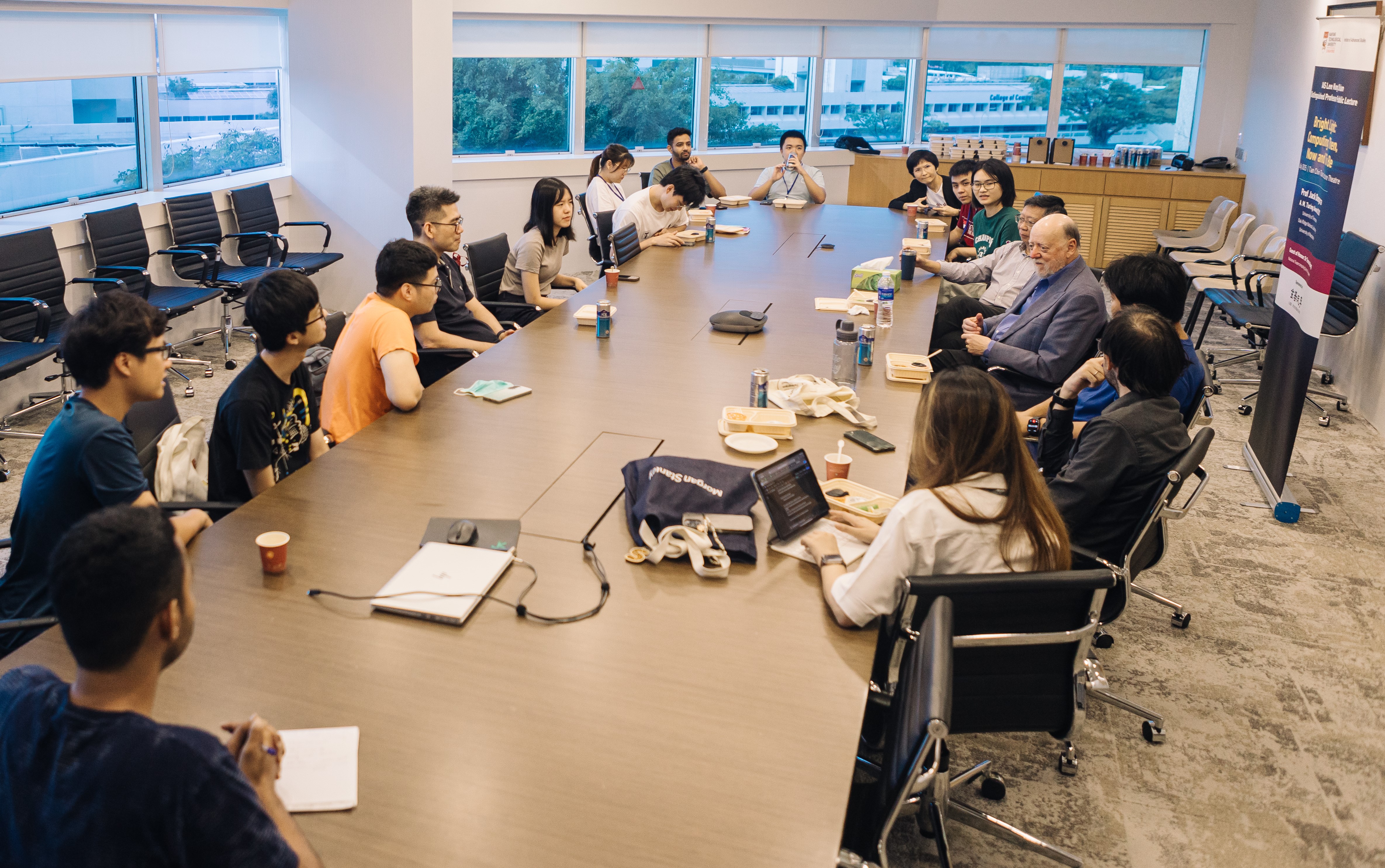 Prof Dongarra sharing his experiences in areas such as academic freedom, industry constraints, and the crucial role of sustained research funding support.
Prof Dongarra also shared insights into the interplay between academic and industry-based research environments. Academic research was described as offering greater intellectual autonomy and the freedom to pursue exploratory ideas. However, Prof Dongarra noted that such freedom is contingent on sustained external funding, which remains a persistent challenge. He outlined the funding model in the United States in detail: where proposals are submitted to peer review committees, ranked, and subsequently allocated resources based on national priorities and available budgets. In contrast, while industry provides enhanced remuneration and logistical stability, it often constrains researchers to solve externally define problems. For individuals driven by intellectual curiosity, such constraints may become limiting over time.
Prof Dongarra expanded on the structure of his current research team, which comprises 45 members with roles ranging from technical writing and proposal development to visual communication and software engineering. He underscored the dependency of nearly all team members on grant funding, highlighting the fragility of academic research groups in the absence of sustained institutional support. He noted that when funding lapses, transitions to industry roles — particularly at companies such as NVIDIA — become common, offering both financial incentives and remote work flexibility.
He also addressed the process by which research problems are selected, acknowledging that funding agencies are more inclined to support novel research directions aligned with broader technological or societal objectives. As such, proposals that promise innovation or alignment with national priorities are more likely to receive backing than those focused solely on incremental improvements.
The discussion further explored the nature of creativity in research, which he attributes in part to the freedom and guidance provided by mentors during early career stages. A strong emphasis was placed on continuous learning and the importance of adaptability. Prof Dongarra noted that impactful researchers often cultivate a portfolio of ideas rather than focusing exclusively on a single problem, enabling shifts in direction when progress stalls. The concept of “context switching” — alternating between parallel lines of inquiry — was affirmed as a useful practice, particularly in overcoming periods of stagnation.
When asked to identify the most impactful and most personally meaningful contributions of his career, Prof Dongarra cited MPI as the most impactful due to its global adoption and influence across computational disciplines. However, he expressed particular satisfaction to his contributions to solving linear algebra problems at scale. By developing robust and scalable routines for matrix decompositions (such as LU, QR, and singular value decomposition), Prof Dongarra’s work enabled the resolution of problems that previously required infeasible computational resources. These algorithms underpin a wide range of applications — from machine learning models and physical simulations to structural engineering and data-intensive forecasting systems — and continue to form the core of scientific software environments in academia and industry alike.
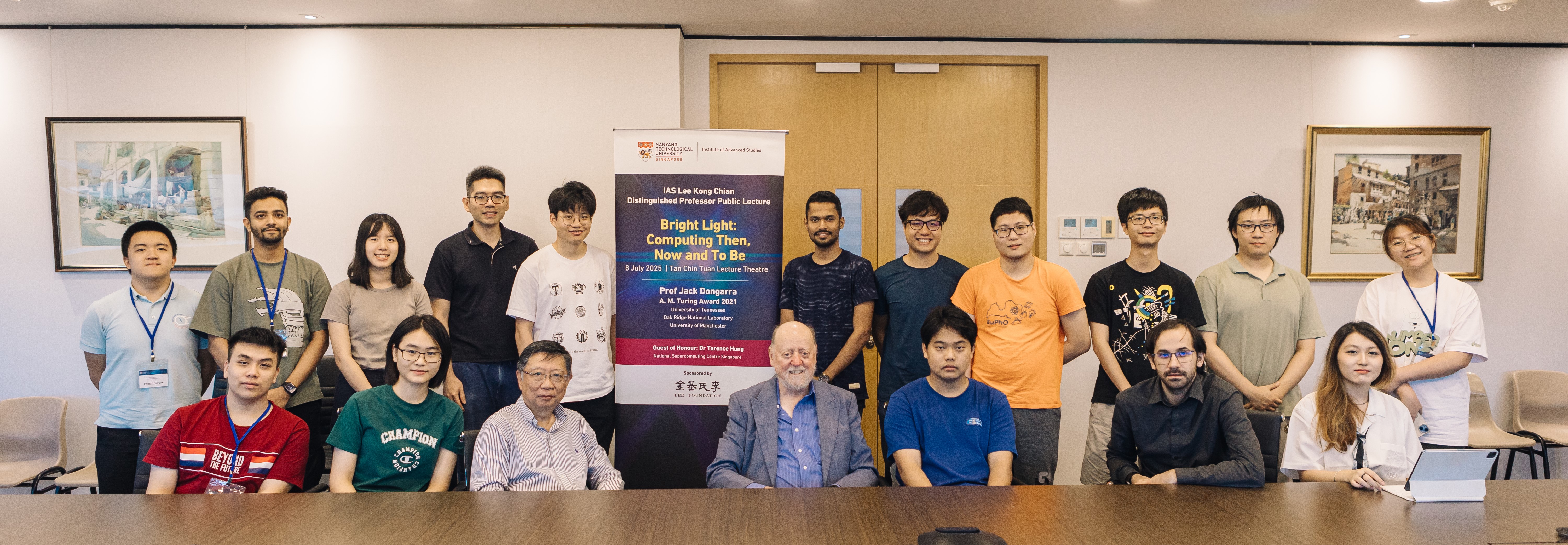
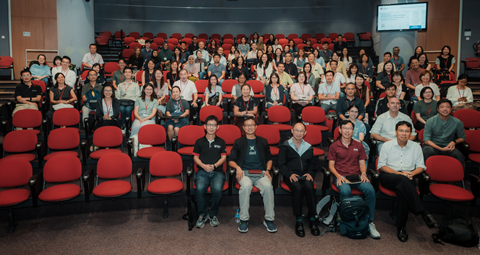
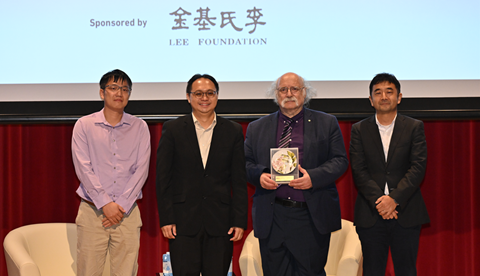
The session concluded with a short photo opportunity and informal exchanges among participants. With the relaxed atmosphere, the session provided rich insights into the complexities of sustaining a research career, the architecture of impactful scientific tools, and the evolving boundaries of computing. By reflecting on both his own journey and the broader research ecosystem, Prof Dongarra offered students not only technical guidance but also an appreciation for the perseverance, adaptability, and intellectual curiosity that define a life in research.