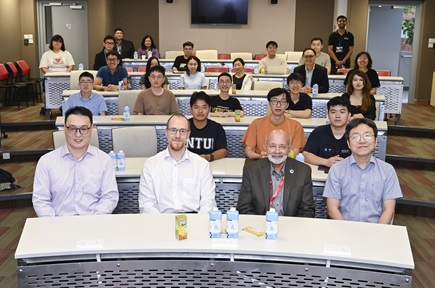
18th International Science Youth Forum - Curiosity Unlocked: How Questions Drive Discovery in the Age of AI
Jointly organised by Hwa Chong Institution (HCI) and the Ministry of Education with support from IAS@NTU, the International Science Youth Forum (ISYF) returned for its 18th iteration from 5 to 9 January 2026. Over a period of five days, HCI hosted 128 delegates and 47 educators, all gathered and united with the same goal in mind: to share and learn about Science beyond classroom walls. This year’s theme was “Curiosity Unlocked: How Questions Drive Discovery in the Age of AI”. Coupled with the courage to inquire and ask probing questions, curiosity is an irreplaceable characteristic of the human mind, playing a paramount role in creative and critical thinking. Though Artificial Intelligence may be taking the world by storm, the same desire to learn that led to vital, groundbreaking revelations such as Newton’s discovery of gravity, Einstein’s theory of relativity, and Franklin’s observations and calculations of DNA structure can only stem from a passion for one’s work and a courage to break away from the norm and challenge the status quo.
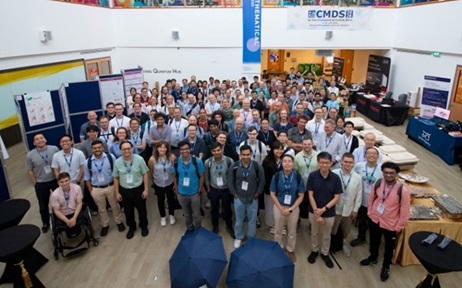
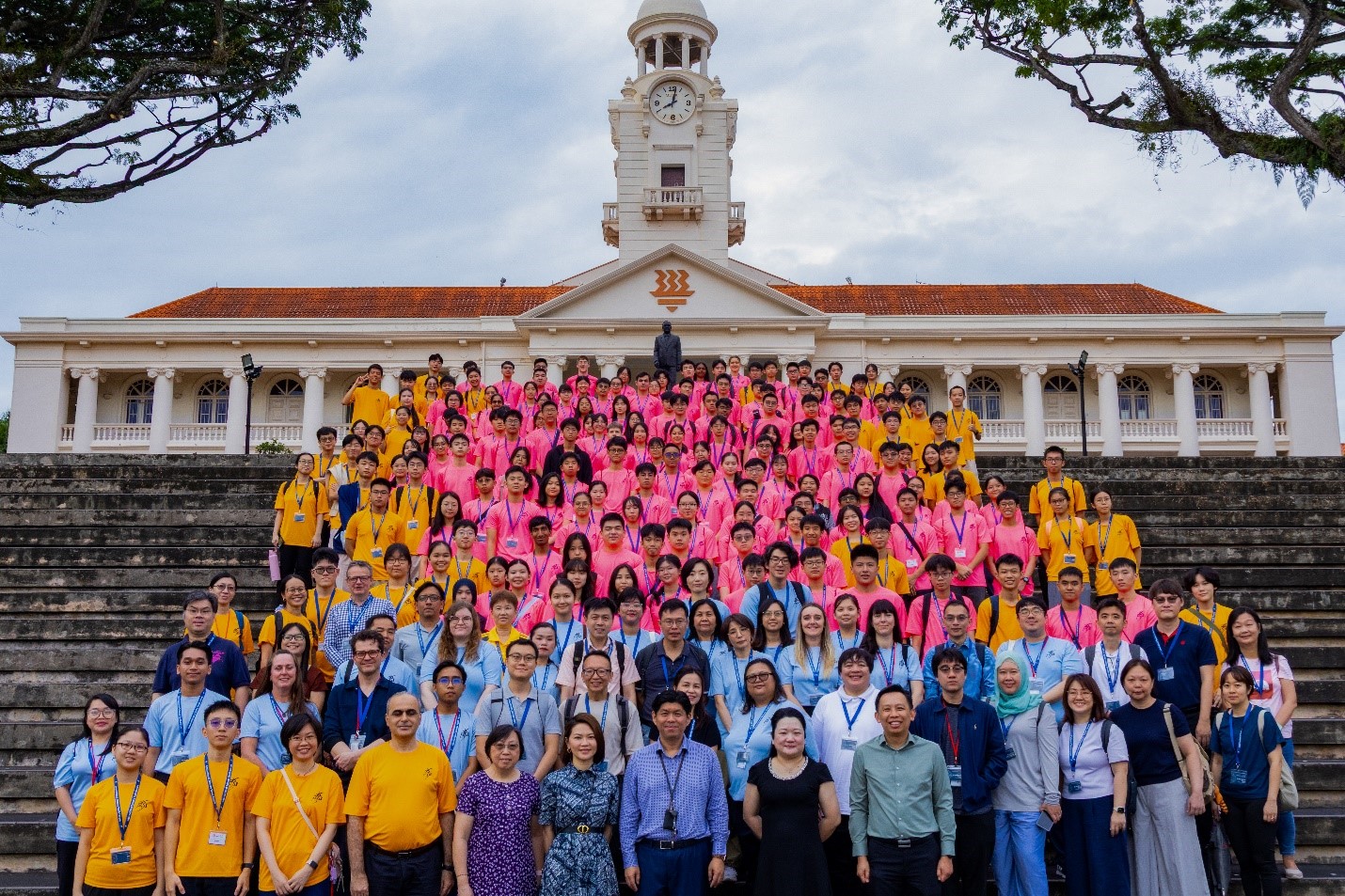 ISYF 2026 delegates with school leaders.
The series of events across five days aimed to pique the curiosity of delegates while deepening their appreciation for the wonders of Science. From engaging interactive workshops and exhibits at Science Centre Singapore and Singapore ArtScience Museum, to participating in thought-provoking discussions during Masterclasses with renowned scientists, each activity brought to the table a new perspective on science and the exciting potential that science holds. As a nod to the diverse cultural background of representatives participating in ISYF, the cultural exhibition allowed delegates to learn more about the various countries that our participants hail from, broadening their perspectives and inspiring them to look beyond geographical borders.
Singapore Discovery Trail
In addition to academic activities, delegates were immersed in Singapore’s natural and historical heritage as they traversed the country during the Singapore Discovery Trail. The Recreational Activities committee had compiled a list of iconic cultural landmarks on our little red dot. For instance, facilitators at Kampung Glam introduced delegates to its history as a centre of trade and a designated Malay-Muslim quarter in the 1822 Raffles Town Plan, while delegates who visited Chinatown learnt more about its five districts and visited sites such as the Sri Mariamman Temple.
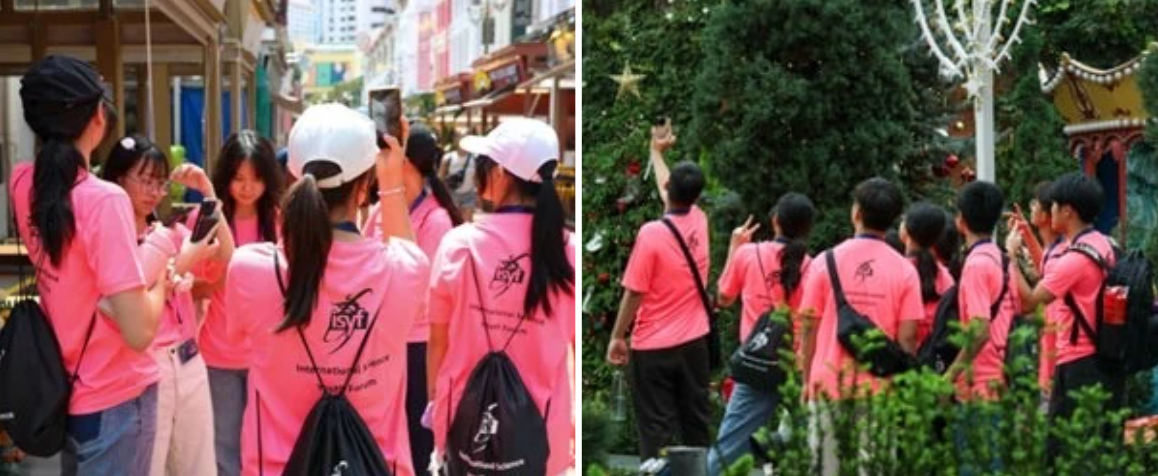 Delegates in Chinatown (left) and Gardens by the Bay Flower Dome (right).
Throughout the trail, not only did the foreign delegates learn more about Singapore, but both foreign and local delegates also delved deeper into the significance of places dear to Singaporeans, fostering a deeper sense of appreciation for our national landmarks.
Cultural Exhibition
Through the cultural exhibition, foreign delegates shared a piece of their home with their peers. They decorated their booths with photographs of their countries, maps, customs, and renowned places for visitors, and also prepared tidbits, drinks or small souvenirs to share with the ISYF community.
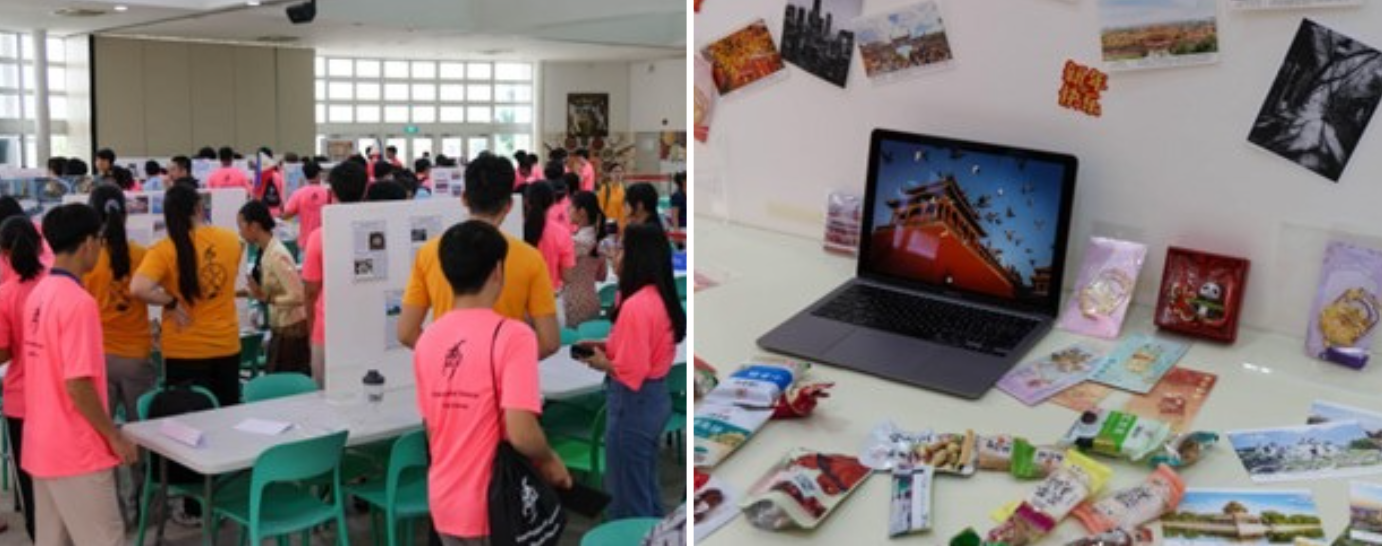 Exploration of various booths filled with photographs, tidbits and cultural information.
The content of each booth was refreshingly varied and unique. For instance, SMA Negeri 4 Denpasar delegates showcased their customary attire, particularly the Udeng and Kebaya, and Mahidol Wittayanusorn School delegates shared their traditional cuisines like the Mango Sticky Rice with us. Likewise, HUS High School for Gifted Students delegates explained interesting facts about floating markets, while Tallinn Secondary School of Science delegates demonstrated creative ways to read tricky Estonian tongue-twisters for all participants. This cultural exchange offered our delegates an invaluable opportunity to pose meaningful questions to their peers across various countries, fostering an appreciation of cultural diversity among all participants.
Science Centre Singapore and ArtScience Museum
As Albert Einstein famously opined, “The only source of knowledge is experience”. Indeed, our Science Activities committee sought to incorporate this quote into each activity they meticulously planned, ensuring that each activity thoughtfully catered to the interests of our delegates while maximising their learning. Our delegates had the opportunity to visit the Singapore Science Centre where they participated in three workshops: the Organic Solar Cells, Genetics Diseases, and Optical Spectroscopy workshops. Additionally, they also took this occasion to peruse the 1000+ exhibits displayed at Science Centre Singapore, piquing their curiosity and interest as they discovered and learned more about the scientific principles underpinning everyday phenomena.
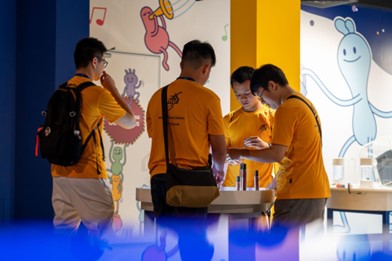 Delegates exploring the exhibits at the Singapore Science Centre.
At the ArtScience Museum, delegates explored the Future World exhibition, where their drawings interestingly came to life at the Sketch Aquarium exhibition. Delegates also found themselves riveted by the multifarious ways a simple paper plane could be over engineered, and investigated how far different planes might take flight in space. Indeed, this experience exposed all participants to a comparatively more informal and amusing facet of learning, offering a timely reminder to all that knowledge can concurrently be acquired through play as well.
Masterclasses
This year, HCI welcomed nine prominent scientists across various fields. Ranging from Nobel Laureates to Turing Award winners and distinguished specialists, each scientist shared a meaningful aspect of his or her research journey to inspire our future batch of STEM advocates. The Dialogue and Masterclasses (DnM) committee played a pivotal role in bridging conversations between delegates and scientists. Members of DnM engaged delegates in various Pre-Masterclass sessions, helping delegates to gain a more comprehensive understanding of each scientist’s work, whilst sowing seeds of curiosity in each delegate's mind.
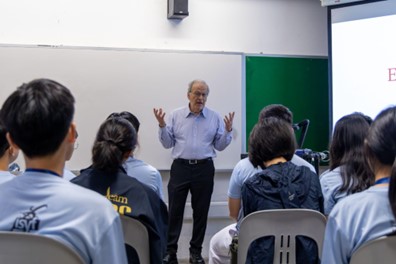 Prof Leslie Valiant (Turing Award 2010) sharing the idea of educability with students.
Sir Richard Roberts (Nobel Prize in Physiology or Medicine 1993) shared his journey to winning his Nobel Prize, from being on the verge of becoming a professional billiards player, to reading a book on biology which compelled him to pursue a career in molecular biology. His journey is a testament to the notion that change remains possible at every stage of life, and that we should make good use of every opportunity that comes our way. Prof Armin Aberle (CEO of the Solar Energy Research Institute of Singapore (SERIS), NUS) gave students an insight into the future of solar energy, a topic he is deeply passionate about, and offered delegates meaningful advice for their scientific journeys ahead.
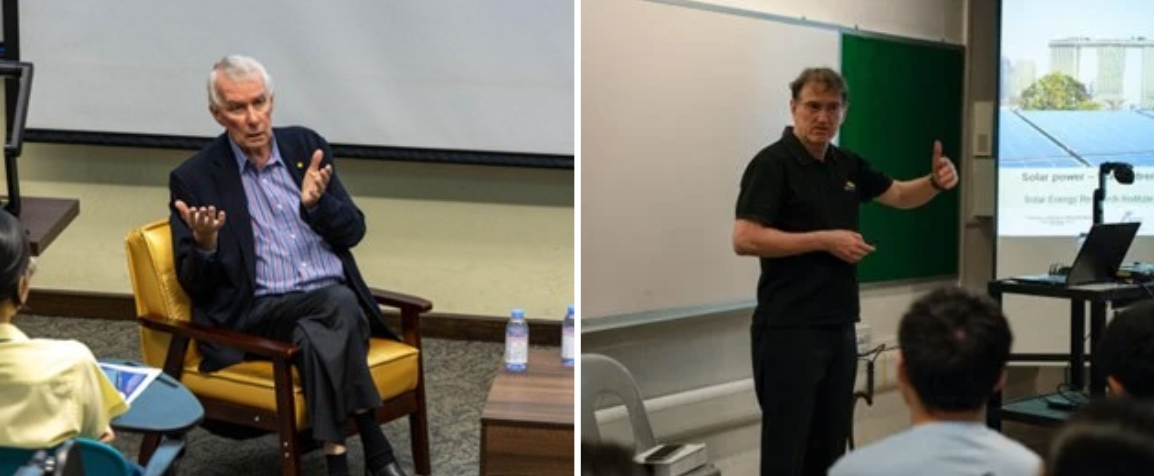 Prof Sir Richard Roberts (left) sharing his Nobel-winning journey; and Prof Armin Aberle (right) explores the future of solar energy and what possibilities lie ahead.
Assoc Prof Xia Kelin (SPMS, NTU), credited by Stanford and Elsevier World as the Top 2% Scientist today, shared more about mathematics as a discipline and how it significantly fuels AI models today. Additionally, he shared various mathematical concepts with participants, delving into topics such as topology and graphs to illustrate interactions in machine learning. Likewise, Assoc Prof Kedar Hippalgaonkar (MSE, NTU) linked AI with our intrinsic curiosity, sharing with delegates about various ways AI might be leveraged as a tool to further our scientific inquiry. In the twenty-first century, AI can be applied across various aspects of research, ranging from autonomous laboratories to research analysis.
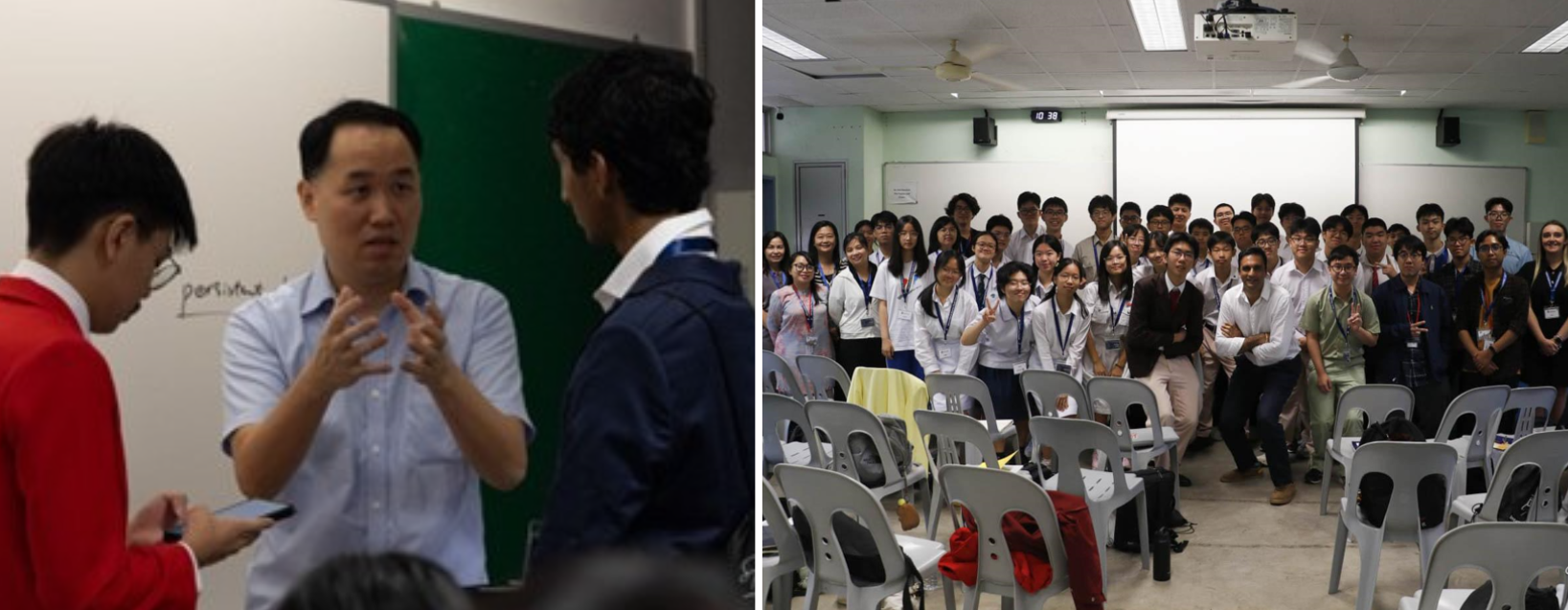 Assoc Prof Xia Kelin (left) answering delegates' queries; and Assoc Prof Kedar Hippalgaonkar (right) sharing how AI can be applied across various areas of scientific study.
Assoc Prof Dario Poletti (SUTD), who published in various top physics journals, delved deep into the world of quantum computing. Students also had an invaluable hands-on opportunity to try out different experimental platforms and learn about the various ways in which businesses are effectively tapping upon this burgeoning field of technology in today’s world. Prof Joan Rose, 2016 Stockholm Water Prize and 2024 IWA Global Water Award recipient for her contributions in Water Science, shared about her journey in the field of water research, and why in today’s day and age, wastewater innovation is a crucial topic to prioritize. She shared about her interdisciplinary experiences that provided opportunities for different Sciences to provide solutions to a societal issue.
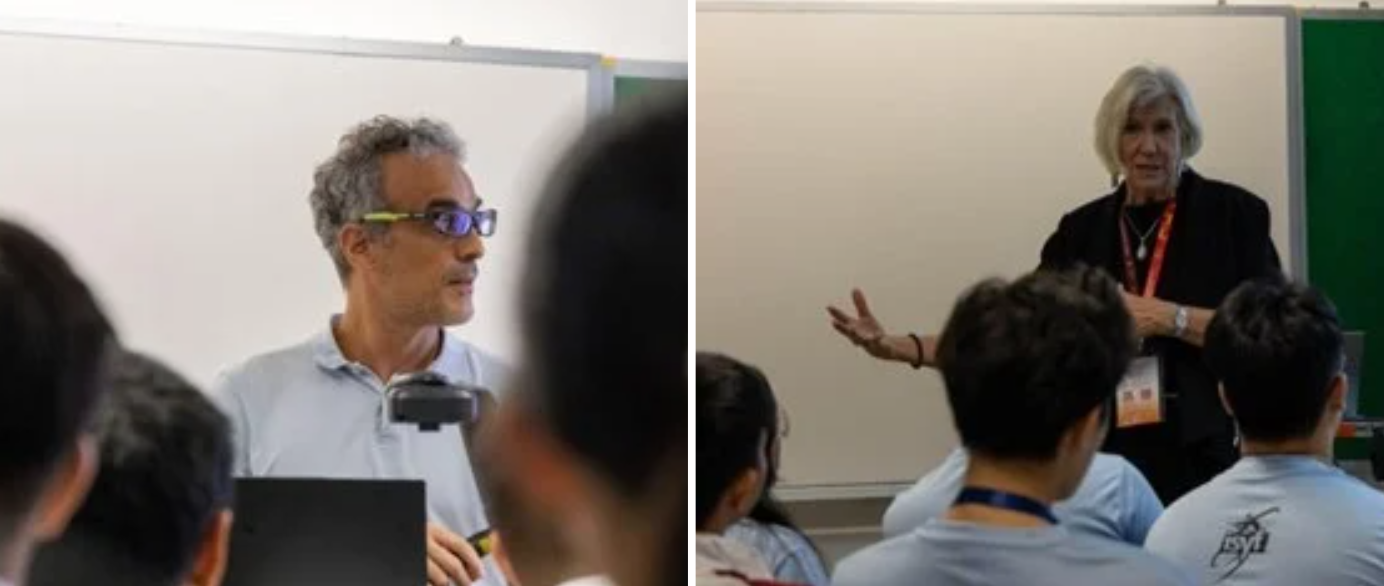 Assoc Prof Dario Poletti (left) dived into quantum computing with hands-on activities with various experimental platforms for studnets; and Prof Joan Rose (right) emphasises wastewater innovation as a top priority in today's water research.
Lastly, Prof Roger Foo, Vice Dean of Research at the NUS Yong Loo Lin School of Medicine, who specialises in cardiometabolism, gave delegates an insight into the works done in The Foo Lab. His team uncovered a molecular candidate for cardiomyocyte differentiation, and a marker gene which acts as a possible gateway to precede cardiomyocyte regeneration.
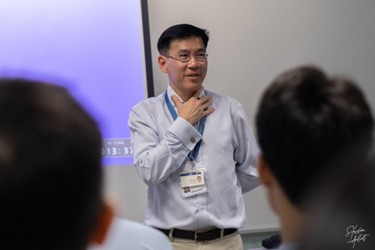 Prof Roger Foo shares Foo Lab insights, revealing molecular pathways and markers advancing cardiomyocyte differentiation and regeneration.
Keynote Lecture
One of the key highlights of ISYF was the Keynote Lecture, which was graced by the presence of Prof Brian Schmidt (Nobel Prize in Physics 2011) and our Guest-of-Honour, Dr Ong Chen Hui (IMDA). The event began with a warm welcome speech from ISYF Co-Chairperson, Jolin Lim En Qi, who reiterated the importance of curiosity in the 21st century. Following her speech, Dr Ong left the delegates with words of encouragement for each person’s individual journey in STEM.
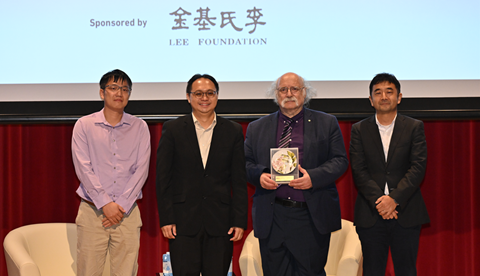
.jpg?sfvrsn=fd204ca1_1) [Clockwise from top left] Guest-of-Honour Dr Ong Chen Hui with her opening address to the audience; Token of Appreciation Presentation by Hwa Chong Institution Principal Mr Lee Peck Ping to Dr Ong and Prof Schmidt; Prof Brian Schmidt explores the universe’s accelerating expansion, dark energy, and cosmic mysteries in an engaging, interactive lecture.
[Clockwise from top left] Guest-of-Honour Dr Ong Chen Hui with her opening address to the audience; Token of Appreciation Presentation by Hwa Chong Institution Principal Mr Lee Peck Ping to Dr Ong and Prof Schmidt; Prof Brian Schmidt explores the universe’s accelerating expansion, dark energy, and cosmic mysteries in an engaging, interactive lecture.
In an animated presentation titled “The Universe from Beginning to End”, Prof Schmidt gave us illuminating insights into his research on the accelerating expansion of the universe and the current theories about dark matter and dark energy forming the bulk of our cosmos. He also brought up Hubble and Cosmological Constant, concepts he picked up in his research journey. The session wrapped up with a live Q&A with the Prof Schmidt, with many eager delegates heading up to the microphone to inquire about various topics such as the nebula hypothesis or parallel universes.
Through the illustrative presentation and lively discussion, delegates left the lecture with fulfilled and motivated hearts, with a newfound or renewed appreciation for the fascinating world of astrophysics.
Closing Ceremony
The closing ceremony, organised by the Ceremonies committee, concluded ISYF 2026, with delegates and facilitators building their last memories over shared food and pictures. HCI’s principal, Mr Lee Peck Ping, congratulated everyone on the successful completion of the 18th ISYF.
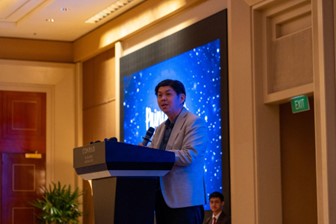 Hwa Chong Institution Principal, Mr Lee Peck Ping delivering his Principal's Address at the closing ceremony.
ISYF Co-Chairperson, Kan Wei Sen, thanked everyone involved in the event for making ISYF 2026 a great success. The lunch concluded with a video montage prepared by the Media and Publications committee, as well as a dance performance prepared by all the HCI student facilitators. The audience left the event after exchanging heartfelt gifts and sincere farewells, filled with gratitude for the memories made and the connections forged.
 The 18th ISYF student facilitators.
As the event drew to a close, delegates were also encouraged to continue their own stories in science and research beyond ISYF 2026. Through the fun-filled 5 days, delegates were exposed to different fields of science through interactions with eminent, well-versed professors with different backgrounds as well as different young but great minds from around the world.
ISYF 2026 stands as a testament to the importance of bringing together people who share a common interest to learn and exchange ideas. ISYF 2026 also serves as a pertinent reminder to future scientists that curiosity is essential, forming the basis of any idea. Only with unbridled curiosity will ideas come to fruition and achieve groundbreaking, even transformational results.
Written by Cheah Sheng Xin, Amy Ong Jin Lu and Jethro Chai Tsin Kai | Hwa Chong Institution
Pictures by: Wang Shihan, Frederic Chua, Zhao Jianzhi, Jiang Yixiang, Hwa Chong Studio Ardent (@hc_ardent on Instagram) | Hwa Chong Institution