The 14th International Conference on Chinese-Language Media and Huaxia Civilisations Convenes in Singapore
.jpg?sfvrsn=749a58e_1)
The 14th International Conference on Chinese-Language Media and Huaxia Civilisations took place on 28–29 November 2025 at the Wee Kim Wee School of Communication and Information (WKWSCI), Nanyang Technological University, Singapore. Guided by the theme “Building a Community with a Shared Future for Mankind in Times of Change: Paths of Peace, Dialogue, and Development,” the conference gathered scholars, practitioners, and media leaders from across Asia to reflect on the changing landscape of Chinese-language media in a rapidly evolving world. All sessions were conducted exclusively in Mandarin.
Key Contributors and Themes
.jpg?sfvrsn=2ebad4de_1)
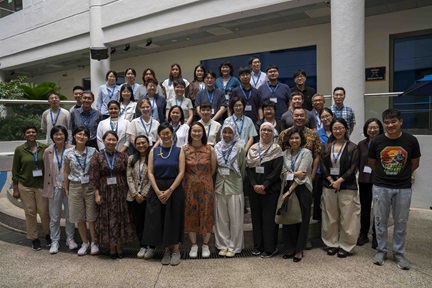
Welcome remarks by Professor Sui Yan, President of the China Journalism History Society; Professor Jin Lingzhi, Party Secretary of the School of Journalism and Information Communication at Huazhong University of Science & Technology; and Professor Jack Qiu, Chair of WKWSCI highlighted the continued relevance of cross-border scholarship. This was followed by an opening dialogue between Professor Wu Tingjun, Founding Dean of the School of Journalism and Information Communication at Huazhong University of Science & Technology, and Professor Eddie Kuo, Founding Dean of WKWSCI, who examined how historical understandings of Chinese civilisations can inform responses to contemporary communication challenges.
Across the two days, researchers presented work spanning international communication, global public opinion, regional media development, digital media innovation, civilisation and globalisation, and strategic communication. Topics such as AI-driven communication strategies, digital inclusion, and the historical role of Chinese-language press in shaping transnational communities illustrated both the breadth and depth of ongoing scholarship in the field.
Keynote and Industry Perspectives
.jpg?sfvrsn=c8ba344_1)
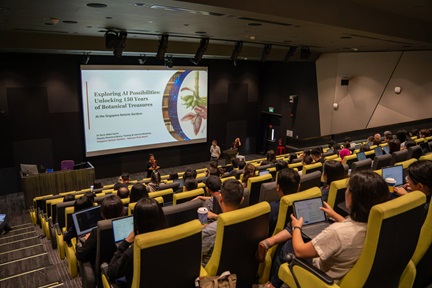
A keynote address by Professor Chen Changfeng, President of the Asia-Pacific Communication Alliance and Professor at the School of Journalism and Communication, Tsinghua University, titled “Visibility in the Age of Intelligent Communication,” explored how intelligent technologies are reshaping information visibility and the ways societies produce and understand knowledge. Her insights provided an important link between academic research and the broader societal shifts driven by automation and digital platforms.
.jpg?sfvrsn=89908548_1)
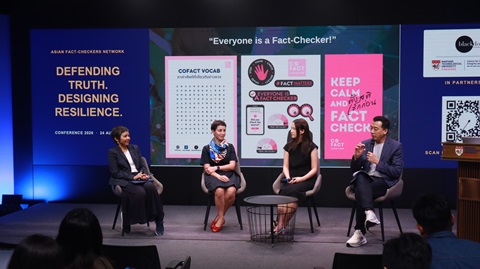
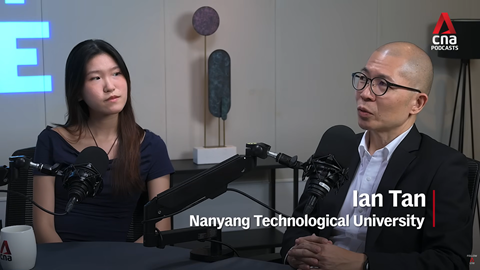
Industry perspectives were also represented, with discussions featuring Southeast Asian Chinese-language media leaders and social media creators working across China and Southeast Asia. These conversations offered practical insights into regional media trends, digital storytelling, audience engagement, and the continually evolving creator economy – underscoring the growing overlap between academic inquiry and professional practice.
Closing and Future Directions
In their closing reflections, Professor Sui Yan and Professor Jack Qiu Linchuan emphasised the importance of sustained regional collaboration and interdisciplinary dialogue. Their remarks reaffirmed the conference’s role as a vital platform for advancing understanding of Chinese-language media and Chinese civilisations.
Bringing together themes from geopolitics and digital transformation to cultural heritage and media practice, the 14th conference strengthened scholarly networks and set the stage for fresh research directions. Preparations are already underway for the 15th International Conference in 2026.