“What Does It Mean to Be Resilient?” Bridging Medicine, Humanities and Lived Experience
On 3rd March 2026, NTU School of Humanities organised an event titled ‘What does it mean to be resilient?’ as part of the biennial Ideas Festival kindly supported by the Social Science Research Council (SSRC) which promotes and supports social science and humanities research in areas of strategic relevance to Singapore and the region. Hosted by the National Library, the event shone a spotlight on the value of interdisciplinary partnership between medicine and the arts. Centred on the theme of resilience, the event brought together patients, caregivers, medical practitioners, medical students, and humanities scholars to explore how resilience is experienced, expressed, and supported in healthcare. Through storytelling, dialogue, and creative works, the festival offered fresh perspectives on the human side of medicine, highlighting how art can illuminate the challenges and triumphs of care.
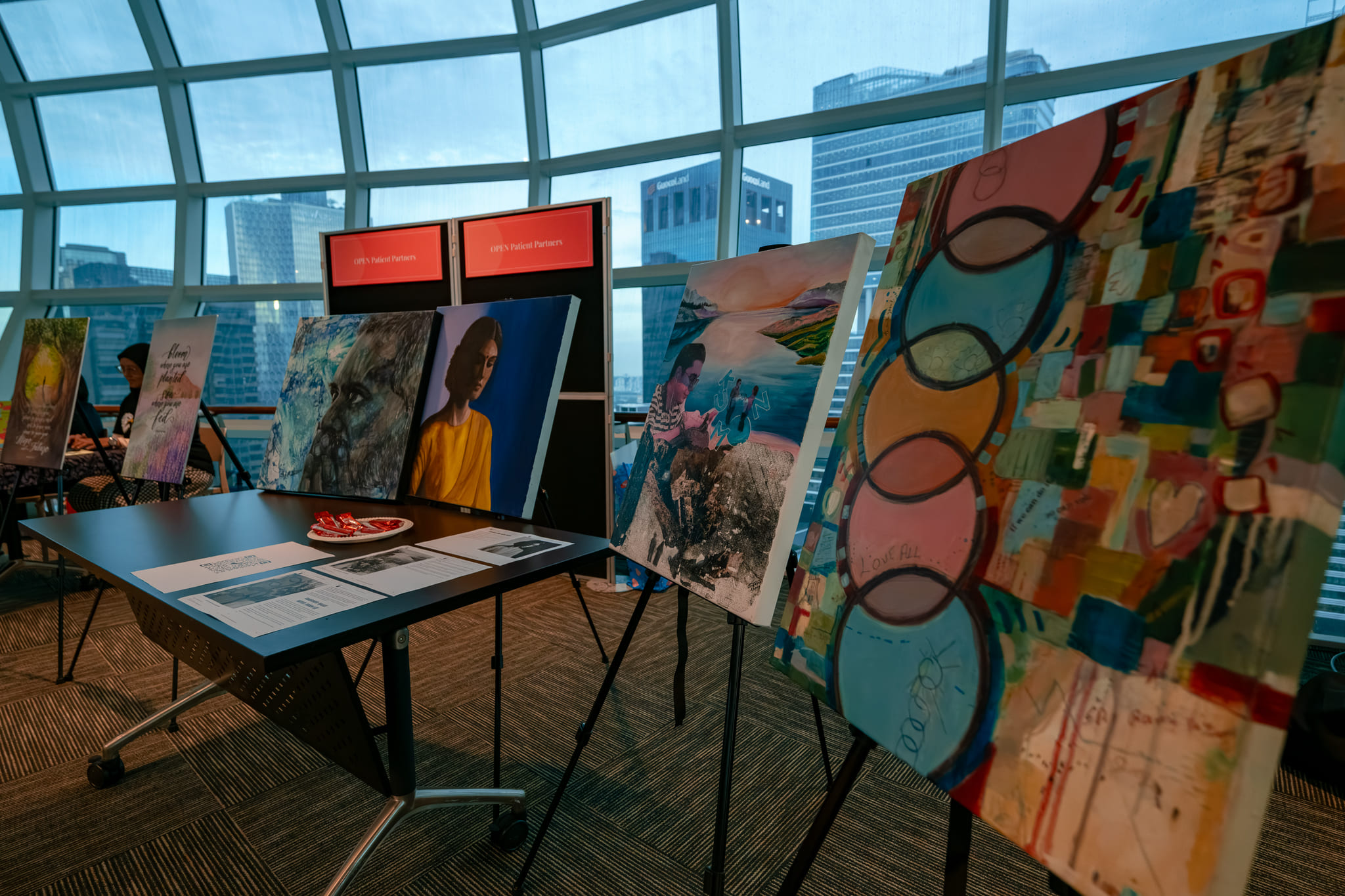
The event’s atmosphere was electric, buzzing with curiosity and engagement. Visitors navigated vibrant creative projects by humanities students from NTU’s Literature and Medicine module alongside poetry and artwork by medical students who studied on the medical humanities modules at LKC Medicine. From striking visual arts to evocative poetry, the exhibits explored human aspects of healthcare, prompting audiences to reflect on the lived experiences of patients and caregivers.
The event opened with a compelling address by Associate Professor Graham John Matthews, who called for participants to honour stories of sickness and celebrate the resilience that patients, doctors, and allied health professionals show on a daily basis. At the same time, we must also be mindful of our limits. He asked us to think critically about common narratives surrounding resilience. “We are taught to stay strong. We are encouraged to fight. We celebrate the people who bounce back”.
“But I often wonder, what happens if you lose? Do these battle metaphors then suggest that you didn’t fight enough?” he added. He explained that the festival aimed to showcase stories of resilience while encouraging participants to think critically about how terms like “resilience” are used in healthcare. He concluded: “resilience is not simply the strength to endure alone, but the courage to recognise our limits, to lean on one another, and to find meaning together in the stories we share”.
Building on this, the festival presented Voices and Stories: Patient Narratives of Resilience, a segment that showcased the personal stories of three speakers navigating illness and caregiving duties. The segment kick-started with Candy Gan, who spoke candidly about living with Type 1 diabetes, reciting an evocative poem named “Blue Honda” to describe her journey. She went on to share her experience creating children’s books to help young patients cope with their condition. Following that, Serene Mai recounted her journey with lupus, including going through dialysis and a kidney transplant. She shared how painting became both her healing outlet and source of income. To end, Rajendran K.S reflected on his challenges as a caregiver for his 27-year-old son with autism, addressing societal stigma and the financial pressures of therapy. He highlighted his experience collaborating with artists who helped him shed light on his experience as a caregiver through paintings.
Resilience remained the focus with the performance, Embodying Resilience, led by PhD candidate in medical humanities, April Thant Aung. Together with three NTU students, she presented a freeze-frame skit that spotlighted the emotional and relational challenges that patients and practitioners face in healthcare. Through this experiential storytelling, the performance highlighted the often unseen and unheard struggles that patients and caregivers contend with.
One of many highlights from the event was a segment titled Beyond Resilience: The Cost of Staying Strong, featuring Assistant Professor Michelle Chiang and Associate Professor Lim Ni Eng. Assistant Professor Chiang presented her work on the myth of Sisyphus and the concept of lucidity, which encouraged the audience to reflect on the courage to face life without exaggeration and denial. Following that, Associate Professor Lim shared a personal account of his father’s stage three pancreatic diagnosis in 2012, highlighting the difficult decisions his family faced between surgery and prognosis. He also discussed the concept of Advanced Care Planning (ACP) and presented case studies that illustrated the complexities of patient autonomy and medical decision-making.
Through storytelling, art, and personal narratives, the Ideas Festival event, ‘What does it mean to be resilient?’, offered a multidimensional exploration of resilience. By bridging medicine and the arts, the event highlighted how understanding human experiences through creative expressions can help us cultivate greater empathy and a deeper understanding of resilience.
-soh-ideasfest-2026-@-national-library--18.jpg?sfvrsn=f9a9a34f_1 "2026-03 IdeasFest")
-soh-ideasfest-2026-@-national-library--73.jpg?sfvrsn=60bf523_1 "2026-03 IdeasFest")
-soh-ideasfest-2026-@-national-library--109.jpg?sfvrsn=ce67bb59_1 "2026-03 IdeasFest")