Self-powered wound dressing speeds healing, monitors infections
New dressing uses body heat to accelerate wound healing and track changes to the wound.
.jpg?sfvrsn=43b583b8_1 "SEM image of the interlaced fibre network structure in the gel dressing (NTU Singapore)")
Scanning electron microscope image of the interlaced fibre network structure in the gel dressing. Credit: NTU.
Scientists have developed a new wound dressing that speeds up the healing of bacteria-infected wounds and enables wireless monitoring of wound conditions, without requiring external power.
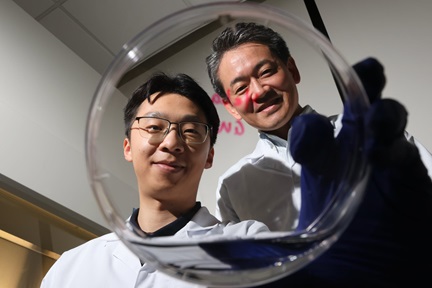
The research team, led by Prof Wei Lei from NTU’s School of Electrical & Electronic Engineering, and in collaboration with Prof Joachim Loo from the University’s School of Materials Science & Engineering and Lee Kong Chian School of Medicine, made the dressing using a water-absorbing gel derived from brown seaweed. The gel is infused with iron ions and reinforced with nanofibres, producing a highly flexible material that can stretch more than four times its original length without breaking.
The dressing encourages faster healing by harnessing the natural temperature gradient between the wound and the surrounding environment, without needing an external power source. This temperature difference creates a voltage in the dressing that guides skin cells towards the wound, speeding up wound closure.
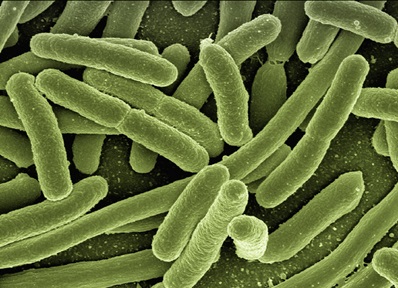
In animal studies, the gel dressing significantly outperformed conventional gauze in healing large, bacteria infected wounds. After 14 days, wounds treated with the new dressing had less than 20% of the wound area open, compared to about 40% for gauze. The new dressing’s iron ions also provided strong antibacterial effects, leaving a hundred to a thousand times fewer bacteria on the wound than gauze.
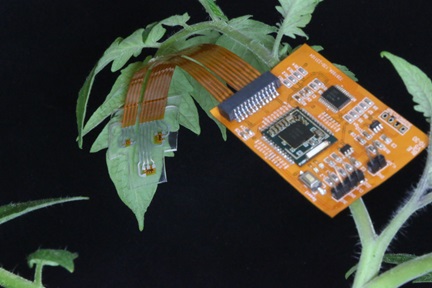
The electricity generated by the dressing can also power simple electronics connected to it, allowing wound data to be transmitted wirelessly. This enables healthcare professionals to monitor wound healing in real time without removing the dressing.
---
Learn more about the study in “A thermogalvanic cell dressing for smart wound monitoring and accelerated healing”, published in Nature Biomedical Engineering (2025), DOI: 10.1038/s41551-025-01440-6.
The article appeared first in NTU's research & innovation magazine Pushing Frontiers (issue #26, May 2026).