Unlocking the cell’s supply chain: How cholesterol keeps cellular recycling centres running
NTU LKCMedicine researchers discover that, far from being simply a dietary villain, cholesterol shields the cell’s recycling centres.
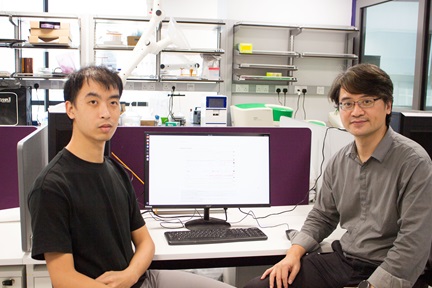
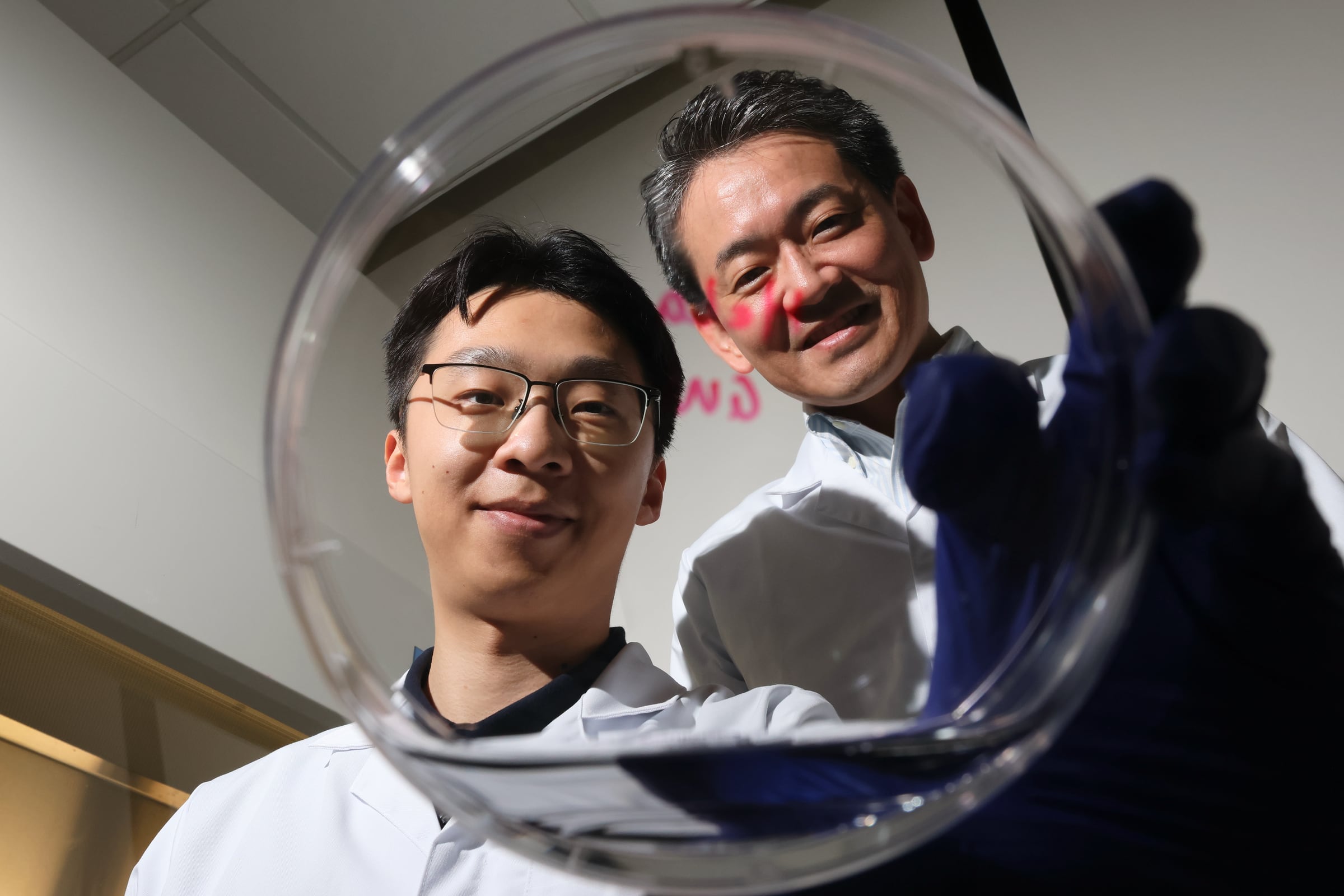 Dr Yang Haoning (left) and Assoc Prof Yasunori Saheki from Nanyang Technological University, Singapore, are part of the team of researchers who discovered the importance of cholesterol in helping cellular recycling. Credit: NTU Singapore
Mention cholesterol, most people will think of clogged arteries or health warnings. But inside the microscopic universe of the human cell, cholesterol has a drastically different job description as an indispensable cellular lifesaver.
A study, led by Nanyang Technological University, Singapore’s (NTU Singapore) Lee Kong Chian School of Medicine (LKCMedicine), shows how cells rapidly dispatch cholesterol to reinforce their “recycling centres” called lysosomes, preventing them from bursting while breaking down worn-out cellular machinery.
Published in Nature Communications this month, the study’s findings provide potential clues into why this recycling process breaks down in age-related brain disorders such as Parkinson’s and Alzheimer’s diseases.
The cellular cleanup crew
Every second inside our cells, microscopic “power stations” called mitochondria generate the energy that fuels life. However, mitochondria will eventually wear down. Left unchecked, toxic fragments from these broken power stations can trigger cell death.
To prevent that, cells execute a precision cleanup operation known as mitophagy, engulfing worn-out mitochondria and sending them to the cell’s highly acidic recycling centres, called lysosomes. Here, lysosomal enzymes break them down into reusable materials.
While scientists have long understood this process, a critical mystery remained – How do lysosomes maintain the harsh acidic environment and withstand stress required to digest such massive cargo without bursting? Now, the study has uncovered the unlikely answer – cholesterol.
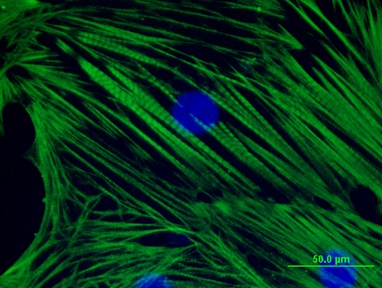
Using advanced cellular imaging, co-first authors NTU Research Fellows Dr Yang Haoning and Dr Koji Matsuhisa, who is currently an Associate Professor at Nagasaki University, Japan, tracked the step-by-step molecular choreography inside the living cells.
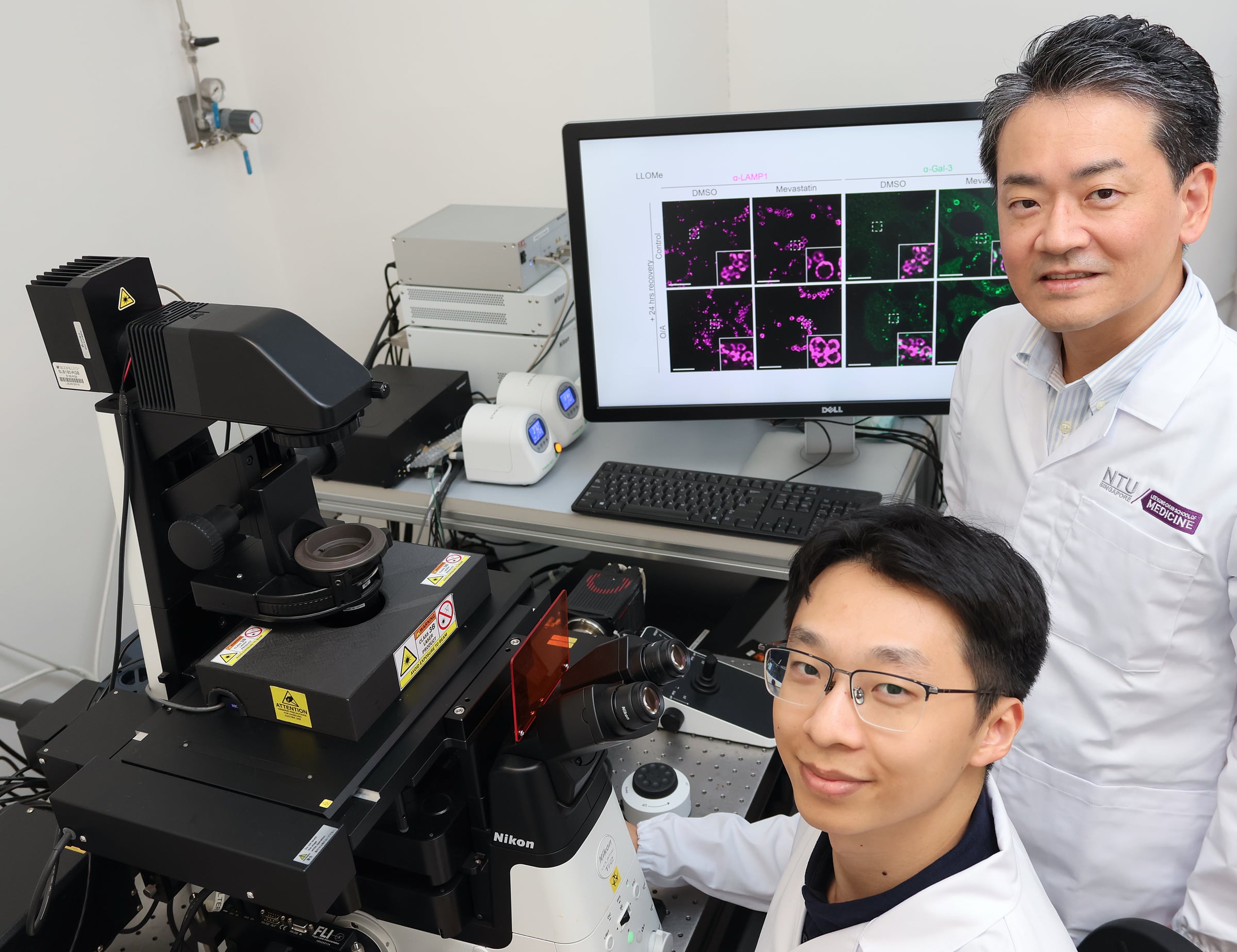 Using advanced microscopic imaging, Dr Yang Haoning (left) and Assoc Prof Yasunori Saheki from Nanyang Technological University, Singapore, discovered the importance of cholesterol in keeping our cellular recycling centres running. Credit: NTU Singapore
When damaged mitochondria land inside a lysosome, an enzyme called PI4KIIα flags the lysosomal surface with a specialised signalling lipid called PI4P. This flag attracts a transport protein named OSBP, which acts as a cellular bridge, rapidly shuttling cholesterol from another cellular network, known as the endoplasmic reticulum (ER), straight into the lysosomal membrane.
As cholesterol leaves the ER, the cell senses a temporary shortage and activates a master genetic switch, ramping up cholesterol production to keep the supply chain flowing.
Corresponding author Assoc Prof Yasunori Saheki, Irene Tan Liang Kheng Chair Professor in Neuroscience at LKCMedicine, said: “Lysosomes need to maintain an extremely acidic interior to digest cellular waste effectively. We discovered that as lysosomes take in damaged mitochondria, they reinforce their membranes with cholesterol. This process helps keep the lysosome resilient and ensures that its digestive functions remain fully active.”
Turning waste into safe energy storage
The research team’s analysis also revealed another intriguing finding. Once the lysosome successfully digests the mitochondrial membranes, it releases a surge of lipids known as free fatty acids. If left free in the cell, these fatty acids can become toxic.
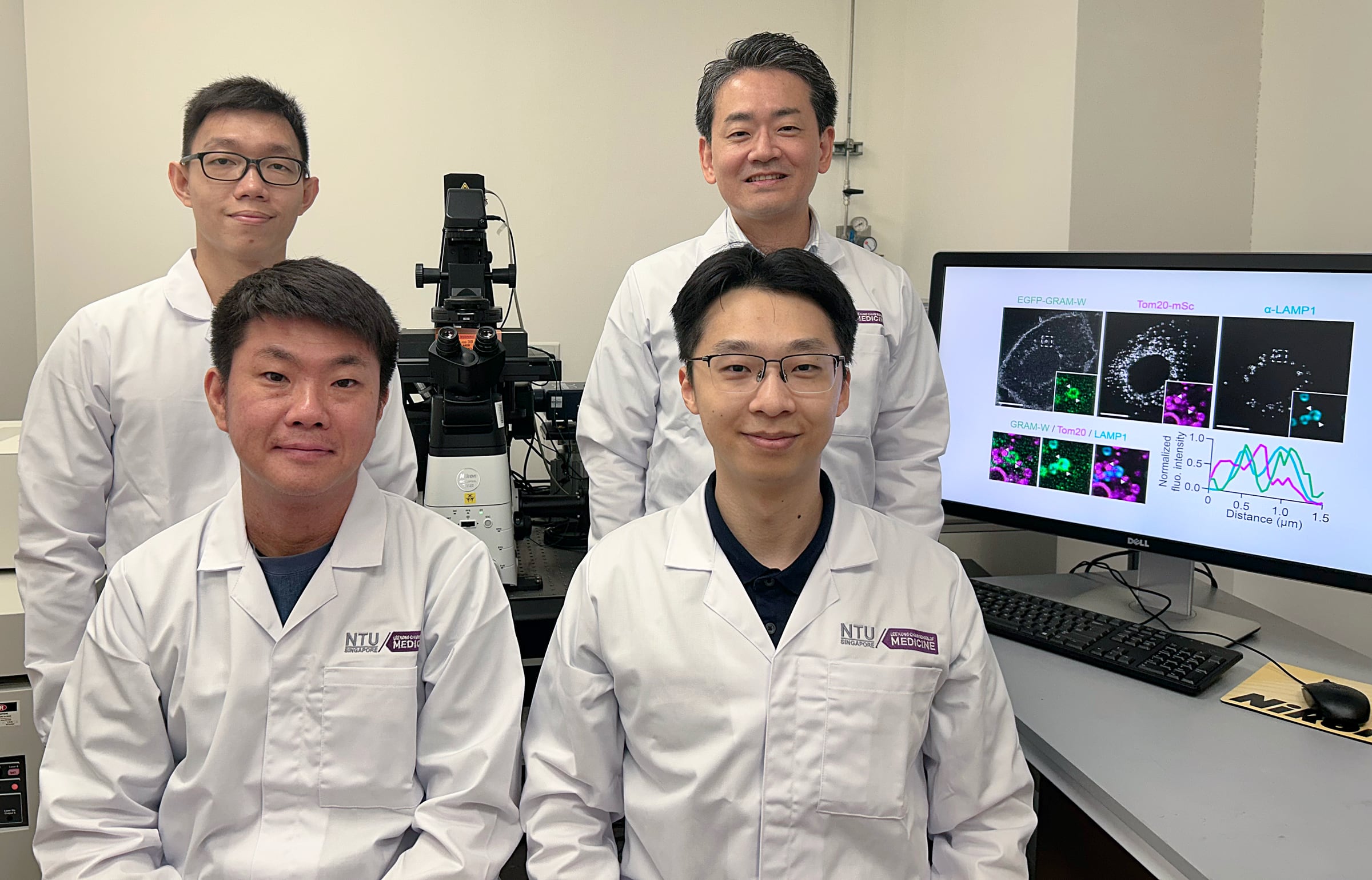 From top left clockwise: Dr Dylan Hong Zheng Koh, Assoc Prof Yasunori Saheki, Dr Yang Haoning, and Dr Wataru Nishi are part of the LKCMedicine research team that discovered the importance of cholesterol in helping our cells. Credit: NTU Singapore
To solve this, the cell uses a series of enzymes to package these fatty acids into safe storage units called lipid droplets. This process effectively converts toxic waste into stored energy reserves for future use.
When the research team experimentally blocked cholesterol transport or synthesis, the consequences were significant. The lysosomes lost their acidity, became fragile and prone to rupture, and failed to break down damaged mitochondria. The cells were also unable to form protective lipid droplets.
LKCMedicine Research Fellow Dr Yang Haoning said: “By mapping how lipid transfer protects lysosomes during mitochondrial damage, we open up potential new therapeutic targets aimed at preserving cellular health during aging.”
Nerve cells in the human brain rely heavily on efficient mitochondrial recycling, as these cells cannot easily replicate or replace themselves. Cholesterol is also known to play an essential role in brain function. The findings hold important implications for understanding neurodegenerative disorders, such as Parkinson’s and Alzheimer’s diseases.
Paper titled “Cholesterol maintains the degradative capacity of lysosomes during clearance and recycling of dysfunctional mitochondria”, published in Nature Communications, on 16 September 2026. DOI: 10.1038/s41467-026-77423-1.

.tmb-listing.jpg?sfvrsn=8d60272d_1)