Nanotechnology's green promise
Nanoscience innovations from NTU are addressing global environmental issues.

All over the world, people are grappling with the debilitating effects of climate change, from heat waves and increased flooding to disease outbreaks and water scarcity.
Solutions to this vast challenge could lie in the miniscule. Scientists are turning to technology at the nano-level to mitigate the effects of climate change and reduce its root causes.
The unique properties of nanomaterials have the potential to help us reduce carbon emissions and pollution, while increasing access to green energy and clean water.
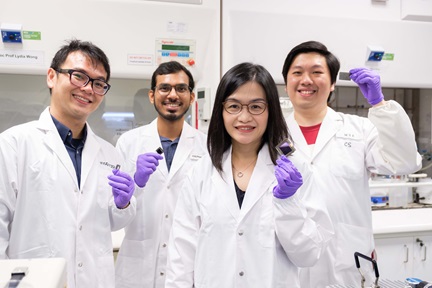
By engineering these nanomaterials, we can develop solutions with different desirable and sustainable properties, says Dr Xiu Mingzhen, CEO of H2Edge Technologies, an NTU spinoff that provides alternatives to expensive metals used in hydrogen production.
“For example, by adjusting the materials’ size, surface area and electronic structure at the atomic level, we can significantly enhance energy efficiency and utilisation,” explains Dr Xiu. “This allows us to reduce our reliance on scarce precious metals while improving durability and performance.”
Such nanomaterials could make green energy production more viable and unlock innovative solutions for environmental monitoring and restoration.
Making green energy viable
In the fight against climate change, many countries are turning to more sustainable sources of energy. These include green hydrogen, produced sustainably with water and renewable electricity, as well as other renewable fuels.
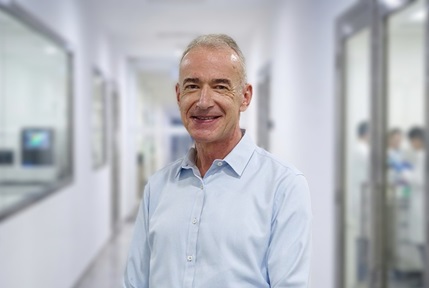
Of the different green energy carriers, hydrogen stands out for its sheer abundance. Beyond generating energy, hydrogen can also be a raw material for other types of green fuels like ammonia, green methanol, biofuels and sustainable aviation fuel, notes Prof Jason Xu from NTU’s School of Materials Science & Engineering and Director of the Maritime Energy & Sustainable Development Centre of Excellence.
Given its potential, there has been growing interest in developing and improving green hydrogen production techniques. Currently, green hydrogen is produced by electrolysis powered by renewables, which uses an electric current to split apart the hydrogen and oxygen molecules that make up water. However, this method requires significant energy input and can be costly. There are some challenges to ammonia electrolysis, which is one of the key techniques for releasing hydrogen from the best hydrogen carrier, ammonia.
“Making hydrogen production from water and ammonia more efficient and cost-effective is key to building the global supply chain of green hydrogen,” Prof Xu adds.
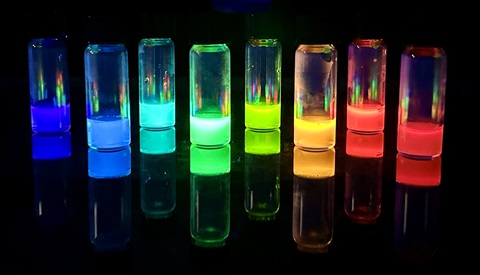
Catalysts are needed to activate or speed up electrolysis when producing hydrogen, and reducing the particle size of catalysts offers a promising route. “When these catalysts are made at the nanoscale, they have a much larger surface area and, more importantly, the intrinsic properties of active sites can be precisely tuned,” explains Prof Xu. “This means more hydrogen can be produced using fewer expensive materials and less energy input. Of course, for some catalyst materials, reducing the size may cause some tradeoff in intrinsic activity. That’s the exciting challenge of this research – identifying those limitations and then finding ways to overcome them.”
Prof Xu and his team are trying to improve the catalysts used in water and ammonia electrolysis. They found that the electron’s spin alignment, and aspects of the catalysts’ magnetic properties, can improve the rate of these chemical reactions.
With further advances in catalyst materials for electrolysis, the chemical reactions required for hydrogen production can become more efficient, supporting the supply chains of various green fuels and green hydrogen.
Advancing energy and water efficiency
Nanotechnology also offers powerful ways to better manage the environment, from environmental monitoring to the treatment of pollutants. For instance, nanotechnology has significant potential to improve water treatment technologies, crucial for resource-scarce countries like Singapore that need highly efficient methods to recycle and produce clean water.
Prof Wang Rong, Executive Director of NTU’s Nanyang Environment & Water Research Institute, whose work involves developing nature-inspired nanoscale membranes, highlights this potential.
“With the growing impact of climate change, Singapore’s water resilience increasingly depends on our ability to produce water in a more energy-efficient and sustainable manner,” she says. This makes further advancements in technologies, such as seawater desalination and water reclamation, especially vital.
The precise control offered by nanotechnology allows researchers to fine-tune nanoscale membrane properties, such as permeability and durability. One of Prof Wang’s inventions uses biomolecules, similar to those found in nature, to steer how the membrane layers form. These biomolecules guide the membrane’s structure at the nanoscale, creating more efficient channels for water molecules to pass through, increasing flow while blocking salt and impurities.
“Our bio-programmable hollow-fibre reverse osmosis membrane can achieve twice the water flux of conventional membranes, while maintaining similarly high levels of salt rejection,” says Prof Wang. “Such innovations demonstrate how nanotechnology can significantly improve the performance and energy efficiency of water treatment processes, contributing to sustainable water solutions.”
Many of these innovations in nanotechnology have already moved from the laboratory to commercial applications. Research from NTU – like Dr Xiu’s work with H2Edge’s alternative catalysts and Prof Wang’s work with her biomimetic membrane spinoff, H2MO – is now being used in regional industry and public utilities.
With continued research and strategic support, nanotechnology is poised to play a significant role in addressing long-term sustainability challenges, from clean energy to water security.
The article appeared first in NTU's research & innovation magazine Pushing Frontiers (issue #26, May 2026).