
Published on 27 August 2025
Ageing well is a blessing, and you can bless many
Professor Joseph Sung
Dean, Lee Kong Chian School of Medicine
“Why do old men wake so early? Is it to have one longer day?”― Ernest Hemingway, The Old Man and the Sea.
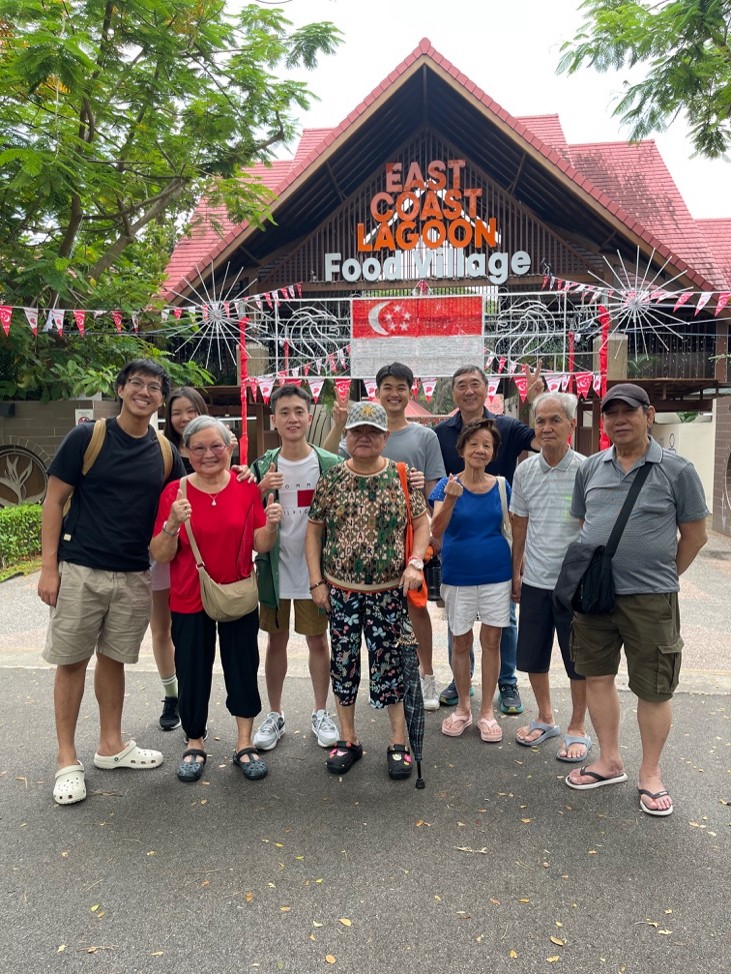
Last Saturday, I had the opportunity to join Dr Chua Tze Hean, an LKCMedicine graduate, and his volunteer group for A Good Meal at the East Coast Lagoon Food Village. When I arrived at the venue, I saw four young men and women busy buying food and drinks for six (would be seven including me) senior citizens sitting in the food court. So, I spent a few minutes chatting with them trying to understand their lives.
There were two couples and two elderly ladies in the group, all living in HDB flats in a nearby estate. They were contacted by A Good Meal through the community centre in their neighbourhood. Among the six, one had mild dementia, one had knee problems, while the others looked relatively healthy. Apparently, they are living on their own with little social network. When I asked whether their children were taking care of them, I noticed a glimpse of sadness. Their children are either living abroad, or too busy to look after them. So, the conversation stopped there.
What Tze Hean and his friends did really touched my heart. They brought them food and drinks. They were attentive and kept asking “Is this food OK? Do you like it?”, much like conversations they would have with their own parents. I asked Tze Hean how often they did this. “Twice a month,” he replied. Each time they would spend around $400 on transportation and the food. All the expenses came out of their own pocket despite the fact that they all earned a humble salary (Wesley was in national service). After the hearty meals, they cleaned up the tables and took the seniors for a stroll along East Coast Park. The smiles on their faces were brighter than the sun that day. A Good Meal has been active for over 16 months now, serving five to six seniors each time.
I left the group with warmth in my heart, thinking to myself, “These kids are the pride of Singapore”.
.jpg?sfvrsn=aa4a7f0f_1)
Singapore is a rapidly ageing society. By 2030, one in four Singaporeans will be 65 years or older. This astounding figure is often quoted by the Ministry of Health. Does living long always mean living well?
Besides chronic diseases that take them in and out of hospital frequently, minor ailments such as joint pain, impaired vision and hearing, poor digestion and failing memory are almost universal problems for the elderly. Who can understand these inconveniences except for those reaching this stage of their life? When I was a medical student, I considered these “small problems” trivial. As I got older, I understand them much better. You really wish you will one day wake up with no pain – your joints allowing you to jump and hop like before.
Many seniors are facing not only physical illness, but also psycho-social challenges: loneliness, helplessness and alienation. According to the second wave of the Well-Being of the Singapore Elderly (WiSE) study*, conducted between 2022 and 2023, the crude prevalence of clinical depression among older adults (aged 60+) was 4.4% (1 in 23). Depression characterised by depressive symptoms that don’t meet full diagnostic criteria (so-called subsyndromal depression) stood at 11.9%. In 2012 the Singapore Longitudinal Ageing Study found that about one in five elderly aged 75 and above show signs of depression. What can we do to relieve this suffering?
What Tze Hean and his friends are doing is absolutely admirable. They extend their helping hands voluntarily. More importantly, you must take good care of your own parents, before turning to other senior citizens. If this is achieved, I am certain your life will be different.
*AshaRani P V et al. Tracking the Prevalence of Depression Among Older Adults in Singapore: Results From the Second Wave of the Well-being of Singapore Elderly Study. Depress Anxiety 2025; 9071391.