Low Complexity Radar Sensing Algorithm for Distance and Speed Estimation
Synopsis
An algorithm is proposed for radar sensing with computational complexity much lower than that of the state-of-the-art radar sensing algorithms.
Opportunity
In many radar applications, estimating the distance and speed of targets requires heavy computation, especially when using advanced methods designed for high accuracy. This can make real-time processing difficult and increases the demands on hardware, power consumption, and system latency. The problem becomes more challenging for small, embedded, or low-power devices, where resources are limited but fast and accurate sensing is still required.
To address this, the proposed method introduces a more efficient radar processing approach that significantly reduces the required computation. This allows radar systems to estimate distance and speed more quickly and with lower hardware and energy requirements. As a result, it is well suited for applications such as autonomous systems, UAV sensing, IoT radar devices, and future integrated radar-communication systems, offering improved efficiency, scalability, and cost-effectiveness.
Technology
This invention proposes a low-complexity radar sensing method for range–velocity estimation by decoupling Doppler and range processing. The approach reduces the computational burden of conventional radar signal processing, enabling faster processing with lower hardware cost and energy consumption. The method segments received radar samples and re-organizes them into structured matrices to facilitate efficient processing, allowing range and Doppler estimation to be performed more independently. This results in a scalable radar processing framework suitable for real-time and resource-constrained radar applications.
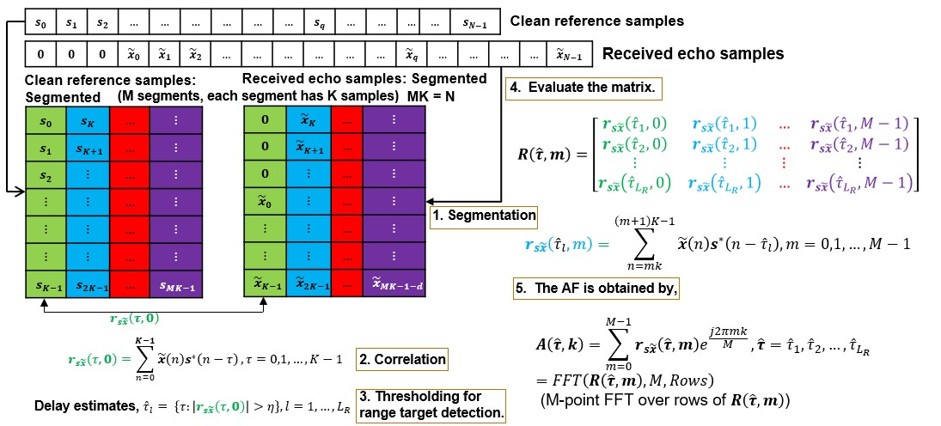
Figure 1: The proposed low-complexity radar sensing approach.
Applications & Advantages
- Applicable to real-time radar-sensing systems such as autonomous vehicles, UAV detection and surveillance radar.
- Low-power or embedded radar platforms where computational resources are limited.
- Portable or edge sensing devices where reduced latency and energy efficiency are critical.
- Significantly reduced computational complexity.
- Lower hardware cost and power consumption.




.tmb-listing.jpg?sfvrsn=462ec612_2)