Sensing and Wearable Technologies with 2D Nanomaterials by Dr Otto Lam
IAS@NTU STEM Graduate Colloquium Jointly Organised with the Graduate Students' Clubs
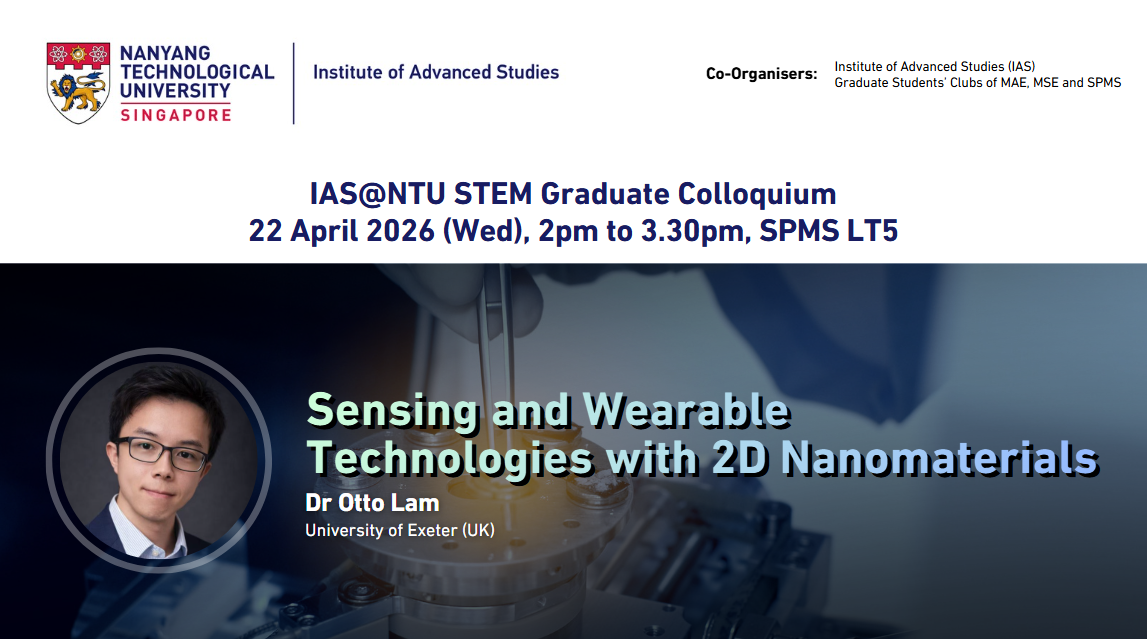
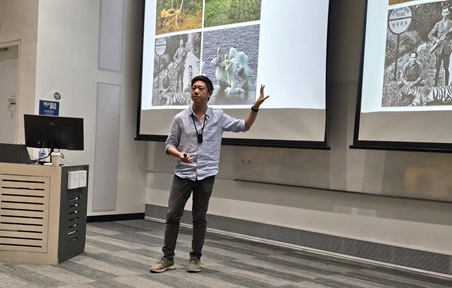
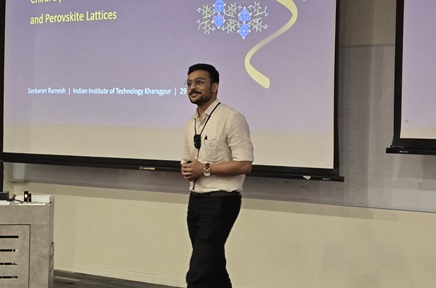
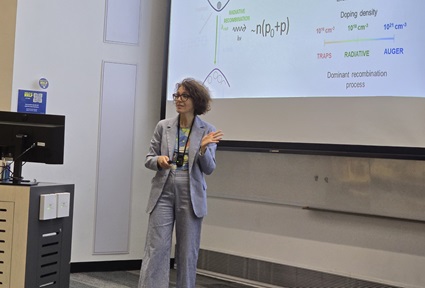
At the IAS@NTU STEM Graduate Colloquium held on 22 April 2026, Dr Otto Lam from the University of Exeter presented a talk titled “Sensing and Wearable Technologies with 2D Nanomaterials.” The presentation focused on how 2D materials can be used in photodetectors, environmental and physiological sensing, and flexible wearable electronics. The talk was structured into two parts, covering first the sensing, followed by the wearable electronics his group has been developing. The presentation provided a broad overview for the audience comprising of attendees with backgrounds across various fields of science.
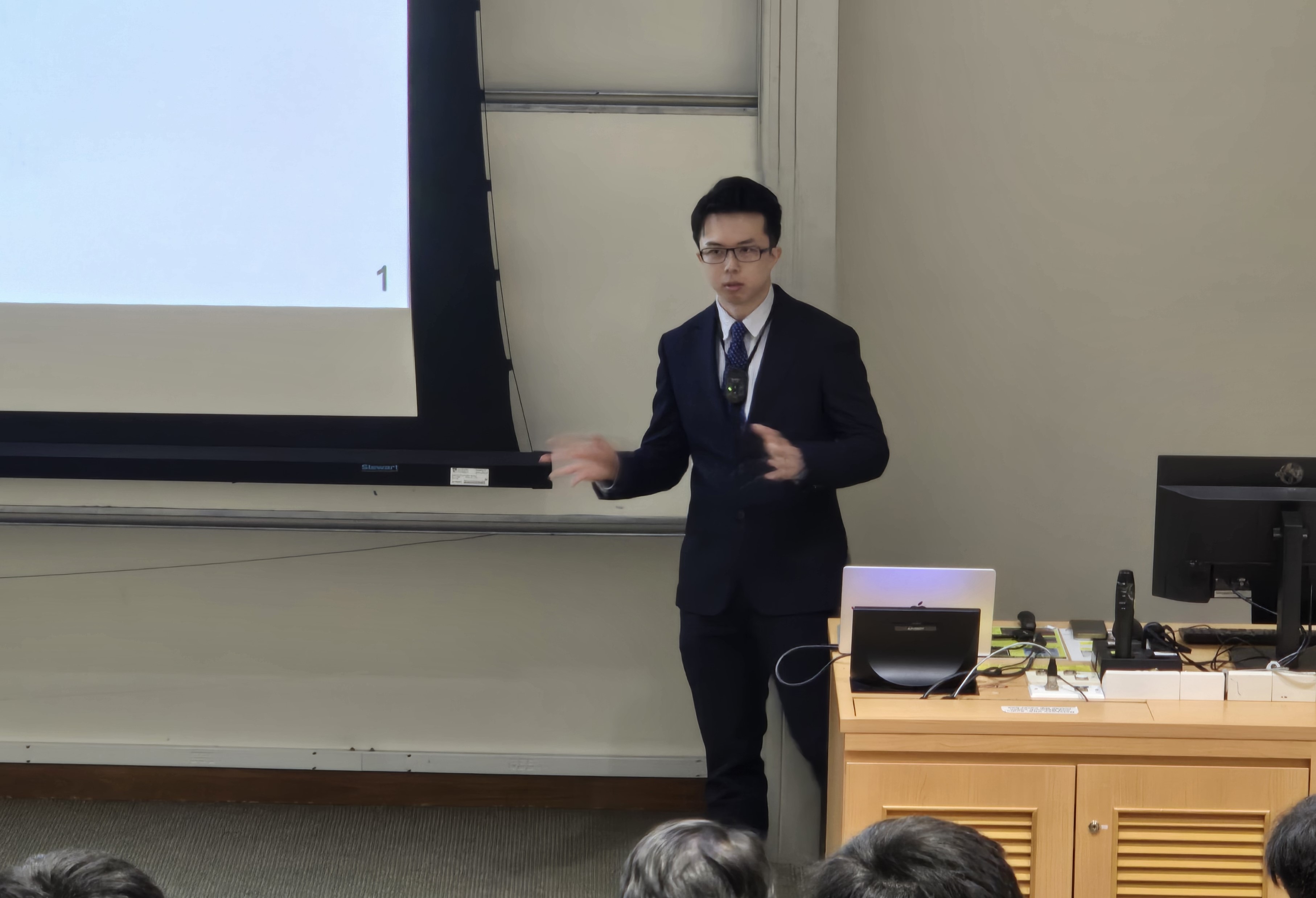 Exploring next-generation 2D materials, the presentation highlights the promise and challenges of perovskites in advancing optoelectronic technologies.
Dr Lam's presentation began centered on 2D materials beyond graphene, especially perovskites. Dr Lam briefly reviewed how his group’s research developed from graphene and transition metal dichalcogenides (TMDCs) to perovskites, which have become widely studied because of their strong light absorption and potential in optoelectronics. He explained that perovskites are attractive because they absorb very well, but they also have well-known limitations. Earlier perovskite materials were not particularly stable, could degrade quickly under ambient conditions, and many of them are lead-based, which raises concerns about toxicity.
A key example from this section was his group’s work on lead-free perovskites deposited by radio-frequency magnetron sputtering. These materials were fabricated on four-inch wafers, showing the possibility of large-area device preparation. Dr Lam described how deposition temperature influenced grain size and defect structure. In particular, the difference in grain size between room-temperature and 150 °C deposition affected the density of surface vacancies, which in turn altered the apparent band gap. He explained that by tuning grain size, the group could tune the surface to bounding ratio and therefore change the density of cesium antimony vacancies. This helped explain differences in optical and electronic behavior between samples. Dr Lam also discussed device performance and transport mechanisms in these photodetectors. He showed that the lead-free devices had high detectivity, relatively fast response, and acceptable uniformity across the wafer.
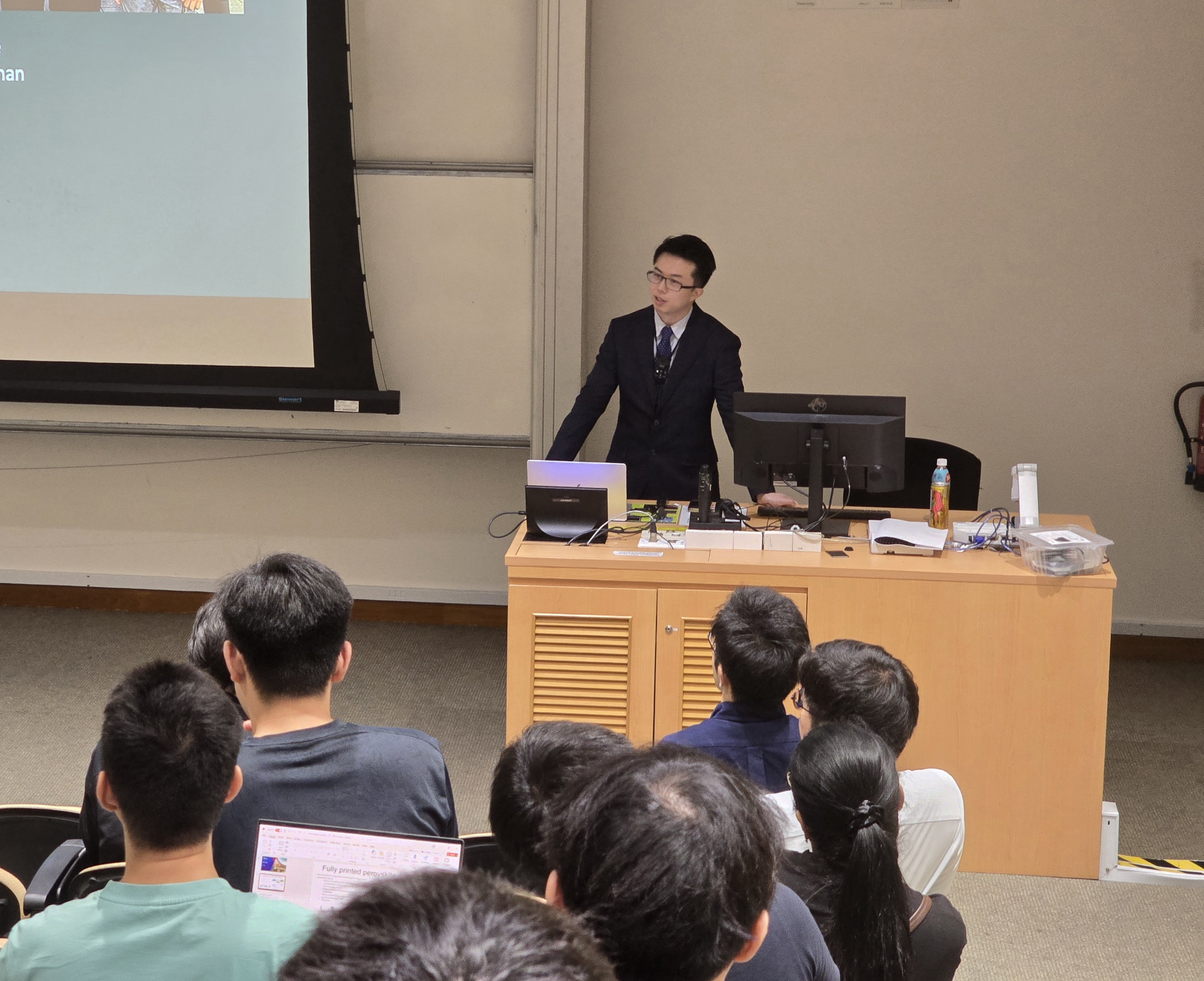
Encapsulated perovskite devices are demonstrated for environmental and physiological sensing applications, including water quality monitoring and light-based heartbeat detection.
In addition, he emphasised the role of trap states in controlling charge transport. He stated it is important to understand how they are playing the role and what they are. His group used electrical measurements to connect transport behavior with trap dynamics and showed that shallow and deep traps influence recombination, carrier lifetime, and diffusion length in different ways.
One of the more application-oriented examples was the use of encapsulated perovskite devices in water and physiological monitoring. Dr Lam described how the group used beeswax as a biodegradable encapsulation layer. With this approach, the devices could be placed underwater and used to assess pond water quality by measuring changes in received light. The same material system was also applied as a heartbeat sensor, because the perovskite devices were highly sensitive to green light, similar to the operating principle of commercial wearable devices.
The second half of the talk moved to wearable electronics based on graphene and other 2D materials. Here, the focus was on coating textiles to create flexible electronic fabrics. Dr Lam explained that his group found spray coating to be especially effective because it could penetrate the porous structure of textiles and create conductive coatings suitable for electronic textiles, or “e-textiles.” These systems were often combined with triboelectric nanogenerators, which he described simply as “static electricity in a nutshell.” In this mechanism, contact and separation between materials with different electron affinities generate charge, allowing movement or vibration to be converted into electrical output.
 Flexible e-textiles take shape as researchers explore graphene-based coatings and wearable electronics technologies.
Using this platform, the group explored several applications, including acoustic energy harvesters, wearable sound sensors, and chemical sensing. One example involved graphene and molybdenum sulfide heterostructures functionalised for detecting styrene, a volatile compound associated in the talk with biomarkers for diseases such as Alzheimer’s and Parkinson’s. Dr Lam also mentioned recent work integrating temperature sensing into wearable systems, including a chip designed for monitoring babies. Across these examples, a common theme was that the same textile-based platform could support both sensing and self-powered operation.
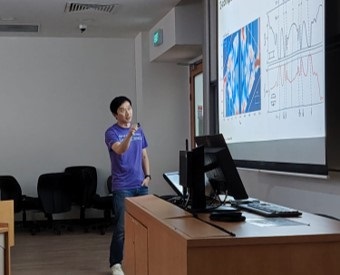
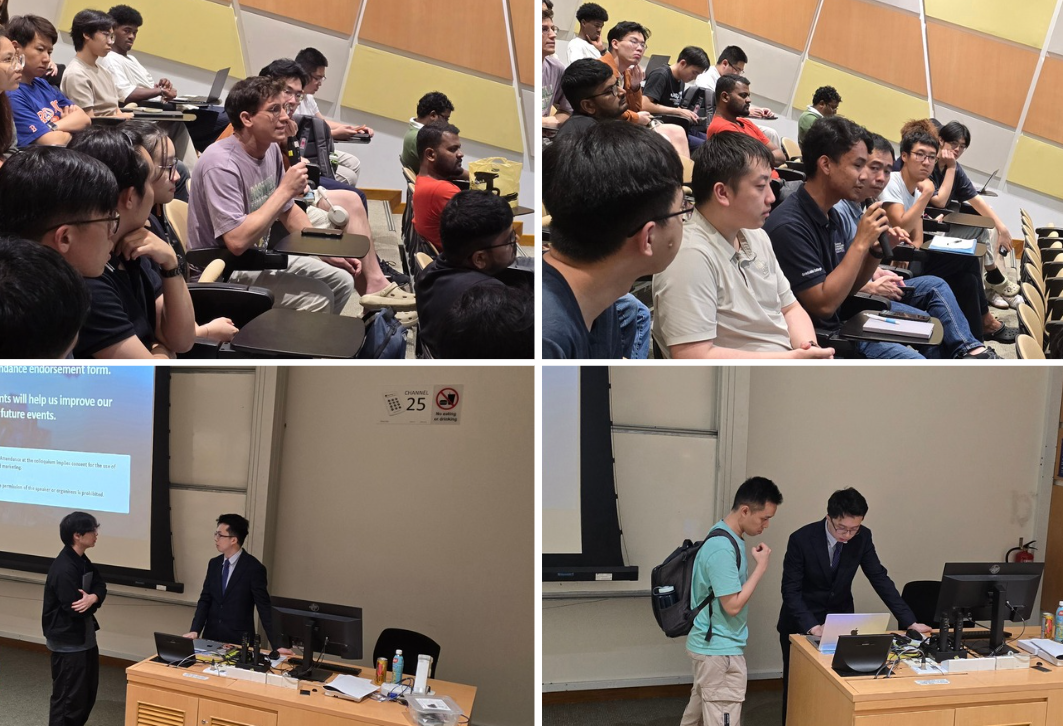 Attendees engage in an active Q&A session with Dr Lam, discussing applications of nanomaterials and device design, with further questions continuing in smaller conversations after the colloquium.
The Q&A session added several useful points. When asked whether triboelectric devices could work as mechanical pressure sensors, Dr Lam replied that they could, although sensitivity and long-term stability would depend on the material used and the force range involved. In response to a question about beeswax, he explained that his group had tested many waxes, not only beeswax, and that mixing with other waxes such as soy wax could help improve properties such as transparency or thickness control. Another question addressed the differences between coating methods, and Dr Lam explained that spray coating performed well mainly because it allowed graphene to penetrate textile structures more effectively than other approaches.
Overall, the colloquium showed how research on 2D nanomaterials is moving beyond material synthesis alone toward device design and practical applications. By covering both photodetectors and wearable systems, Dr Lam highlighted how materials such as perovskites, graphene, and TMDCs can be adapted for sensing, environmental monitoring, and lightweight electronics in forms that are flexible, scalable, and application-driven.
Written by: Ma Zhuoran| NTU School of Mechanical and Aesospace Engineering Graduate Students’ Club
“My PhD thesis is based on this and helped to get a new outlook on things!” - Verma Somya (PhD student, MSE)
“Learning about the novel and interesting applications of the 2D Materials” - Zhao Muqing (PhD student, IGP-NEWRI)
“The usage of beeswax was interesting as a encapsulation layer.” - Muhammad Syahril Bin Roslan (PhD student, SPMS)
Watch the recording here.