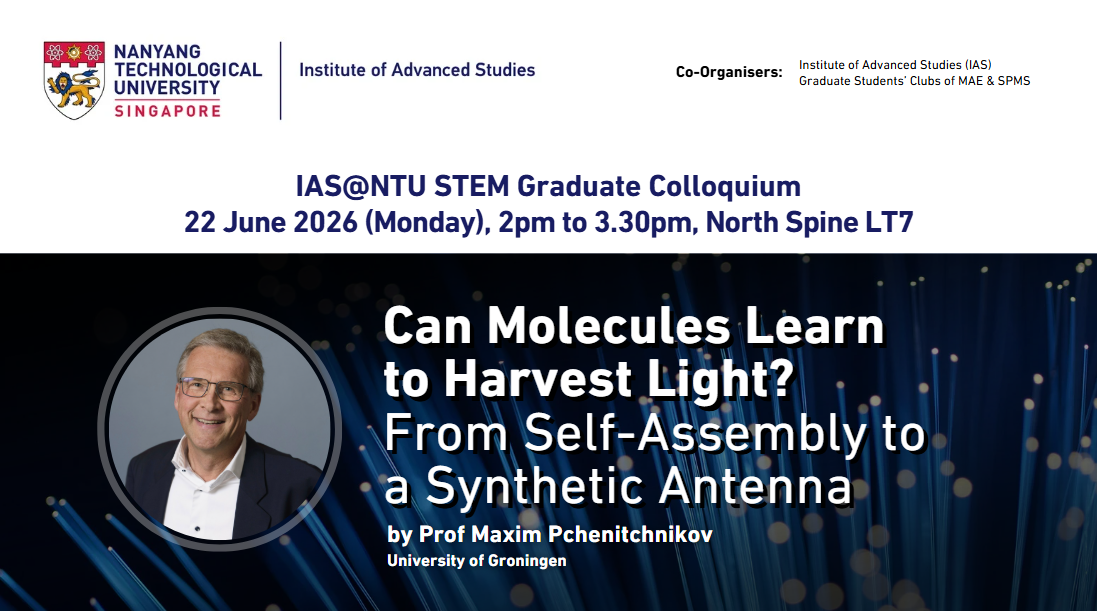
Can Molecules Learn to Harvest Light? From Self-Assembly to a Synthetic Antenna by Prof Maxim Pchenitchnikov
IAS@NTU STEM Graduate Colloquium Jointly Organised with the Graduate Students' Clubs
On 22 June 2026, the IAS@NTU STEM Graduate Colloquium Series hosted Prof Maxim Pchenitchnikov from the University of Groningen for a colloquium titled "Can Molecules Learn to Harvest Light? From Self-Assembly to a Synthetic Antenna". The colloquium introduced how small organic molecules can self-assemble into ordered nanostructures and gradually acquire light-harvesting-like properties.
 Prof Maxim introduced his research background and the central theme of the session, focusing on how molecules can self-assemble into ordered nanostructures and gradually acquire light-harvesting-like properties.
The presentation began with a question that is easy to understand but difficult to answer: how can many small molecules, without central control, build a structure capable of collecting and guiding light? Prof Maxim believes the answer lies in molecular self-assembly, a process where molecules organise through noncovalent interactions such as hydrogen bonding, π–π stacking, electrostatic interactions, and van der Waals forces. One key message of the talk was that self-assembly is not only about forming a final structure. The pathway matters because molecular function can emerge during the assembly process.
To explain these concepts, Prof Maxim first explored natural light-harvesting systems. Green sulfur bacteria can perform photosynthesis under extremely weak light conditions. Their chlorosomes act as large molecular antennas, containing many strongly coupled pigment molecules that capture photons and transfer energy to reaction centres. However, natural chlorosomes are structurally complex and difficult to study in detail. Therefore, a simpler synthetic system is needed to understand how molecular order and optical function develop.
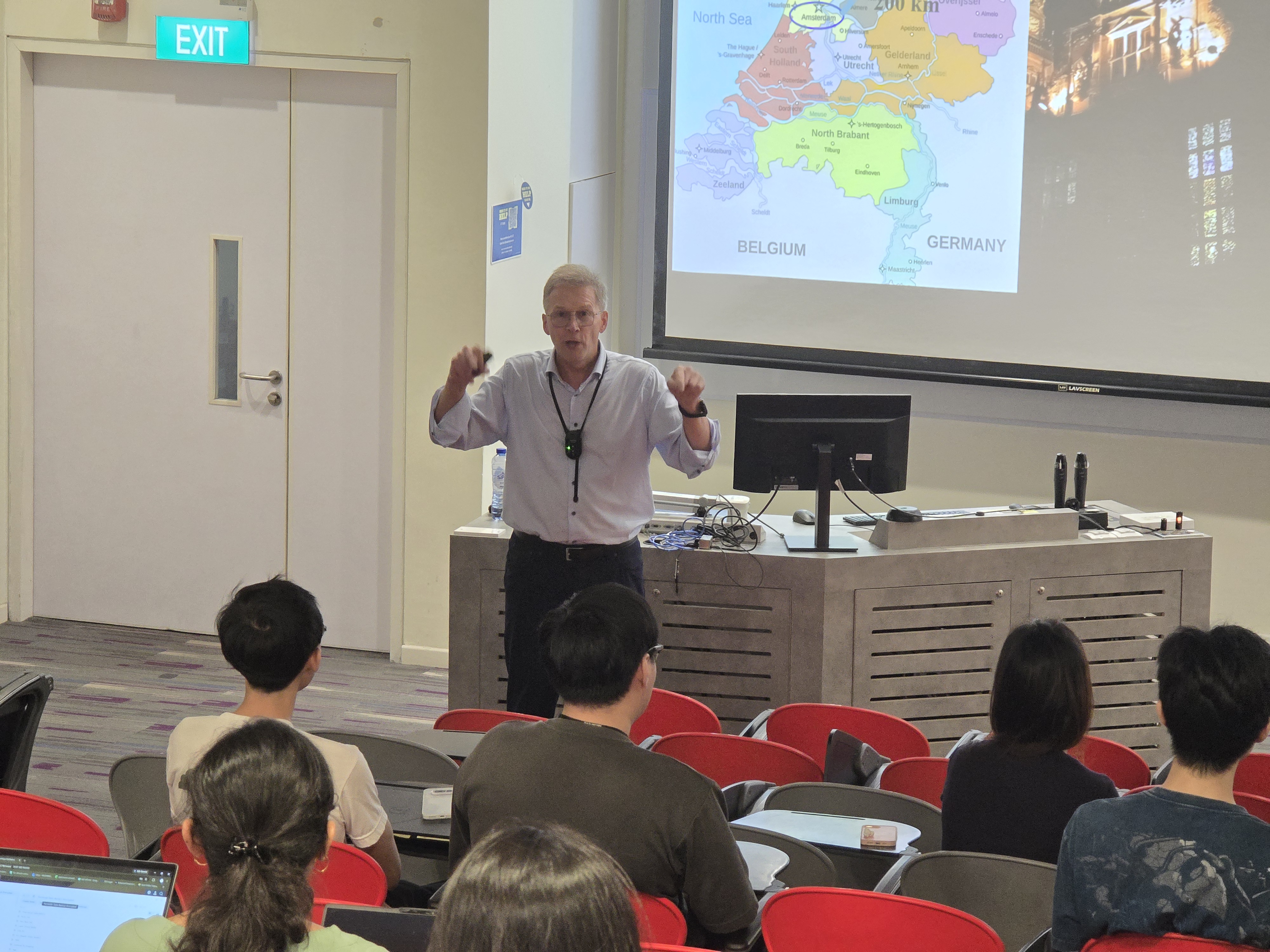 Prof Maxim explained how synthetic light-harvesting systems helped reveal the relationship between molecular order and optical function.
Prof Maxim discussed a model system based on C8S3 dye molecules. These molecules contain hydrophobic, hydrophilic, and light-absorbing chromophore parts. When mixed with water under suitable conditions, they can self-assemble into double-walled nanotubes. These nanotubes are only nanometers in diameter but can reach micrometer lengths. Once molecular packing becomes sufficiently ordered, electronic excitation can be shared over many molecules as an exciton. In this way, the optical spectrum becomes a useful reporter of molecular structure.
A major focus of the colloquium was the “missing middle” between the initial molecular solution and the final double-walled nanotube. Many studies compare only the starting and ending states, but Prof Maxim's work in this area aims to follow the intermediate stages: when do the molecules first aggregate, when does the nanotube structure appear, and when does optical function become recognisable? To answer these questions, Prof Maxim's research combines three main tools. Molecular excitons serve as structural reporters because their spectral features change with molecular order and disorder. Two-dimensional electronic spectroscopy provides information about spectral correlations, coupling, and energy exchange. Microfluidics is then used to convert assembly time into a controlled spatial position, allowing measurements at different stages of the process.
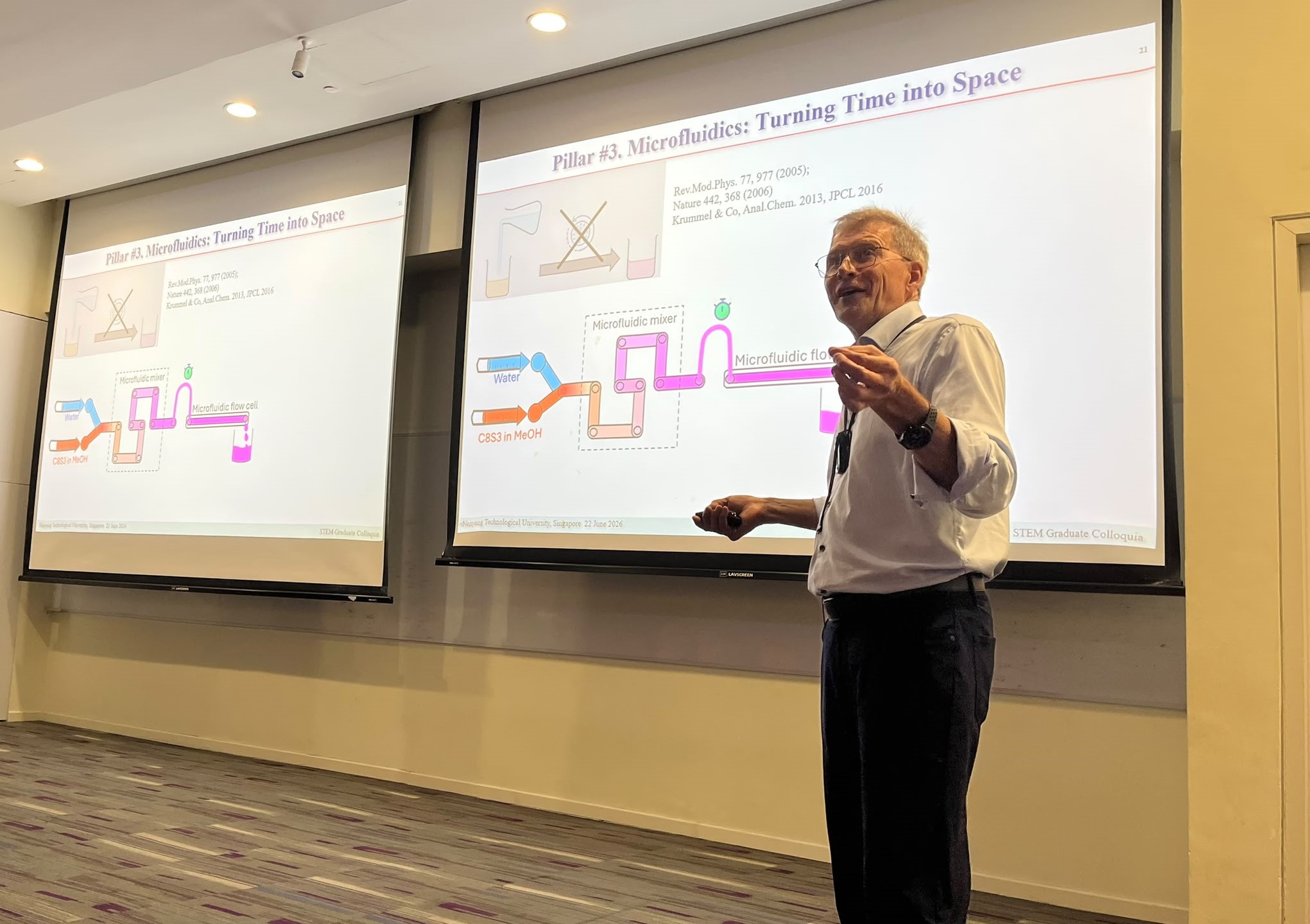 Advanced spectroscopy and microfluidics revealed the intermediate stages of nanotube self-assembly.
The results showed that the assembly does not happen in a single step. At the earliest measured time, the molecules have already gathered, but the structure is still highly disordered. The spectrum showed a broad J-aggregate signal, indicating that aggregation has started but molecular order remains low. Within 1-2.5 minutes, features related to the inner and outer nanotube begin to appear, but disorder remains substantial. By around 5 minutes, the double-walled optical signature is largely established, although the system is not yet fully ordered. After 24 hours, the spectra show clearer and more mature features corresponding to the inner and outer nanotube excitons. Cryo-TEM images further support this picture. The nanotube-like structure appears early, while molecular and excitonic order continue to improve over a longer time. This led to the idea of two different “clocks” in self-assembly: a structural clock and an optical clock. The structure can form within minutes, but full molecular ordering takes much longer.
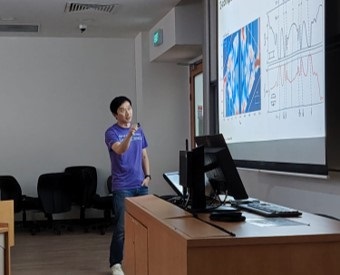
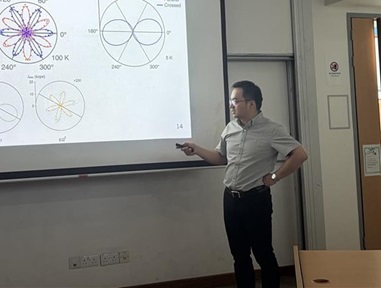
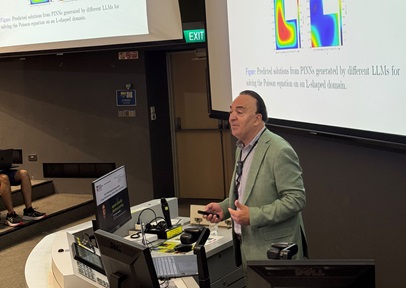
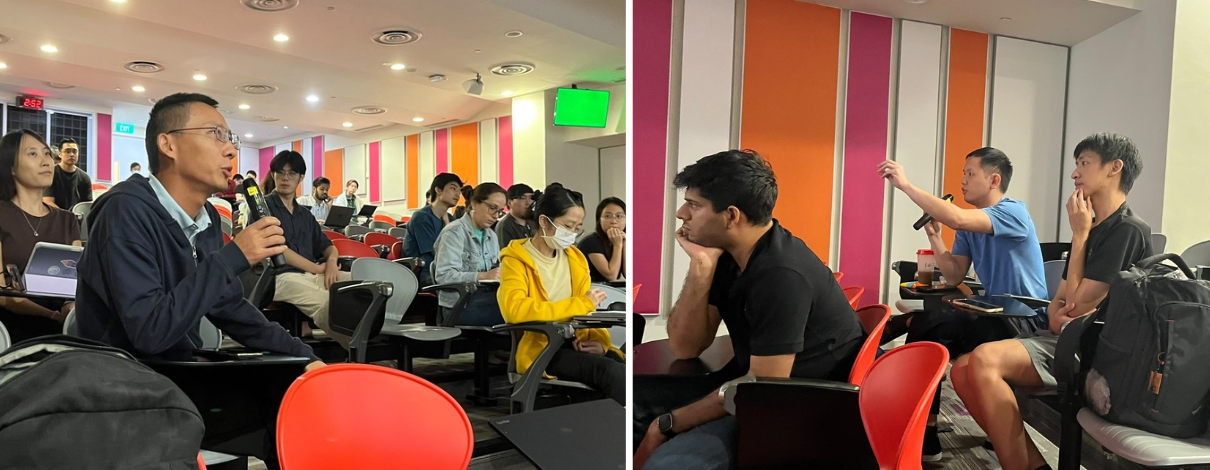 Attendees engaged in a lively Q&A with Prof Maxim, covering the experimental process and complementary approaches that could further refine the existing studies.
The Q&A segment also brought up practical and conceptual issues in studying such fast and sensitive processes. Questions touched on how chemical conditions, concentration ratios, and mixing in the microfluidic setup influence self-assembly, as well as how reproducible the earliest stages are. Prof Maxim noted that complementary approaches, including molecular dynamics simulations and advanced microscopy, may help bridge this early-time gap.
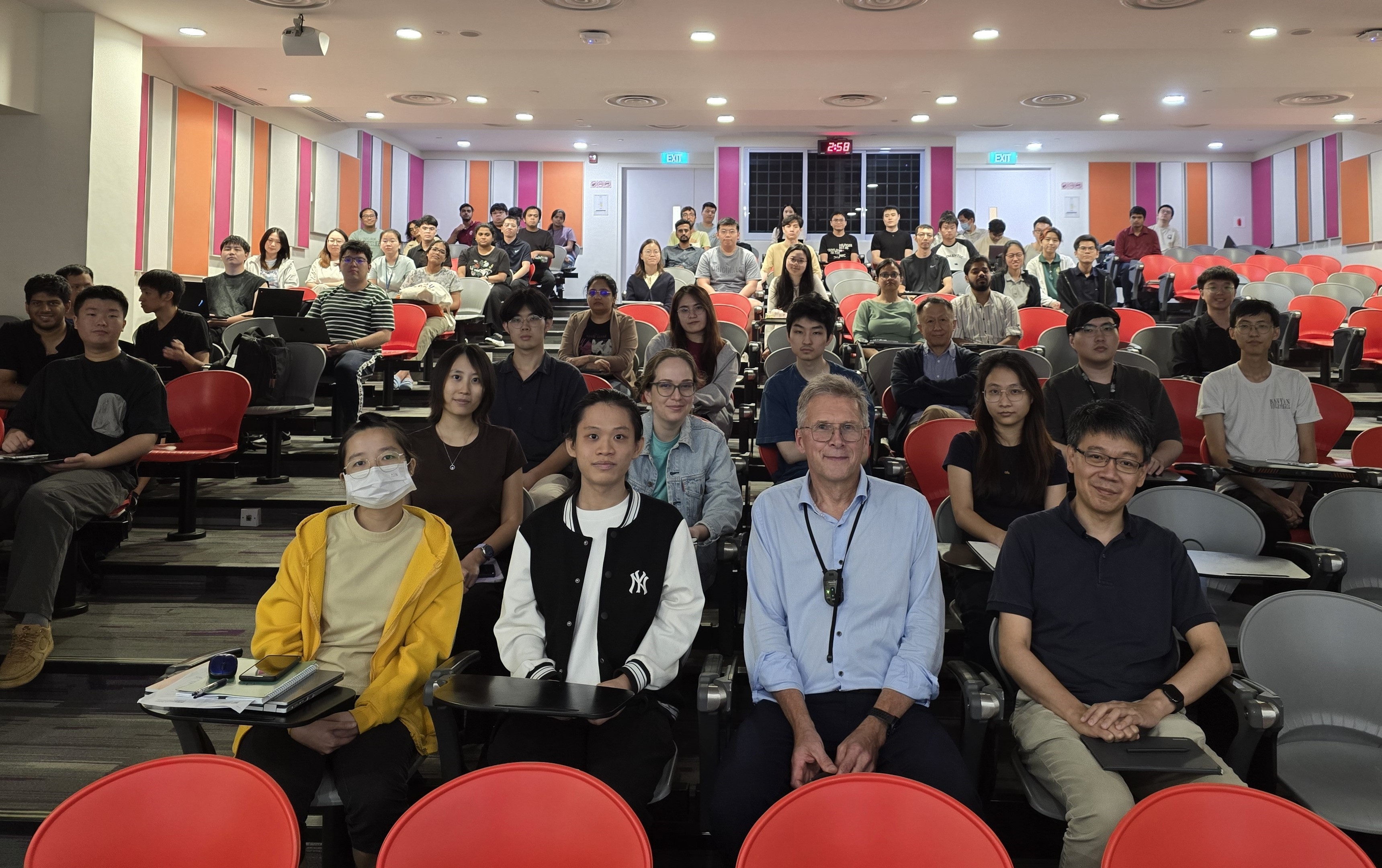
Overall, the colloquium showed that molecular self-assembly can be studied as a time-dependent process rather than only as a final product. The main takeaway is that simple molecules can form organised nanotubes through many weak interactions, and their ability to guide light develops gradually as molecular order improves. Prof Maxim's work provides a clearer picture of how synthetic light-harvesting antenna-like systems form, and why the pathway toward the final structure is as important as the final structure itself.
Written by: Ma Zhuoran | NTU School of Mechanical and Aerospace Engineering Graduate Student’ Club
"The presentation was clear, well‑structured, and very informative. I especially appreciated the deep insights into the latest research findings and the practical examples shared. The Q&A session was also engaging and thought‑provoking." - Li Yanan (PhD student, MSE)
"I enjoyed the new ideas about material microscopic construction" - Zhao Muqing (PhD student, IGP-NEWRI)
Watch the recording here.