Safeguarding Biodiversity in a Changing World by Asst Prof Zeng Yiwen
IAS@NTU Discovery Science Seminar Jointly Organised with the Graduate Students' Clubs
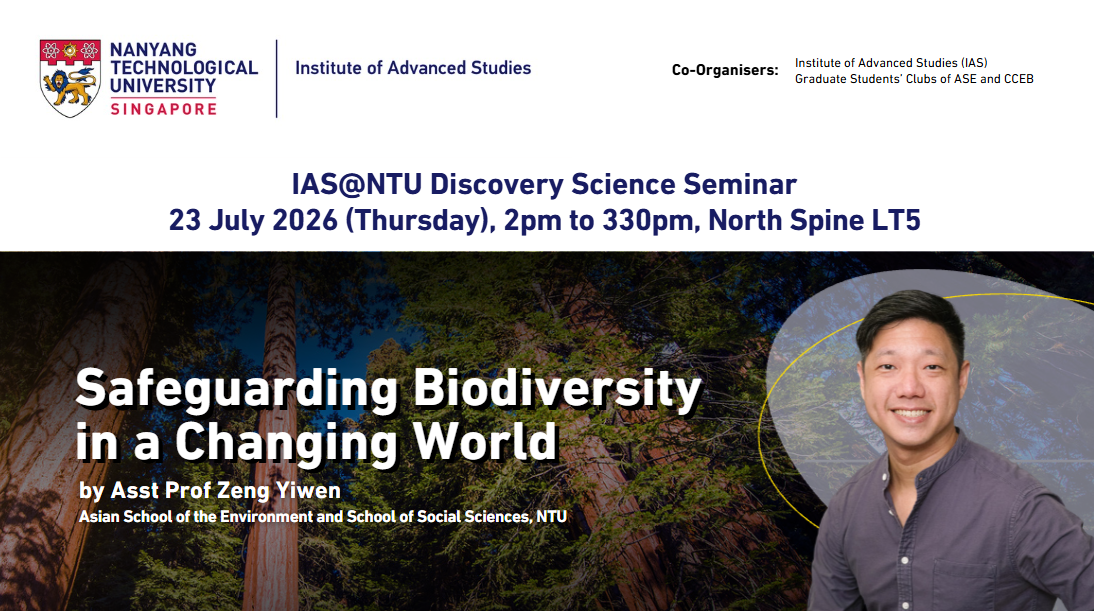
On 23 July 2026, the Institute of Advanced Studies (IAS), in collaboration with the Graduate Students' Clubs of the Asian School of the Environment (ASE) and the School of Chemistry, Chemical Engineering and Biotechnology (CCEB), hosted an IAS Discovery Science Seminar titled “Safeguarding Biodiversity in a Changing World" by Asst Prof Zeng Yiwen, a leading researcher in Environment and Society, with a joint appointment between the Asian School of the Environment and the School of Social Sciences.
Asst Prof Zeng's seminar examined the major threats to global biodiversity, including habitat loss, climate change, and overexploitation. It also introduced innovative conservation strategies, integrating ecological research with remote sensing, geospatial analysis, and community stewardship to support biodiversity conservation in a rapidly changing world.
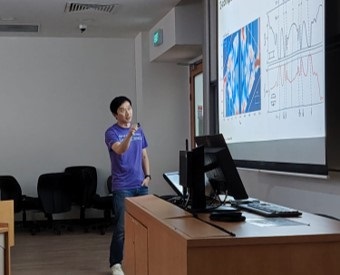
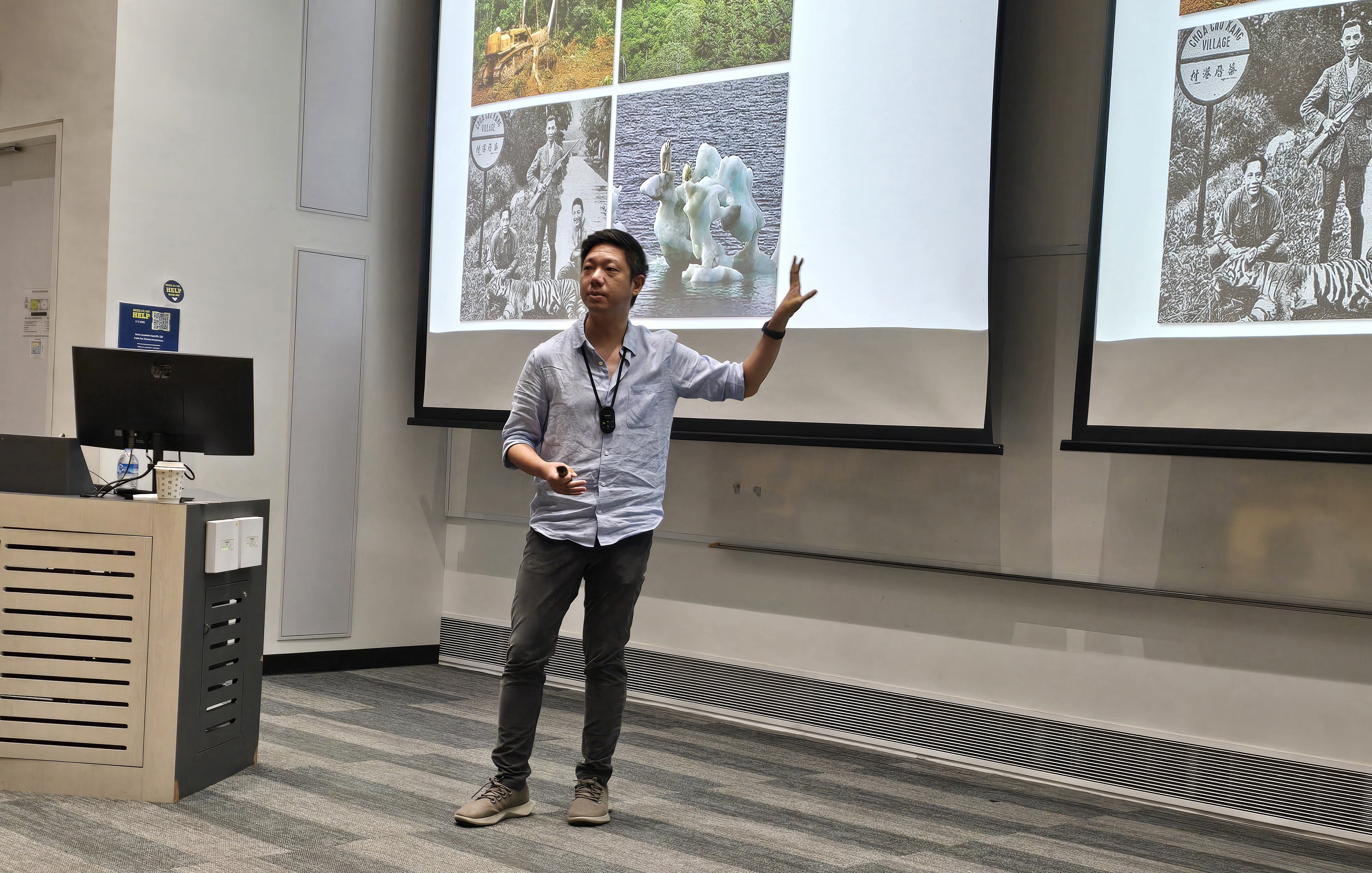 Asst Prof Zeng began his presentation by discussing innovative conservation strategies.
During the seminar, Asst Prof Zeng first highlighted the unprecedented challenges facing global biodiversity. He explained that biodiversity loss is primarily driven by human activities, including habitat destruction, deforestation, and climate change. Human expansion and excessive exploitation of natural resources have significantly reduced the habitats available for many species, making biodiversity conservation more urgent than ever. He also pointed out that while approximately 23% of threatened species require active human intervention to ensure their survival, the remaining 77% can be effectively conserved by protecting their natural habitats and minimising human disturbance.
The seminar then focused on three key questions: How do we safeguard biodiversity? How do we finance area-based conservation? And how can we conserve protected areas in the future? Drawing on research from Southeast Asia and global case studies, Asst Prof Zeng demonstrated how advances in ecological modelling, remote sensing, geospatial analysis, and conservation policy can support more effective biodiversity conservation. He emphasised the importance of integrating scientific research, innovative financing mechanisms, and community participation to develop sustainable conservation strategies for the future.
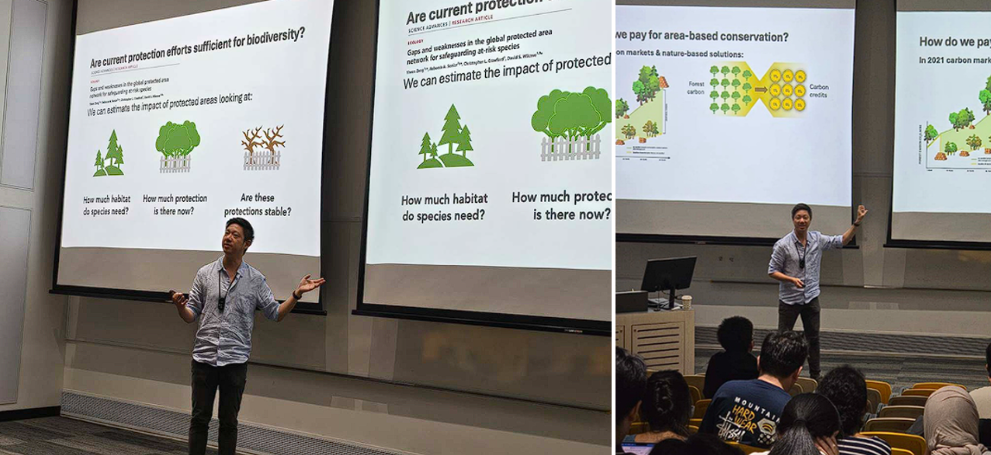 Asst Prof Zeng explained the concepts of biodiversity and the carbon market.
Asst Prof Zeng also highlighted one of the key challenges faced by protected area managers: the persistent shortage of funding for biodiversity conservation. He explained that conservation efforts have traditionally relied on government funding, private donations, and revenue generated from park entrance fees. However, these funding sources are often insufficient to support the long-term management and protection of biodiversity. He further pointed out that, with the rapid growth of global carbon trading markets since 2021, a significant amount of financial capital has flowed into carbon-related projects. This trend presents new opportunities to explore how carbon finance and other innovative market-based mechanisms can be leveraged to provide more sustainable funding for biodiversity conservation and area-based protection.
As he wrapped up his presentation, Asst Prof Zeng emphasised that biodiversity conservation is a highly complex and multidisciplinary challenge that requires continuous research and collaboration. He noted that while assessing conservation risks and identifying priority areas are important, they represent only the first step. Future research should also focus on understanding how conservation strategies influence ecosystems and species, how conservation efforts can be made financially sustainable, and how economic mechanisms can be designed to support long-term biodiversity protection.
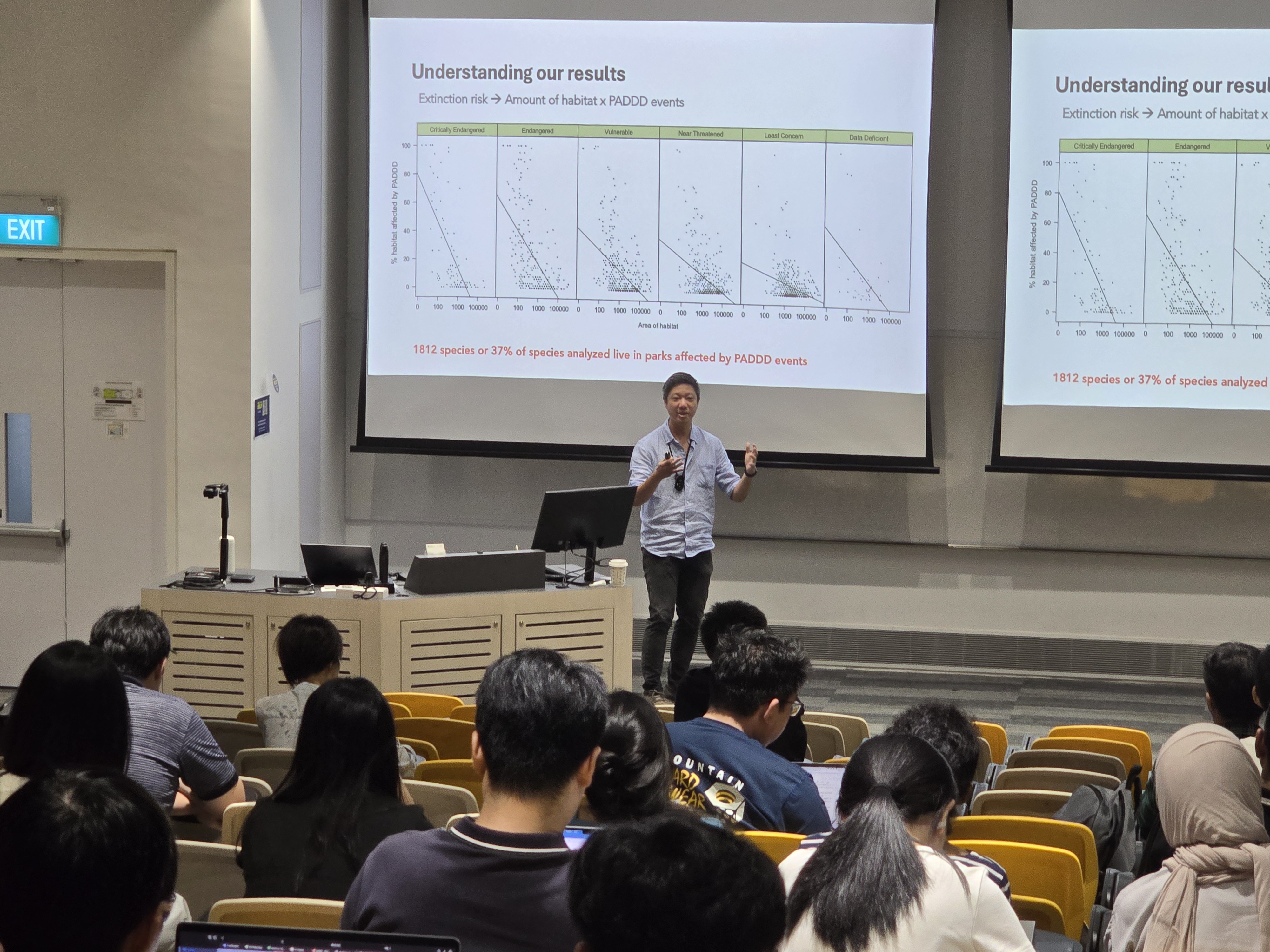 Asst Prof Zeng showcased how science, innovative financing, and community participation can be combined for sustainable biodiversity conservation.
The seminar concluded with an engaging and interactive Q&A session, during which participants raised a wide range of thought-provoking questions. One participant asked how to balance the economic dependence of local communities on agricultural production with the need for biodiversity conservation. Asst Prof Zeng explained that there is no simple solution to this complex issue. Instead, he emphasised the importance of information sharing, and benefit-sharing mechanisms to align the interests of local communities with long-term conservation goals. Participants also asked whether his research provides a feedback loop for future conservation project developers, and what kinds of economic incentives and policy measures governments and policymakers could implement to encourage stronger biodiversity conservation. Asst Prof Zeng addressed each question in detail, highlighting the importance of integrating scientific evidence, effective policy design, and collaboration among researchers, governments, and local communities to achieve sustainable conservation outcomes.
Written by: Li Qingao| NTU School of Chemistry, Chemical Engineering and Biotechnology Graduate Student’ Club
"The presentation was very enriching and I have learnt more about how upkeeping and maintaining biodiversity works throughout the world" - Cheng Xin Wei (PhD student, MAE)
"It was interesting to learn about risks involved in assessing carbon markets and how biodiversity is often overlooked." - Nur Estya Binte Rahman (PhD student, ASE)
"I particularly enjoyed learning about environmental conservation efforts and the systems needed and implemented in place" - Joel Yip Onn (PhD student, MSE)
"Candid sharing about complexities surrounding land usage and political legacies" - PhD student, ASE
Watch the recording here.