Global Conference for Women Leaders and Emerging Researchers in Materials Science (GLOW) 2026
Written by Dr Haruethai Kongcharoen| School of Materials Science and Engineering (MSE)r Disruptive Photonic Technologies (CDPT), NTU
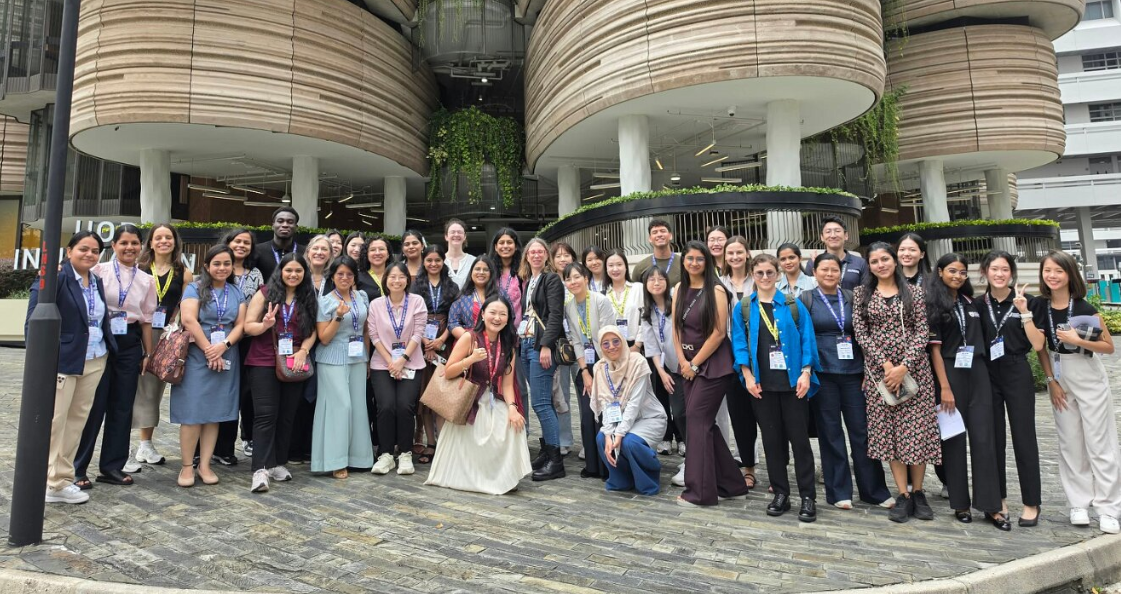
The 3rd Global Conference for Women Leaders and Emerging Researchers in Materials Science (GLOW 2026), held from 29 September to 1 October, 2026 at the Nanyang Executive Centre (NEC), NTU, brought together researchers, industry leaders, and innovators from around the world to exchange ideas, foster collaborations, and celebrate women's contributions to materials science. With approximately 300 registrations representing 30 countries, the conference strengthened global research connections and inspired the next generation of women leaders. We extend our heartfelt thanks to all speakers, sponsors, partners, and participants for making GLOW 2026 a resounding success!
The conference commenced with warm welcome remarks from co-chairs Prof Lee Pooi See (Vice President, International Engagement, NTU) and Prof Ng Kee Woei (Chair, School of Materials Science and Engineering, NTU). The conference brought together Early Career Fellowship awardees, featured world-class speakers, and NTU Alumni. Key highlights included a dynamic panel discussion on innovation featuring NTU alumni founders alongside corporate industry leaders.
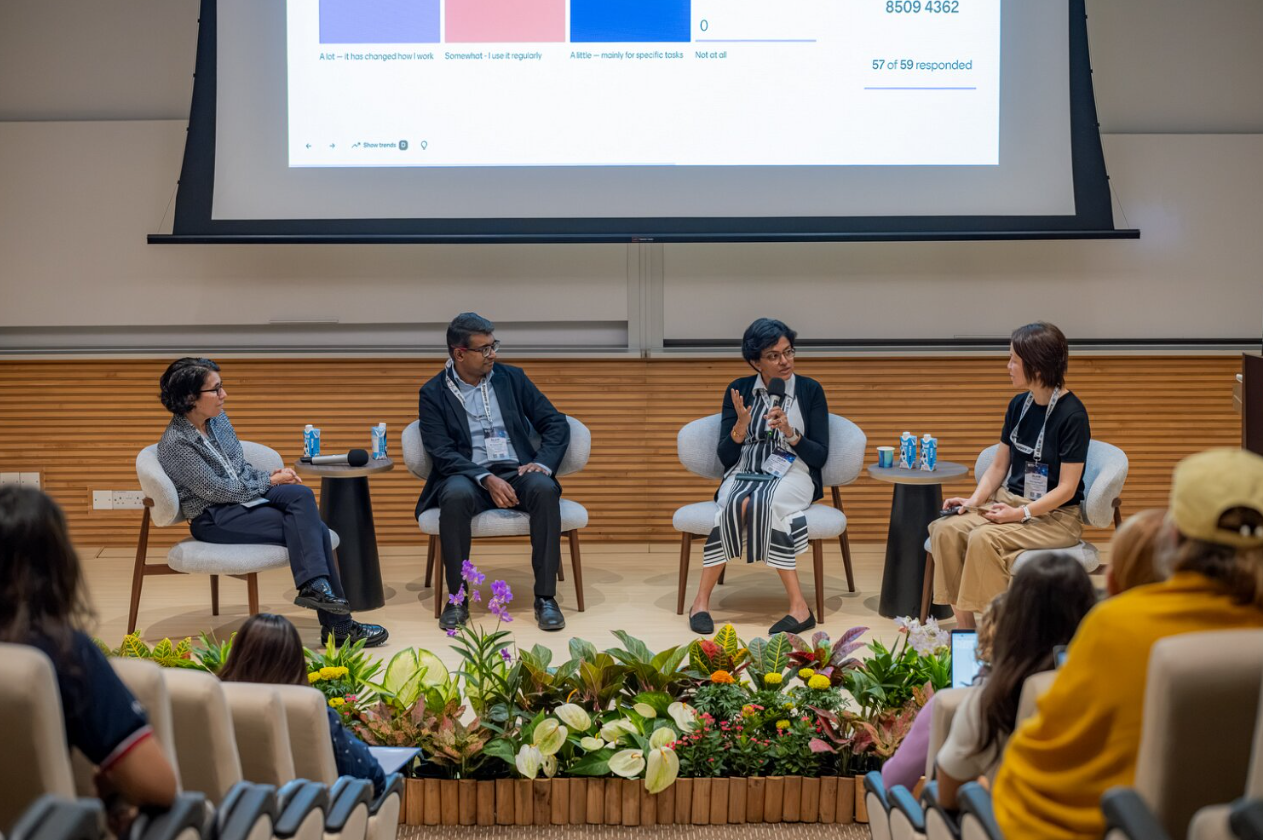 Panel Discussion with panellists (from left to right): Prof Cherie R. Kagan (University of Pennsylvania), Mr Prakash Rau (Micron Technology), and Prof Arthi Jayaraman (University of Delaware and IBM Consulting).
Supported by the Institute of Advanced Studies (IAS) at NTU, Micron, A*STAR (IDL), the Royal Society of Chemistry (RSC), the Materials Research Society (MRS), and Women@NTU, GLOW continues to empower women leaders, foster mentorship, and provide valuable opportunities for early-career researchers worldwide.
A central centerpiece of GLOW 2026 was the plenary address delivered at NEC by Prof Shirley Meng, Vice President (Industry) at NTU and pioneer in energy storage. Entitled "Becoming WISE: Women In Science & Engineering," Prof Meng's talk seamlessly connected the personal ethos of mentorship with a rigorous technical roadmap for next-generation battery architectures necessary to achieve full global decarbonisation.
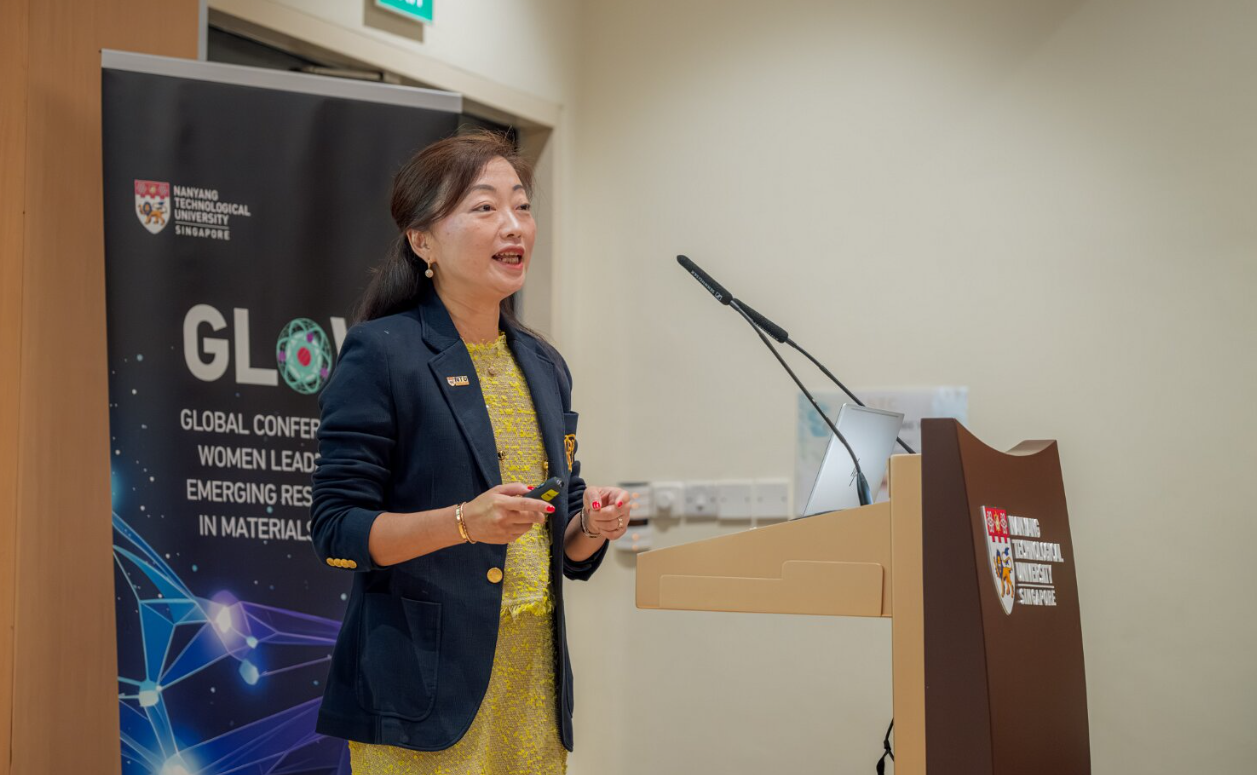 Prof Shirley Meng delivered an inspiring plenary address on mentorship, scientific innovation,
and sustainable battery technologies.
Plenary Talk
Becoming WISE: A Journey in Science and Mentorship by Prof Shirley Meng (Vice President (Industry), NTU)
Prof Meng opened her plenary address with reflections on career development, emphasising the irreplaceable value of foundational support systems and early mentorship. Recalling her own path from family encouragement to academic training spanning NTU, MIT, and leading global institutes, she framed career challenges through the classic idiom "A blessing in disguise"—demonstrating how setbacks frequently precursor breakthrough discoveries.
"Nothing in life is to be feared, it is only to be understood. Now is the time to understand more,
so that we may fear less."— Marie Curie (Invoked during Plenary Keynote)
Prof Meng outlined the fundamental role of universities as vibrant innovation ecosystems. Institutions must go beyond traditional pedagogy to act as active talent pipelines and incubators for curiosity-driven research. Grounded in a strong support network across family, planet, and country, her message urged young female engineers to embrace ambitious global impact through collaborative research networks.
35 Years of Battery Science: Achievements & Benchmarks
Tracing the evolution of electrochemistry from Benjamin Franklin coining the term "battery" in 1748 to the 2019 Nobel Prize in Chemistry awarded for Intercalation Chemistry, Prof Meng reviewed the dramatic technological advancements made over the past 35 years in lithium-ion battery (LIB) technology:
- Energy Density Tripled: Continuous material evolution—moving cathode chemistries from LiCoO2 to Nickel-rich NMC/NCA, and anodes from graphite to silicon-carbon composites and lithium metal—has scaled cell performance exponentially (e.g., 18650 cylindrical cells advancing from 1Ah to 3.5Ah).
- 10-Fold Cost Reduction: Battery pack costs dropped from over $2,000/kWh in 2005 to under $100/kWh today.
- Extended Durability: Deep DoD cycle life expanded from 300 cycles to over 6,000 cycles.
- Industrial Scale: Worldwide LIB production surpassed 1.2 TWh/year capacity, powering over 20 million electric vehicles sold annually.
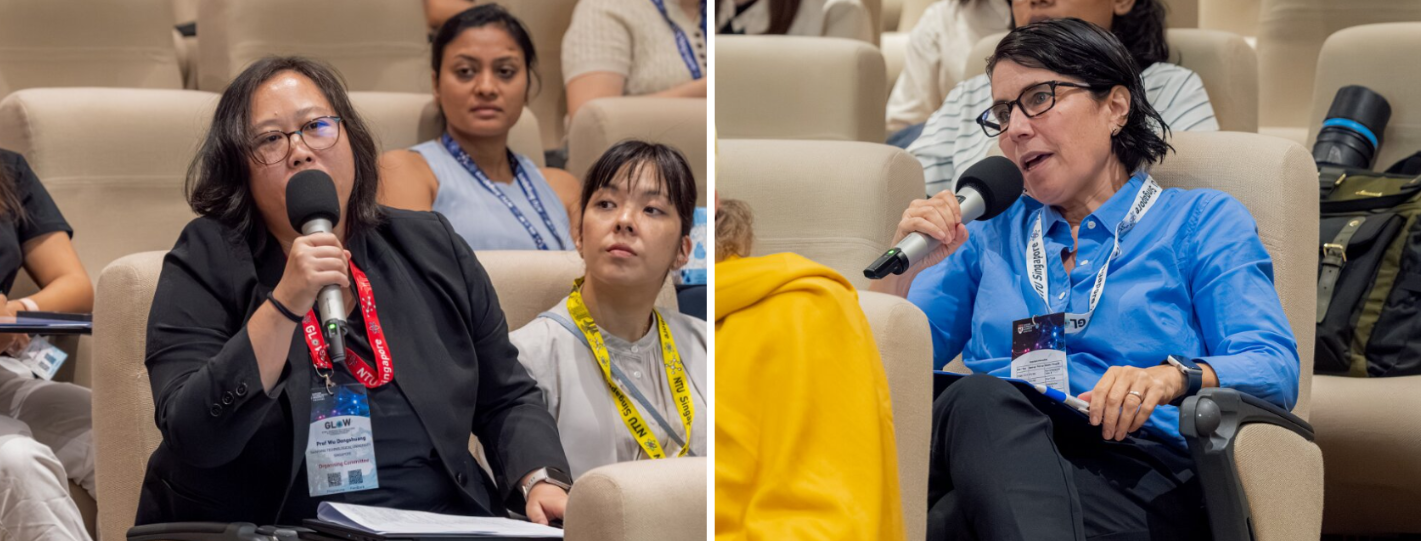 Audience members raised insightful questions on next-generation battery technologies and challenges in achieving global decarbonisation.
Key Takeaway: The Gigawatt Scale Challenge
With EV sales now accounting for one in four new cars globally (~20 million units in 2025 alone requiring 2 TWh), current production represents only a fraction of future needs. Industrial policies, localised manufacturing (such as Tesla's Shanghai Megafactory completed in record speed), and rapid recycling pipelines are laying the baseline, but the race is far from over.
The 300 TWh Decarbonisation Horizon
Looking ahead to 2050, when the global population is projected to reach 10 billion, Prof Meng presented a stark metric for world energy storage demands. Meeting universal energy needs requires an estimated 300 TWh of battery capacity across three main pillars: electrifying 1 billion passenger vehicles (~100 TWh), powering heavy transit and semi-trucks, and stabilising future renewable electrical grids (~100 TWh).
Crucially, current global deployment has completed only 5% of this 300 TWh requirement. Reaching the remaining 95% presents severe material resource constraints that necessitate moving beyond traditional lithium-ion frameworks.
Sodium-Ion & Rock-Forming Chemistry
As global lithium reserves are geographically limited and insufficient for multi-terawatt grid storage, Prof Meng highlighted Sodium-Ion (Na-ion) Batteries as the next TW-hr scalable technology. Leveraging abundant "rock-forming elements" (O, Si, Al, Na, Fe, Mg, Ca), Na-ion technology has scaled from lab concepts to GWh manufacturing in under two years, with TWh deployment expected within two decades.
Startups spun out from research laboratories—such as UNIGRID, South 8 Technologies, and ExPost Technology—are proving that sodium-based chemistries and novel liquefied gas electrolytes can deliver high power, extreme temperature operation (-60°C to +60°C), and superior nail-penetration safety without relying on critical mineral supply chains.
Next-Decade Battery Frontiers
To reach energy densities exceeding 500 Wh/kg while ensuring safety and sustainability, Prof Meng outlined four primary research vectors defining the next decade of battery technology:
- All-Solid-State Batteries (ASSBs): Utilising solid sulfide/oxide electrolytes, ultra-thin separators, and stackable cell architectures to eliminate flammable organic solvents.
- Dry Battery Electrode (DBE) Processing: Eliminating toxic wet solvents in electrode manufacturing to cut energy consumption, reduce factory footprints, and lower cell costs at scale.
- Anode-Free & Lithium Metal Architectures: Depositing ultra-thin metal directly onto current collectors during initial charge to achieve maximum volumetric and gravimetric energy density.
- Conversion Chemistries: Unlocking high-capacity conversion systems such as Lithium-Sulfur (Li-S) and Lithium-Oxygen (Li-O).
Overcoming Practical Hurdles
Translating solid-state chemistry to commercial production requires overcoming critical mechanical hurdles: reducing operating stack pressures from 100 MPa down to 1–2 MPa, lowering precursor costs (such as reducing Li2S costs by 5x–10x), ensuring dry-room compatibility, and developing standardised metrology across the battery lifecycle from mining to closed-loop recycling.