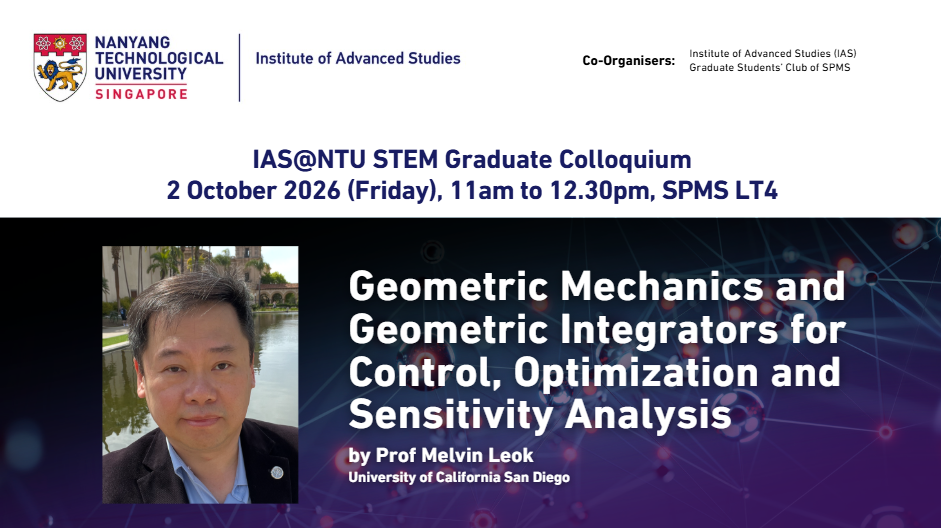
Geometric Mechanics and Geometric Integrators for Control, Optimisation and Sensitivity Analysis by Prof Melvin Leok
IAS-STEM Graduate Colloquium Jointly Organised with the Graduate Students' Clubs
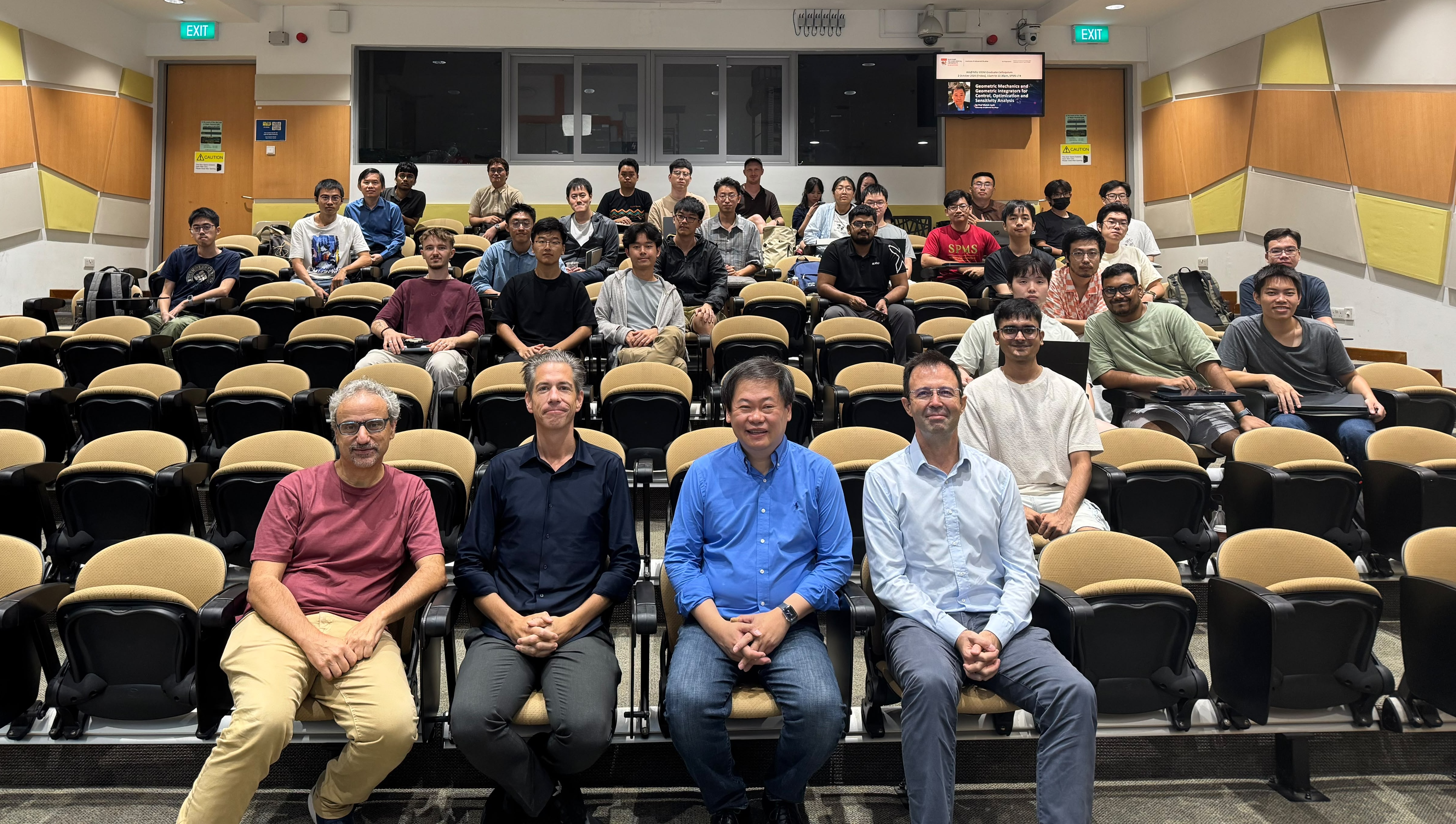
On 2 October 2026, the IAS@NTU STEM Graduate Colloquium, jointly organised with the Graduate Students’ Club of the School of Physical and Mathematical Sciences (SPMS), hosted Prof Melvin Leok from the University of California San Diego at SPMS LT4. In his talk titled “Geometric Mechanics and Geometric Integrators for Control, Optimisation and Sensitivity Analysis”, Prof Leok, Professor of Mathematics and Director of the Computational Science, Mathematics and Engineering programme at UC San Diego, showed how the geometry hidden inside the laws of mechanics, namely symmetries, conservation laws and the curved spaces on which motion takes place, can be put to work in designing controllers, building numerical algorithms that stay faithful over long simulations, and even training modern machine-learning models.
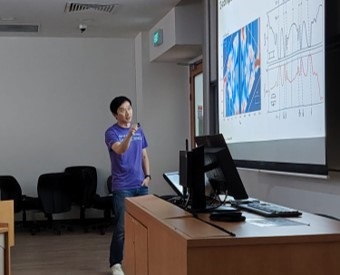
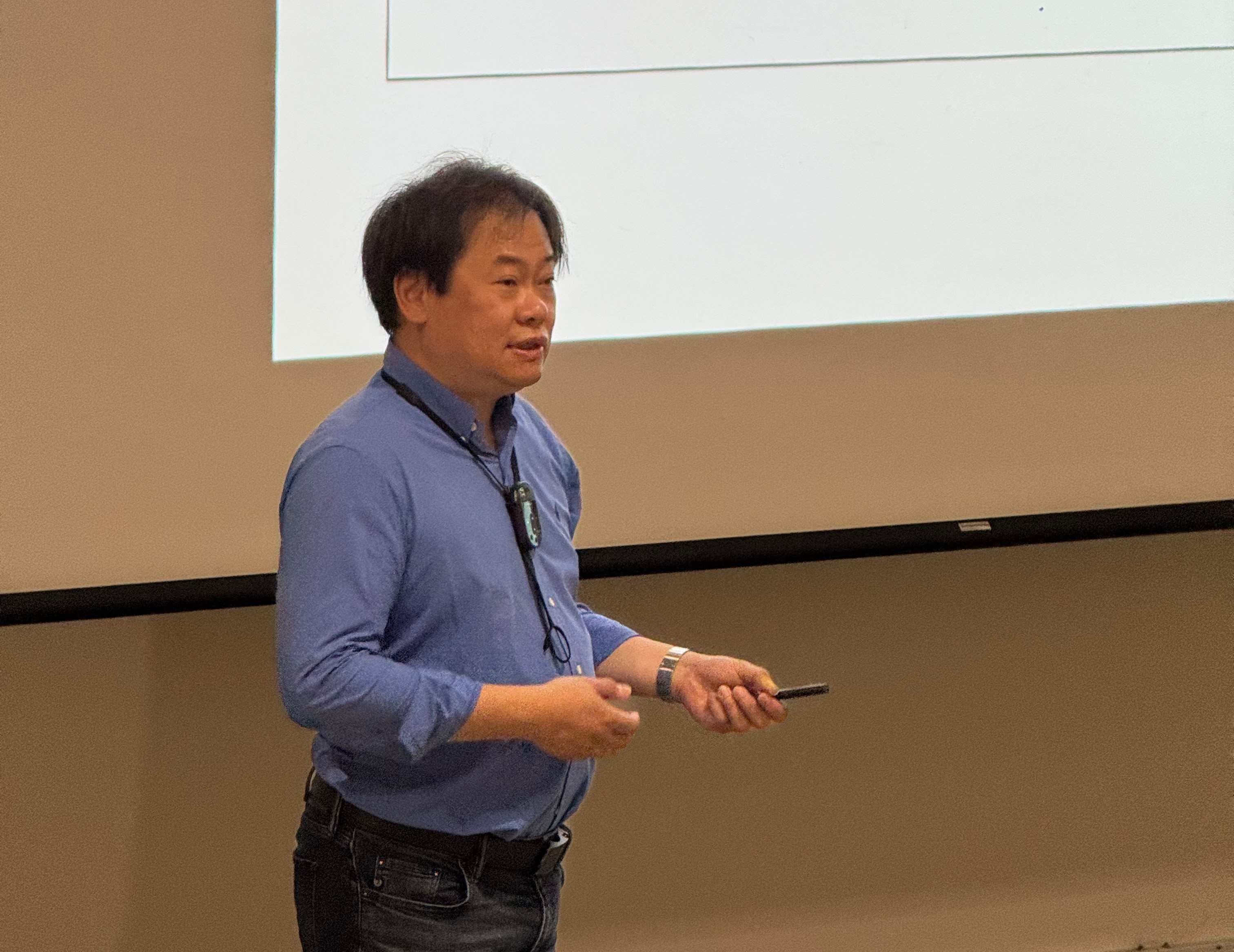 Prof Leok opens the colloquium by exploring the geometric control of spacecrafts.
Drawing on videos and everyday examples, Prof Leok opened with a classic puzzle: a cat dropped upside down with no initial spin reliably lands on its feet. Since nothing external twists the cat, its total angular momentum remains zero throughout the fall, so how can it turn over at all? The answer lies in geometric mechanics. By cycling through a sequence of body shapes, bending, twisting and tucking its legs, the cat produces a net rotation even though its angular momentum never changes. The reorientation is a purely geometric effect of the closed loop the cat traces through its space of shapes.
The same principle underpins geometric control theory. Prof Leok explained how it allows the attitude of a satellite to be controlled by changing its shape, for instance by moving internal parts or appendages, rather than by firing thrusters and consuming limited chemical propellant.
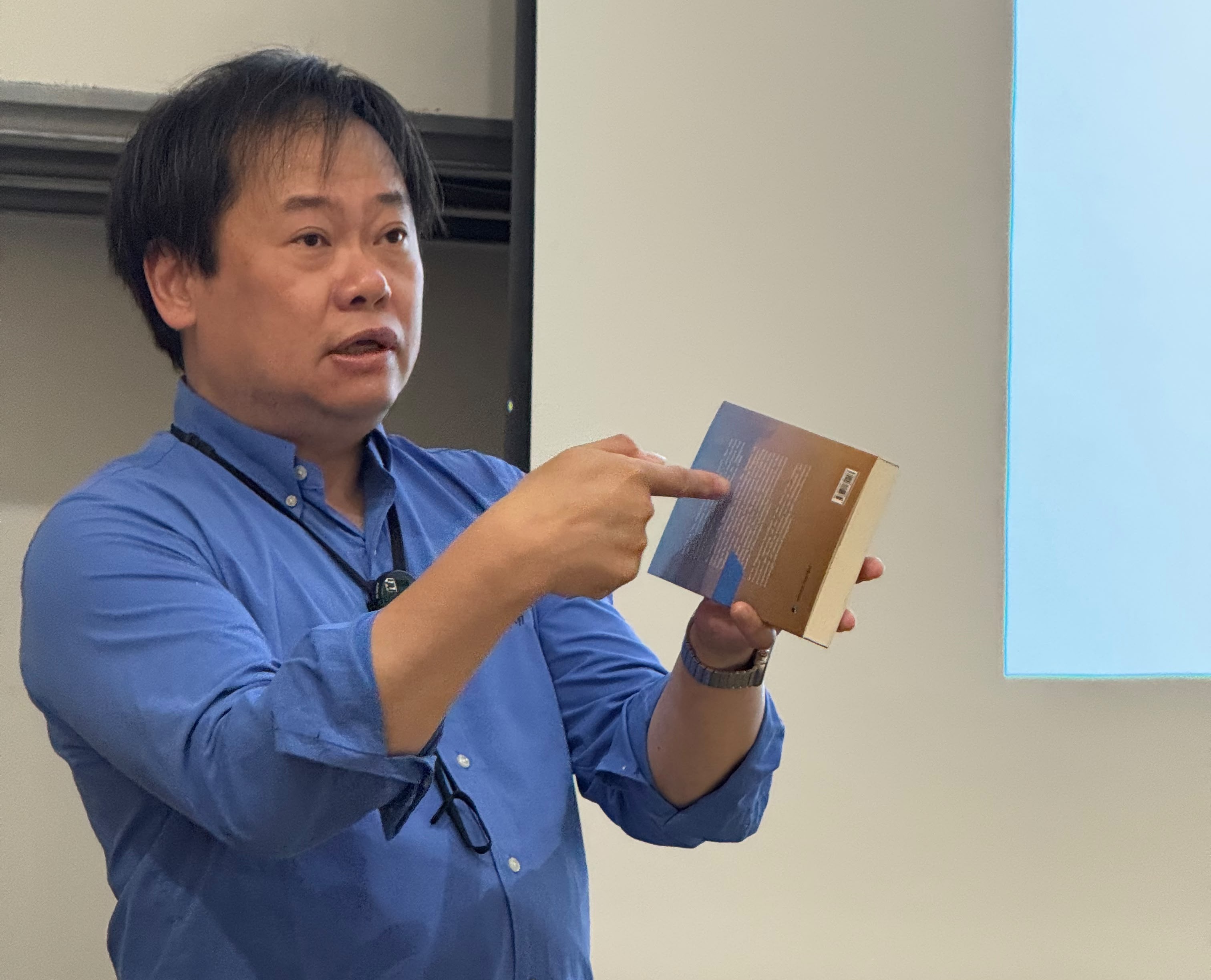 Prof Leok drew on everyday examples and further reading to make abstract geometric ideas accessible.
Prof Leok highlighted how mathematics and geometry can play an important role in developing reliable numerical methods for studying complex mechanical systems. Rather than simply approximating the equations of motion, geometric integrators preserve the underlying structure and physical principles of a system within the numerical method itself. This allows simulations to remain more accurate and physically consistent over long periods, avoiding the artificial behavior that can arise in conventional numerical approaches. Through examples of orbital motion, he illustrated how preserving these fundamental properties can make a significant difference in long-term simulations. In short, by discretising the principle rather than the equations, the geometry of the physical system is carried over to the numerical method.
Prof Leok also touched on spectral variational integrators, which pair the variational approach with high-order spectral approximations of the trajectory, achieving very rapid convergence while retaining the same geometric guarantees.
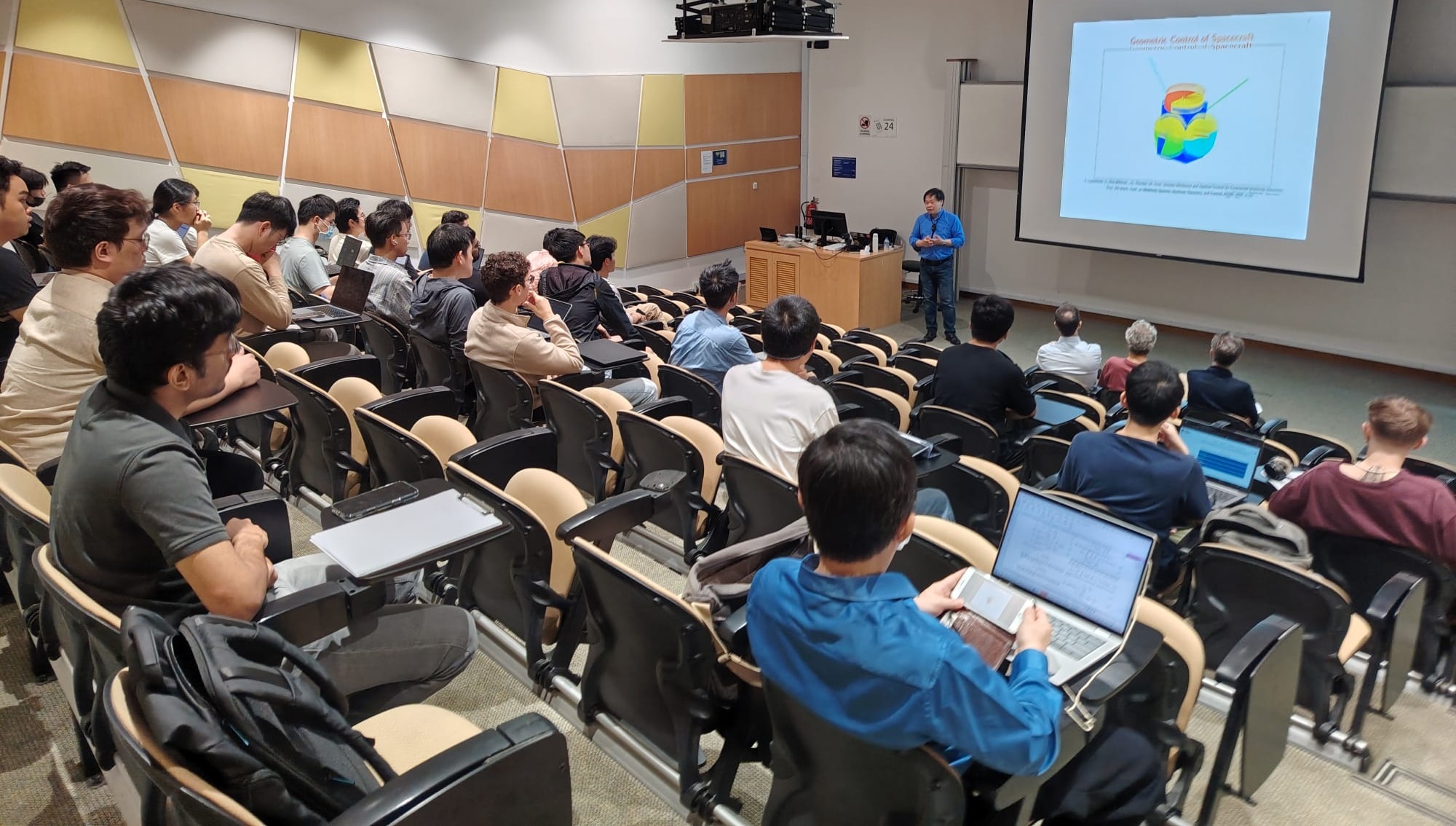
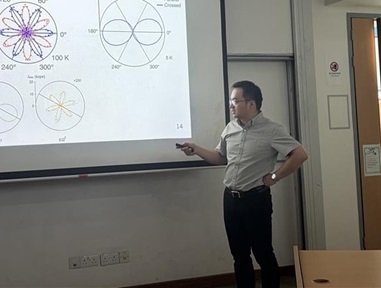
Prof Leok used orbital simulations to illustrate why preserving geometric structure matters over long time spans.
The colloquium also explored how these ideas can be applied to practical problems, including the control of robots and drones, where accurate predictions of motion and orientation are essential. By incorporating the geometry of the system into numerical calculations, these methods provide a more natural and reliable framework for modelling motion and designing control strategies. Prof Leok further discussed how the same perspective can contribute to accelerated optimisation, offering a way to develop algorithms that reach solutions more efficiently by drawing on ideas from mechanics.
Finally, he introduced the role of these methods in sensitivity analysis and the training of neural networks based on differential equations. By ensuring consistency between simulations and the gradients used to optimise them, geometric approaches can improve the reliability of computational learning methods. Overall, the colloquium demonstrated how preserving the mathematical structure of a physical system is not merely a theoretical consideration, but a practical approach with applications ranging from long-term physical simulations and autonomous systems to optimisation and machine learning.
Prof Leok concluded by drawing these threads together: the same geometric structures reappear at every level, in mechanical systems, in optimisation algorithms and in sensitivity analysis, and respecting them in computation leads to methods that are more accurate, robust and consistent.
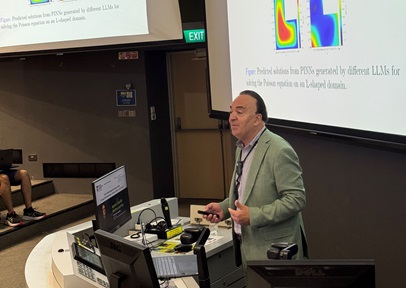
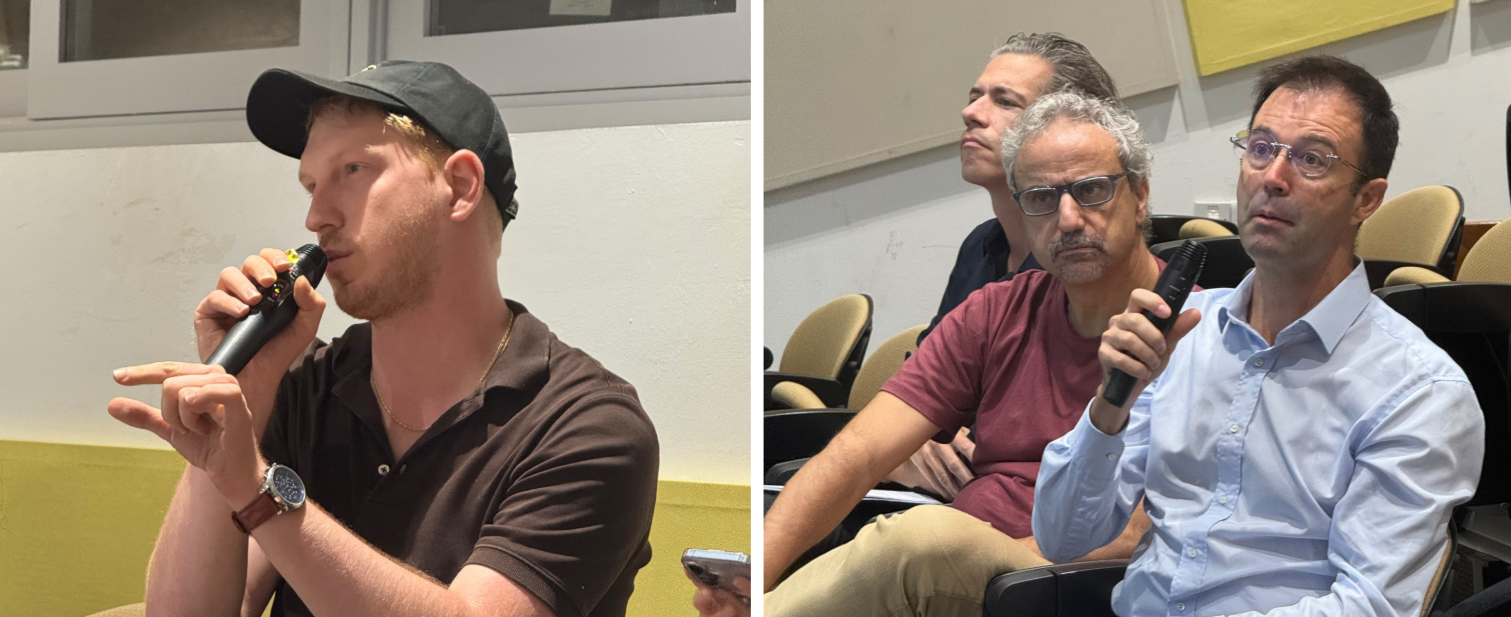 Audience members posed questions to Prof Leok during the Q&A session.
The colloquium drew a diverse audience of graduate students from SPMS, the Interdisciplinary Graduate Programme (IGP), the School of Mechanical and Aerospace Engineering (MAE), the School of Electrical and Electronic Engineering (EEE) and the School of Chemistry, Chemical Engineering and Biotechnology (CCEB). Attendees from outside mathematics particularly appreciated how Prof Leok used concrete examples to make abstract geometric ideas accessible and to relate them to real-world problems. The session concluded with an engaging Q&A, where participants took the opportunity to probe the ideas further with Prof Leok.
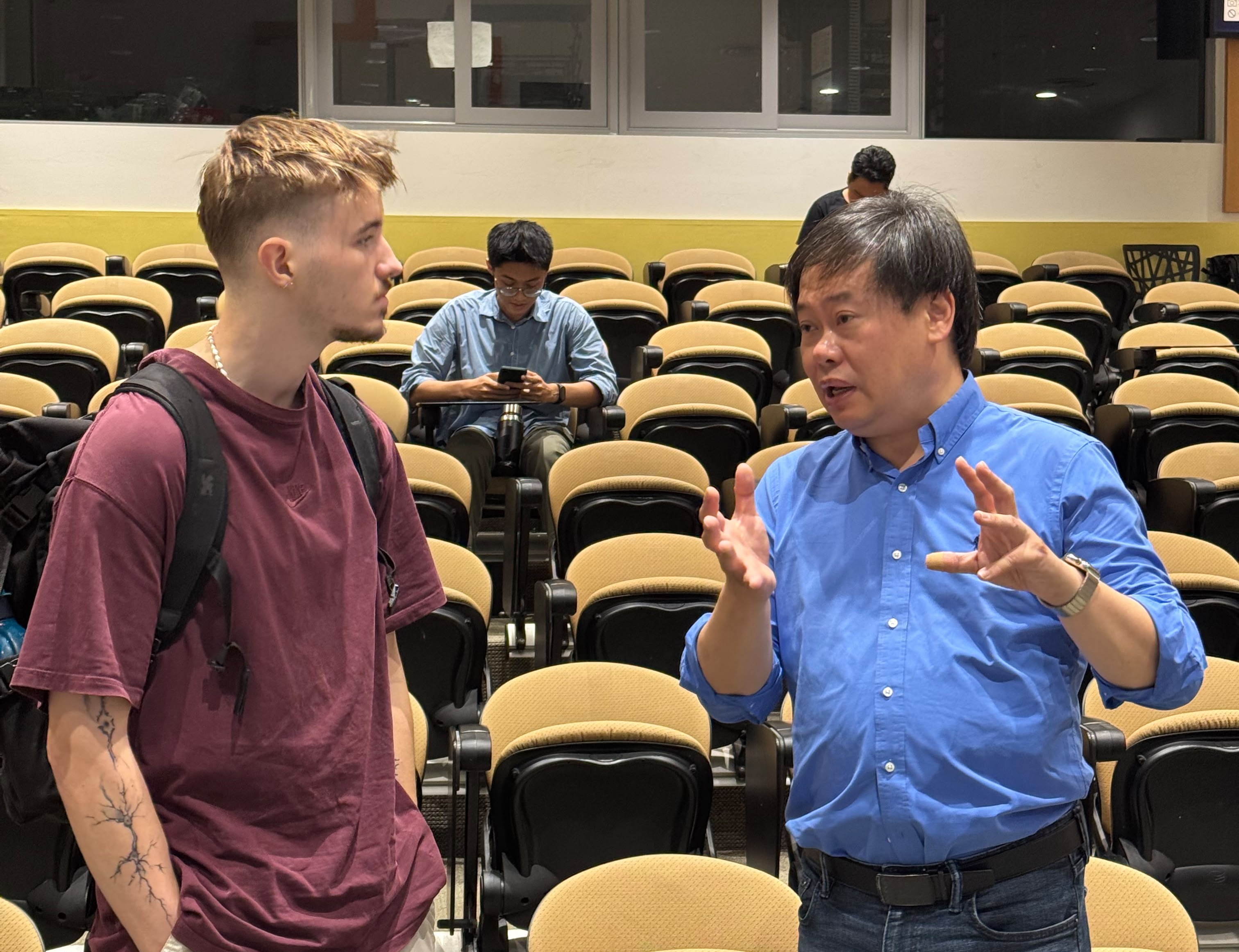 Prof Leok continued the discussion with a student after the colloquium.
The conversations did not end with the formal session. Several students stayed back to continue their discussions with Prof Leok one-on-one, reflecting the strong interdisciplinary interest in structure-preserving computation across science and engineering.
Written by: Char Pranoy Ranjan | NTU School of Physical and Mathematical Sciences Graduate Student’ Club
"Prof Leok gave many examples on how the geometric technique can be applied to other areas" - Huynh Thai Duong (PhD student, SPMS)
"I enjoyed the professor's explanation of structure preserving discretisation" - Ritam Hazra (PhD student, SPMS)
“I appreciate the depth of the speaker’s explanation.” – Abhisek Nath (PhD student, SPMS)
“The speaker relates the concepts to real life problems, making them easier to understand.” – Ong Hong Xuan (PhD student, MAE)
“I appreciate the way the professor explains concepts so that even non-mathematical people can understand them.” – Shiva Sreenivasan (PhD student, IGP)
Watch the recording here.