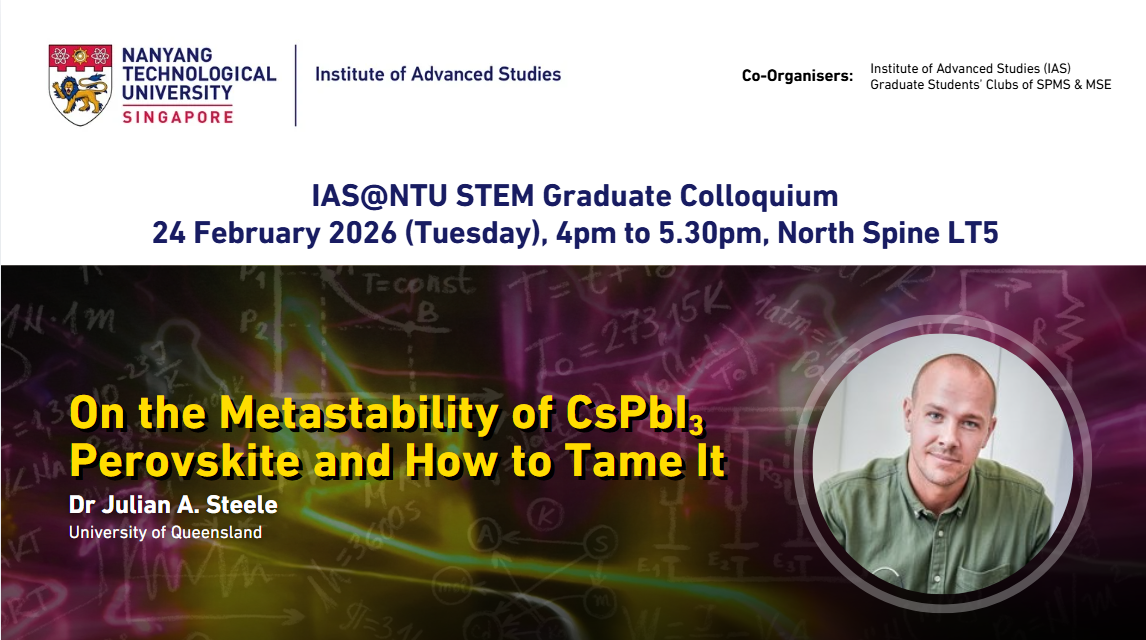
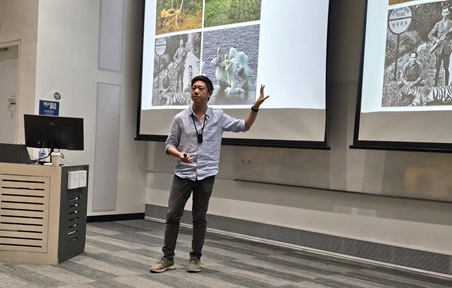
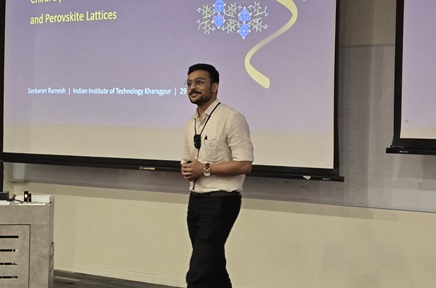
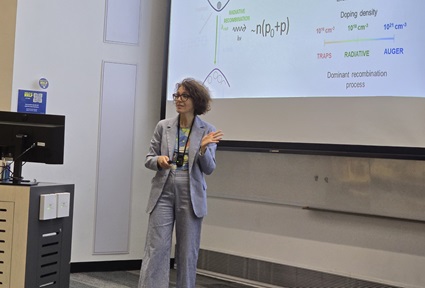
Metastability of CsPbI₃ Perovskite and How to Tame It by Dr Julian Steele
IAS@NTU STEM Graduate Colloquium Jointly Organised with the Graduate Students' Clubs
On 24 February 2026, the IAS@NTU STEM Graduate Colloquium Series recently welcomed Dr Julian Steele for an insightful seminar titled “Metastability of CsPbI₃ Perovskite and How to Tame It.” The talk brought together graduate students, researchers, and faculty members interested in the rapidly advancing field of perovskite materials and their potential applications in next-generation optoelectronic devices.
Dr Steele’s colloquium focused on one of the most intriguing challenges in perovskite research the instability of the inorganic perovskite CsPbI₃, a material widely recognised for its exceptional light-absorbing properties and promise in high-efficiency solar cells and light-emitting devices. While the perovskite possesses excellent optoelectronic characteristics in its black perovskite phase, maintaining this phase at room temperature remains a major scientific challenge.
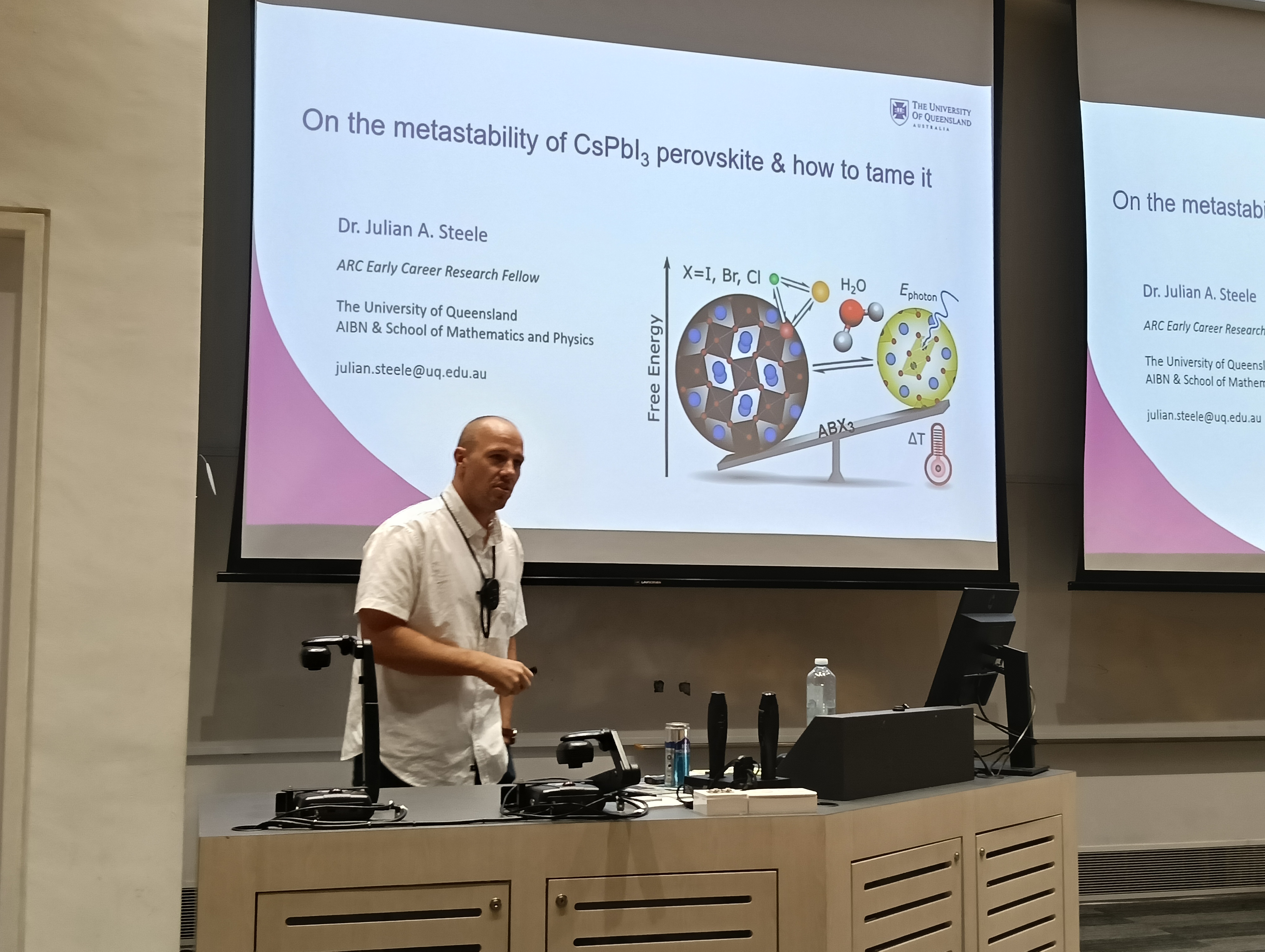 Dr Steele explores the challenge of stabilising CsPbI₃’s black perovskite phase for high-efficiency solar technologies.
The Promise of Inorganic Perovskites
Dr Steele began by providing a broader perspective on the rise of perovskite materials in modern energy research. Over the past decade, perovskite-based devices have achieved remarkable improvements in performance, especially in photovoltaic applications. Their strong optical absorption, tunable band gaps, and relatively simple fabrication processes have made them strong contenders for next-generation solar technologies.
Among these materials, all-inorganic perovskites such as CsPbI₃ have attracted attention due to their improved thermal stability compared to hybrid organic-inorganic perovskites. However, this advantage comes with its own challenge: the desirable black perovskite phase is only metastable at room temperature and tends to transform into a yellow non-perovskite phase that lacks useful electronic and optical properties.
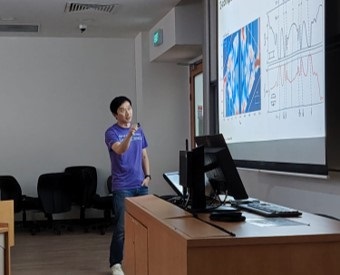
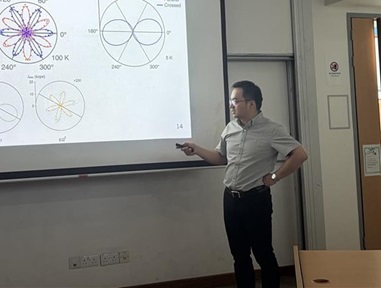
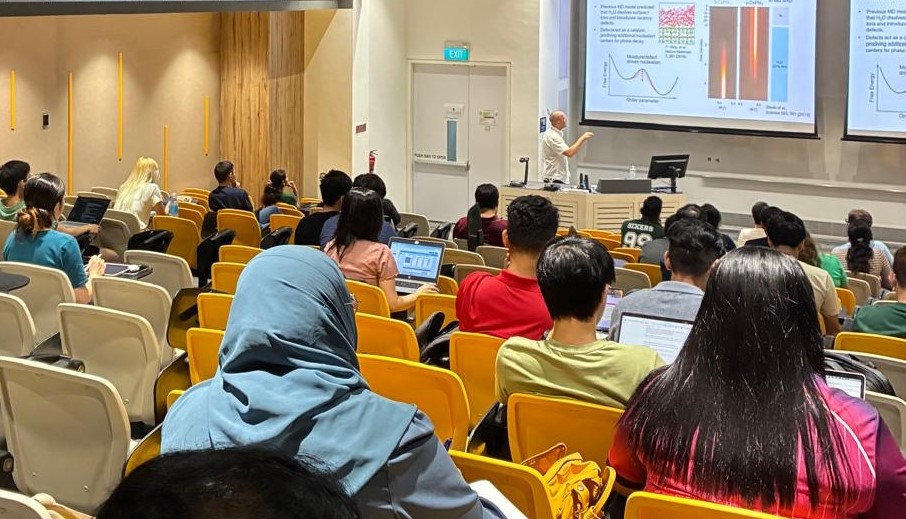 Dr Steele presenting research trends and growing scientific interest in perovskite materials.
Understanding Metastability
A central theme of the seminar was the concept of metastability a state in which a material exists in a configuration that is not the lowest energy state but remains temporarily stable due to kinetic barriers.
Dr Steele explained that the black perovskite phase of CsPbI₃ is energetically unfavorable under ambient conditions. As a result, the material naturally relaxes into a more stable yellow phase over time. This transition is closely linked to structural distortions within the crystal lattice, particularly the tilting of the PbI₆ octahedra that form the framework of the perovskite structure.
Understanding these structural transformations is essential for developing strategies to stabilise the functional phase of the material.
Environmental Effects and Degradation Pathways
Beyond intrinsic structural instability, environmental factors play an important role in the degradation of CsPbI₃. Moisture, in particular, can significantly accelerate the phase transition.
Dr Steele described how water molecules interact with the lattice and can promote the formation of iodine vacancies, which act as nucleation sites for the transformation to the yellow phase. Such insights highlight the importance of both materials design and device encapsulation when developing stable perovskite technologies.
Advanced characterisation techniques including in situ structural measurements allow researchers to directly observe these transformations and gain deeper insight into the mechanisms governing material stability.
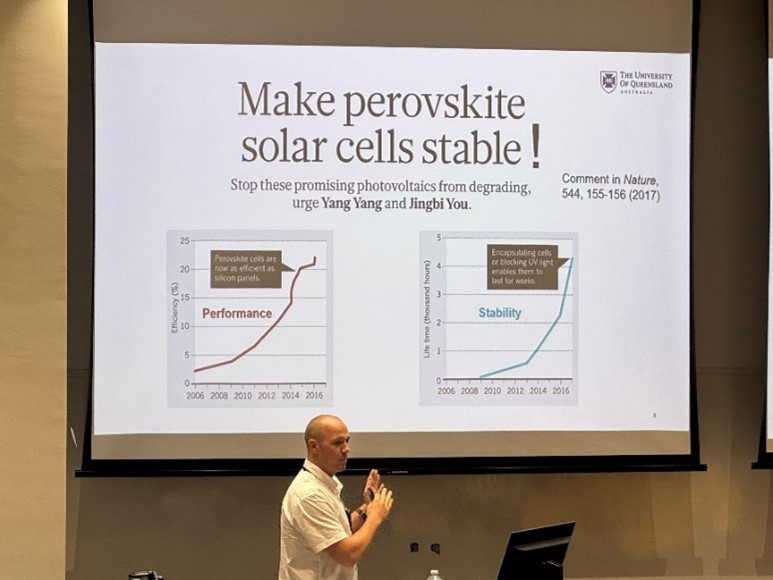 Dr Steele emphasised that mastering metastability is not merely a challenge but also an opportunity. By understanding and controlling these delicate energetic landscapes, scientists can unlock new pathways for designing functional materials with tailored properties.
Toward Stable Perovskite Devices
The colloquium concluded by discussing how these stabilisation strategies can be translated into practical devices such as solar cells, LEDs, and photodetectors. By carefully engineering crystal structure, composition, and environmental protection, researchers are gradually overcoming the stability limitations that have historically hindered perovskite technologies.
An engaging discussion session followed, where attendees posed questions about phase engineering, long-term device stability, and the future of inorganic perovskites in commercial applications. The exchange highlighted the growing interest in perovskite research and its potential to reshape the future of optoelectronic technologies.
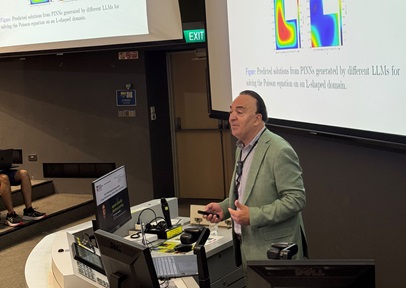
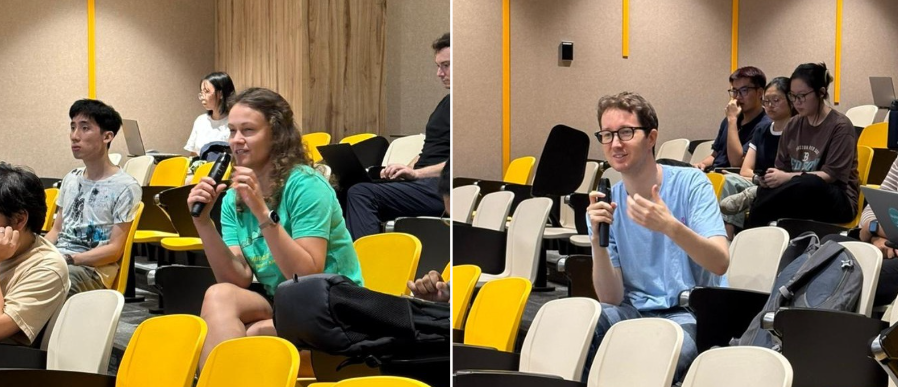 Audience discussion on phase engineering, device stability, and the commercial future of inorganic perovskite optoelectronics.
Dr Steele’s talk provided valuable insight into the complex interplay between structure, energetics, and environment in perovskite materials, offering a deeper understanding of how metastability can be controlled to enable more robust and efficient devices.
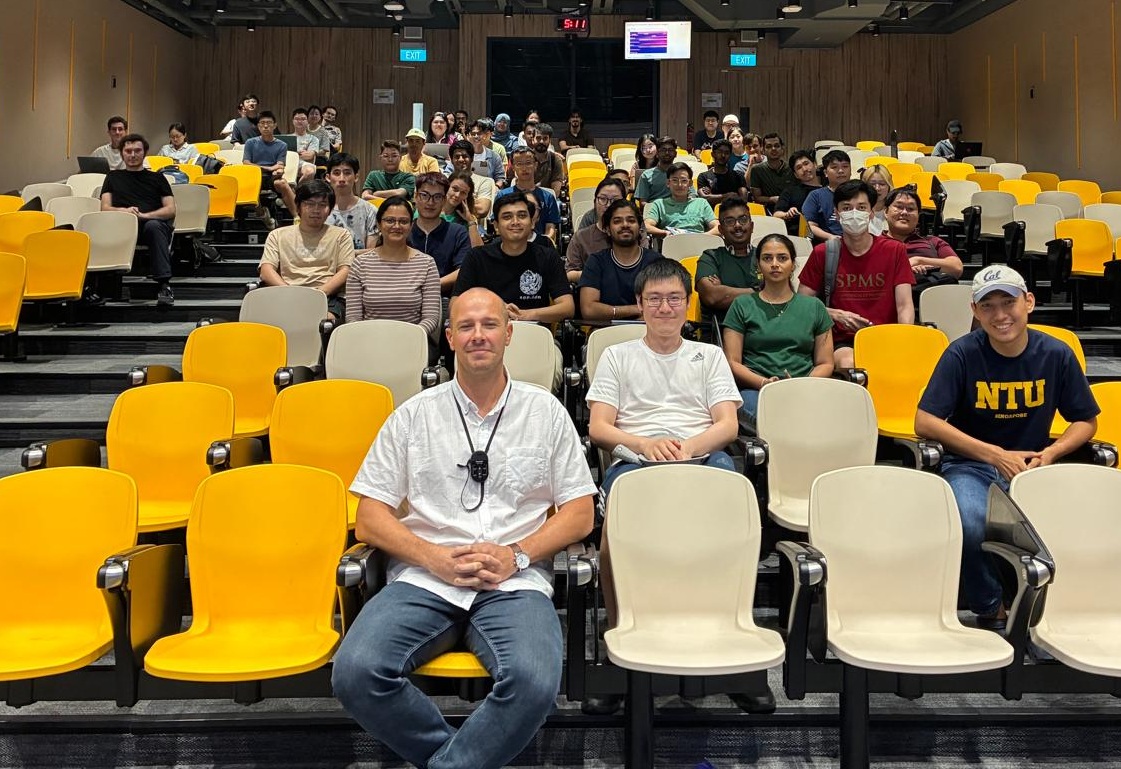
Written by: Rohit Duvvuri | NTU School of Materials Science and Engineering Graduate Students’ Club
"The colloquium clearly explained the phases of perovskite changes in different temperature.” – Hu Ruijie (PhD student, IGP)
"I enjoyed learning about how the perovskites transition to non-perovskite structures, especially in the presence of moisture layers, and how strain is present in the structures in 2D films..” – Mustafa Ameer (PhD student, EEE)
“I learned about inorganic perovskite stability and performance .” – Kumar Rajesh (PhD student, IGP-ERIAN)
"Dr Steele was quite informative and helped me fill up a few doubts I am having with my work." - Verma Somya (PhD student, MSE)
Watch the recording here.