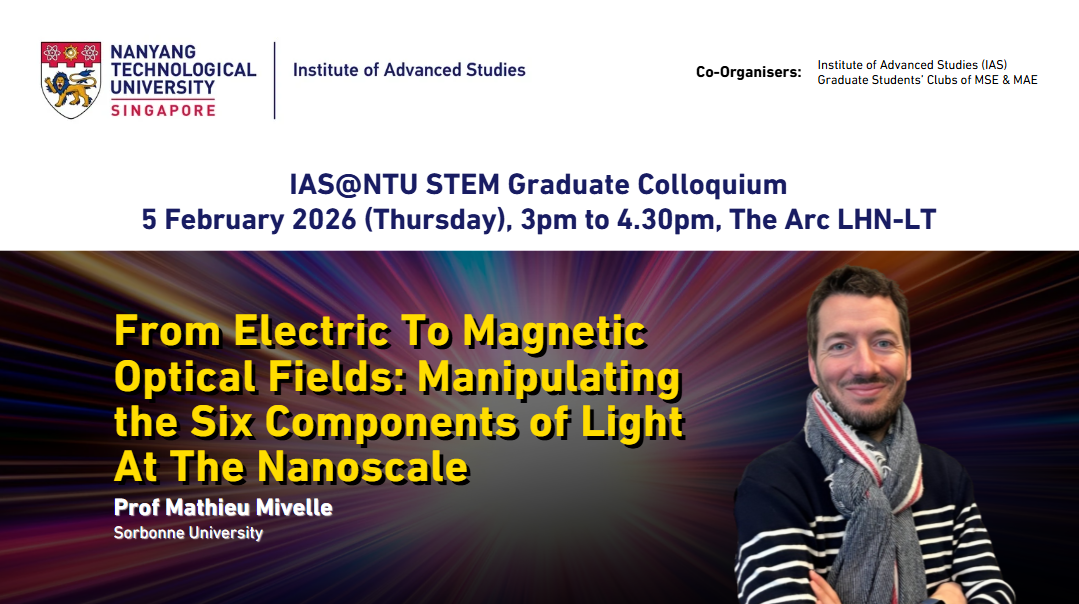
From Electric To Magnetic Optical Fields: Manipulating the Six Components of Light At The Nanoscale by Prof Mathieu Mivelle
IAS@NTU STEM Graduate Colloquium Jointly Organised with the Graduate Students' Clubs
At the IAS@NTU STEM Graduate Colloquium on 5 February 2026, Prof Mathieu Mivelle (Sorbonne University) delivered a talk titled “From Electric to Magnetic Optical Fields, Manipulating the Six Components of Light at the Nanoscale.” From the very beginning, he challenged a common assumption in optics that we usually focus almost entirely on the electric part of light. As he emphasised, light is an electromagnetic wave composed of six components, which are three electric and three magnetic. Yet, historically, the magnetic part has been largely overlooked. One of the key messages of the talk was what he described as the complete manipulation of all six electromagnetic components. This phrase captured the core ambition of his research. Instead of treating magnetic optical fields as negligible, his work aims to engineer nanostructures that allow both electric and magnetic components to be selectively enhanced and controlled.
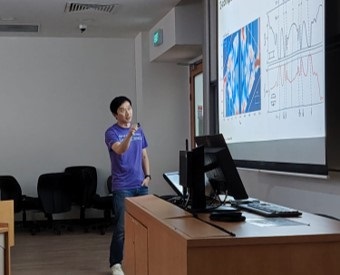
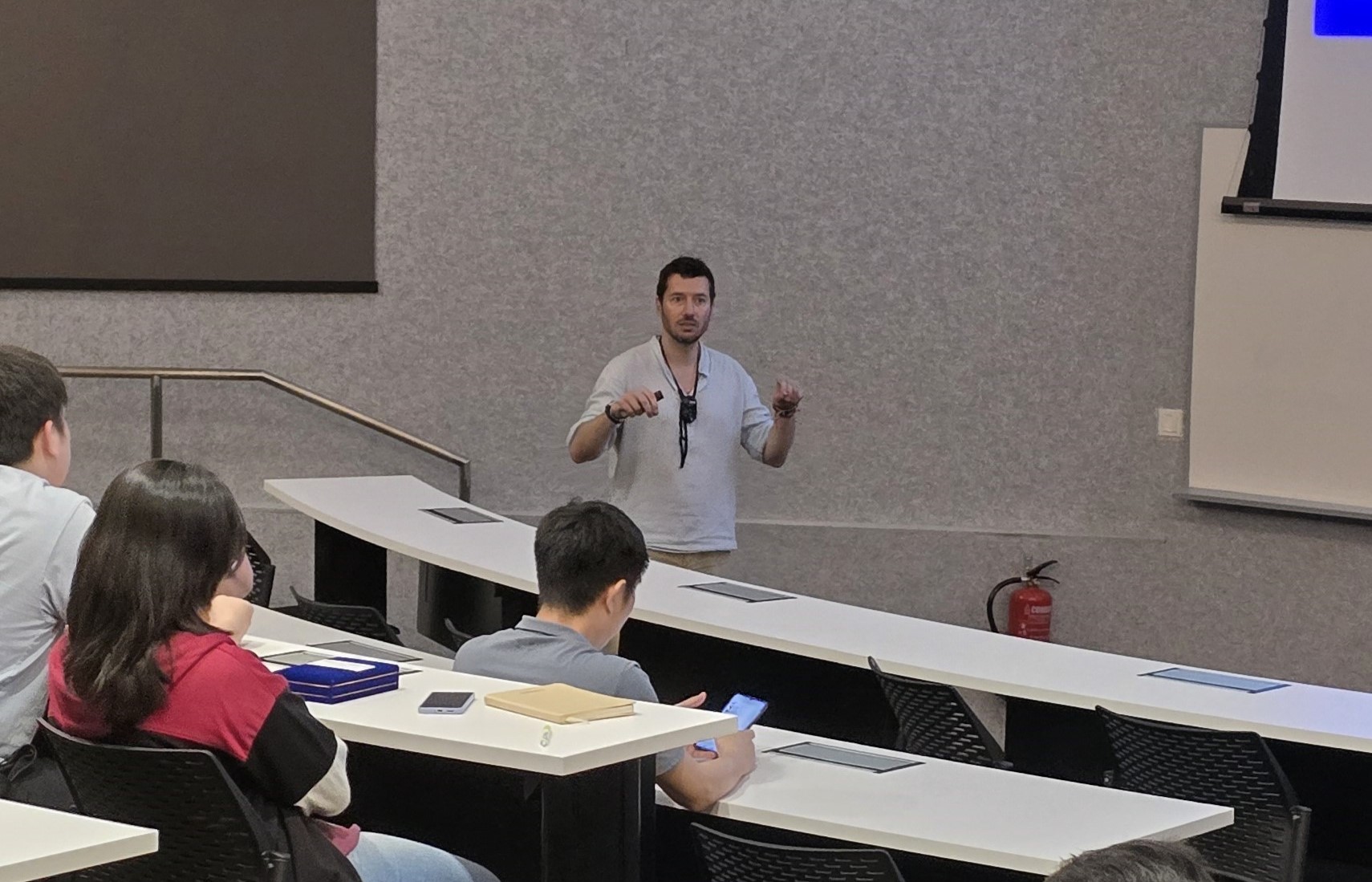 Prof Mivelle challenges optics norms, championing control of light’s six electromagnetic components at the nanoscale.
He explained that this control becomes possible at the nanoscale, where carefully designed nanostructures can reshape local electromagnetic fields. At this scale, light no longer behaves as a simple uniform wave. Instead, strong localised field distributions, hotspots, directional currents, and magnetic field concentrations can be generated. Through such engineering, it becomes feasible to create what he referred to as intense and directional magnetic optical fields. The applications presented were both fundamental and forward-looking. He highlighted highly nonlinear photon avalanche processes, illustrating how tailored electromagnetic fields can dramatically amplify optical responses. Another major theme was chiral light-matter interaction, where controlling the magnetic component of light enables stronger coupling with chiral molecules, which is an area with implications for sensing and spectroscopy. Midway through the presentation, by connecting optical field engineering to magnetic structures such as skyrmions, he showed how nanoscale photonics can influence magnetic phenomena.
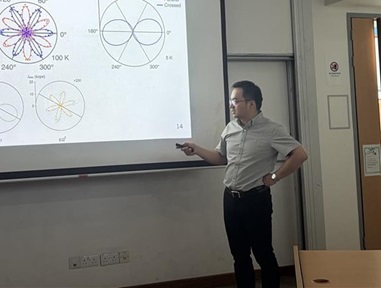
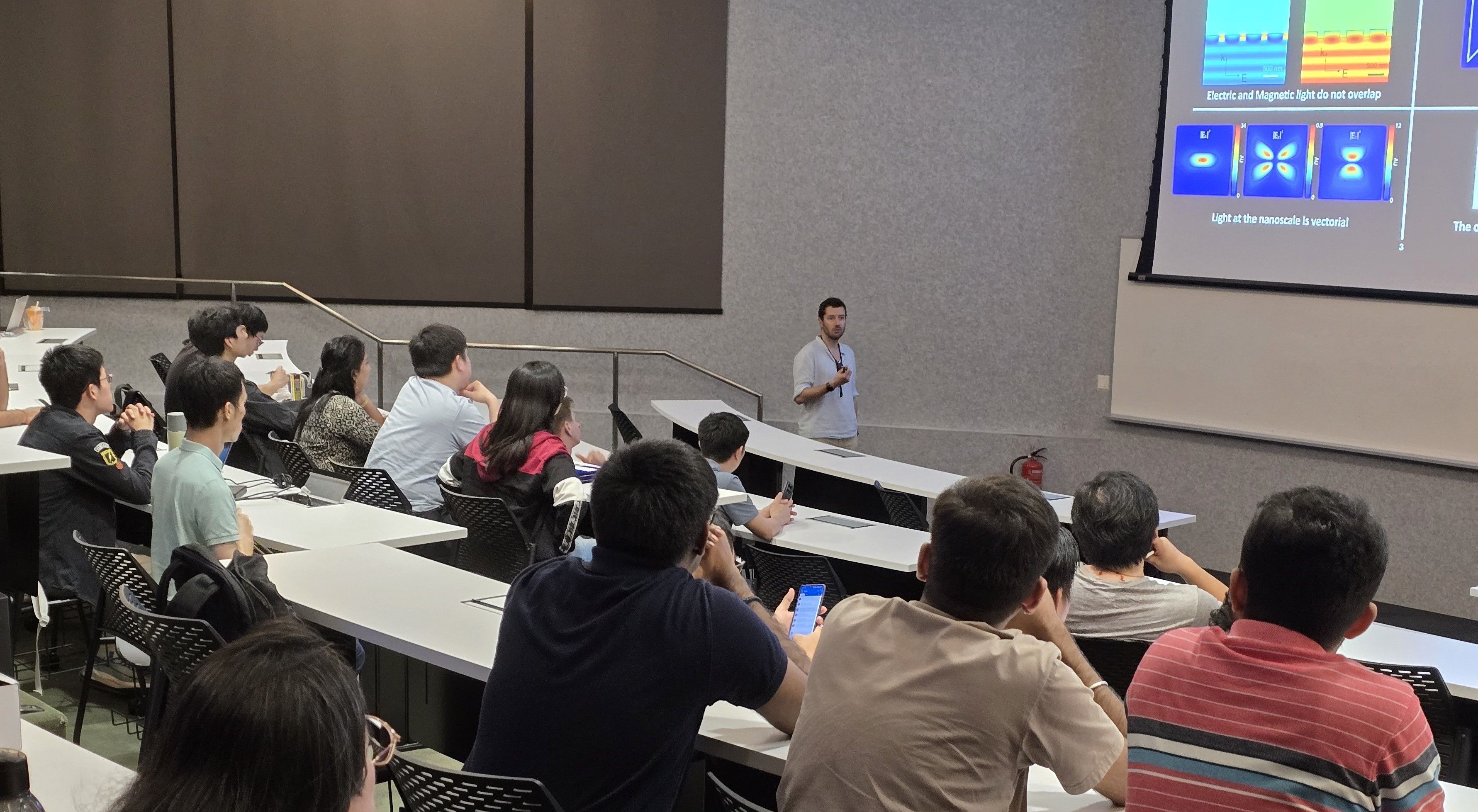 Prof Mivelle outlined engineered optical magnetic fields, highlighting their potential to reshape nanophotonics and advance emerging quantum science.
This connection laid the groundwork for the broader vision presented toward the end of the talk. In addition, he outlined how engineered optical magnetic fields could interface with emerging quantum systems. He discussed potential relevance to systems sensitive to magnetic fields, including solid-state quantum platforms. The broader implication was clear: controlling magnetic optical fields may open pathways not only in nanophotonics but also in quantum science. Throughout the seminar, the progression felt deliberate. From recognising the imbalance between electric and magnetic optical control, to demonstrating nanoscale engineering strategies, and finally to proposing links to magnetism and quantum technologies. The emphasis remained consistent. Light should be understood and engineered as a six-component entity, not just an electric-field-driven phenomenon.
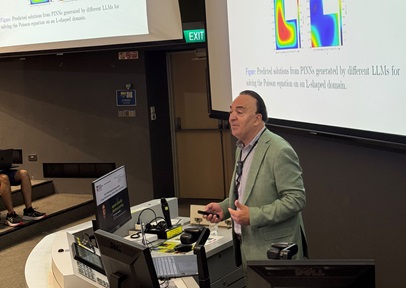
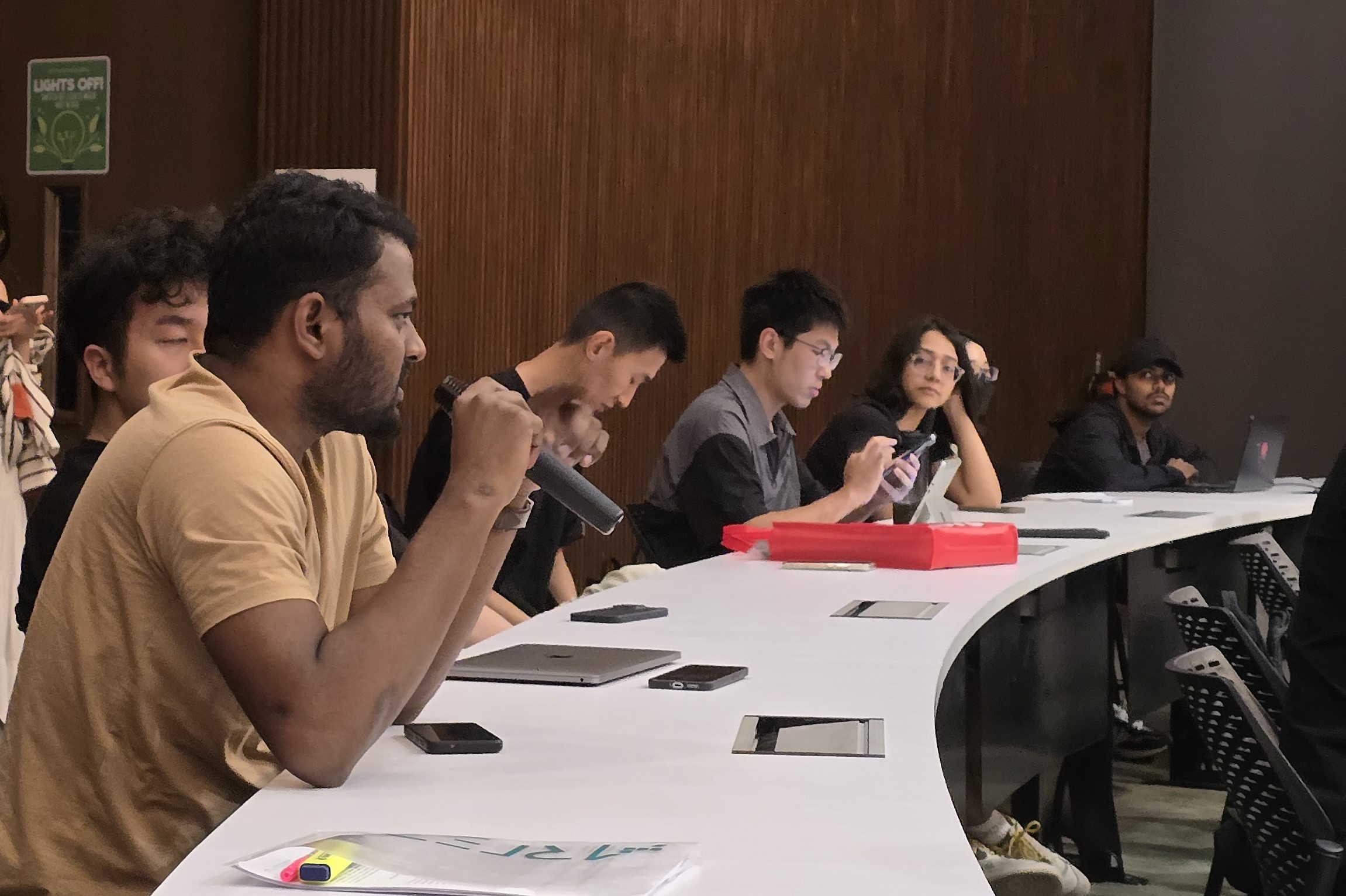 Prof Mivelle tackles questions on experimental limits, material platforms, and the promising future of magnetic optical fields.
During the Q&A session, questions centered on practical limitations and experimental feasibility. How strong the magnetic optical fields can realistically become, what material platforms are most promising, and how these concepts transition from theoretical modeling to real devices. Prof Mivelle acknowledged fabrication constraints and measurement challenges but remained optimistic about the field’s rapid progress.
Overall, the key takeaway from the talk was clear. By moving “from electric to magnetic optical fields,” researchers can unlock richer control over light-matter interactions. The ability to manipulate all six electromagnetic components at the nanoscale represents not just a technical milestone, but a conceptual shift in how we understand and design optical systems for future technologies.
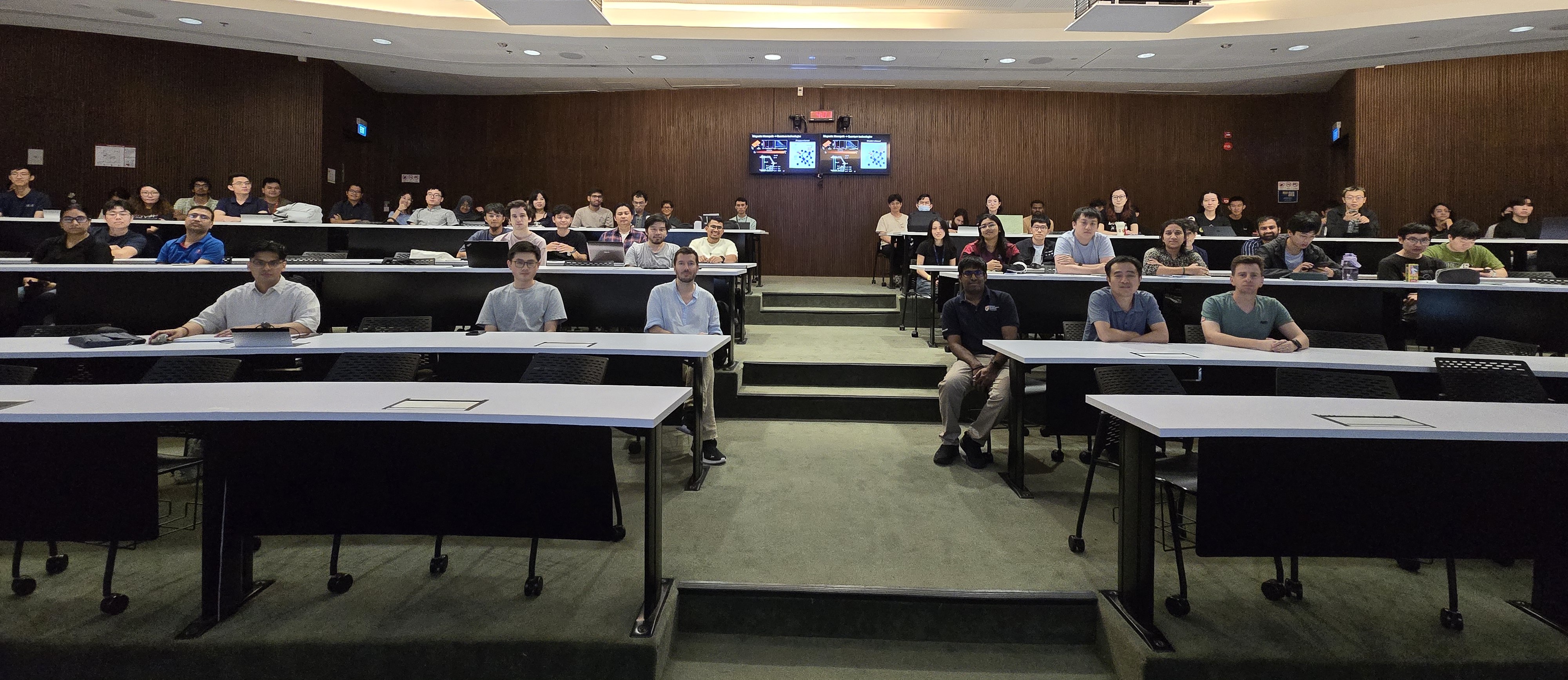
Written by: Ma Zhuoran | NTU School of Mechanical and Aerospace Engineering Graduate Students' Club
“ The introduction to the inverse Faraday effect was very interesting.” – Fan Chengle (PhD student, SPMS)
“ Very informative, and presentation was delivered through clear illustrations.” – Daniel Goh Jee Seng (PhD student, MAE)
“ The way he presented the data, very eye catching.” – Diana Arredondo Bernal (PhD student, CCEB)
Watch the recording here.