Does an Isolated Quantum System Relax? by Prof Jorg Schmiedmayer
IAS Frontiers Seminars: Quantum Horizons, Seminar #7
On 23 March 2026, the Institute of Advanced Studies (IAS@NTU), in collaboration with the Graduate Students’ Club of the School of Physical and Mathematical Sciences (SPMS) hosted the IAS Frontiers Seminars: Quantum Horizons by Prof Jorg Schmiedmayer (Vienna University of Technology), who delivered a seminar titled “Does an Isolated Quantum System Relax?”.
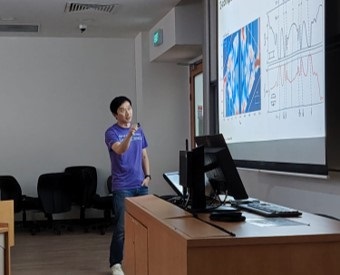
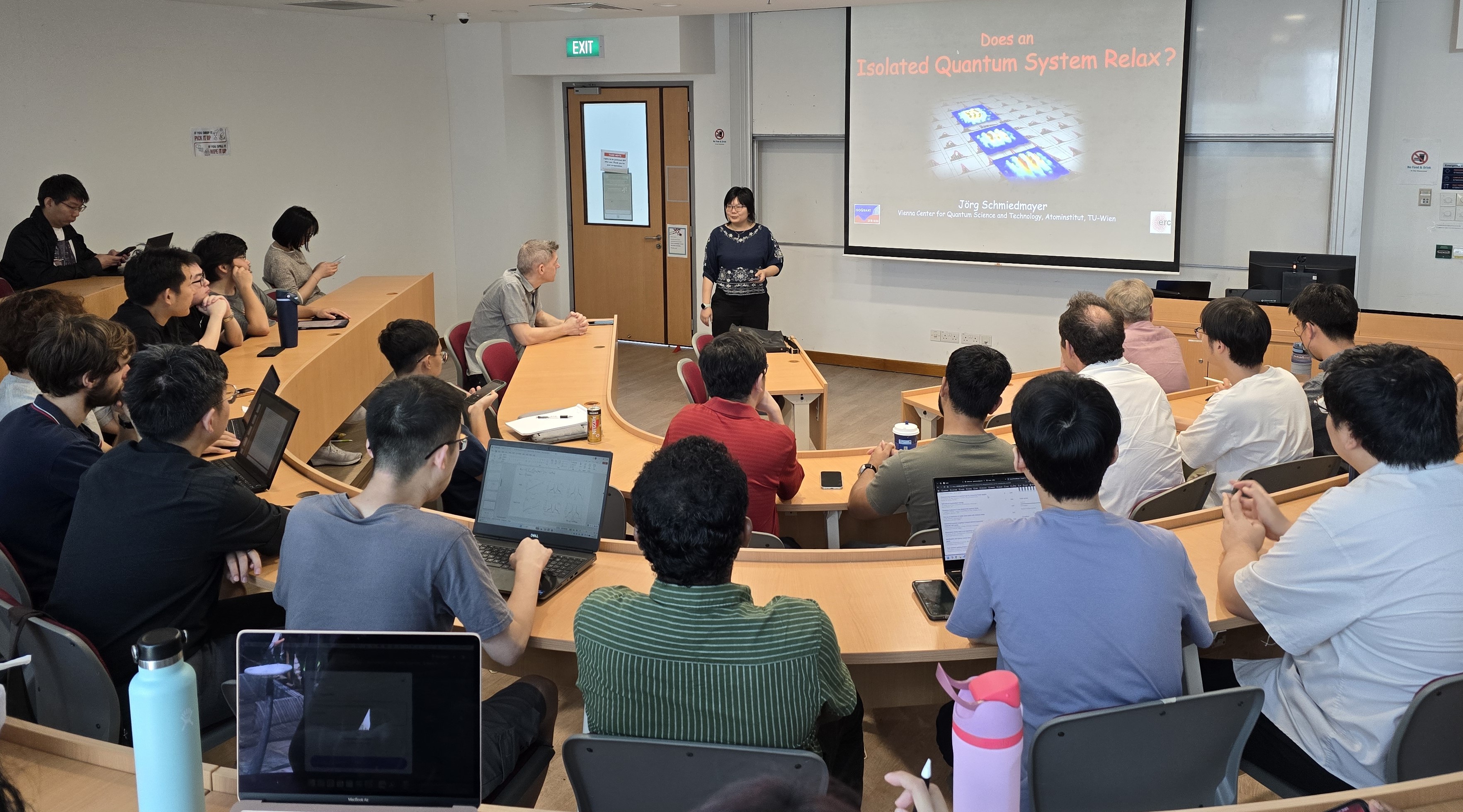 Asst Prof Nelly Ng (SPMS) welcoming everyone to the seminar, and sets the stage for the exciting session ahead.
If you make yourself a cup of hot coffee and let it rest in the open air, what is going to happen? We know from experience that the coffee will cool to the temperature of the air surrounding it. This relaxation toward thermal equilibrium is at the center of thermodynamics governing everyday objects around us. It states that systems tend to evolve toward state with maximum entropy, which corresponds to thermal equilibrium.
But what happens if you go deep into the quantum regime? Do systems also tend to relax toward thermal equilibrium? Here lies a fundamental tension between thermalisation and quantum mechanics. The reason is that isolated quantum systems evolve unitarily. Roughly, this means that entropy is conserved and no information about the system initial state is lost.
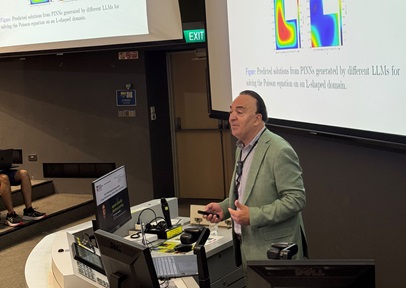
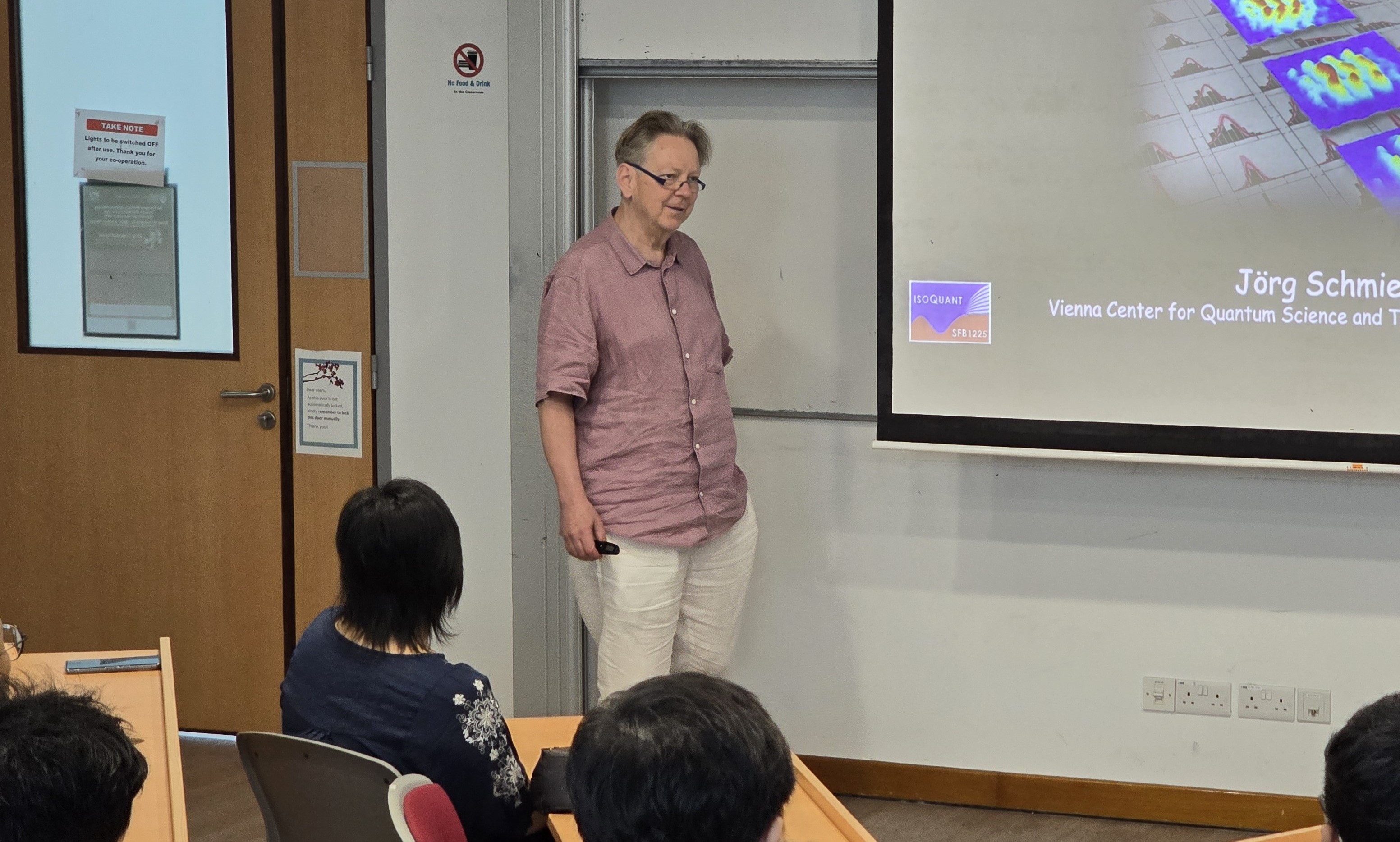 From cooling coffee to quantum systems: Prof Schmiedmayer explores the tension between thermalisation and conserved entropy
The departure of quantum mechanics from classical intuition prompts a bigger question. How does the classical world, governed by thermodynamics, emerge from the fundamental rules of quantum mechanics? Prof Jörg Schmiedmayer and his experimental group are set on a journey to investigate this. In their laboratories, they construct a highly controllable and measurable quantum many-body system made of ~10,000 extremely cold Rubidium atoms. They then watch in detail whether these quantum systems thermalise.
Probing Thermalisation in the Quantum Regime with 1D Bose Gas
The experiment starts by cooling down Rubidium atoms to extremely cold temperatures, possibly the coldest temperature ever realised in the universe. More specifically, the temperature of the atoms reaches a nanokelvin regime, a billion times colder than outer space. This extremely low temperature is needed to realise the quantum nature of these atoms. After being cooled down, the movement of the atoms are further constrained in one-dimensional (1D) geometry. In other words, the atoms can only move in one axis, e.g., left and right (and not up/down front/back). This 1D constraint is so that the atoms are easier to model, control, and measure. Collective behavior of the atoms is also more pronounced in 1D geometry, as the atoms cannot pass through each other when they move around.
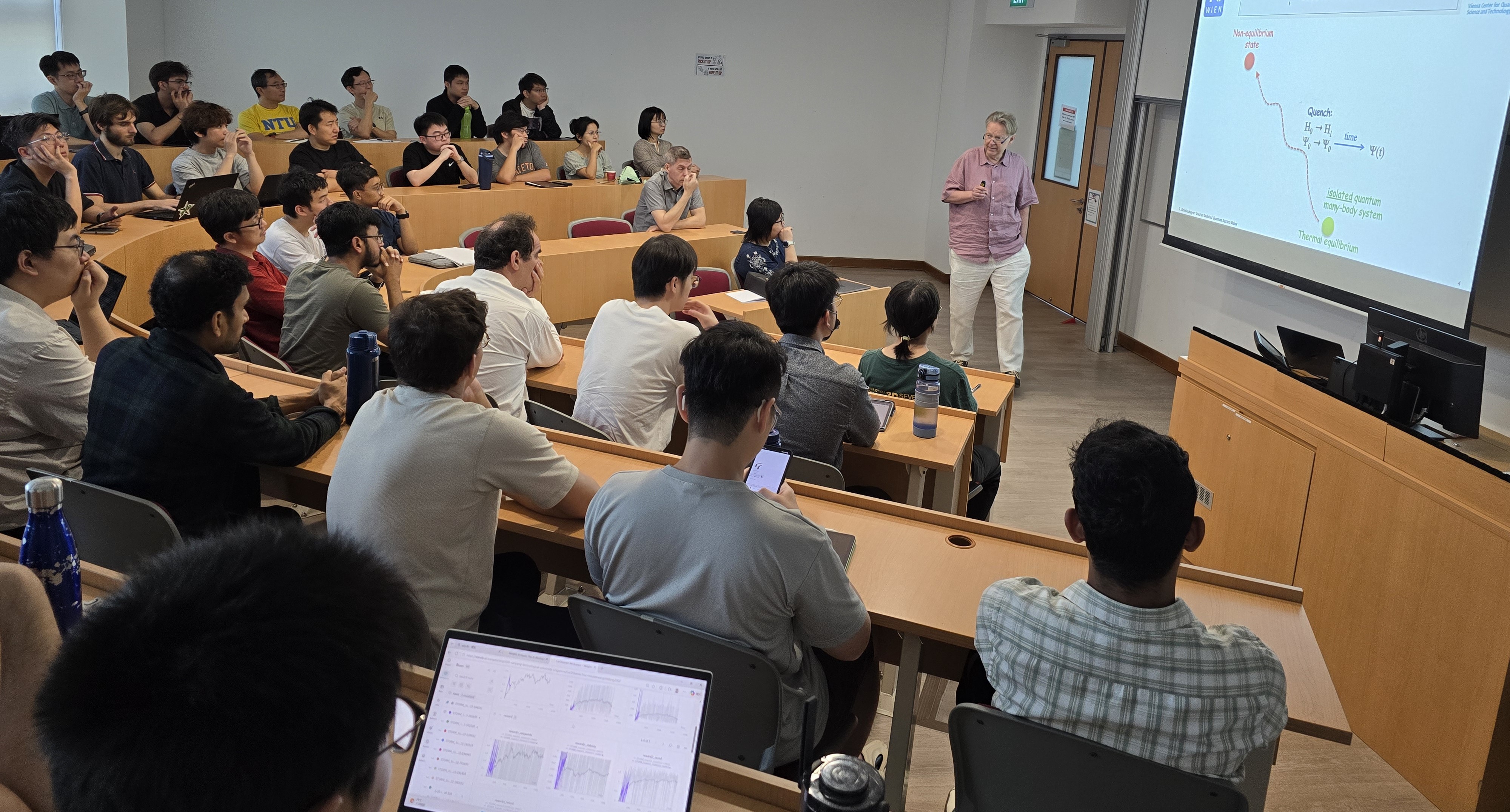
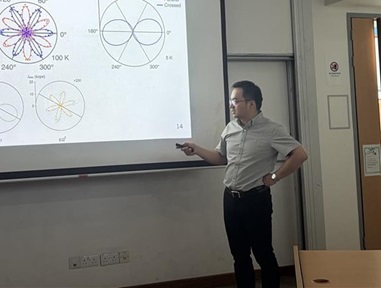
Prof Schmiedmayer explains how his group cools rubidium atoms to near absolute zero to study quantum thermalisation behavior.
Complex and Multistage Relaxation Toward Equilibrium
To probe the answer, Prof Schmiedmayer and his group need to develop highly sophisticated ways of measuring the system. Their key measurement method utilises interference, a key phenomenon in waves where two crests and troughs of a wave can enhance and annihilate each other. It is well-known that interference is an exceptional tool for measuring and obtaining information. At normal temperature, however, atoms behave as particles and therefore they cannot interfere. But, in extremely cold temperatures these atoms start behaving more like waves due to their quantum properties. As a result, atoms can also exhibit interference, which is then used to measure and study relaxation toward thermal equilibrium in this experiment.
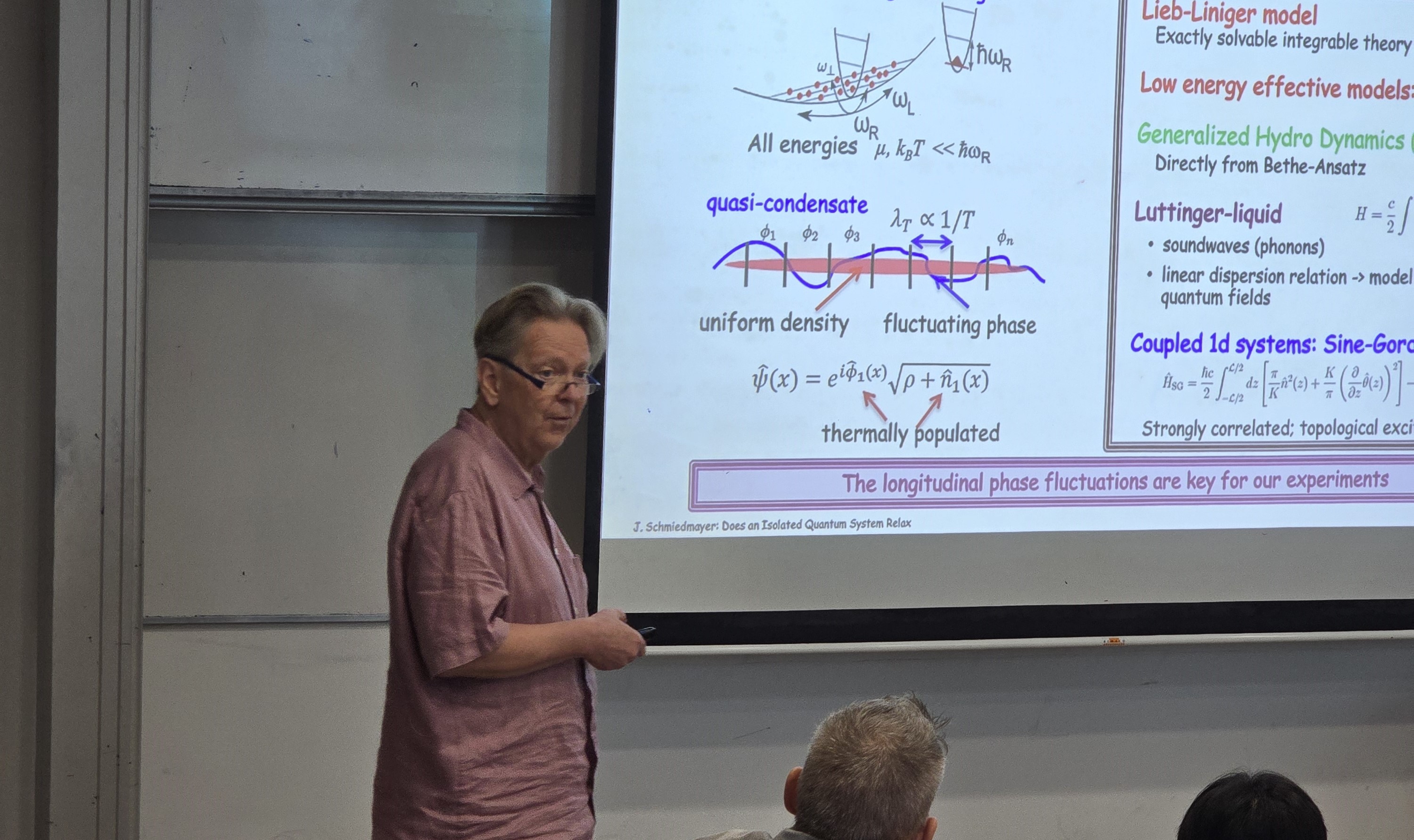
Prof Schmiedmayer shares the complexities of 1D quantum systems, leading to an engaging audience discussion on quantum relaxation, prethermalization, and recurrence phenomena.
What they found is fascinating. Rather than a quick decay toward equilibrium as expected in everyday systems, the relaxation of 1D quantum systems is complex, with various intermediate stages. For example, the system undergoes prethermalization, i.e., it relaxes to a relatively long-lived thermal-like state that is not the true thermal equilibrium. Furthermore, the system experiences a recurrence; this is when information appears to be lost, but then returns at a later time. The jury is still out on whether the system ultimately approaches a true thermal equilibrium, where all information about its correlated initial state has been lost.
The seminar ends with a lively Q&A session, where the audience ask more details on the quantum many-body systems realised in Prof Schmiedmayer’s laboratory, the measurement protocol, and the possibility of observing true thermalisation.
This seminar is part of the ongoing IAS Frontiers Seminars: Quantum Horizons series. Find out more about the upcoming seminars and register here.
Written by Taufiq Murtadho| NTU School of Physical and Mathematical Sciences
“I like how Prof Schmiedmayer gave very detailed pictures on both experiment and theory in his domain, it did make the physics picture much easier to visualise." - Martina Lee Zhe Ying (PhD Student, SPMS)
"I enjoyed his experimental presentation on doing phase measurements in 1D Bose-Einstein Condensates." - Qiu Kai Wei (PhD Student, SPMS)