AI as the Frontier of Digital States: Estonia's Approach to Responsible and Inclusive AI Governance by Ms Liisa-Ly Pakosta
Institute of Advanced Studies and Asian Centre for Digital Cultures Distinguished Speaker Seminar
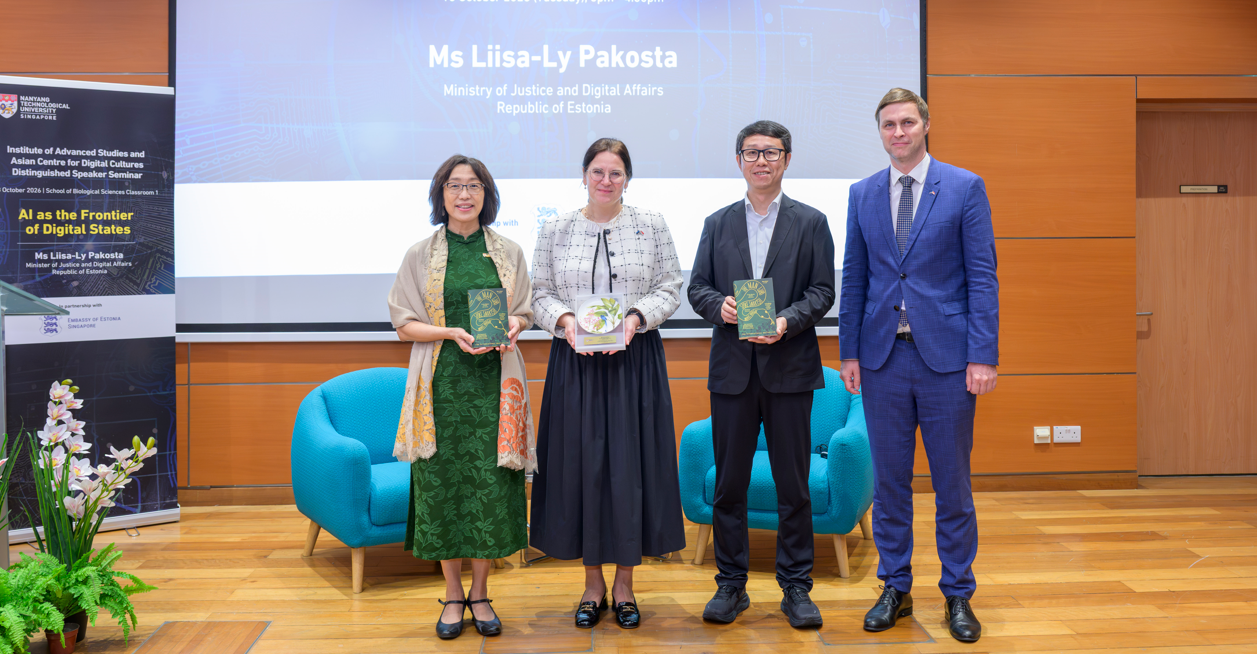
On 13th October 2026, Nanyang Technological University (NTU), Singapore welcomed Ms Liisa-Ly Pakosta, Minister of Justice and Digital Affairs of the Republic of Estonia, for a Distinguished Speaker Seminar titled “AI as the Frontier of Digital States”. The seminar explored Estonia’s approach to digital transformation and the opportunities and challenges of integrating artificial intelligence (AI) into public governance, with a particular emphasis on human rights, public trust and social inclusion.
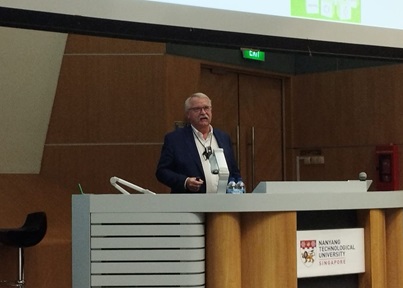
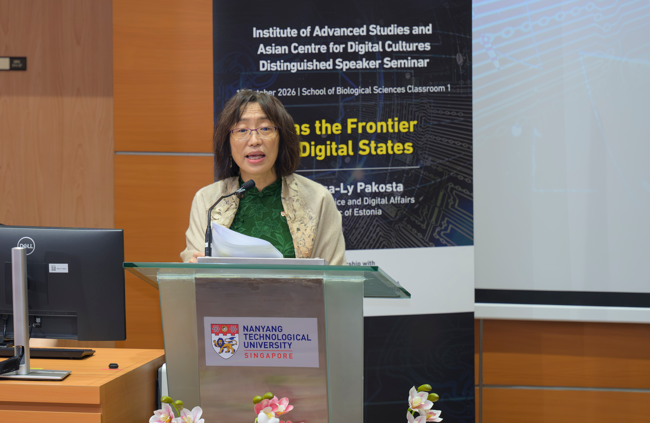 Prof Jun Yang (Dean, NBS) opened the seminar by highlighting Singapore and Estonia’s shared digital aspirations.
The seminar commenced with a welcome address by Prof Jun Yang, Dean of Nanyang Business School (NBS), who highlighted the shared aspirations of Singapore and Estonia as digitally advanced nations. Prof Yang emphasised the importance of adopting AI in practical and ethical ways, noting the valuable opportunities for both countries to exchange insights on responsible innovation and digital governance.
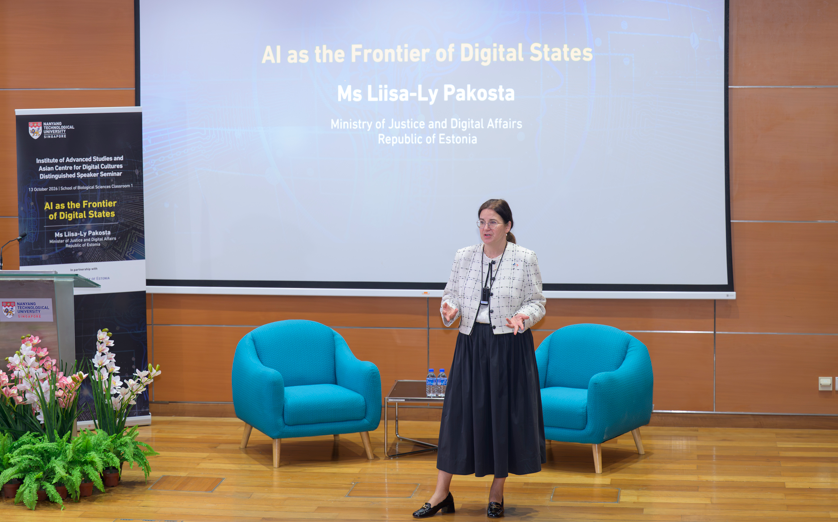 Minister Pakosta highlighted Estonia’s digital transformation and its commitment to responsible,
rights-based AI governance.
Drawing on Estonia’s digital transformation journey since regaining independence in 1991, Minister Pakosta shared how the country developed an extensive digital government ecosystem grounded in accessibility, efficiency and citizens’ rights. Early investments in digital infrastructure, public education and accessible government services laid the foundation for Estonia’s transition into the AI era. “When AI came, we were already ready,” she remarked, highlighting how decades of digital development had prepared Estonia to embrace emerging technologies. She further described freedom and human rights as the “guiding stars” of Estonia’s digital transformation, emphasising that technological
advancement must remain grounded in democratic values and public accountability. A central theme of the seminar was the importance of establishing clear boundaries for AI adoption. Minister Pakosta discussed Estonia’s approach to balancing innovation with privacy, cybersecurity and democratic values. Using examples from environmental management and public administration, she illustrated how AI can improve decision-making and service delivery while underscoring that technological feasibility alone does not justify its implementation. Public trust, data sovereignty and the right to understand or challenge automated decisions must remain essential considerations in AI governance. She also highlighted the growing importance of cybersecurity as threats evolve from conventional attacks towards those involving autonomous AI agents.
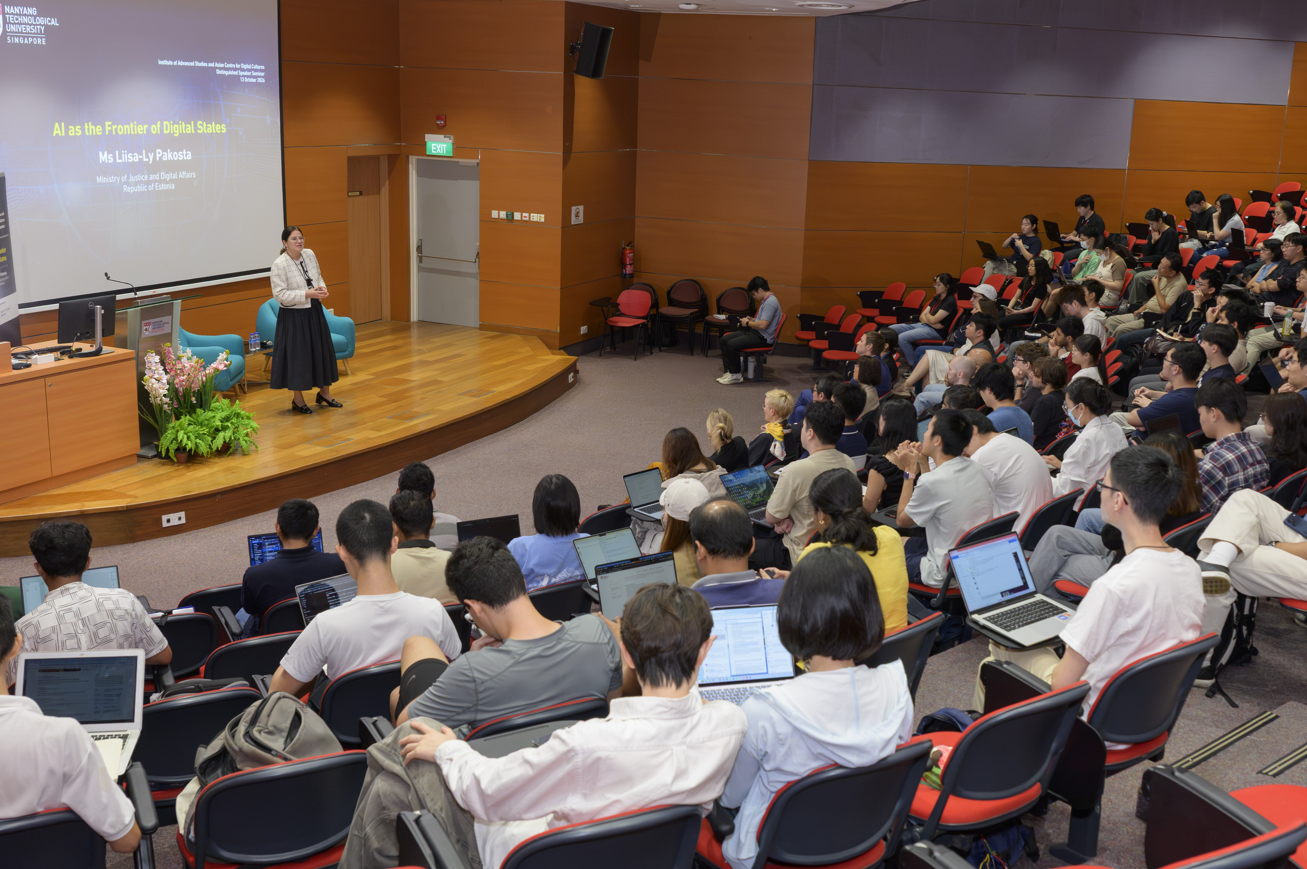 A key part of the seminar was the emphasis on inclusive digital transformation, to ensure AI advancements benefit all segments of society.
Minister Pakosta also highlighted Estonia’s commitment to the principle of “nobody is left behind” in digital transformation. Initiatives such as early digital education, specialised AI training for different professions and community-based digital literacy programmes aim to ensure that people across generations and socioeconomic backgrounds can benefit from emerging technologies. She further discussed efforts to extend digital access to vulnerable groups, including incarcerated individuals, to reduce the risk of digital exclusion. Rather than viewing AI primarily as a means of replacing workers, she encouraged the rethinking of public services and the development of new capabilities that allow people to contribute in meaningful ways.
Beyond technical and regulatory considerations, the seminar addressed the implications of AI for education, language and cultural identity. Minister Pakosta cautioned that AI systems developed within dominant cultural and linguistic contexts may overlook the diversity of smaller societies. She observed that AI-generated content can carry “U.S. colors”, reflecting cultural influences that may not adequately represent local identities and perspectives. Drawing parallels with the historical spread of printing technology, she warned of the potential marginalisation of languages and cultures that are not adequately represented in emerging AI systems. She also encouraged educational institutions to
rethink learning approaches by integrating AI literacy while continuing to nurture critical thinking, creativity, ethical reasoning and other essential human capabilities.
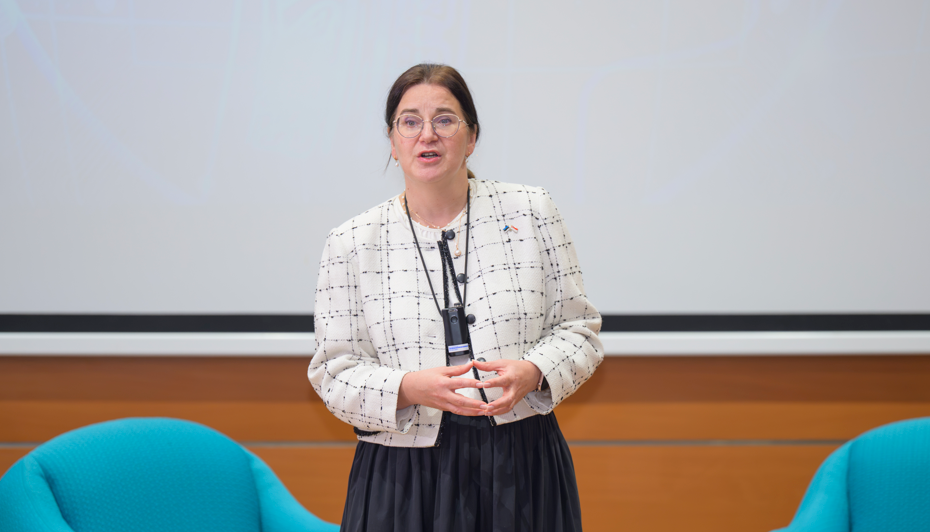 Addressing AI’s cultural implications, Minister Pakosta drew parallels between technological advancement
and linguistic and cultural marginalisation.
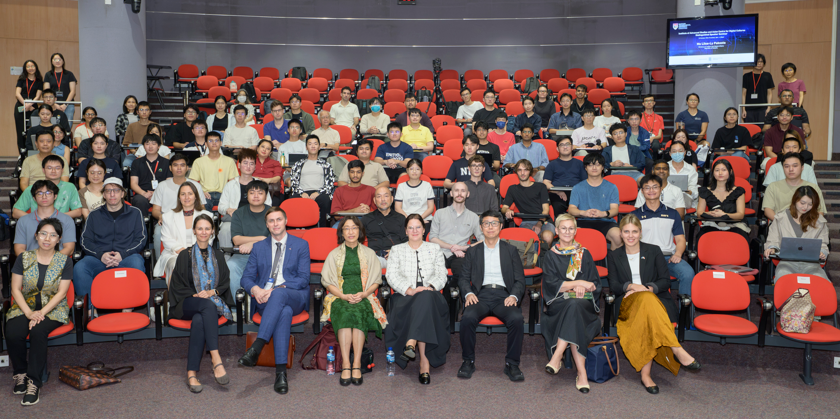
The seminar concluded with an engaging question-and-answer session moderated by Prof Jack Qiu, Chair of NTU’s Wee Kim Wee School of Communication and Information. Students and audience members raised thought-provoking questions on the societal implications of AI, reflecting a strong interest in how emerging technologies could reshape education, governance and everyday life. One question explored how education systems should evolve as AI fundamentally changes the ways students access and consume knowledge. In response, Minister Pakosta emphasised that integrating AI into education should not come at the expense of developing essential human capabilities. She highlighted the continued importance of physical education, music, philosophy and ethical reasoning, encouraging educators to explore new approaches that combine technological proficiency with critical thinking and human development. Another question examined whether governments should reject certain AI applications based on ethical and societal considerations rather than technical limitations. Minister Pakosta emphasised that technological efficiency should not come at the expense of public trust, democratic participation, and citizens’ rights. Drawing on an example of AI-assisted environmental decision-making, she explained that although AI could potentially produce forestry management decisions in less than a minute, democratic processes must preserve opportunities for public consultation and objections. Her response underscored the importance of protecting citizens’ “right to protest” rather than prioritising speed and automation alone.
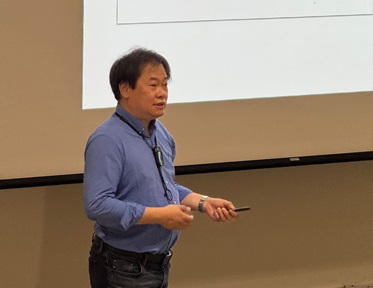
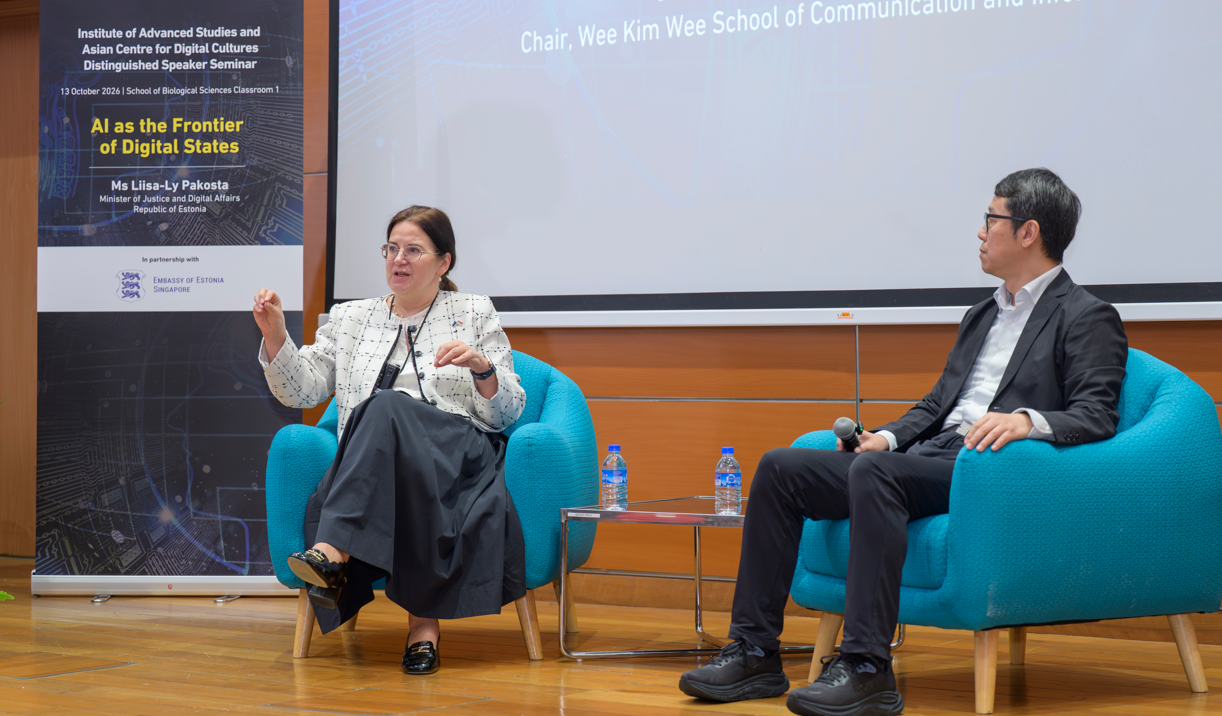 Prof Jack Qiu (Chair, WKWSCI) moderated an engaging discussion with Minister Pakosta on AI’s societal implications.
The discussion also explored how governments could ensure that AI benefits different segments of society, particularly older adults and younger generations facing different challenges in adapting to technological change. Minister Pakosta emphasised the importance of continuous evaluation of public satisfaction with digital services and targeted educational support. She further encouraged a broader reconsideration of how AI could transform existing services, rather than merely automating established processes. Reflecting on the discussion, Prof Qiu highlighted the importance of establishing safeguards and boundaries for AI, rather than viewing it solely as a “frontier to conquer”. In response, Minister Pakosta identified children as Estonia’s “frontier”, underscoring the importance of preparing younger generations with the knowledge, skills and values needed to shape technological progress responsibly.
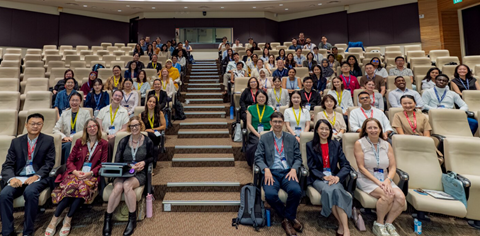
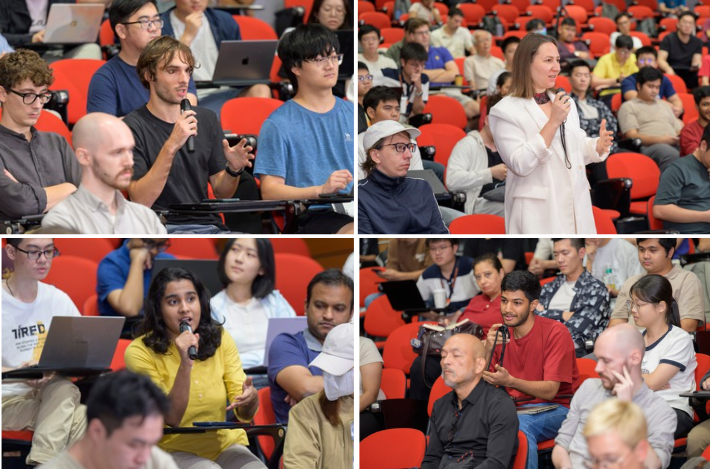 Audience members raised thought-provoking questions on AI’s impact on education, governance and society.
The Distinguished Speaker Seminar provided valuable perspectives on the evolving role of AI in public governance and fostered meaningful dialogue between policymakers, academics, and students. Estonia’s experience offered insights into how digitally advanced societies can pursue innovation while safeguarding human dignity, democratic accountability and cultural diversity. The discussion reinforced the importance of international knowledge exchange and interdisciplinary engagement in building trusted, resilient and inclusive AI-enabled societies.
Written by: Goh Si Qi | PhD Student, NTU College of Computing and Data Science
- "One point I enjoyed about this seminar was the consideration of children being the future.” — Foo Yan Xi (PhD student, EEE)
- “An eye-opening seminar looking at the broadening of AI applications in different cultures beyond Singapore.” — Raphael Tan Teng Seng (Undergraduate Student, SoH)
- “Many perspectives about how AI can improve the quality of society by changes involving digitalisation.” — Aldan Hadziq Haidar (PhD student, MSE)