
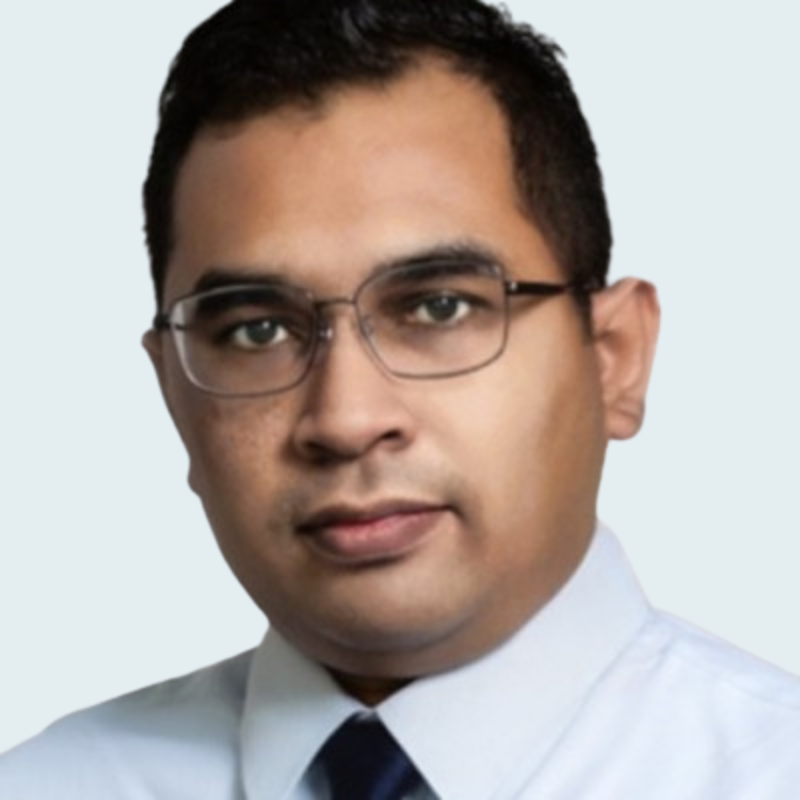
Amir Yunus
Master of Science in Information Systems, 2026
Programme Head (Specialist Diploma in Applied Generative Artificial Intelligence), Republic Polytechnic, Singapore
“What began as an opportunity to deepen my knowledge became a catalyst for my growth as an educator and researcher”
With a background in AI and data science spanning research and industry, I wanted to go beyond the technical aspects of AI to better understand how information systems, data and people work together. I pursued the Master of Science in Information Systems (MSIS) to deepen my expertise and strengthen my research capabilities. Studying part-time while working full-time also allowed me to apply what I learnt directly to my work.
One of my most memorable experiences was the Critical Inquiry module, where I learnt how to develop a research question and carry it through to a completed academic paper. What began as a class project became a published paper on deploying an AI chatbot in vocational education. The experience gave me a stronger foundation for conducting research, which I now draw on as a Principal Investigator at Republic Polytechnic, leading a study on AI adoption among small and medium-sized enterprises (SMEs).
MSIS also influenced how I design and teach AI programmes. Modules such as Text and Web Mining and Graph Analysis deepened my technical knowledge, while Human-Computer Interaction encouraged me to consider how people engage with technology, rather than focusing solely on AI models. These perspectives continue to inform my work as a Lecturer and Programme Head at Republic Polytechnic, where I develop courses for working adults in areas such as generative AI, agentic AI and human-AI interaction.
Beyond technical knowledge, modules such as Disinformation and the Information Professions strengthened my approach to developing critical thinking among students and contributed to my decision to pursue a PhD at NTU.
Looking back, MSIS has helped me build on my experience in AI and apply it in new ways across research and education. It reinforced the value of continuous learning, even in a field I was already familiar with, and showed me how connecting academic knowledge with real-world challenges can open up new opportunities for professional growth.