Past Events

CSSI Director, A/P Teo You Yenn was invited to speak on a panel, titled ‘Community and the Market’ at the Institute of Policy Studies (IPS) Singapore Perspectives 2025 Conference. In her speech, Prof Teo explored why we value community and the virtues it embodies. For corporations to be committed to caring about community, these virtues must be part of everyday practices and not just peripheral and relegated to occasional volunteer or charitable activities. Read her full speech here.
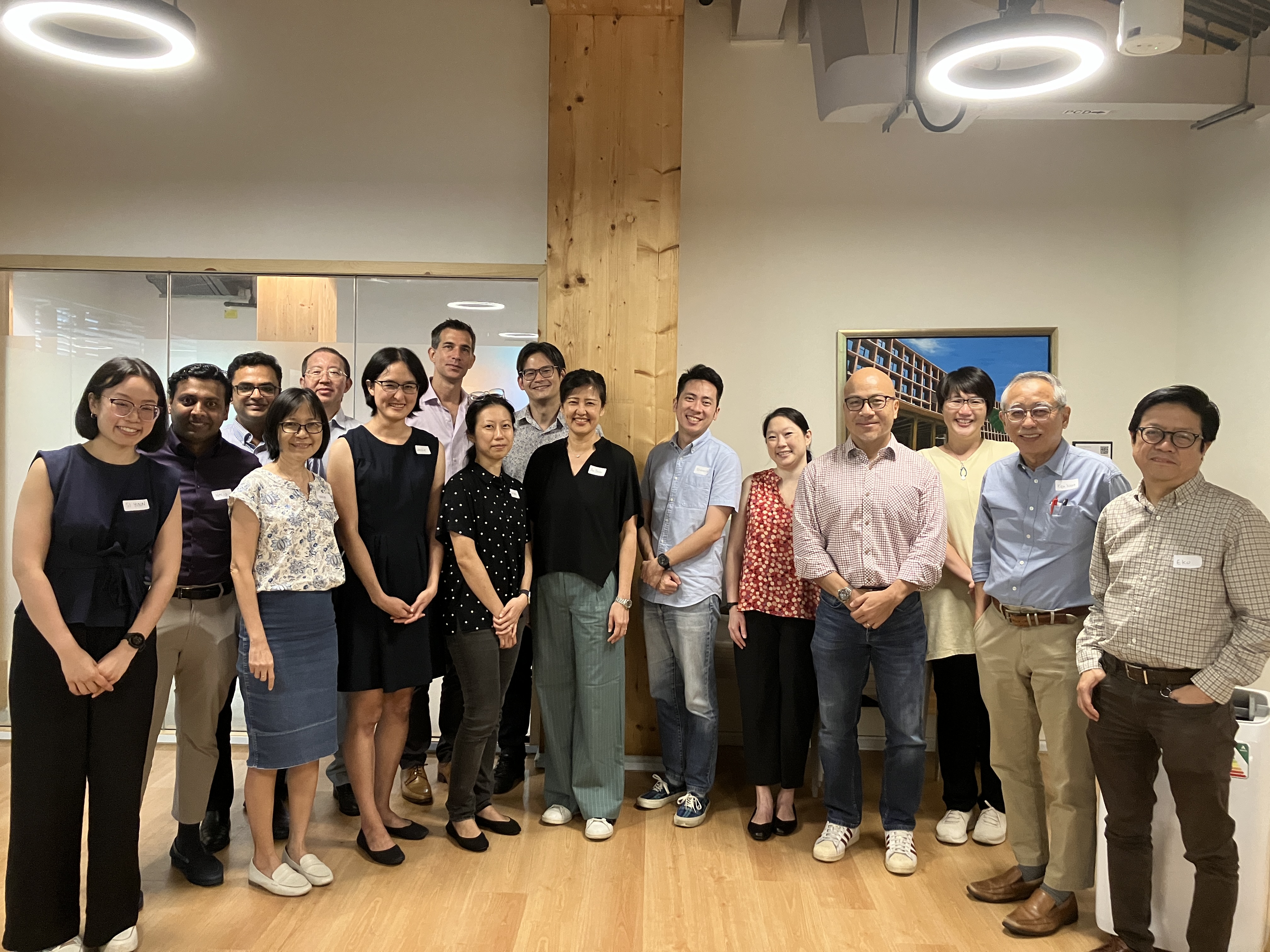
Strengthening the understanding of inequality requires research methodologies and expertise from various fields. CSSI is privileged to have the support of a distinguished Advisory Board that draws from academia, the social sector, civil society, and the arts. We have also built an excellent network of Associates from across Singapore’s universities and multiple disciplines, including Economics, Education, Political Science, Psychology, Public Policy, Social Work, Sociology, and Urban Planning.
In February 2025, we hosted two networking lunches for our Advisory Board members and Associates.
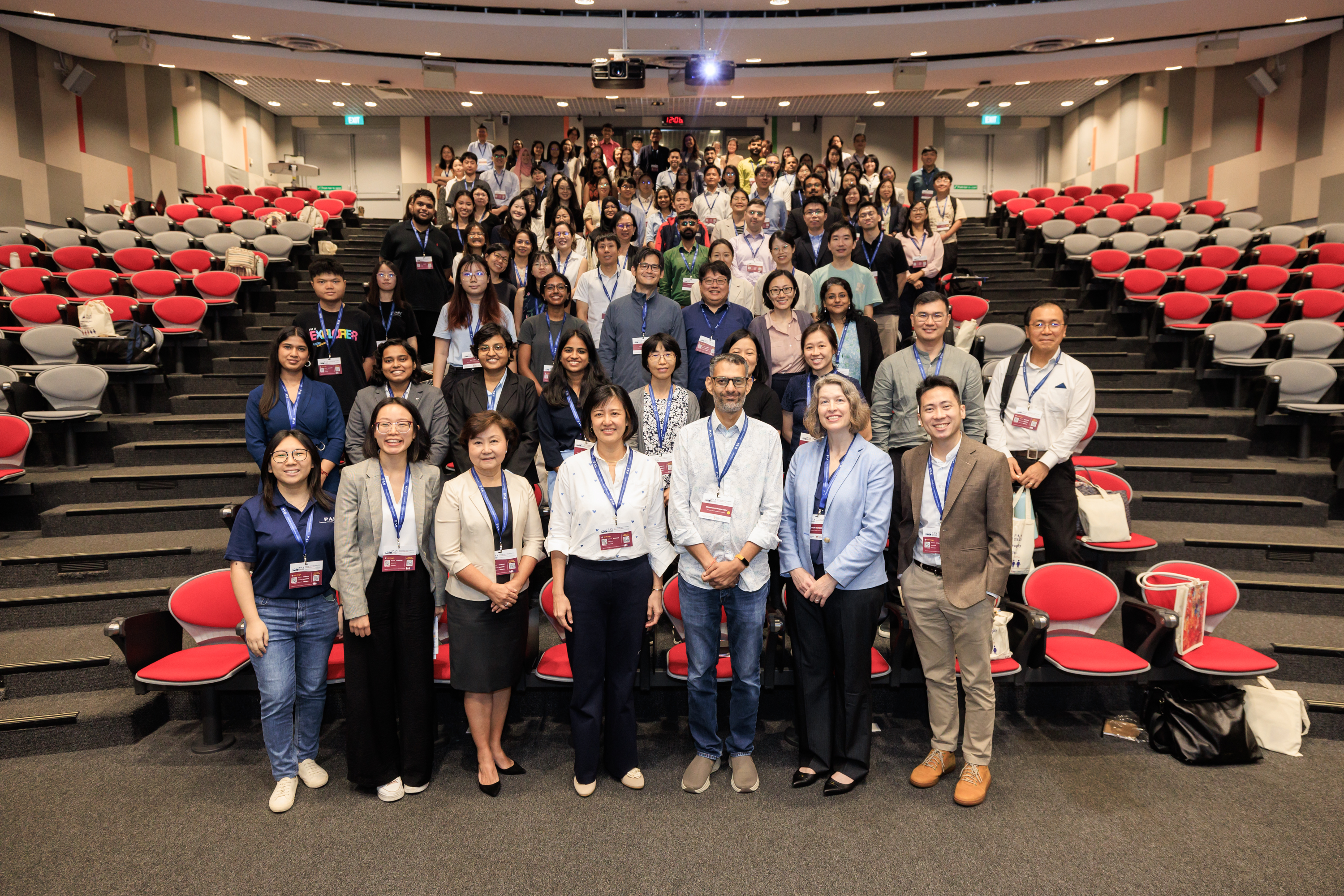
CSSI co-organised the 2025 Population Association of Singapore (PAS) Annual Meeting on 15-16 May 2025. Themed ‘Demography and Inequality: intersecting Paths’, the two-day event provided opportunity for scholars from around the region to consider how inequality shapes or is shaped by demographic trends.
Technological and healthcare advancements in recent decades have led to longer life expectancies, with opportunities for many to reap the benefits of living longer, better lives. Yet, these benefits have been unequally distributed across regions and social groups due to the climate crisis, concentration of wealth, and political polarisation. Alongside the changing patterns of family formation, familial structures and in many contexts, rapidly ageing populations, there are new configurations of social inequalities.
Analyses of global, regional or country-specific population characteristics and trends can provide insights into unequal human wellbeing. Studies of demographic patterns also have the potential to inform understanding of how inequality intersects with fertility, health and mortality, family composition and migration. Comparative evidence can provide ideas for how public policies can enhance greater equality.
CSSI Director, A/P Teo You Yenn, delivered the opening keynote address, where she urged scholars to see inequality not just in terms of narrow outcomes, but as a feature of social life that has wide-ranging implications. She remarked that inequality affects not just marginalised groups but all of society. Inequality shapes how ordinary people live, feel, see, and act in the world. Seeing inequality as context can deepen understanding of demographic trends such as low fertility. In closing, A/P Teo encouraged young scholars in particular to be open to research from various disciplines and curious about the various ways people respond to the conditions of inequality. Read her speech here.


PAS Conference Parallel Sessions brought together scholars from around the region to consider how demographic trends are shaped by and shapes inequality.
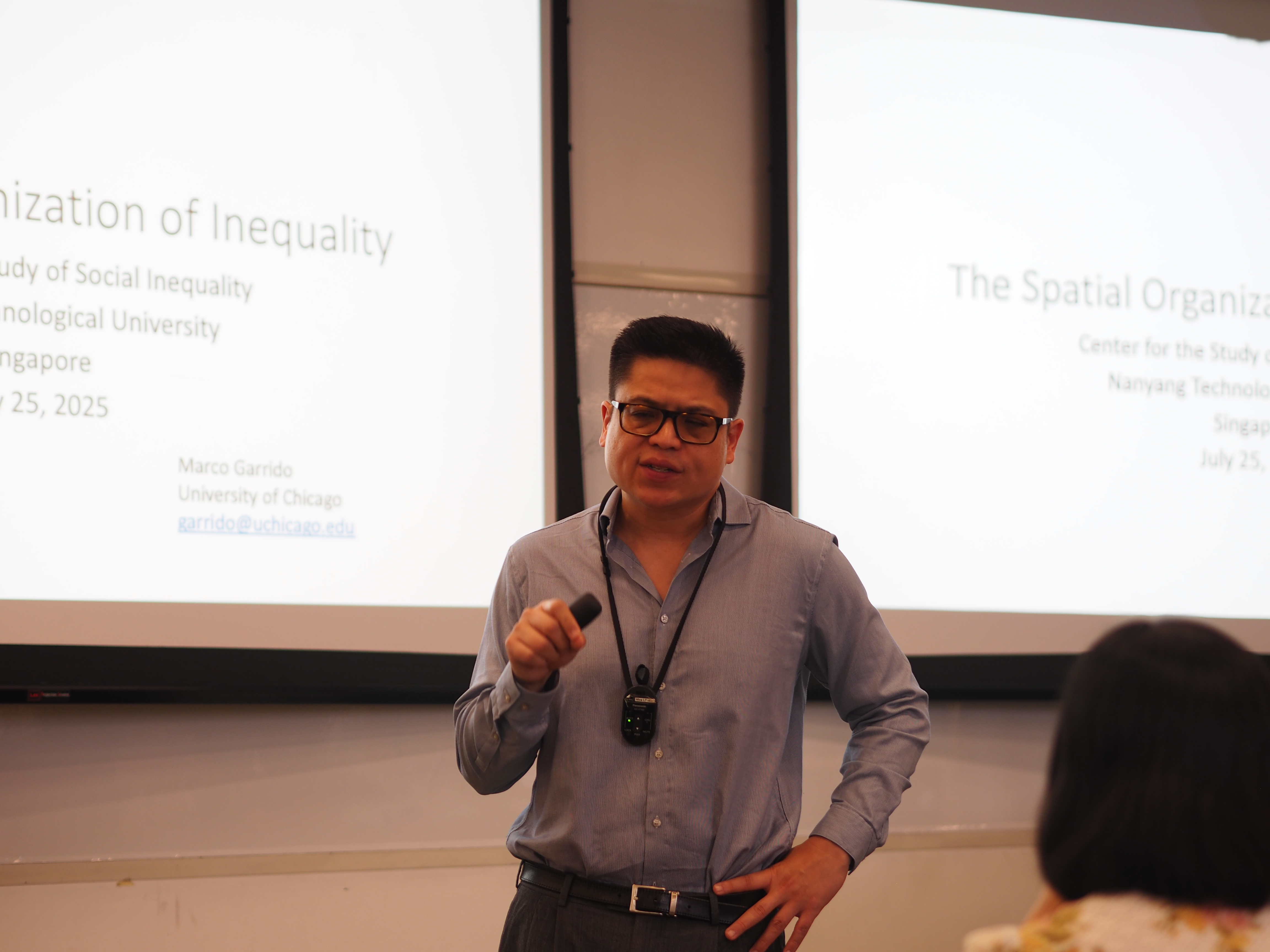
CSSI kickstarted our Seminar Series in July 2025 with our first guest speaker, Associate Professor Marco Garrido from the Department of Sociology at the University of Chicago. Titled ‘The Spatial Organisation of Inequality’, Prof Garrido highlighted the importance of being attentive to the spatial organisation of inequality. Using the cases of Metro Manila and Singapore, he showed how social and spatial boundaries reinforce each other to shape experiences and perceptions of inequality.
CSSI Associate, Dr Ng Kok Hoe, Senior Research Fellow at the Lee Kuan Yew School of Public Policy, served as discussant at the Seminar. Dr Ng offered an incisive discussion of the different ways space delineates social groupings within public housing estates in Singapore.

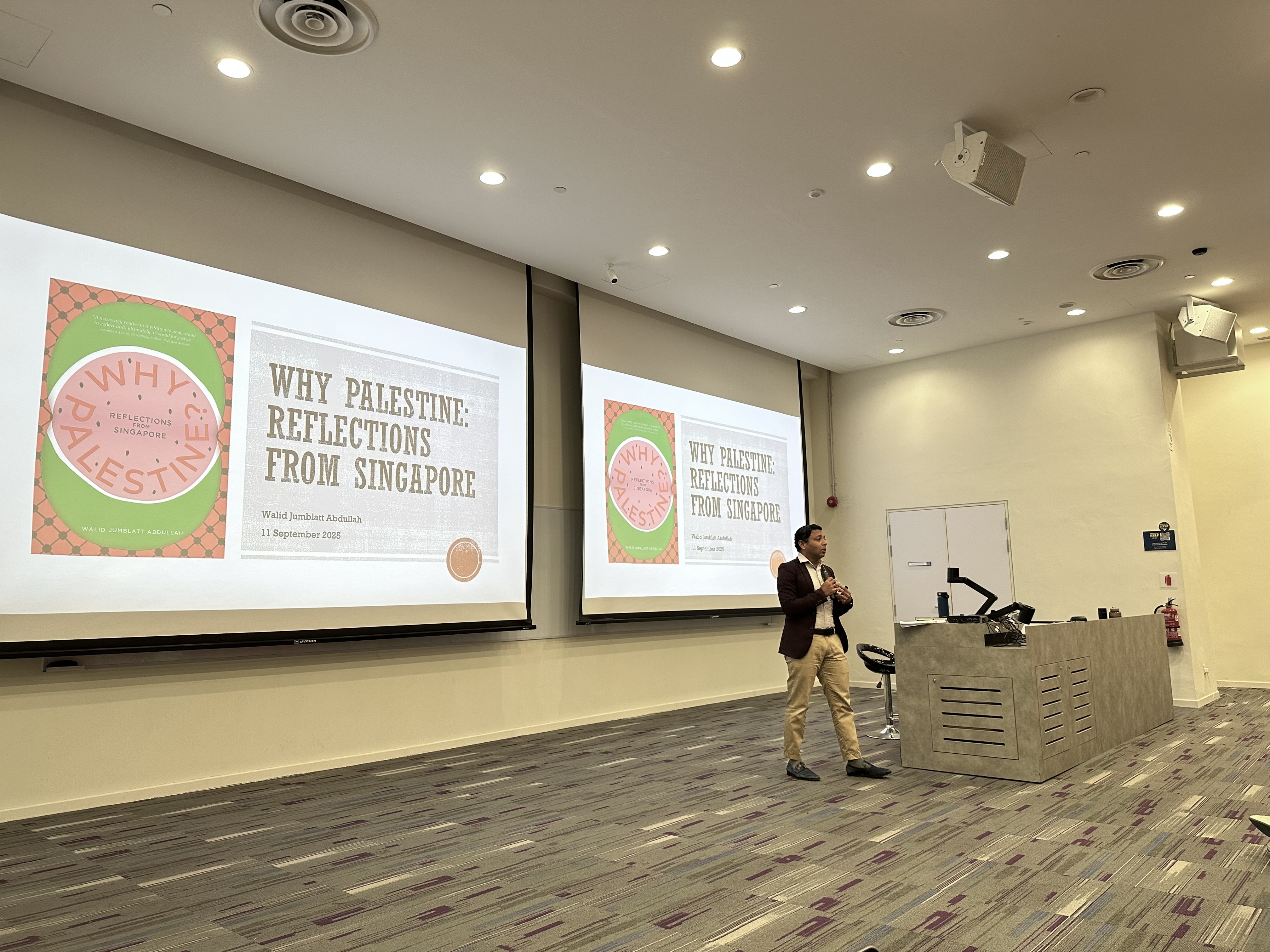
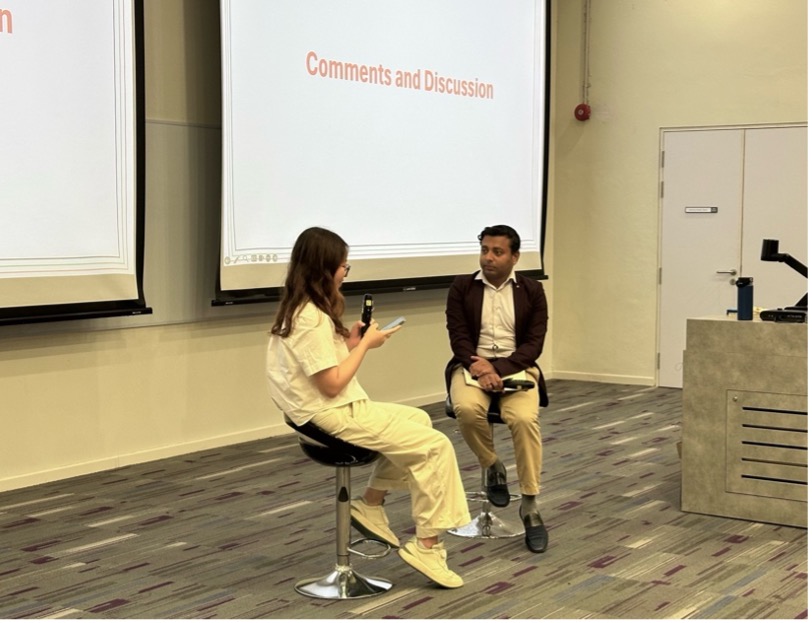
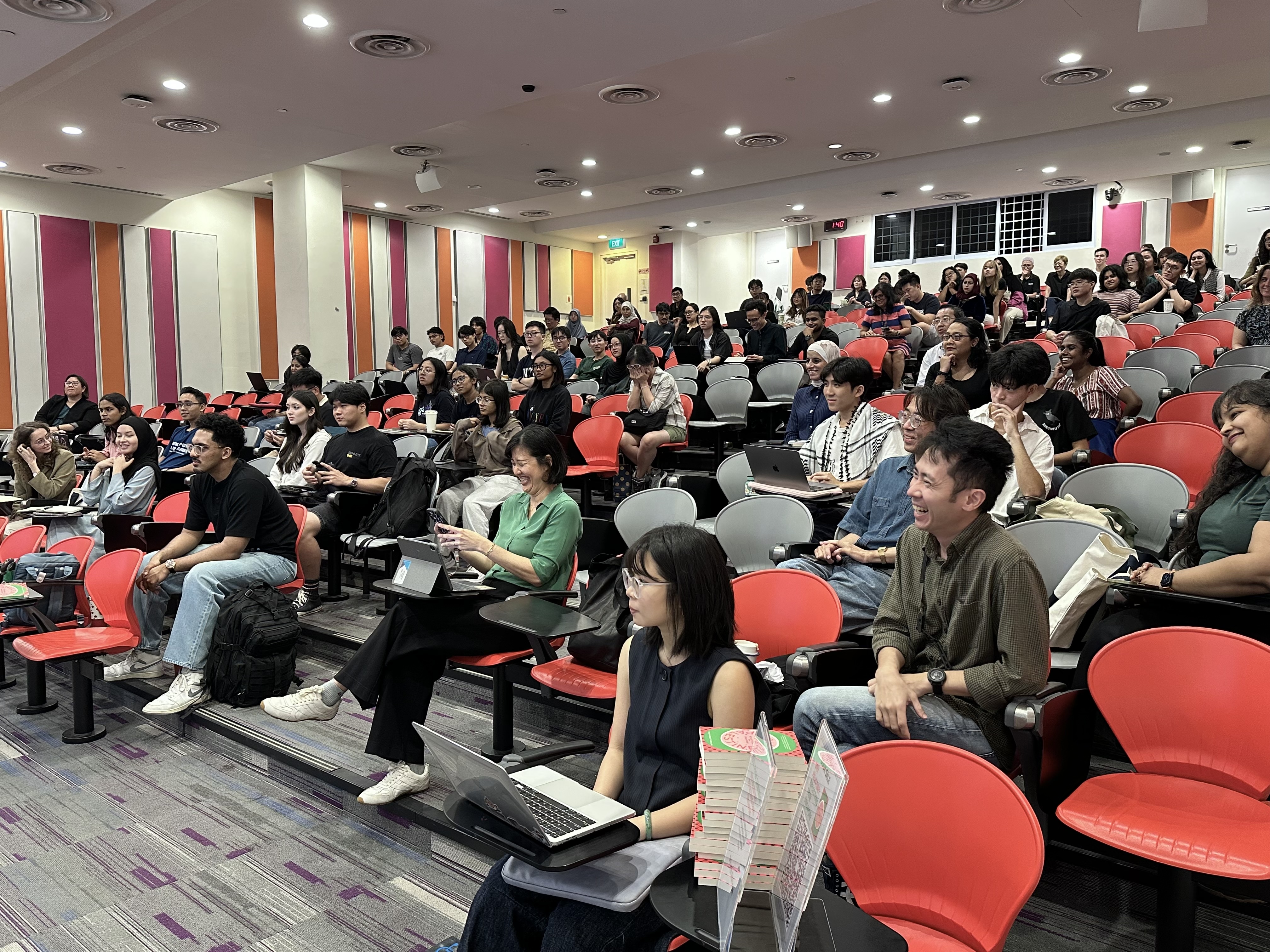
Together with the Public Policy and Global Affairs Programme at NTU, CSSI hosted a talk by CSSI Associate, Associate Professor Walid Jumblatt Abdullah. Titled after his book, ‘Why Palestine: Reflections from Singapore’, A/P Walid traced the development of the conflict in Palestine. He showed how the issue is characterised by extreme political inequality, in which the dehumanisation of Palestinians in the media and by politicians were pronounced well before October 2023. A/P Walid also showed how religion has been used by different actors to justify their actions. He also dedicated some time to speaking about how different individuals and groups in Singapore have responded to this conflict and ongoing humanitarian crisis, and the ways in which things have shifted in recent times.
During the Q&A segment, moderated by Politics, Philosophy and Economics major, Andrea Seah, the audience was forthcoming with questions, ranging from the role of major state powers in the conflict, to how activism has evolved around the issue. A/P Walid’s candid responses created opportunities for nuanced conversations.

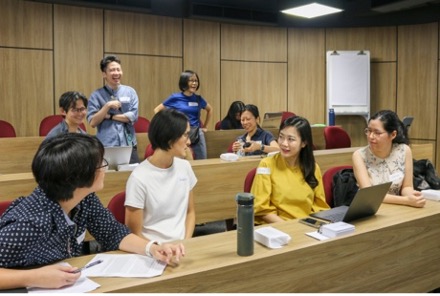
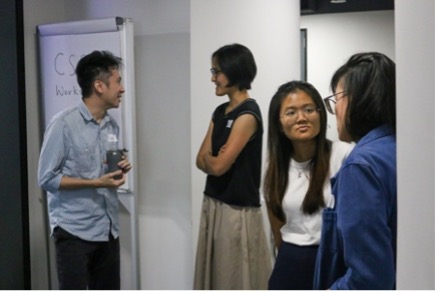
On October 2-3, 2025, we gathered CSSI Associates and other colleagues to share ongoing research and ideas for future projects. Colleagues presented projects on a wide range of topics—education, climate and the built environment, politics, mental health, migration, and more. Drawing from the multidisciplinary expertise of participants, we discussed how different theoretical and methodological approaches enrich our collective knowledge about inequality and its workings.
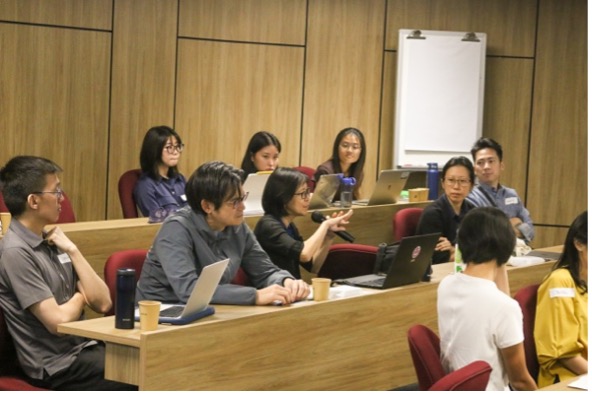
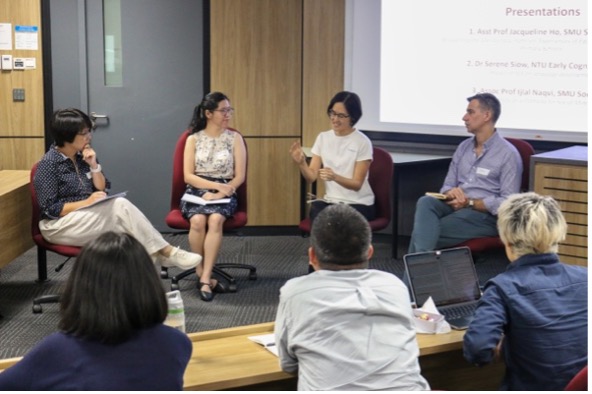
An important part of CSSI’s work lies in strengthening the community of scholars working on inequality in Singapore. This event provided space for people to meet and connect, to exchange views on the challenges and opportunities of working on an urgent social problem, and to discuss how to do socially-engaged scholarship.

Together with Dialogue Centre, CSSI co-organised the book launch of Fighting Polarisation: Shared Communicative Spaces in Divided Democracies (Polity Press, 2025), by Professor Cherian George.
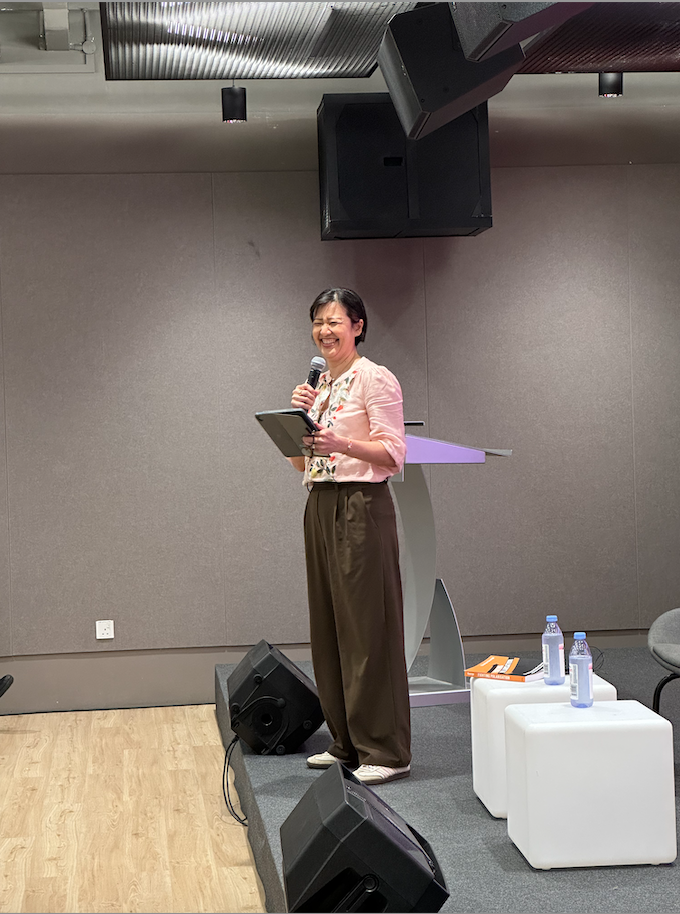
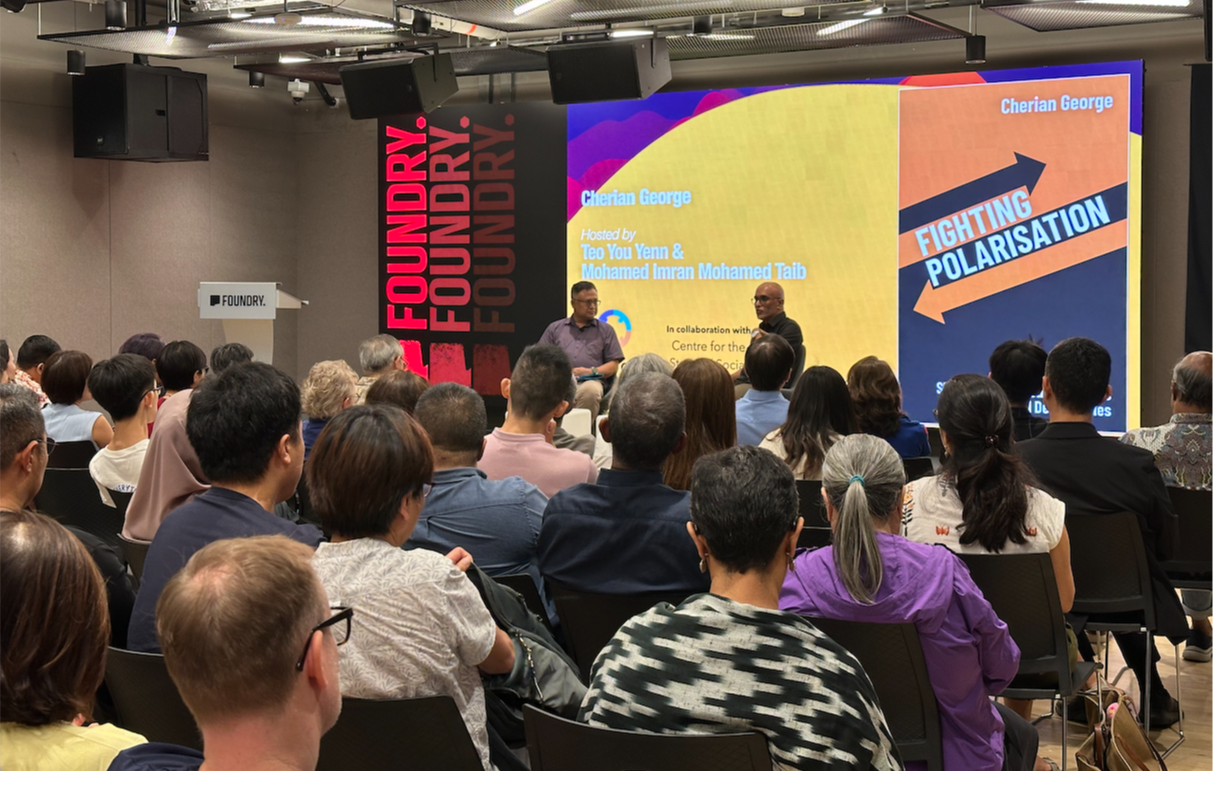
Around the world, intensifying inequalities have led to the deepening of social divides. Polarisation has consumed democracies, trapping citizens in uncompromisingly opposing camps. Yet, there remain people around the world who refuse to give up on the democratic promise of a larger “we”. Professor Cherian George’s book documents these efforts at creating spaces for dialogue amidst disagreement and conflict. At the launch, Professor George discussed how his fieldwork reveals lessons for creating innovative media and communicative spaces that allow groups who may have profound disagreements to engage in civil dialogue.
Held at The Foundry, a social impact hub, the launch was attended by an enthusiastic audience of more than a hundred people, including academics, students, journalists, and other members of the public.
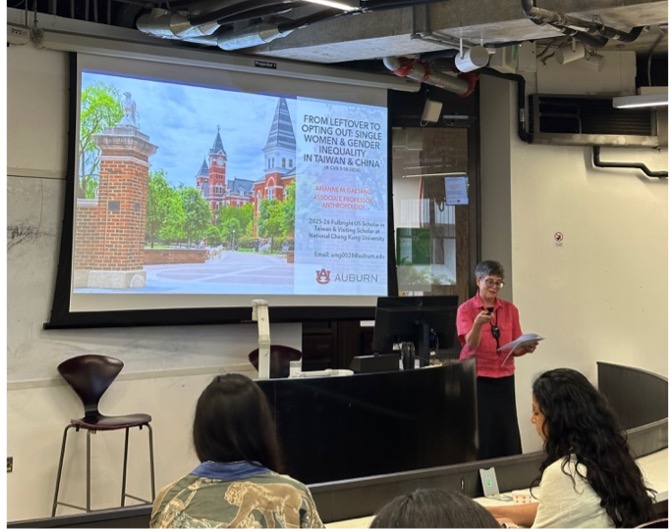
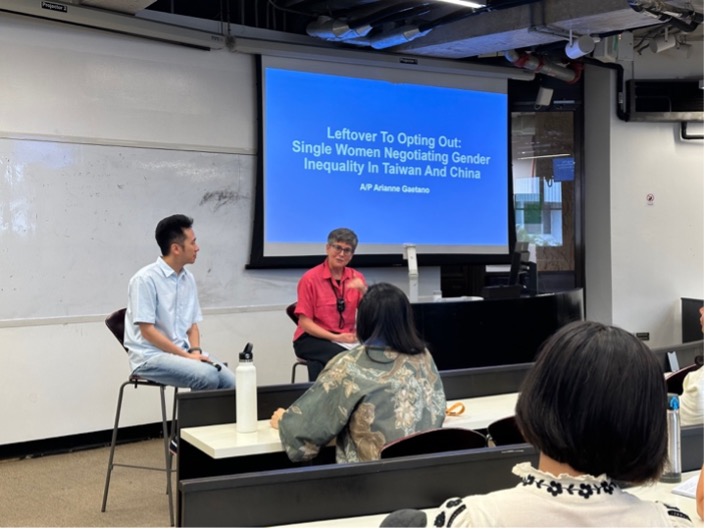
In March, CSSI hosted A/P Arianne Gaetano (Auburn University) for our first seminar of the year. Prof Gaetano drew on her extensive ethnographic fieldwork in Shanghai and Taiwan to understand how women in these societies are negotiating singlehood against normative expectations of marriage and family formation.
Quoting from in-depth interviews, Prof Gaetano showed how highly-educated single women negotiated matters of personal identity and cultural understandings of singlehood. Many shared experiences of past relationships, but career aspirations, resistance to normative expectations in the domestic sphere and growing awareness of feminist ideas eventually led them to distance themselves from marriage.
Prof Gaetano’s talk provided the opportunity for us to reflect on similar demographic shifts in Singapore through a thoughtful Q&A session and networking segment.
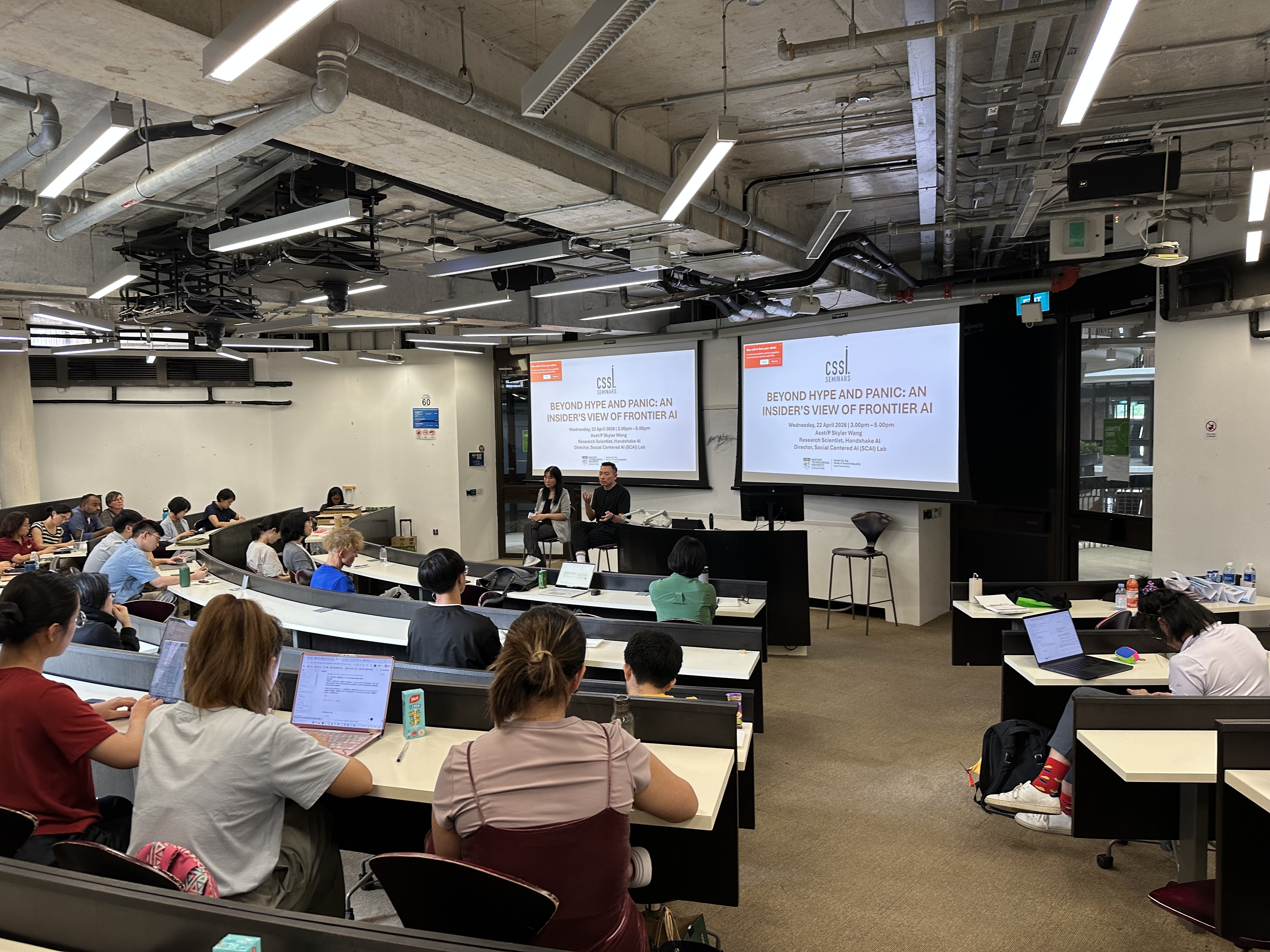
Public debates about artificial intelligence often oscillate between hype about transformative innovation and panic about social disruption. Assistant Professor Skyler Wang (McGill University) spoke at a CSSI Seminar about how technological development involves far more trade-offs and ambiguities than polarised narratives about AI typically depict.
Drawing from his experience as both sociologist and Research Scientist (first at Meta and now at Handshake AI), Prof Wang spoke about key developments in frontier AI systems and the concerns these raise for ethical practice and inequality. Rather than thinking about AI in binary (good/bad) terms, he argues it is more fruitful to consider unintended impacts on different groups and the variant resources people possess to manage disruptions. Prof Wang advocates for a more socially-centered approach to assess AI’s impact – rather than focusing on impacts on individuals, to consider effects on social groups, institutions and their norms and practices.
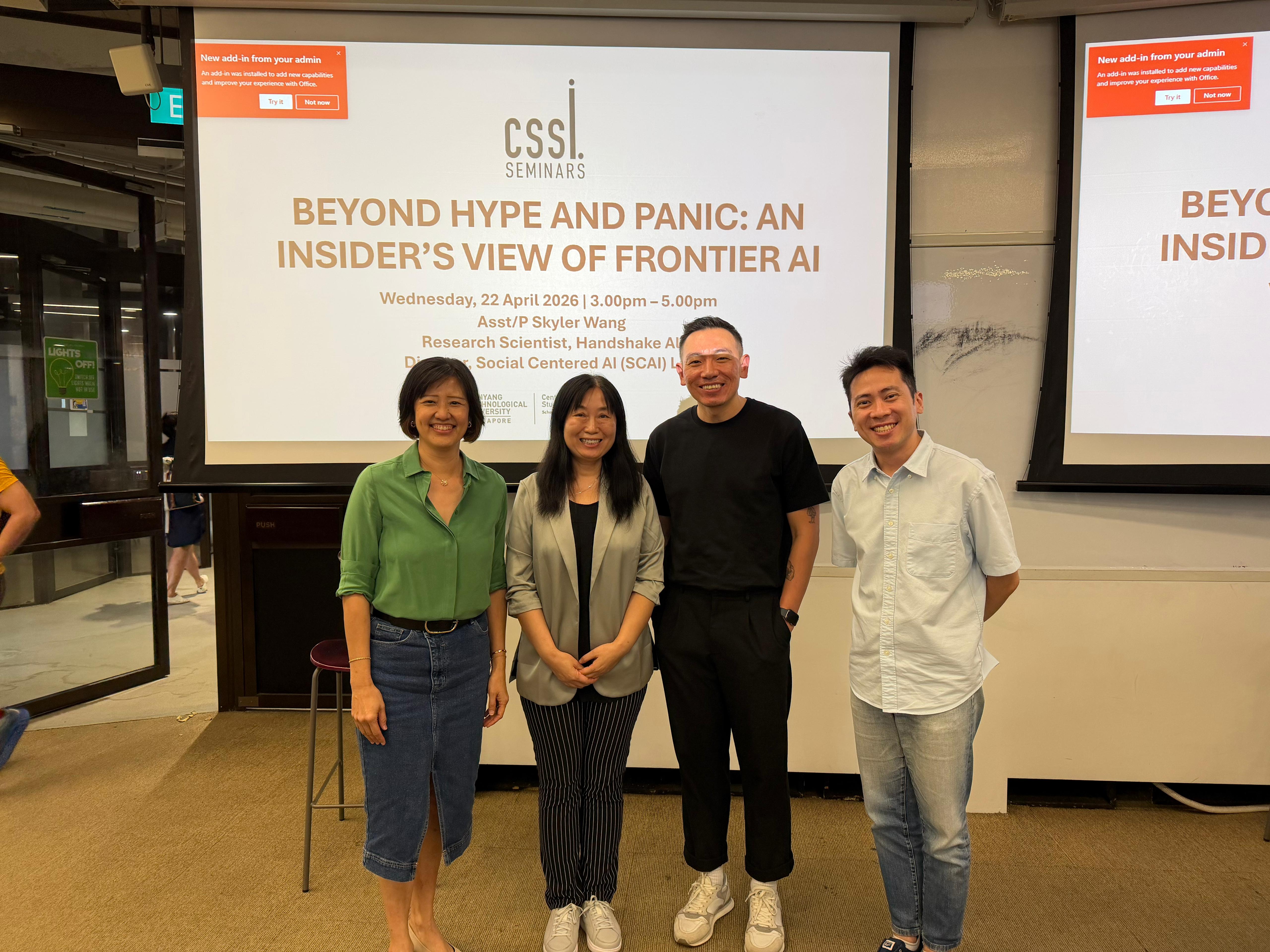
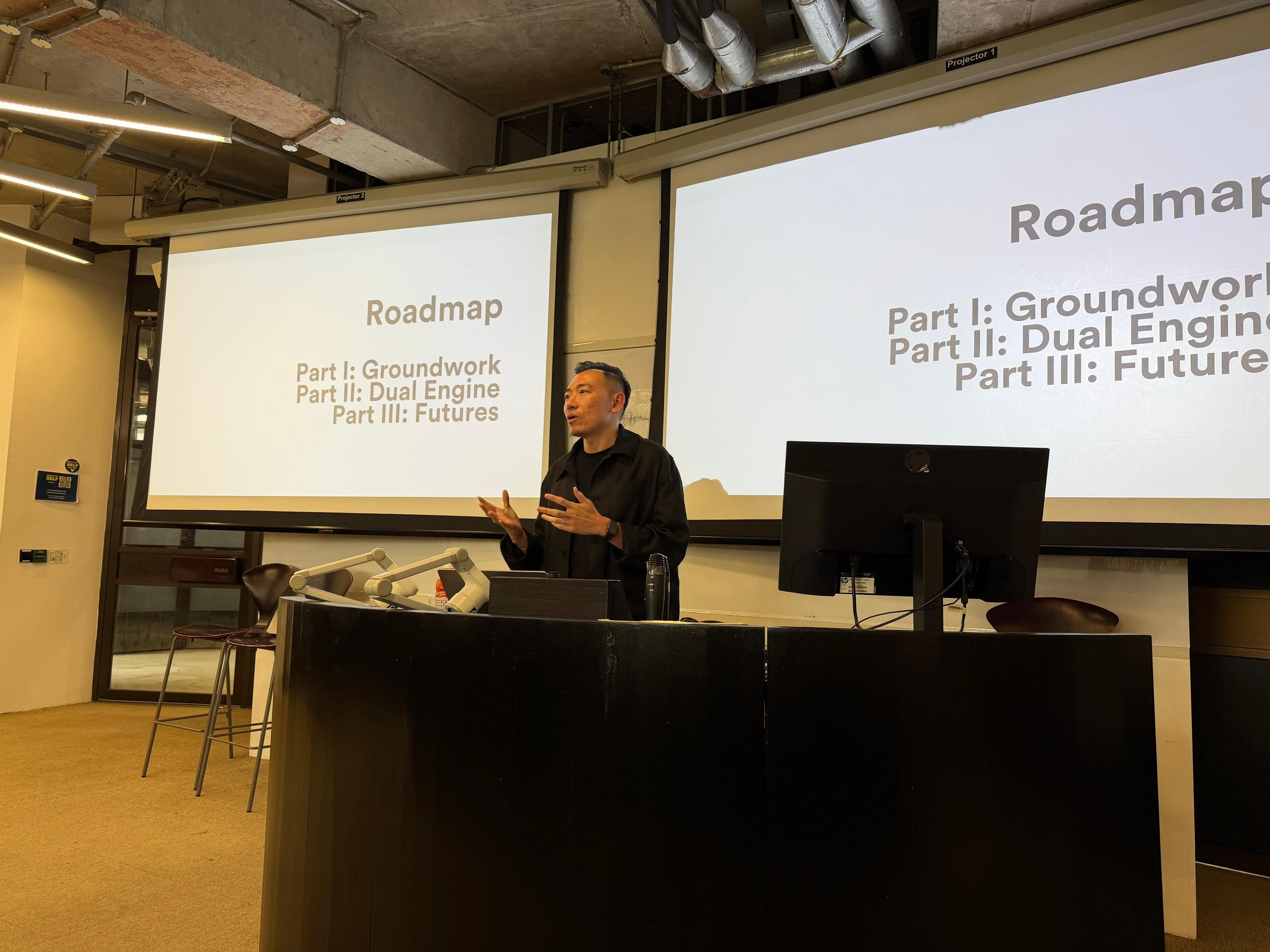
The seminar attracted a diverse crowd of academics, educators and members of the public. There was a lively dialogue during Q&A, particularly around how to think about AI, inequality, and education.

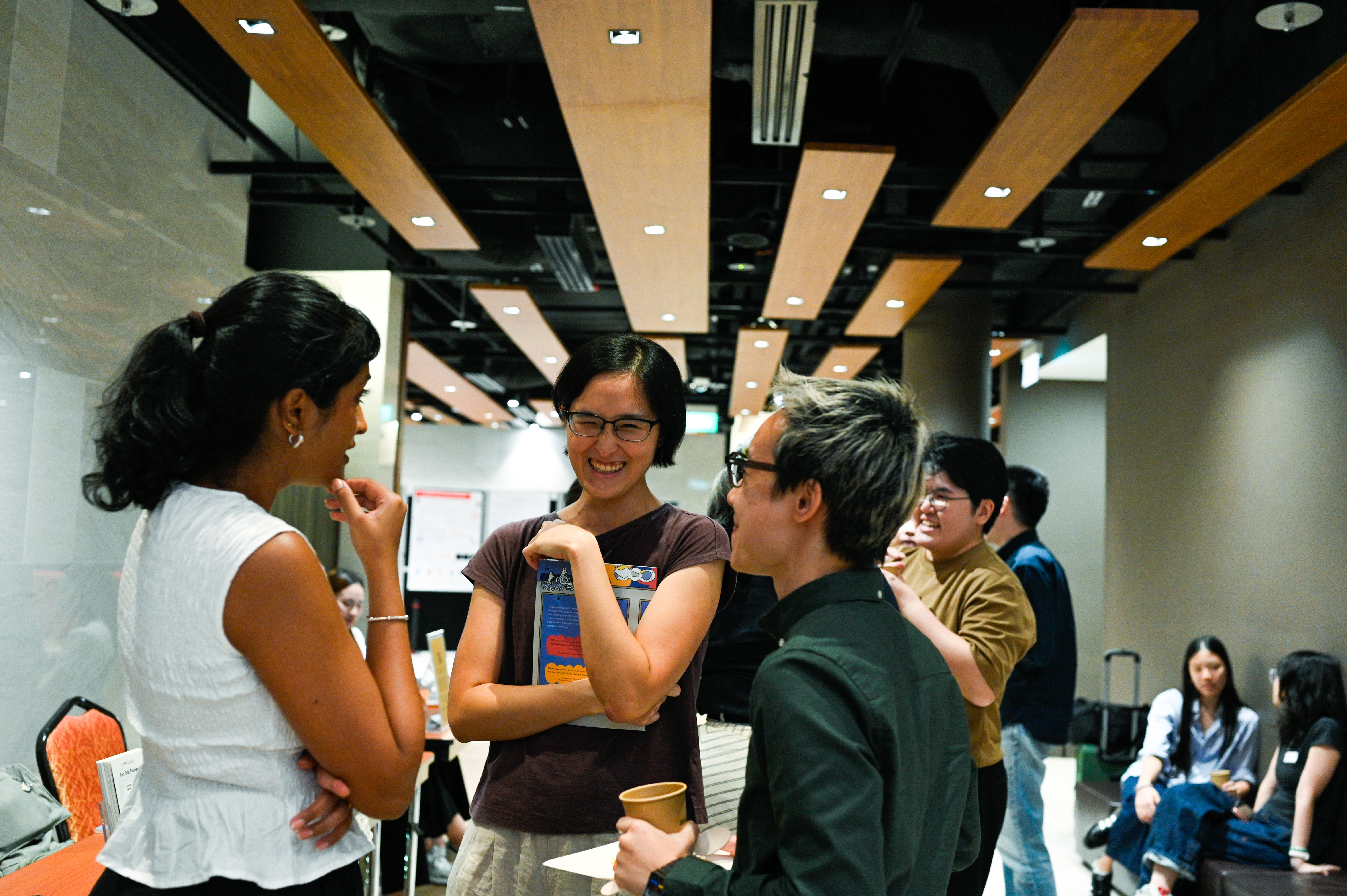
As part of our mission to nurture public social science, CSSI brought together three practitioners for our inaugural CSSI Conversations: Creating a Child-Centric Society in April 2026. Over an evening of honest and open conversation, Lin Shiyun (3 Pumpkins, Tak Takut Kids Club), Pooja Bhandari (EveryChild.SG), and Cindy Tay-Ng (Children’s Aid Society) shared their extensive experience working with children. The session was moderated by CSSI Deputy Director, Asst/P Shannon Ang.
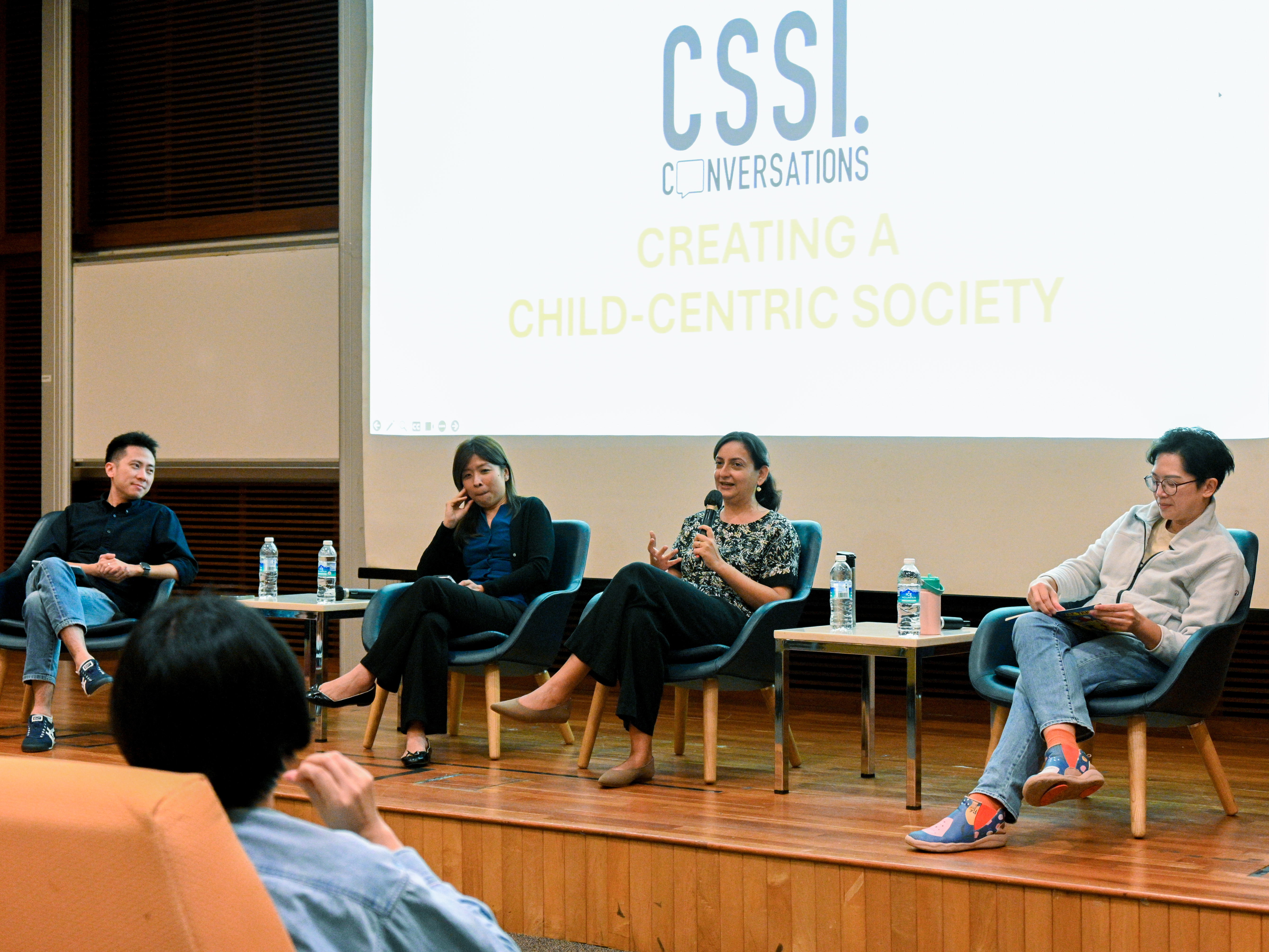
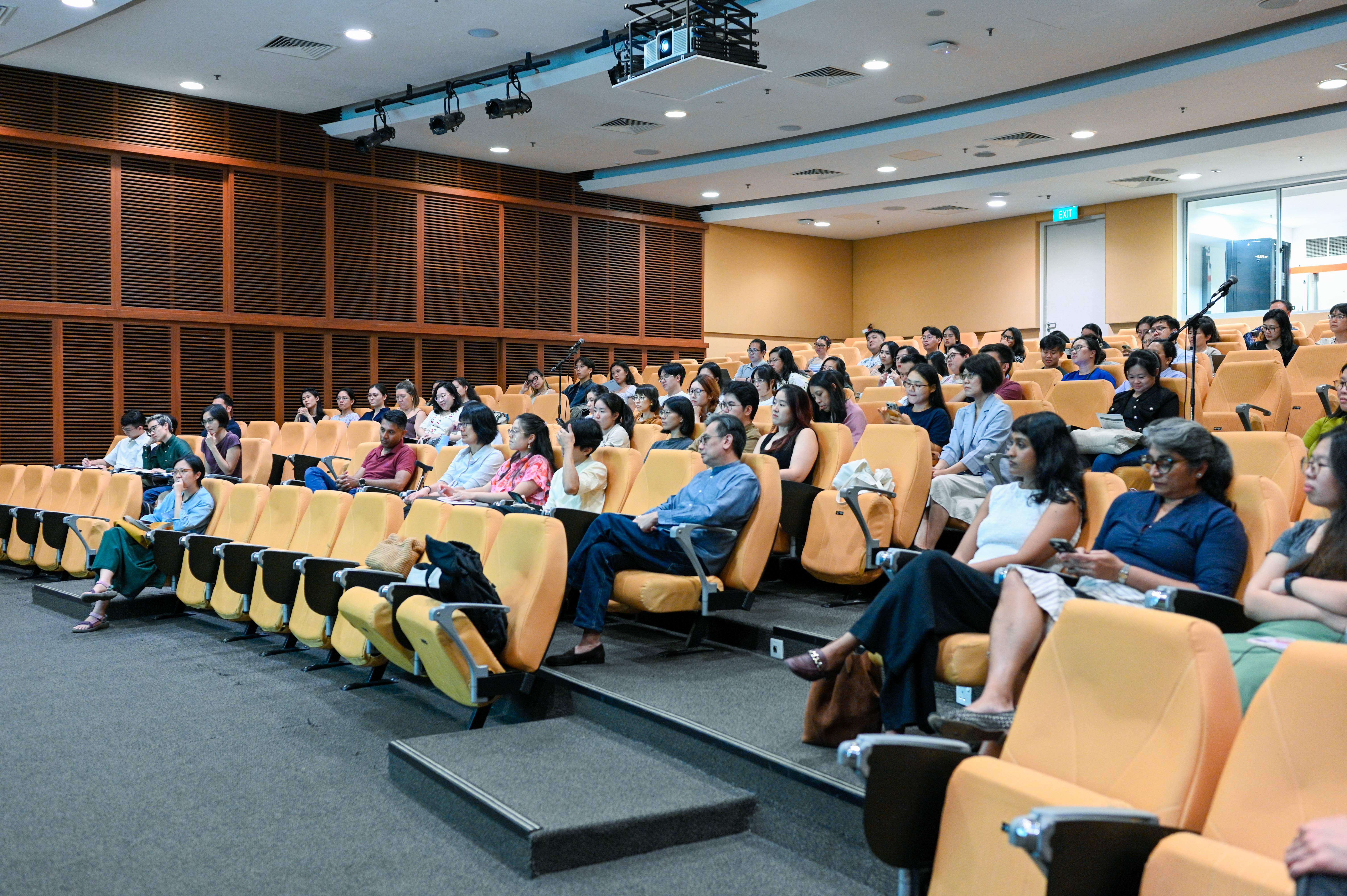
Audience members were first invited to consider what a good childhood looks like. They proposed words such as “play,” “joy” and “freedom.” Following this, Shiyun, Pooja, and Cindy drew from their work and expertise to highlight gaps they have observed in the current system that inhibit us from being a more child-centric society. They also discussed the impact of social inequality in shaping the opportunities available to different groups of children. They emphasised that every child should have access to the same resources, rather than having their aspirations limited by their social position.
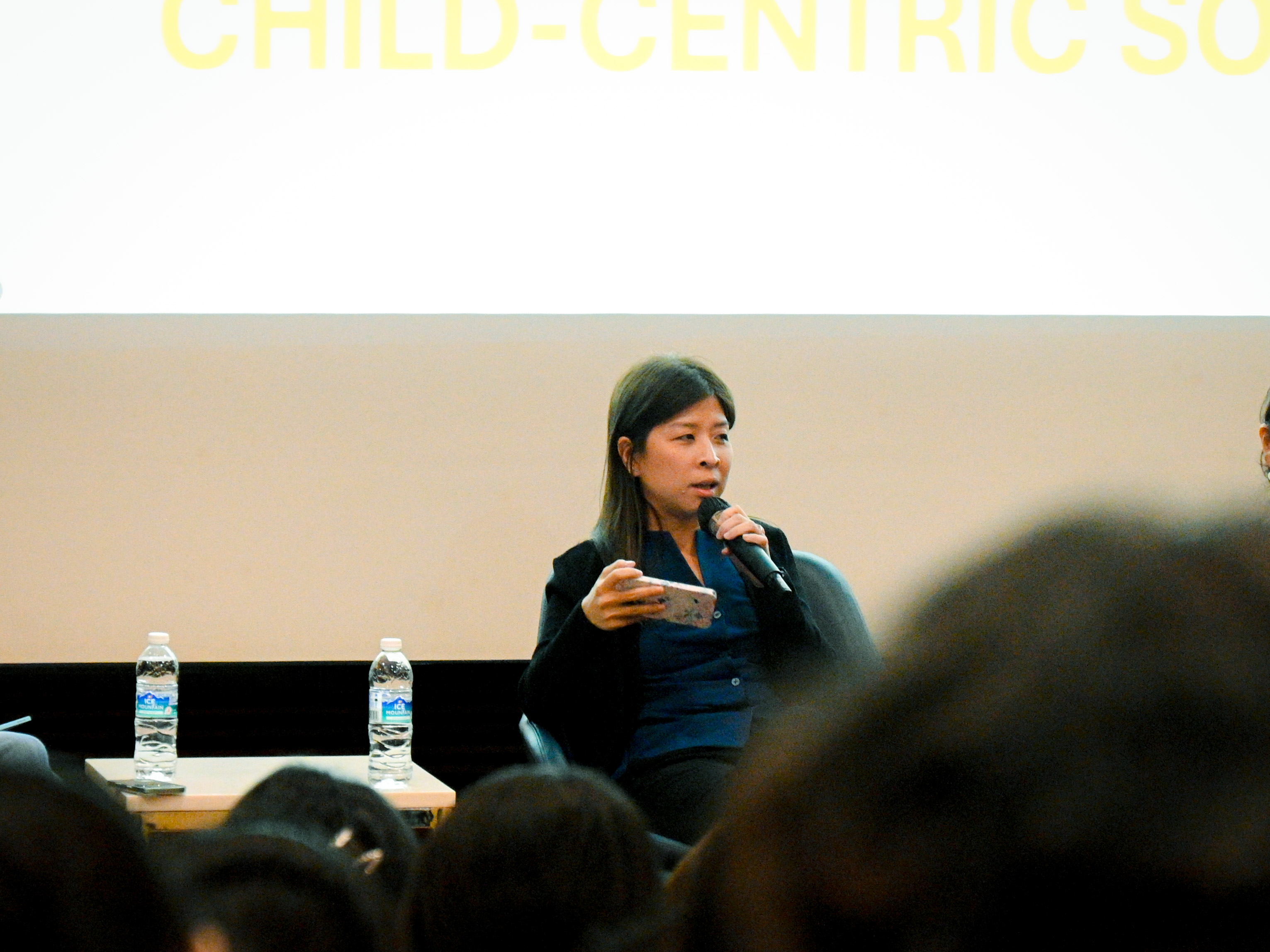


During the Q&A segment, audience members shared candidly about the challenges they face in advocating for children, while acknowledging the importance of continuing to do so. Many left the event having found new allies and renewed purpose in their efforts to create a more child-centric society.