NTU scientists uncover how common intestinal bacteria ‘starve’ and disarm frontline immune cells
Findings reveal how Enterococcus faecalis disrupts human’s immune system, opening new possible avenues to treat chronic wound infections.
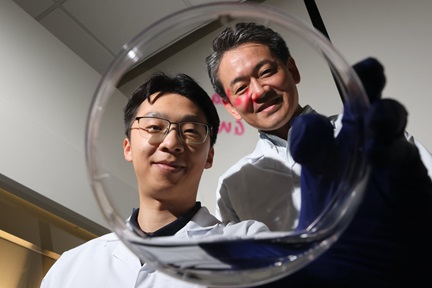
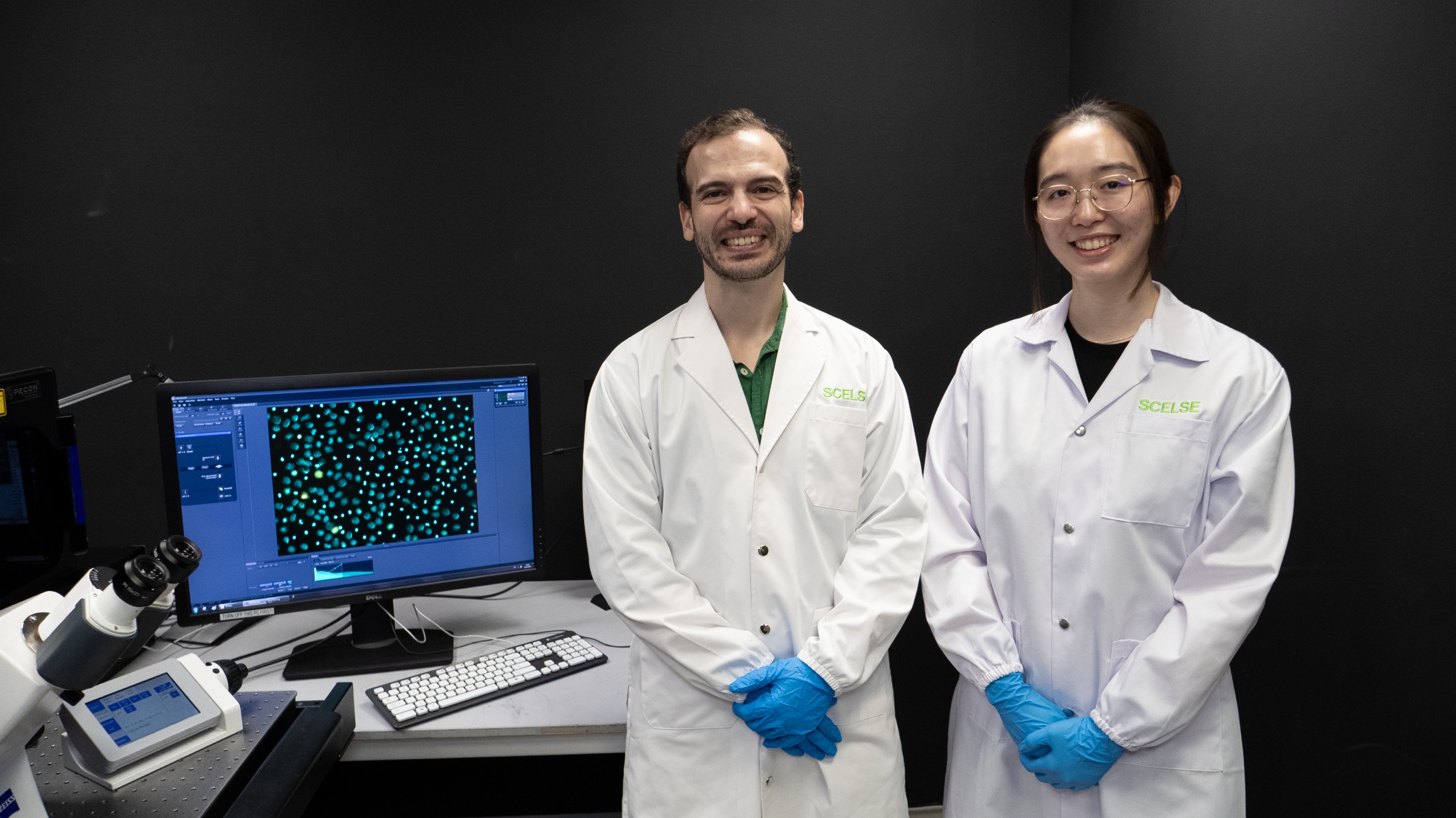 Dr Haris Antypas (left) and Ms Geneve Wong are part of the NTU-led research team that discovers how common intestinal bacteria disarm human’s immune cells. Photo Credit: NTU Singapore.
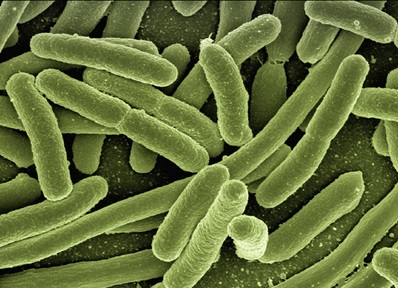
Scientists from Nanyang Technological University, Singapore (NTU Singapore) have uncovered how Enterococcus faecalis (E. faecalis) biofilms, a type of bacteria, systematically disarm the human immune system.
The findings could pave the way for new treatments that neutralise bacterial metabolism rather than relying solely on conventional antibiotics.
E. faecalis lives harmlessly in human intestines but can cause serious infections, such as chronic wound infections, infective endocarditis, and catheter-associated urinary tract infections, when it spreads to other parts of the body. These bacteria form slime-like communities called biofilms that are hard to get rid of.
The study was led by researchers from the Singapore Centre for Environmental Life Sciences Engineering (SCELSE), School of Biological Sciences in collaboration with the Lee Kong Chian School of Medicine at NTU, the Singapore-MIT Alliance for Research and Technology, and the University of Geneva (UNIGE).
Neutralising the body’s ‘First Responders’
Neutrophils are white blood cells and among the body’s first responders to infection. They can engulf invading bacteria or release web-like structures called neutrophil extracellular traps, or NETs, which capture and help kill microbes. Despite strong neutrophil recruitment, E. faecalis biofilms often persist during infection.
This study reveals how E. faecalis disarms neutrophils. The team exposed human neutrophils to biofilm secretions and watched their metabolic activity grind to an abrupt halt.
They uncovered this effect using microcalorimetry, a technique which measures the heat released by cells, alongside liquid chromatography–mass spectrometry, which quantifies molecules involved in the cells’ metabolic processes.
The team found that the bacterial biofilm churns out copious amounts of lactic acid, which acidifies the immediate environment. This acidity also lowers the pH inside nearby neutrophils and shuts down their core metabolic engines, cutting off the energy and chemical fuel needed to mount an immune assault.
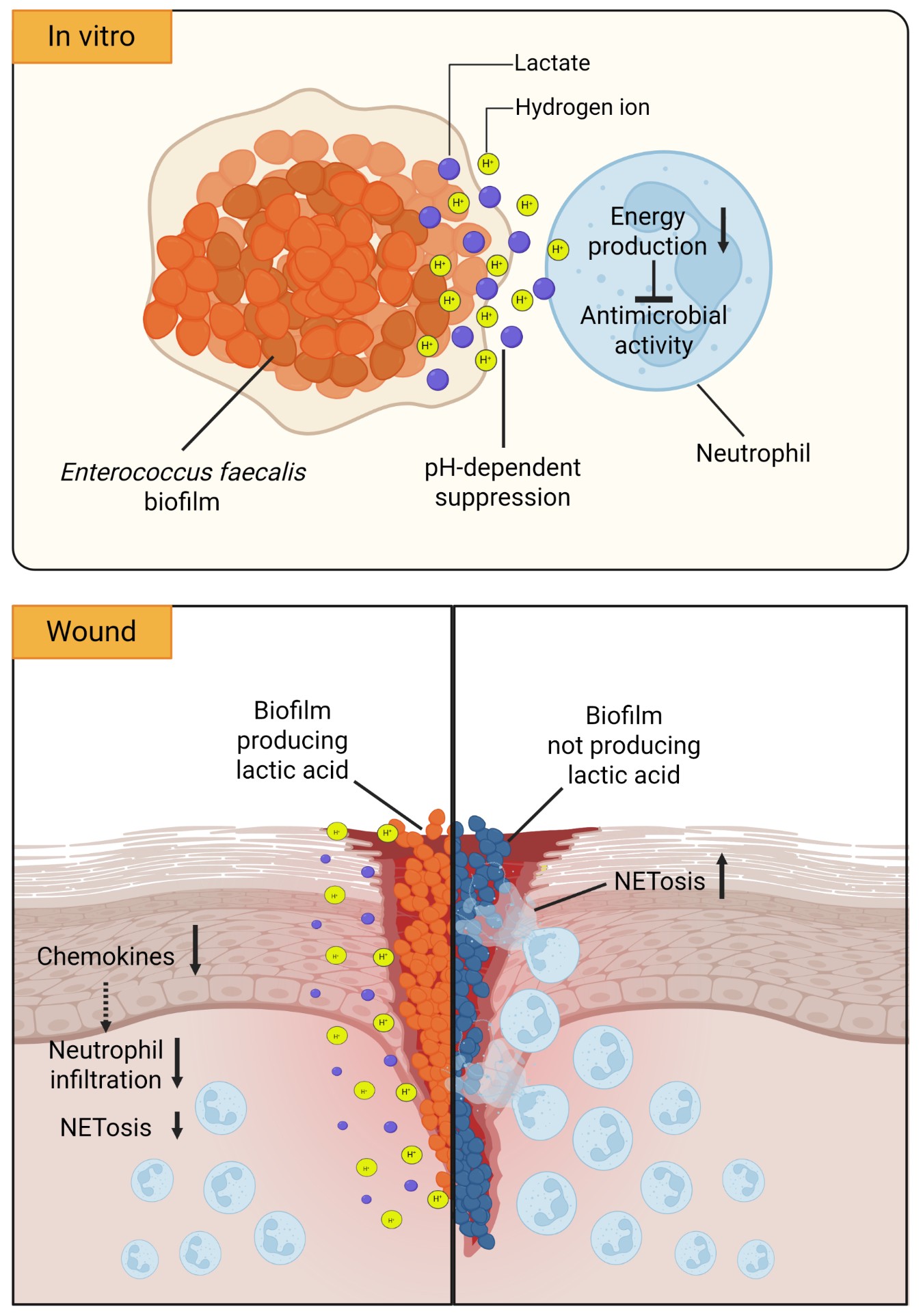 E. faecalis-derived lactic acid suppresses neutrophil functions. In vitro: Bacteria release lactic acid, making the area around the biofilm and the inside of nearby neutrophils more acidic. This disrupts how these immune cells produce energy and makes it harder for them to clear infection. Wound: In an animal model of wound infection, bacteria that could no longer make lactic acid triggered stronger early signals that help draw immune cells to the wound. After seven days, these wounds contained more neutrophils showing increased antimicrobial activity. Created in BioRender and modified from Antypas, H. (2026), https://BioRender.com/a9lpr6b.
“Bacteria effectively pull the plug on the immune cell’s power supply,” said Dr Haris Antypas, lead author of the study and Senior Research Fellow at SCELSE. “The neutrophils remain physically present at the site of infection, but their ability to attack and engulf pathogens is completely shut down.”
Testing the findings in infected wounds
The researchers then tested whether the biofilm also suppressed neutrophil activity in an animal model of wound infection.
They compared infections caused by normal E. faecalis with those caused by bacteria genetically modified to lack the enzymes producing lactic acid.
When the researchers removed the bacteria’s ability to produce lactic acid, more neutrophils reached the infected wounds 7 days after infection and the team found more signs that these immune cells had released more NETs to entrap bacteria. This stronger immune response is consistent with an earlier study by the same team, which found about 10 times fewer bacteria in wounds infected with the modified strain after seven days.
Together, these findings suggest that the bacteria's lactic acid-producing machinery plays an important role in weakening the immune response during infection, highlighting it as a potential target for future treatments.
Rethinking chronic wound and biofilm treatment
The combined laboratory and pre-clinical findings offer a fresh understanding of why biofilm-associated infections are notoriously difficult to clear.
Rather than acting simply as a passive physical barrier or armour against antibiotics, bacterial biofilms actively reshape their immediate microenvironment to disarm host defence cells.
“The lactic acid, made by the bacteria, seems to affect how many neutrophils reach a wound and what they do once they get there. That gives us a question to test. Can we change the conditions in an infected wound so the immune cells that arrive there can do their job?” asked Dr Kimberly Kline, corresponding author of the study and professor at UNIGE.
While these potential treatments have yet to be tested, the findings provide a basis for developing new approaches to help the body's immune system fight persistent bacterial infections. Looking ahead, the NTU-led research team plans to explore interventions that can preserve neutrophil metabolic activity and shield them against biofilms.
The paper titled, “Enterococcus faecalis biofilm rewires neutrophil metabolism to suppress antimicrobial activity”, was first published online in Science Advances, on 21 October 2026. DOI: 10.1126/sciadv.aej4153.
All animal experiments were conducted in accordance with NTU Institutional Animal Care and 613 Use Committee protocols A19061 and A24066.