Moving people forward: Asst Prof Azilawati Jamaludin
Asst Prof Azilawati harnesses the science of learning and educational neuroscience to help students unlock their potential.
.jpg?sfvrsn=fea6f90_1)
Research Fellow Dr Fengjuan Wang (left) and Asst Prof Azilawati Jamaludin. Credit: NTU
Why do some students struggle with learning mathematics more than others? Earlier studies have pointed to possible differences in brain functions as one contributing factor.
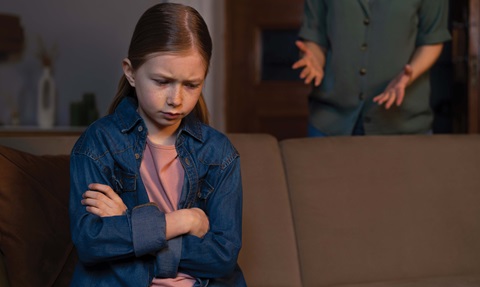
But research led by Asst Prof Azilawati Jamaludin from the National Institute of Education (NIE) in NTU suggests that the issue is more complex. Some children with maths-learning difficulties show brain activity patterns similar to their peers who do not struggle.
“Our findings highlight that maths-learning challenges in pupils may not always stem from inherent brain differences. Instead, factors like their learning environment, emotional wellbeing and teaching methods play a critical role,” explains Asst Prof Azilawati, an Assistant Centre Director at NIE’s Science of Learning in Education Centre, where she oversees the Human Potential and Translation portfolio.
“Our study reinforces that a ‘one-size-fits-all’ approach in helping children struggling with maths is insufficient. Strategies personalised to each learner are needed,” she adds.
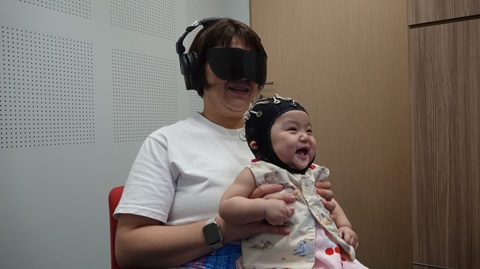
Asst Prof Azilawati’s research into the science of learning and educational neuroscience uncovers findings like this by measuring and studying “digital biomarkers” when pupils are learning. The markers include brain activity patterns and physiological responses, like how much one sweats. These give an indication of, for example, the cognitive effort pupils put in or how anxious they are.
Using such insights and more, Asst Prof Azilawati aims to find personalised ways to help children learn, especially those from disadvantaged backgrounds or who face emotional challenges.
Her team has found that when children engage with well-designed educational games, it can help “strengthen” brain activity patterns linked to more effective learning, especially in maths. These games have since been introduced into primary school classrooms across Singapore.
Yet Asst Prof Azilawati says that real-life teachers remain key because no computer code can replace the human intuition of a skilled educator. Her team has begun training educators to incorporate cognitive neuroscience principles into the teaching of maths and to tailor lessons for struggling learners, including using strategies to help them manage their emotions.
Asst Prof Azilawati was also part of the team that codeveloped interdisciplinary undergraduate and graduate programmes in the science of learning. For example, she helped to design the Master of Science in Science of Learning, launched in 2021 by NIE in partnership with NTU’s Lee Kong Chian School of Medicine.
The article appeared first in NTU's research & innovation magazine Pushing Frontiers (issue #25, August 2025).
.tmb-listing.jpg?sfvrsn=6ddb47de_2)
.tmb-listing.jpg?sfvrsn=fba51b63_2)
.tmb-listing.jpg?sfvrsn=ba129532_2)