
_mobile.png?sfvrsn=4e3a9f29_0)
For more information about this programme, please contact:
NTU PACE
Email: ask.microcredentials@ntu.edu.sg
FlexiMasters in Biomedical Engineering Principles and Practices
The FlexiMasters in Biomedical Engineering Principles and Practices is suitable for prospective learners who are keen in the biomedical engineering sector, providing them with the opportunity for advanced training and qualifications in integrating medicine and engineering, pharmaceutical and medical devices.
The FlexiMasters is mapped to the Master of Science (MSc) in Biomedical Engineering from NTU's School of Chemistry, Chemical Engineering and Biotechnology (CCEB).
By the end of this programme, learners will be able to:
- Apply biomaterial selection principles for biomedical innovation and clinical translation.
- Design integrated medical instrumentation systems for healthcare applications.
- Compare 3-Dimensional (3D) printing technologies and materials for biomedical device development.
- Analyse biomedical data using machine learning and data analytics tools.
- Develop effective biomedical project plans with regulatory and stakeholder considerations.
- The programme consists of six courses worth a total of 15 Academic Units (AUs).
- Assessment(s) will be conducted during every course and learners will be graded based on their performance in the assessment(s).
- As the micro-credential courses are only offered in this FlexiMasters in Biomedical Engineering Principles and Practices programme, learners are required to enrol into this programme and complete all required courses within this programme.
- While no pre-requisite is needed to enrol in the individual courses, learners without qualifications in materials science and engineering or closely related fields may find the course contents challenging.
- Mode of class delivery: Asynchronous E-Learning
Upon successful completion, the following qualifications will be awarded:
- A Graduate Certificate will be awarded to learners attaining 9 AUs, with a minimum Grade Point of 2.5 (which is equivalent to a letter grade of C+) achieved for each course.
- A FlexiMasters will be awarded to learners attaining 15 AUs, and achieving a minimum Grade Point of 2.5 (which is equivalent to a letter grade of C+) for each course.
Pathway to the Master's programme:
Credits earned are valid for 5 years for transfer of credits to the MSc in Biomedical Engineering. The minimum Grade Point eligible for transfer of credits to the MSc in Biomedical Engineering is 2.5 (which is equivalent to a letter grade of C+). Transfer of credits is by application and the application will be assessed and approved by the University in accordance with University Credits Transfer and Course Exemption Policy.
To meet the requirement of SkillsFuture Singapore, assessment(s) will be conducted during every course.
The assessment(s) include:
1. Polymeric Materials for Biomedical Applications
- Group work and individual presentation
- Project
2. Advanced Medical Devices and Systems
- Test
- Group Project
- Assignment
3. 3D Printing for Biomedical Applications
- Test
- Group assignment & presentation
4. Data Analytics for Biomedical Applications
- Group project report
- Project presentation
- Peer review
- Test
- Assignment
- Class participation
5. Project Management for Biomedical Sector
- Group work and individual presentation
- Group written report
Suitable for professionals working/intending to work in the biomedical engineering industry.
As the micro-credential courses are only offered in this FlexiMasters in Biomedical Engineering Principles and Practices programme, learners are required to enrol into this programme and complete all required courses within this programme.
Note: Shortlisting will be conducted.
| Course title | Objective |
|---|---|
Polymeric Materials for | This biomaterial course focusses on polymers used in medical devices, drug delivery systems, and tissue engineering. Designed for science and engineering professionals, the curriculum covers polymer synthesis, physicochemical and biological characterisation, and material selection strategies. In the application-centric approach of the course, real-world case studies have been incorporated to illustrate performance optimisation and application in healthcare. This course also addresses commercialisation, clinical translation, and regulatory compliance, equipping learners for biotechnology, pharmaceutical, and biomedical engineering careers. Learners will enhance their expertise in biomedical polymers, biomaterials innovation, and healthcare technology with this industry-relevant course. At the end of the course, learners will be able to:
|
| Advanced Medical Devices and Systems (3 AU) | This course in biomedical technologies offers an in-depth coverage on biomedical engineering essentials, focusing on medical devices, instrumentation, and wearable health technologies. Learners will master core engineering principles, device design, and software integration, gaining valuable skills for the biomedical technology sector. The curriculum covers advanced therapeutic and surgical innovations, neurotechnology, and user experience development, equipping learners for real-world application and effective deployment of medical solutions. Ideal for professionals seeking to advance in biomedical engineering, this course emphasises practical and theoretical approaches from designing, developing, to integrating cutting-edge medical technologies and algorithms in healthcare. At the end of the course, learners will be able to:
|
 3D Printing for | This course bridges additive manufacturing and 3-dimensional (3D) printing technologies tailored for biomedical engineering. Learners will gain insights into 3D printing history, fundamentals, and cutting-edge techniques, alongside analysis of printable materials and their properties. The curriculum covers regulatory and ethical considerations for 3D printed medical devices, fostering critical comparison of printing methods and materials. It equips learners with practical skills for real-world biomedical applications, with learners designing and fabricating a functional 3D printed prototype. This micro-credential course is ideal for professionals seeking to dive deeper in biomedical 3D printing, additive manufacturing, and medical device innovation. At the end of the course, learners will be able to:
|
 Data Analytics for | This course introduces learners to the fundamental physical and functional properties of materials and their relevance to modern technologies such as energy conversion, sensing, communications, and artificial intelligence. Learners will explore how material properties influence new material design, device applications, and system integration. The course covers key concepts in mechanical, thermal, optical, magnetic, and electronic properties, along with hands-on exposure to material testing and characterisation techniques. Ideal for learners aiming to innovate in areas like sustainable energy, optical communications, and advanced manufacturing, this course equips learners with essential skills to drive materials and device innovation. At the end of the course, learners will be able to:
|

| This course develops practical project management skills through the planning and execution of a biomedical project from initial concept to detailed design. Learners will apply established project management frameworks to define project scope, objectives, deliverables, timelines and risk mitigation strategies. Emphasis is placed on addressing regulatory requirements, ethical considerations and stakeholder need which are specific to the biomedical sector. Through collaborative, team‑based project work, learners will develop project management and progress‑tracking skills. This course prepares learners to manage interdisciplinary biomedical projects effectively, supporting successful outcomes in the health and biomedical sector. At the end of the course, learners will be able to:
|

Venue: NTU Main Campus, NTU e-Learning platform
| COURSE TITLE | CLASS SCHEDULE AY2027/28 | REGISTRATION CLOSING DATE |
| Polymeric Materials for Biomedical Applications | Semesters 1 and 2 Register interest for next intake | - |
| Advanced Medical Devices and Systems | Semester 1 Register interest for next intake | - |
| Advanced Medical Devices and Systems | Semesters 1 and 2 Register interest for next intake | - |
| Data Analytics for Biomedical Applications | Semester 2 Register interest for next intake | - |
| Project Management for Biomedical Sector | Semesters 1 and 2 Register interest for next intake | - |
- Credit-bearing and stackable to Graduate Certificate in Biomedical Engineering Principles and Practices (9 AU), FlexiMasters in Biomedical Engineering Principles and Practices (15 AU) and MSc in Biomedical Engineering (30 AU).
Note: NTU reserves the right to change the date, venue, and mode of delivery due to unforeseen circumstances.
 | These courses are part of:
Learners will receive their Statement of Accomplishment (for a grade of D and above) or Certificate of Participation for each course—dependent upon their assessment performance. |
| Courses | Course Fee payable before funding | Course Fee payable after SSG funding, if eligible under various schemes | ||
| ¹ SCs and PRs | ² SCs aged 40 and above | ³ Enhanced Training Support for SMEs (ETSS) | ||
| Up to 70% funding | Up to 90% funding | |||
| Polymeric Materials for Biomedical Applications | S$5,101.20 | S$1,530.36 | S$594.36 | S$594.36 |
| Advanced Medical Devices and Systems | S$5,101.20 | S$1,530.36 | S$594.36 | S$594.36 |
| 3D Printing for Biomedical Applications | S$5,101.20 | S$1,530.36 | S$594.36 | S$594.36 |
| Data Analytics for Biomedical Applications | S$5,101.20 | S$1,530.36 | S$594.36 | S$594.36 |
| Project Management for Biomedical Sector | S$5,101.20 | S$1,530.36 | S$594.36 | S$594.36 |
| Total Programme Fee | S$25,506.00 | S$7,651.80 | S$2,971.80 | S$2,971.80 |
- Fees listed above are inclusive of 9% GST.
Funding Requirements
1 Eligible Singapore Citizens (SCs) aged 39 years and below, and Permanent Residents (PRs), must record at least 75% training attendance and pass all associated assessments to be eligible for funding of up to 70% of the course fee. Learners will have to bear the full course fees upon failure to meet either one of the requirements.
2 Mid-career Enhanced Subsidy (MCES) - SCs aged 40 and above must record at least 75% training attendance and pass all associated assessments to be eligible for funding of up to 90% of the course fee. Learners will have to bear the full course fees upon failure to meet either one of the requirements.
3 Enhanced Training Support for SMEs (ETSS) - Small and Medium Enterprise (SME)-sponsored learners must be SCs or PRs and not a full-time national serviceman. SMEs must be: (1) Registered or incorporated in Singapore; with (2) Employment size of not more than 200 or with annual sales turnover of not more than $100 million. Courses will also have to be fully paid for by the employer.
Note: Learners must comply with all applicable and prevailing regulations, terms and conditions set by SSG.
Other Funding Support
- NTU/NIE alumni may utilise their $1,600 Alumni Course Credits for each course. Click here for more information.
- Learners can utilise their SkillsFuture Credits for these courses.
- Singaporeans aged 40 years and above are able to use their SkillsFuture Credit (Mid-Career) top-up of $4,000 to offset out-of-pocket course fees for these courses.
Course Withdrawal and Refund Policy
Refunds requested prior to course commencement date may be subjected to an administrative fee and the deduction of any non-refundable pre-paid amounts. No refunds will be granted upon course commencement.
| Associate Professor Dang Thuy Tram joined the School of Chemical and Biomedical Engineering at Nanyang Technological University, Singapore, in January 2016. She received her Bachelor’s Degree from the University of Illinois, Urbana-Champaign and her PhD Degree from Massachusetts Institute of Technology, both in Chemical Engineering. She also conducted her postdoctoral training as a Controlled Release Society fellow at Brigham and Women’s Hospital, Harvard Medical School. A/P Dang is currently an Associate Editor of Drug Delivery and Translational Research (Springer), the official journal of the Controlled Release Society.
|
| Assistant Professor Liang Kaicheng is an Assistant Professor in the School of Chemistry, Chemical Engineering and Biotechnology at Nanyang Technological University (NTU), Singapore. His group develops miniaturised AI-powered optical imaging technologies with applications from quantitative biology to surgical guidance. Asst/P Liang is passionate about clinically inspired engineering, and works closely with clinicians, surgeons and pathologists across the country to develop next-generation medical technologies and improve patient lives. Asst/P Liang is a Singapore National Research Foundation Fellow (Class of 2021) and has a PhD and MS in Electrical Engineering from the Massachusetts Institute of Technology, and a BS in Biomedical Engineering from Duke University. Asst/P Liang's training and career has roots in A*STAR. Before moving to NTU, he was a Principal Investigator at the ASTAR Institute of Molecular and Cell Biology and Institute of Microelectronics. |
| Dr Pui Tze Sian received his B.S (2003) in Health Physics from University Technology Malaysia and M.S. (2004) in Medical Physics from University of Malaya. He received a Ph.D in Biomedical Engineering from Nanyang Technological University, Singapore, in 2010, in which he focused on nanoelectronic biosensing of dynamic cellular activities. From 2011 to 2014, he was a senior research engineer in Institute of Microelectronics (IME), ASTAR. In 2012, he was awarded the Young Researcher Collaborative Grant from ASTAR. His faculty appointment began in March 2016. |
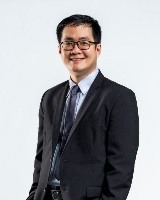 Dr Ong Chi Wei Dr Ong Chi WeiInstructor for: Data Analytics for Biomedical Applications | Dr Ong Chi Wei is currently a lecturer with the School of Chemistry, Chemical Engineering, and Biotechnology at Nanyang Technological University (NTU), Singapore. He received his Ph.D. in Biomedical Engineering from the National University of Singapore in 2019, with a focus on developing innovative medical devices for treating aortic aneurysms. He worked as a CFD engineer at Seemode Ptd Ltd, sponsored by SGinnovate after his PhD study. Following this, he pursued post-doctoral training at the NUS Cardiovascular Biomechanics and Ultrasound Laboratory, where he conducted research on the development of computational models for fetal heart modeling. Later, he joined the A*STAR Institute of High-Performance Computing as a scientist from December 2021 to May 2023 before joining NTU. |
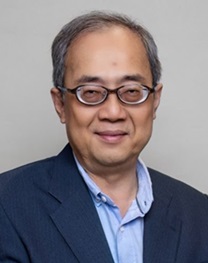 Assistant Professor Park Seung-Min Assistant Professor Park Seung-MinInstructor for: Data Analytics for Biomedical Applications | Assistant Professor Park Seung-Min is an Assistant Professor in the School of Chemistry, Chemical Engineering and Biotechnology and an Assistant Professor by Courtesy in the Lee Kong Chian School of Medicine at Nanyang Technological University, Singapore. He previously served as an Instructor in the Department of Urology at Stanford University School of Medicine. He was awarded the Ig Nobel Prize in Public Health in 2023 for developing the Stanford Smart Toilet, which integrates technologies like urinalysis dipstick tests and a computer vision system for stool analysis. Asst/P Park earned his Ph.D. in Applied Physics from Cornell University in 2008 and completed postdoctoral training in Bioengineering at the University of California, Berkeley. During this period, he was also a visiting scholar at the Universidade Federal do Rio de Janeiro, Brazil, reflecting his commitment to global health. His research at Stanford focused on cancer diagnostics using nanotechnology. |
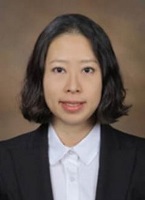 Dr. Luciana Lisa Lao Dr. Luciana Lisa LaoInstructor for: Project Management for Biomedical Sector | Associate Professor Song Juha joined the School of Chemical and Biomedical Engineering at Nanyang Technological University, Singapore, in April 2016. She obtained her PhD in Materials Science and Engineering at Massachusetts Institute of Technology in 2011, with research focus on biomimetics and biomechanics for an understanding of material design principles of natural exoskeleton systems. She did her post-doctoral training at Advanced Institute of Convergence Technology, Seoul National University, where she conducted research on development of hybrid biomaterials for dental, orthopedic, cardiovascular and soft tissue implants, actively working with local biomedical companies. During 2014-2015, she was also a contract professor at Korea University, School of Biomedical Engineering. |
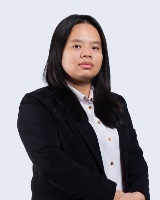 Associate Professor Dang Thuy Tram
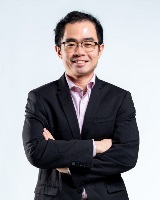 Assistant Professor Liang Kaicheng
 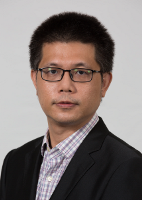 Dr Pui Tze Sian