
For more information about this programme, please contact:
NTU PACE
Email: ask.microcredentials@ntu.edu.sg
FlexiMasters in Signal Processing and Machine Learning
The FlexiMasters in Signal Processing and Machine Learning is designed for engineers and data scientists seeking to advance their expertise in real-time DSP, NLP, ensemble learning, genetic algorithms, and video analysis. This programme builds the competencies needed to address real‑world engineering and data challenges with confidence and applied proficiency.
This FlexiMasters is also stackable to Master of Science (MSc) in Signal Processing and Machine Learning from NTU’s School of Electrical and Electronic Engineering (EEE) providing a pathway for those looking to further their academic and professional journey.
- Gain Practical DSP and AI skills: Enhance your ability to work with intelligent systems, and data-driven applications
- Develop specialised skills across five courses: Learn about DSP design, NLP, ensemble learning, genetic algorithms, and video analysis
- Strengthen applied machine learning capabilities: Use ensemble methods, evolutionary techniques, and deep learning-based processing
- Apply theory to real-world technical problems: Prepare for machine learning and AI in modern signal processing
- Advance your career through professional upskilling: Enhance readiness for high growth technology fields such as AI engineering, data science embedded systems, and smart‑technology development.
- The programme consists of five courses worth a total of 15 Academic Units (AUs).
- Assessment(s) will be conducted during every course and learners will be graded based on their performance in the assessment(s). Assessment(s) may include quizzes, assignments and final examination.
- As the micro-credential courses are only offered in this FlexiMasters in Signal Processing and Machine Learning programme, learners are required to enrol into this programme and complete all required courses within this programme.
- No pre-requisites are needed to enroll in the individual courses; however, learners without qualifications or working experience in relevant engineering or the related fields may find the course contents challenging.
- Shortlisting will be conducted for this programme
- Mode of class delivery: Face-to-face
Upon successful completion, the following qualifications will be awarded:
- A FlexiMasters will be awarded to learners attaining 15 AUs, and achieving a minimum Grade Point of 2.5 (which is equivalent to a letter grade of C+) for each course.
- A Graduate Certificate will be awarded to learners attaining 9 AUs, with a minimum Grade Point of 2.5 (which is equivalent to a letter grade of C+) for each course
Pathway to the Master's programme:
Credits earned are valid for 5 years for transfer of credits to the MSc in Signal Processing and Machine Learning. The minimum Grade Point eligible for transfer of credits to the MSc in Signal Processing and Machine Learning is 2.5 (which is equivalent to a letter grade of C+). Transfer of credits is by application and the application will be assessed and approved by the University in accordance with University Credits Transfer and Course Exemption Policy.
To meet the requirement of Skills and Workforce Development Agency (SWDA), assessment(s) will be conducted during every course.
The assessment(s) include:
1. Real-time DSP Design & Applications
- Tests
- Final Exam
2. Natural Language Processing
- Quizzes
- Online test
- Capstone Group Project
3. Analytic & Ensemble Machine Learning
- Tests
- Final Exam
4. Genetic Algorithms & Machine Learning
- Tests
- Assignments
- Final Exam
5. Video Analysis and Processing
- Tests
- Final Exam
Suitable for practicing engineers, hardware and software designers, data scientists, R & D managers, and industry planners who seek an understanding of current approaches and evolving directions for DSP and AI technologies. It is also intended for engineers and data scientists who anticipate future involvement in these areas.
As the micro-credential courses are only offered in this FlexiMasters in Signal Processing and Machine Learning programme, learners are required to enrol into this programme and complete all required courses within this programme.
Note: Shortlisting will be conducted.
| Course title | Objective |
|---|---|
 Real-time DSP Design & Applications | This course introduces the fundamentals of real-time signal processing using Digital Signal Processor (DSP) and Very Large-Scale Integration (VLSI) architecture. It emphasises the core concept of real-time processing and covers various software and hardware approaches for processing signals in real time. Learners will be able to integrate theory and practice to develop sophisticated DSP and VLSI solutions, and apply principles of Optimum general-purpose DSP and VLSI system design, including associated trade-offs. This course is ideal for engineers and data scientists looking to innovate in Artificial Intelligence (AI), digital communications, and smart system design. At the end of the course, learners will be able to:
|
 Natural Language Processing | This course provides a comprehensive introduction to Natural Language Processing (NLP), guiding learners from foundational principles to cutting-edge technologies. It emphasizes hands-on experience, as learners apply advanced NLP methods—including attention-based deep learning models—to practical projects such as machine translation and text summarization using real-world datasets. With the rapid emergence of Artificial Intelligence-powered generative tools such as ChatGPT, NLP expertise is increasingly critical in research, development, and enterprise sectors. Equipped with essential skills in machine learning and deep learning, learners will be effectively prepared for careers in data science and artificial intelligence. At the end of the course, learners will be able to:
|
 Analytic & Ensemble Machine Learning | This course offers a foundational overview of machine learning, examining both analytic and ensemble approaches. Beginning with basic concepts, the course then progresses to linear regression, classification, kernel-based techniques. Learners will then explore ensemble approaches like bagging and boosting, including classic algorithms like Random Forest, AdaBoost, and traditional Gradient Boosting before advancing to the more popular XGBoost, and LightGBM. The curriculum also introduces reinforcement learning and its relationship to ensemble methods, with practical industry examples. Learners can enhance employability and position themselves for roles in Artificial Intelligence (AI) and machine learning engineering upon the completion of this course.
|
 Genetic Algorithms & Machine Learning Genetic Algorithms & Machine Learning(3 AU) | This course approaches the tackling of complex and real-world problems with genetic algorithms and machine learning. Learners will explore optimisation techniques using evolutionary algorithms for solving challenges with mixed real-integer variables, numerous locally optimal solutions, and discontinuities; and traverse key machine learning concepts, theories and algorithms for analysing supervised and unsupervised learning algorithms. This micro-credential enables learners to leverage machine learning methods for data analytics and pattern recognition. By the end of the course, learners would be able to apply various evolutionary optimization algorithms to solve problems in their own research fields. At the end of the course, learners will be able to:
|
| This course is designed to equip learners with comprehensive knowledge in video analysis and processing. It includes principles, concepts and theories, behind image and video compression techniques and standards, Artificial Intelligence (AI) models used for video analytics, key video analytics tasks and applications, as well as recent developments in the field. Learners interested in expanding their expertise in video analytics are encouraged to enroll. Upon completion, learners will possess the theoretical understanding and practical insights necessary to advance their careers in video analysis and processing. At the end of the course, learners will be able to:
|
 Video Analysis and Processing
 Venue: NTU Main Campus
| COURSE TITLE | CLASS SCHEDULE AY2026/27 | REGISTRATION CLOSING DATE |
Real-time DSP Design & Applications | Semesters 1 and 2 Register interest for next intake | -
|
Natural Language Processing | Semesters 1 and 2 Register interest for next intake | |
Analytic & Ensemble Machine Learning | Semesters 1 and 2 Register interest for next intake | |
| Genetic Algorithms & Machine Learning | Semesters 1 and 2 | |
| Video Analysis and Processing | Semesters 1 and 2 |
Listed courses are:
- Credit-bearing and stackable to Graduate Certificate in Signal Processing and Machine Learning (9 AU), FlexiMasters in Signal Processing and Machine Learning (15 AU) and MSc in Signal Processing and Machine Learning (30 AU).
Note: NTU reserves the right to change the date, venue, and mode of delivery due to unforeseen circumstances.
 | These courses are part of:
Learners will receive their Statement of Accomplishment (for a grade of D and above) or Certificate of Participation for each course—dependent upon their assessment performance. |
| Courses | Course Fee payable before funding | Course Fee payable after SWDA funding, if eligible under various schemes | ||
| ¹ SCs and PRs | ² SCs aged 40 and above | ³ Enhanced Training Support for SMEs (ETSS) | ||
| Up to 70% funding | Up to 90% funding | |||
| Real-time DSP Design & Applications | S$5,615.68 | S$1,684.70 | S$654.30 | S$654.30 |
| Natural Language Processing | S$5,615.68 | S$1,684.70 | S$654.30 | S$654.30 |
| Analytic & Ensemble Machine Learning | S$5,615.68 | S$1,684.70 | S$654.30 | S$654.30 |
| Genetic Algorithms & Machine Learning | S$5,615.68 | S$1,684.70 | S$654.30 | $654.30 |
| Video Analysis and Processing | S$5,615.68 | S$1,684.70 | S$654.30 | S$654.30 |
| Total Programme Fee | S$28,078.40 | S$8,423.50 | S$3,271.50 | S$3,271.50 |
- Fees listed above are inclusive of 9% GST.
Funding Requirements
1 Eligible Singapore Citizens (SCs) aged 39 years and below, and Permanent Residents (PRs), must record at least 75% training attendance and pass all associated assessments to be eligible for funding of up to 70% of the course fee. Learners will have to bear the full course fees upon failure to meet either one of the requirements.
2 Mid-career Enhanced Subsidy (MCES) - SCs aged 40 and above must record at least 75% training attendance and pass all associated assessments to be eligible for funding of up to 90% of the course fee. Learners will have to bear the full course fees upon failure to meet either one of the requirements.
3 Enhanced Training Support for SMEs (ETSS) - Small and Medium Enterprise (SME)-sponsored learners must be SCs or PRs and not a full-time national serviceman. SMEs must be: (1) Registered or incorporated in Singapore; with (2) Employment size of not more than 200 or with annual sales turnover of not more than $100 million. Courses will also have to be fully paid for by the employer.
Note: Learners must comply with all applicable and prevailing regulations, terms and conditions set by SWDA.
Other Funding Support
- NTU/NIE alumni may utilise their $1,600 Alumni Course Credits for each course. Click here for more information.
- Learners can utilise their SkillsFuture Credits for these courses.
- Singaporeans aged 40 years and above are able to use their SkillsFuture Credit (Mid-Career) top-up of $4,000 to offset out-of-pocket course fees for these courses.
Course Withdrawal and Refund Policy
Refunds requested prior to course commencement date may be subjected to an administrative fee and the deduction of any non-refundable pre-paid amounts. No refunds will be granted upon course commencement.
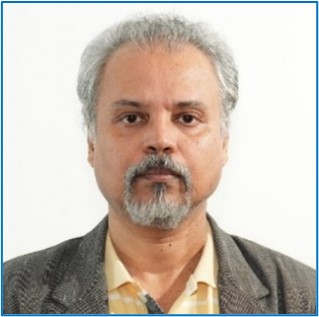 Dr Anamitra Makur | Anamitra Makur received the B.Tech. degree from the Indian Institute of Technology, Kharagpur, and the M.S. and Ph.D. degrees from the California Institute of Technology, Pasadena. He was with the Indian Institute of Science, Bangalore, until 2002 in various capacities, the most recent being a Professor. He also held visiting positions at University of California at Santa Barbara, University of Kaiserslautern, Griffith University at Brisbane, and Keio University at Yokohama. Since 2002, he has been an Associate Professor at Nanyang Technological University, Singapore. His current research interests include theory of signal processing such as graph signal processing and compressed sensing. Dr. Makur is the recipient of several awards, notable being the 1998 Young Engineer award from the Indian National Academy of Engineering, and the best paper award in the IEEE APCCAS 2006 conference. He was also the co-author in the student paper award of the IEEE ICASSP 2006 conference. He has served as the Associate Editor of several journals, including the IEEE Transactions on Signal Processing. |
 Dr S Supraja | S Supraja received her B.Eng. degree in Electrical and Electronic Engineering (EEE) from Nanyang Technological University (NTU), Singapore, in 2016. Subsequently, Supraja also received her Ph.D degree in EEE from NTU in 2022, under the Delta-NTU Corporate Laboratory. She joined as a EEE Lecturer in 2022, initially focusing on the Interdisciplinary Core Curriculum (ICC) and subsequently other EEE courses. She has championed the use of team-based learning to develop a new postgraduate EEE MSc course EE6405: Natural Language Processing in 2024. At present, she is also the Assistant Chair (Students) as an appointment holder. Supraja's research interests include natural language processing & machine learning, curriculum design & pedagogical practices, as well as, learning analytics & educational data mining. She has been actively pursuing teaching grants such as the EdeX Teaching and Learning Grant, EdeX Faculty Learning Communities Grant, EEE Teaching Ignition Grant, and NTU-Imperial College London Education Fund. She has also supervised several MSc students under the topics of natural language processing, computer vision, and multimodal systems. She has top-tier journal publications in the area of natural language processing and learning analytics. She was recently awarded with the EEE Early Career Teaching Excellence Award and was a ICC Most Caring Teaching Award Nominee in 2025. |
 Dr Simon Liu Dr Simon LiuInstructor for: Natural Language Processing & Analytic & Ensemble Machine Learning | Dr. Simon Liu is a senior leader in Data Science and Risk Management. He currently serves as the Chief Data and AI Officer at TrustDecision, where he oversees the company’s data and artificial intelligence strategy, driving innovation in decision intelligence and risk analytics. He is also an Adjunct Associate Professor at Nanyang Technological University (NTU), teaching graduate-level courses in natural language processing and ensemble learning and supervising Master’s students. Previously, Dr. Liu was the Senior Vice President and Head of Data Science for Risk and Security at Lazada, leading machine learning and AI initiatives across fraud prevention, anti-money laundering (AML), credit and payment risk, and content governance in Southeast Asia and affiliated platforms such as Miravia in Spain and Daraz in South Asia. Earlier in his career, he held leadership roles at Scotiabank in Canada, culminating as Director of AML Modelling and Analytics, where he led global data science teams and pioneered Canada’s first AI-powered model for human trafficking detection. Dr. Liu is the co-author of the graduate textbook Analytic Learning Methods for Pattern Recognition and the author of the forthcoming book AI and Machine Learning for E-commerce Risk Management. He holds a Ph.D. in Electrical and Computer Engineering from the University of Toronto and remains committed to advancing academic–industry collaboration and the application of machine learning in risk, compliance, and digital platforms. |
| Zhiping Lin received Ph.D. degree in information engineering from the University of Cambridge, UK, in 1987. Since 1999, he has been an associate professor at the School of Electrical and Electronic Engineering (EEE), Nanyang Technological University (NTU), Singapore, where he is now serving as Programme Director of MSc in Signal Processing and Machine Learning, the School of EEE, NTU. Prof. Lin served as the Editor-in-Chief of Multidimensional Systems and Signal Processing, and in the editorial board of several other international journals, including the Journal of the Franklin Institute and IEEE Trans. on Circuits and Systems II. He was the coauthor of the 2007 Young Author Best Paper Award from the IEEE Signal Processing Society, and a Distinguished Lecturer of the IEEE Circuits and Systems Society during 2007-2008. His research interests include multidimensional systems, statistical signal processing and image/video processing, robotics and machine learning. He has published over 200 journal papers and over 200 conference papers. He co-authored the book entitled “Analytic Learning Methods for Pattern Recognition” published by Springer in 2025. He received the 2022 Inspirational Mentor for Koh Boon Hwee Award, and the 2025 EEE Staff Award for Exceptional Contributions in Coordinating and Promoting MSc Programmes from NTU. |
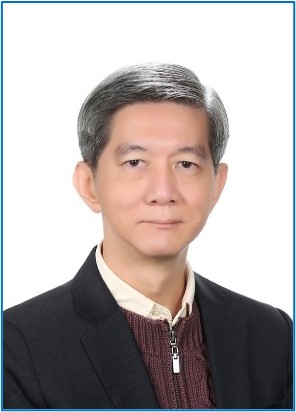 Prof Kar-Ann Toh | Kar-Ann Toh is a Professor in the School of Electrical and Electronic Engineering at Yonsei University, South Korea. He received his Ph.D. degree from Nanyang Technological University (NTU), Singapore, in 1999. After graduation, he worked for two years in the aerospace industry before holding postdoctoral appointments at NTU research centers from 1998 to 2002. He was subsequently affiliated with the Institute for Infocomm Research in Singapore from 2002 to 2005, prior to joining Yonsei University. During his sabbatical year in 2020, he served as a Visiting Professor in the Department of Electrical and Computer Engineering at the National University of Singapore (ECE–NUS). He is the co-author of the book Analytic Learning Methods for Pattern Recognition (2025). His research interests include pattern classification, machine learning, neural networks, and biometrics. He has served, or is currently serving, as an Associate Editor for several international journals, including IEEE Transactions on Biometrics, Behavior, and Identity Science, IEEE Transactions on Information Forensics and Security, Journal of the Franklin Institute, Pattern Recognition Letters, and IET Biometrics.
|
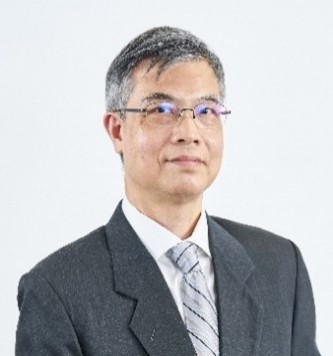 Assoc Prof Lin Zhiping
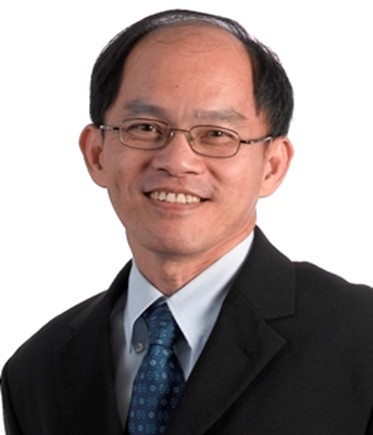 Assoc Prof Lim Meng-Hiot Assoc Prof Lim Meng-HiotInstructor for: Genetic Algorithms & Machine Learning | Dr. Meng-Hiot Lim is a faculty in the School of Electrical and Electronic Engineering. He was one of the founding co-directors of the M.Sc. in Financial Engineering and the Centre for Financial Engineering, anchored by the Nanyang Business School. A versatile researcher with diverse interests, his areas of research focus include computational intelligence, machine learning, finance, algorithms for UAVs and memetic computing, and more recently in pedagogical engineering. He was the founding Editor-in-Chief of Memetic Computing Journal by Springer, and currently he serves as the Technical Editor-in-Chief . He is the Chief Editor of PALO (Proceedings on Adaptation, Learning and Optimization) series and is also a Book Series Editor of Smart Systems Technology by Springer. He has significant experience in industrial funded projects with companies such as Seiko, ST Engineering, Boeing USA and others. Being a key initiator and founding director of Garage@EEE, he helped to promote and nurture student startups. He is also a founder and advisor of EEE ViPod club and NTU Uavionics club. |
| Dr. Kezhi Mao obtained his BEng, MEng and PhD from Jinan University, Northeastern University, and University of Sheffield in 1989, 1992 and 1998 respectively. Since 1998, he has been working at School of Electrical and Electronic Engineering, Nanyang Technological University, Singapore, where he is an Associate Professor. Dr. Mao's expertise spans several subfields of artificial intelligence (AI), including machine learning, computer vision (CV), natural language processing (NLP), and large language models (LLM). As the lead Principal Investigator, Dr. Mao has successfully completed over a dozen funded projects that span the vast landscape of AI. As a passionate advocate of translational research, Dr. Mao and his team developed and delivered a range of intelligent systems and tools to government agencies and industries, enriched with AI-driven solutions. Beyond his research and development endeavours, Dr. Mao is active in conducting consultancy work in the AI landscape. He advised several multinational corporations on AI techniques in the business world, emphasizing the practical applications of the state-of-the-art technologies. For professional services, he is now serving as the Associate Editor of 3 journals, including Neural Networks, Neurocomputing, and Expert Systems with Applications. |
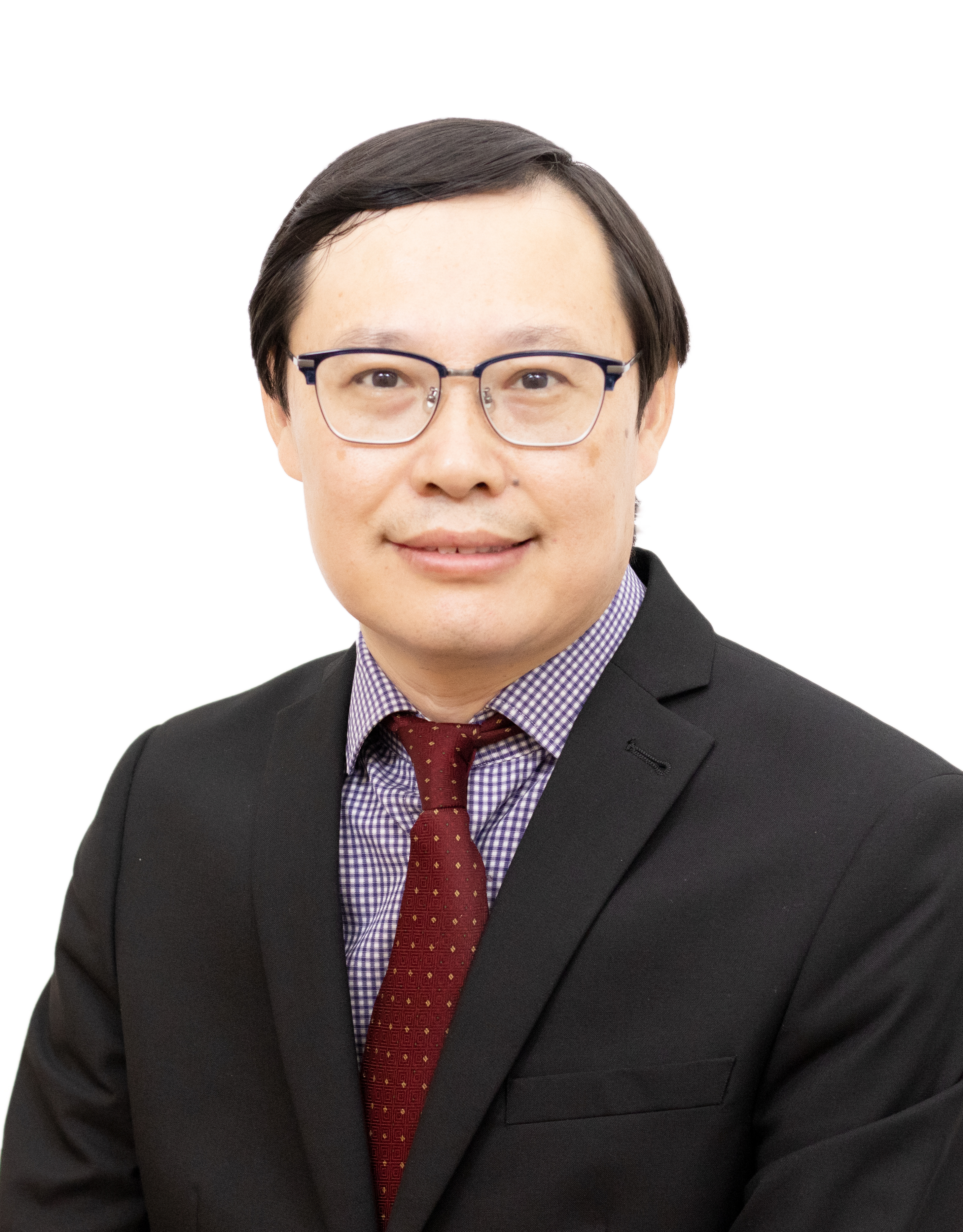 Assoc Prof Mao Kezhi
 Assoc Prof Yap Kim Hui Assoc Prof Yap Kim HuiInstructor for: Video Analysis and Processing | Dr. Kim-Hui Yap received the Bachelor of Electrical Engineering (University Medal Winner and First Class Honors) and PhD degrees from the University of Sydney, Australia. He is currently an Associate Professor at the School of Electrical and Electronic Engineering, Nanyang Technological University. His main research interests include computer vision, artificial intelligence and data analytics. He has authored more than 150 technical publications in various reputable international journals and conference proceedings. He has authored a book entitled “Adaptive Image Processing: A Computational Intelligence Perspective, Second Edition” published by the CRC Press. Dr. Yap has served as Associate Editor/Editorial Board Member for several international journals and assumed various positions in Organization Committees of several international conferences. |