Applications closing on 31 August 2026
NTU PACE
Email: ask.microcredentials@ntu.edu.sg
FlexiMasters in Responsible Applied Artificial Intelligence
The FlexiMasters in Responsible Applied Artificial Intelligence equips professionals with the skills to design, implement and manage Artificial Intelligence (AI) solutions responsibly. This programme covers ethical AI, human-centred design and responsible use of traditional, generative and agentic AI solutions. Learners will gain practical skills to use AI technologies responsibly, including those to perform prompt engineering, exploratory data visualisation of AI datasets and the design of robust and smart agentic AI frameworks. Learners will also learn best practices and techniques for mitigating potential AI-related risks across the entire AI lifecycle, from design, development, deployment to post-development stages. By the end of the course, learners will understand the ethical implications of AI, apply responsible AI governance frameworks and integrate trustworthy AI practices into real-world projects. This programme is suitable for AI practitioners, data professionals and technology leaders seeking to enhance their capabilities in responsible AI application and ethical AI deployment while future-proofing their careers in the fast-evolving AI landscape.
The FlexiMasters in Responsible Applied Artificial Intelligence is mapped to the Master of Computing in Applied Artificial Intelligence (MCAAI) from NTU's College of Computing and Data Science (CCDS).
By the end of this programme, learners will be able to:
Exploit Generative Artificial Intelligence (GAI) technologies within their organisations and existing work processes responsibly.
Describe practical considerations, from deciding to adopt a GAI solution to designing a suitable system and establishing governance.
Put into practice appropriate Artificial Intelligence (AI) governance considerations and processes in designing and deploying AI solutions.
Discuss techniques that can help address ethical issues essential to the proper governance of AI and autonomous decision-making systems, which include issues of data privacy, biasness and explainability.
Create intuitive and human-centred AI solutions that prioritise user needs, usability and trust.
Design robust and smart agentic AI frameworks for reliable applications in complex real-world environments.
- The programme consists of six courses worth a total of 15 Academic Units (AUs).
- Assessment(s) will be conducted during every course and learners will be graded based on their performance in the assessment(s).
- No pre-requisites are needed to enroll in the individual courses; however, learners without qualifications or working experience in relevant engineering or the related fields may find the course contents challenging.
- Delivery Mode: Classroom, Synchronous and Asynchronous E-Learning (course dependent)
Upon successful completion, the following qualifications will be awarded:
- A Graduate Certificate will be awarded to learners attaining 6 AUs, with a minimum Grade Point of 2.5 (which is equivalent to a letter grade of C+) achieved for each course.
- A FlexiMasters will be awarded to learners attaining 15 AUs, and achieving a minimum Grade Point of 2.5 (which is equivalent to a letter grade of C+) for each course.
Pathway to the Master's programme:
Credits earned are valid for 5 years for transfer of credits to the Master of Computing in Applied Artificial Intelligence (MCAAI). A maximum of 15 AUs can be credit transferred from this FlexiMasters to the MCAAI. The minimum Grade Point eligible for transfer of credits to the MCAAI is 2.5 (which is equivalent to a letter grade of C+).
Transfer of credits is by application and the application will be assessed and approved by the University in accordance with University Credits Transfer and Course Exemption Policy.
To meet the requirement of Skills and Workforce Development Agency (SWDA), assessment(s) will be conducted during every course.
The assessment(s) include:
1. Responsible Generative AI and Applications
- Assignments
- Quizzes
2. Addressing Issues in Generative AI System Design and Deployment
- Assignments
- Quizzes
3. AI Ethics and Governance Fundamentals
- Assignments
- Quiz
4. Addressing Issues in AI Ethics and Governance
- Assignments
- Quizzes
5. Human-centred Artificial Intelligence User Experience and Data Visualisation
- Assignment
- Quizzes
6. Responsible Agentic Artificial Intelligence and Applications
- Assignment
- Quizzes
Learners who desire to design and employ AI-related technologies and solutions in their work processes and to do so in a thoughtful, human-centred and responsible manner.
| Course title | Objective |
|---|---|
Responsible Generative AI and Applications (3 AU) | With the rapid growth in Generative Artificial Intelligence (GAI) technologies, professionals in every industry need a good grasp of what GAI is and how they can exploit it in a responsible and thoughtful manner. This introductory course helps learners understand GAI technology, its capabilities, limitations and applications in various scenarios. More importantly, it highlights new ethical risks associated with the use of GAI, along with risk mitigation strategies and practical approaches in deploying trusted GAI solutions. Exercises in effective prompt engineering techniques will expose learners to the use of GAI tools to generate relevant text and images that are context-appropriate for their needs and that of their organisations. At the completion of this course, learners will have acquired the understanding and skills to responsibly exploit GAI technologies within their organisation and existing work processes. At the end of the course, learners will be able to:
|
Addressing Issues in Generative AI System Design and Deployment (2 AU) | This course teaches learners to implement Generative AI (GAI) responsibly in organisations. It addresses key issues throughout the design, development, deployment, and post-deployment stages. Learners will explore practical considerations, from deciding to adopt a GAI solution to designing a suitable system and establishing governance. The aim is to equip AI practitioners with the knowledge to avoid common pitfalls when integrating GAI in their organisations. Additionally, the course covers security and safety aspects like jailbreaking and prompt injection, highlighting unique vulnerabilities in GAI systems and offering strategies for resilient and responsible deployment. At the end of the course, learners will be able to:
|
AI Ethics and Governance Fundamentals (2 AU) | Deloitte Insight’s State of the Artificial Intelligence in Enterprise 2022 report found that 94% of business leaders polled said Artificial Intelligence (AI) is critical to their success but 50% cited managing AI-related risks as one of their top concerns. This basic course introduces AI Ethics and Governance (AIE&G) issues relevant to the many industries that exploit AI solutions. These issues include internal governance structures, level of human involvement in AI decision making, operations management, stakeholder interaction and communication, etc. It gives an overview of the Singapore Computer Society’s comprehensive AIE&G Body of Knowledge 1.0 (BoK) document and proposes an AI Governance Framework for organisations that is built on the understanding of well-established guidelines for Responsible AI, best practices in adapting an organisation and the use of tools that can help manage and mitigate AI-related risks. At the end of this course, learners will be able to put into practice appropriate AI governance considerations and processes in designing and deploying AI solutions. At the end of the course, learners will be able to:
|
Addressing Issues in AI Ethics and Governance (3 AU) | The proper governance of Artificial Intelligence (AI) and autonomous decision-making systems involves addressing many ethical issues such as data privacy, biasness, fairness and explainability. In this introductory course, learners will understand what each of these issues involve and how they relate to the notion of good AI governance. Interesting real-world case studies will be presented to help contextualise these ethical challenges in different industries. The course will also discuss techniques that can help address issues of data privacy, biasness and explainability, both at the stage when data is being prepared and during the process of AI model training. On completion of this course, learners will have acquired the useful AI governance skills and know-how that will help them design, evaluate and deploy Responsible AI solutions in their work place. At the end of the course, learners will be able to:
|
Human-centred Artificial Intelligence User Experience and Data Visualisation (3 AU) | This course discusses the principles and value of human-centred AI (HCAI) and its impact on how professionals using AI in various industries consider and identify tasks within work processes for effective AI augmentation or automation. It covers issues related to the design of HCAI user experience designs that imbue trust during user interaction and improve usability, thereby promoting adoption. Guidelines covered facilitate the design of AI solutions with better AI explanations and interactions, user control and feedback, and error handling. This course also introduces exploratory data visualisation design skills by adopting a human-centred approach, enabling enhanced AI systems development and responsible visual communication. At the end of the course, learners will be able to:
|
Responsible Agentic Artificial Intelligence and Applications | Agentic AI systems autonomously make decisions, act, and adapt in dynamic environments. As these AI systems integrate into high-stakes fields like healthcare, financial trading and autonomous transactions, understanding their risks and ethical challenges is critical. This course covers the architecture and key components for building agentic AI frameworks, including hands-on training to use an industry standard for providing context to Large Language Models and agents using Model Context Protocol. It guides learners towards responsible agentic AI design and deployment by grounding the practical expertise acquired with knowledge about the unique risks exposed by agentic AI systems and possible mitigation strategies. At the end of the course, learners will be able to:
|





| COURSE TITLE | COURSE DATES | REGISTRATION CLOSING DATE |
| ^Responsible Generative AI and Applications | 19 Sep - 24 Oct 2026 Apply Now | 31 August 2026 |
| ^Addressing Issues in Generative AI System Design and Deployment | 31 Oct - 21 Nov 2026 Apply Now | 31 August 2026 |
^AI Ethics and Governance Fundamentals | Register interest for next intake | - |
| ^Addressing Issues in AI Ethics and Governance | - | |
| ^^Human-centred Artificial Intelligence User Experience and Data Visualisation | - | - |
| ^^Responsible Agentic Artificial Intelligence and Applications | - | - |
Delivery Mode:
^Synchronous and Asynchronous E-Learning
^^Classroom, Synchronous and Asynchronous E-Learning
Course Schedule:
^Synchronous E-Learning on Saturdays; Live E-consultation on every alternate Wednesday evening; Asynchronous E-Learning on the other days of the week
^^To be advised
The listed courses are credit-bearing and stackable to Graduate Certificate in Responsible Applied Artificial Intelligence (6 AU), FlexiMasters in Responsible Applied Artificial Intelligence (15 AU) and Master of Computing in Applied Artificial Intelligence (30 AU).
Courses which are part of the Certificate in Responsible Generative AI Governance:
(register on the website here)
- Responsible Generative AI and Applications
- Addressing Issues in Generative AI System Design and Deployment
Courses which are part of the Certificate in AI Ethics and Governance:
(register on the website here)
- AI Ethics and Governance Fundamentals
- Addressing Issues in AI Ethics and Governance
Note: NTU reserves the right to change the date, venue, and mode of delivery due to unforeseen circumstances.
 | These courses are part of:
Learners will receive their Statement of Accomplishment (for a grade of D and above) or Certificate of Participation for each course—dependent upon their assessment performance. |
Courses | Course Fee payable before funding | Course Fee payable after SWDA funding, if eligible under various schemes | ||
| ¹ SCs and PRs | ² SCs aged 40 and above | ³ Enhanced Training Support for SMEs (ETSS) | ||
| Up to 70% funding | Up to 90% funding | |||
| Responsible Generative AI and Applications | S$6,540.00 | S$1,962.00 | S$762.00 | S$762.00 |
| Addressing Issues in Generative AI System Design and Deployment | S$4,360.00 | S$1,308.00 | S$508.00 | S$508.00 |
| AI Ethics and Governance Fundamentals | S$4,360.00 | S$1,308.00 | S$508.00 | S$508.00 |
| Addressing Issues in AI Ethics and Governance | S$6,540.00 | S$1,962.00 | S$762.00 | S$762.00 |
| Human-centred Artificial Intelligence User Experience and Data Visualisation | S$6,540.00 | S$1,962.00 | S$762.00 | S$762.00 |
| Responsible Agentic Artificial Intelligence and Applications | S$4,360.00 | S$1,308.00 | S$508.00 | S$508.00 |
| Total Programme Fee | S$32,700.00 | S$9,810.00 | S$3,810.00 | S$3,810.00 |
- Fees listed above are inclusive of 9% GST.
Funding Requirements
1 Eligible Singapore Citizens (SCs) aged 39 years and below, and Permanent Residents (PRs), must record at least 75% training attendance and pass all associated assessments to be eligible for funding of up to 70% of the course fee. Learners will have to bear the full course fees upon failure to meet either one of the requirements.
2 Mid-career Enhanced Subsidy (MCES) - SCs aged 40 and above must record at least 75% training attendance and pass all associated assessments to be eligible for funding of up to 90% of the course fee. Learners will have to bear the full course fees upon failure to meet either one of the requirements.
3 Enhanced Training Support for SMEs (ETSS) - Small and Medium Enterprise (SME)-sponsored learners must be SCs or PRs and not a full-time national serviceman. SMEs must be: (1) Registered or incorporated in Singapore; with (2) Employment size of not more than 200 or with annual sales turnover of not more than $100 million. Courses will also have to be fully paid for by the employer.
Note: Learners must comply with all applicable and prevailing regulations, terms and conditions set by SWDA.
Other Funding Support
- NTU/NIE alumni may utilise their $1,600 Alumni Course Credits for each course. Click here for more information.
- Learners can utilise their SkillsFuture Credits for these courses.
- Singaporeans aged 40 years and above are able to use their SkillsFuture Credit (Mid-Career) top-up of $4,000 to offset out-of-pocket course fees for these courses.
Course Withdrawal and Refund Policy
Refunds requested prior to course commencement date may be subjected to an administrative fee and the deduction of any non-refundable pre-paid amounts. No refunds will be granted upon course commencement.
Learn more about funding
Assoc Prof Guosheng Lin | Assoc Prof Guosheng Lin is an Associate Professor at the College of Computing and Data Science (CCDS), NTU. Before moving to Singapore, he was a research fellow at the Australian Centre for Robotic Vision (ACRV), affiliated with The University of Adelaide. His research interests lie in computer vision and deep learning. His recent work focuses on generative learning, including 3D generation and editing, video generation and editing, scene generation, controllable generation, and their applications in scene understanding and 3D vision. |
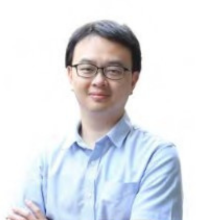
Asst Prof Wang Wenya | Asst Prof Wang Wenya is an Assistant Professor at the College of Computing and Data Science (CCDS), NTU. She has received her PhD degree from CCDS, NTU, supervised by Sinno Jialin Pan, and the BSc degree from the School of Mathematical Sciences, NTU. Her main research interest lies in Natural Language Processing with extension to Multimodal Learning, particularly investigating and utilising the mystery of generative AI in knowledge reasoning, model explainability and trustworthiness. |

Assoc Prof Goh Wooi Boon
| Assoc Prof Goh Wooi Boon is the Associate Dean (Undergraduate Teaching and Employability) at the College of Computing and Data Science (CCDS), NTU. Before joining NTU, he was senior engineer and later engineering section manager at the Mechanization and Automation department of Hewlett Packard Singapore. His industrial engineering expertise is in the area of developing robot-assisted automation systems. Assoc Prof Goh’s interests lie in the interface between humans and computers, especially the design of interactions and issues arising from such interactions, including ethical and societal issues. He is a regular instructor for courses in AI Ethics and Governance (AIEG) and was a reviewer for the Singapore Computer Society’s AIEG Body of Knowledge (BoK) 2.0. |
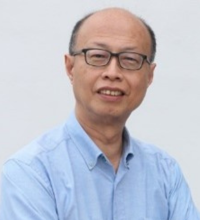
Assoc Prof Chia Liang Tien, Clement | Assoc Prof Chia Liang Tien, Clement is an Associate Professor at the College of Computing and Data Science (CCDS), NTU. He was the Director, Centre for Multimedia and Network Communications 2002-2007 and Head, Division of Computer Communications 2006-2009. Assoc Prof Chia’s research interests can be broadly categorized into two main areas, Internet related research with emphasis on the Semantic Web and Multimedia Understanding for Information Management through media analysis, annotation and adaptation. |

Dr Zhiqi Shen | Dr Zhiqi Shen is a Senior Lecturer at the College of Computing and Data Science (CCDS), NTU. His research interests include goal oriented intelligent agents, multi agent systems, agent oriented software engineering and interdisciplinary research in artificial intelligence (AI), machine learning, game design, digital storytelling, e-learning, e-health, crowdsourcing and active ageing. Collaborating with Harvard, MIT and NIE/LSL researchers, “Virtual Singapura” built using his agent based game engine is the first immersive, situated and massive multi-user online role playing (MMORP) virtualised learning environment in Singapore for enabling students to learn through exploring in virtual worlds. |

Mr Ong Chin Ann | Mr Ong Chin Ann is a lecturer at the College of Computing and Data Science (CCDS), NTU, with over a decade of experience teaching various Computer Science and Cybersecurity courses. He holds numerous professional certifications, including Certified Trainer, Certified Software Tester, Certified Security Specialist, Certified Network Defender, CISCO CCNA, and Microsoft Certified Azure and AI Fundamentals. He is involved in developing LLM-powered tools for educational purposes. His research explores the importance of secure LLM applications and ethical considerations in their deployment. Mr Ong is a Senior Member of the Institute of Electrical and Electronics Engineers (IEEE) and a Professional Member from the Singapore Computer Society (SCS). |
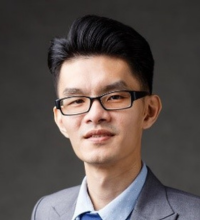
Dr Zhang Jiehuang | Dr Zhang Jiehuang is a lecturer at the College of Computing and Data Science (CCDS), NTU. He is a data scientist with years of experience in the technology sector. He currently teaches data science and AI in CCDS, focusing on developing responsible AI systems in real world settings. During his PhD, Dr Zhang developed a set of methodologies to guide and evaluate responsible AI systems for software and AI development. He was previously in the data chapter team of the Development Bank of Singapore (DBS) bank, where he led high impact projects to build and deploy AI models to predict incidents and discover insights into customer activity. Dr Zhang was also involved in the scoping and proof of concept of Generative AI use cases to apply to the banking and finance sector. |

Prof Guan Cuntai | Prof Guan Cuntai is a President’s Chair in Computer Science and Engineering, and Deputy Dean at the College of Computing and Data Science (CCDS), NTU. He has been the Director of the Artificial Intelligence Research Institute (AI.R) of NTU, as well as the Co-Director for S-Lab for Advanced Intelligence (S-Lab) of NTU from 2020 to 2024. His research interests are in the fields of Brain-Computer Interfaces, Machine Learning, and Artificial Intelligence. He is an elected Fellow of the Singapore Academy of Engineering (SAEng), Fellow of NAI (National Academy of Inventors, USA), Fellow of IEEE (the Institute of Electrical and Electronics Engineers), and Fellow of AIMBE (the American Institute for Medical and Biological Engineering). |
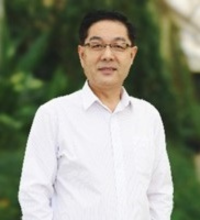
Prof Cong Gao | Prof Cong Gao is the Head of the Division of Data Science at the College of Computing and Data Science (CCDS), NTU. He was a co-director for Singtel Cognitive and Artificial Intelligence Lab for Enterprises@NTU (SCALE@NTU). He previously worked at Aalborg University, Denmark, Microsoft Research Asia, and the University of Edinburgh. Prof Cong Gao’s current research interests lie in AI for databases, spatial data management, spatial data mining and smart city, recommendation and social media mining. His research was supported by industrial grants. |
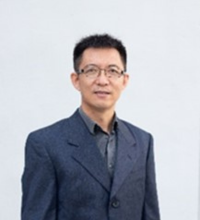
Assoc Prof Yu Han | Assoc Prof Yu Han is an Associate Professor at the College of Computing and Data Science (CCDS), NTU. Between 2018 and 2024, he was a Nanyang Assistant Professor (NAP) in CCDS, NTU. He has been a Visiting Scholar at the Department of Computer Science and Engineering, Hong Kong University of Science and Technology (HKUST) from 2017 to 2018. Between 2015 and 2018, he held the prestigious Lee Kuan Yew Post-Doctoral Fellowship (LKY PDF) at the Joint NTU-UBC Research Centre of Excellence in Active Living for the Elderly (LILY). Before joining NTU, he worked as an Embedded Software Engineer at Hewlett-Packard (HP) Pte Ltd, Singapore. Assoc Prof Yu specialises in trustworthy federated learning and is experienced in deploying various AI solutions to the industry. For his continued contributions to the field of trustworthy AI and real-world impact in the society, he has been identified as one of the World's Top 2% Scientists in AI, and selected as one of the JCI Ten Outstanding Young Persons (TOYP) of Singapore. |
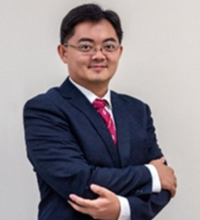
Dr Weng Jianshu | Dr Weng Jianshu is the Head of Data Science at Chubb, APAC. He has many years of experience both academia and industries (public sector, IT, and finance) in the domain of text mining or information retrieval. He has extensive experience working on industrial AI systems involving privacy-preserving technologies. In the recent years, he has spent most of his time in putting Artificial Intelligence/Machine Learning (AI/ML) into real-world use cases and advocating the ethical aspect of AI/ML, e.g. explainability, fairness, robustness, and privacy-preserving of AI/ML models. |

Dr Kwong Yuk Wah | Dr Kwong Yuk Wah is an industry practitioner who regularly shares her vast knowledge and practical experiences through continuous education training. She has led the Singapore Computer Society (SCS) AI Ethics and Governance initiative from 2020 to 2022, and accomplished a few achievements which include the launch of the world’s first AI Ethics Body of Knowledge and SCS-NTU AI Ethics Certification for professionals. Dr Kwong is a Fellow Member of SCS and currently sits on the AI Ethics & Governance Evaluation Board of SCS. She is in the inaugural Singapore 100 Women In Tech list (2020) compiled by IMDA and SCS. |

Mr Sam Au Jit Seah | Mr Sam Au Jit Seah is currently a Senior Customer Solutions Engineer, Artificial Intelligence (AI) / Machine Learning (ML), Google Cloud. He is an AI / ML Specialist working in the areas of Generative AI, AI/ML and Agentic AI solutions for enterprise customers. He was previously a Senior Solutions Architect - AI /ML specialist in Amazon Web Services (AWS), provided architecture and application design of Generative AI and Agentic AI solutions for partners and customers. He has also worked in Data Science (DS), Generative AI / AI / ML, Network Science and AI-Internet of Things (IoT) projects on AWS/Google Cloud Platform (GCP)/Azure/Snowflake, and has acquired multiple certifications namely in Google, AWS, NVIDIA and Oracle. Mr Au is a continuous learner and has recently acquired Data Science and Cybersecurity Specialist Certifications from Nanyang Technological University, Google Cloud Certified Professional Machine Learning Engineer and AWS Certified Machine Learning Specialty. He is an AWS Subject Matter Expert in AI / ML with contributions to the AWS certification examinations and frequent speaker in Applied AI conferences. |