Student Experience
From Nerves to New Horizons: My First International Conference in the Swiss Alps
By NTU MSE PhD student, Ms. Ho Su Hian — Sustainability, Hydrogen Energy, Microscopy
A leap into the unknown
Five months into my PhD at NTU’s School of Materials Science and Engineering, I found myself packing my poster tube and boarding a plane to Switzerland. It was my first time in Europe — and my first international academic conference.
I felt a mix of excitement and nervous anticipation — eager to meet world-leading scientists, yet unsure how my work would be received. Coming from a relatively early stage in my materials science journey, I knew I still had much to learn and wondered if my perspectives would hold their own among such accomplished researchers.
What I didn’t expect was how much this single week would reshape how I see research, community, and myself.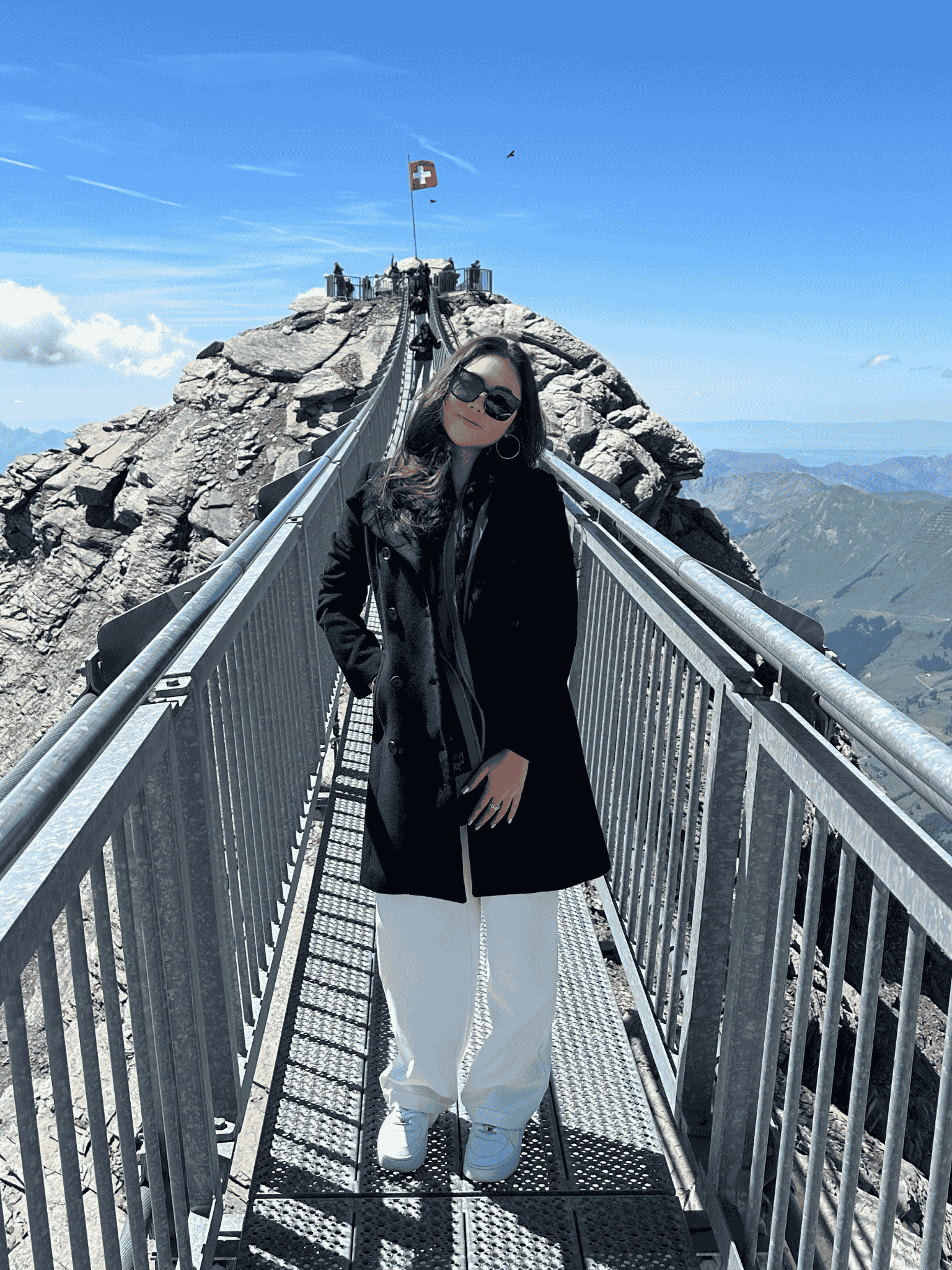
A conference like no other
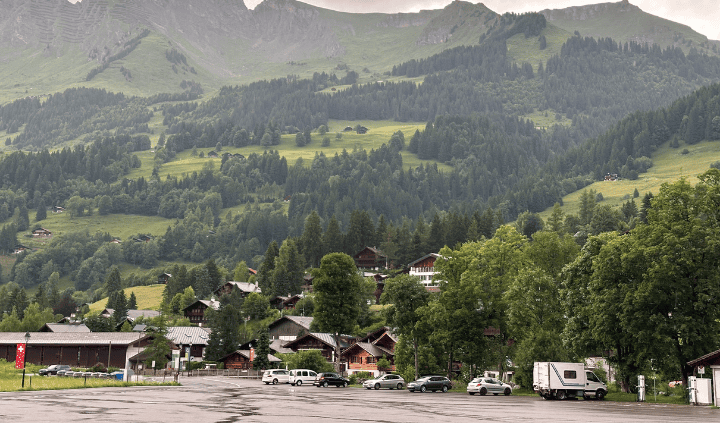
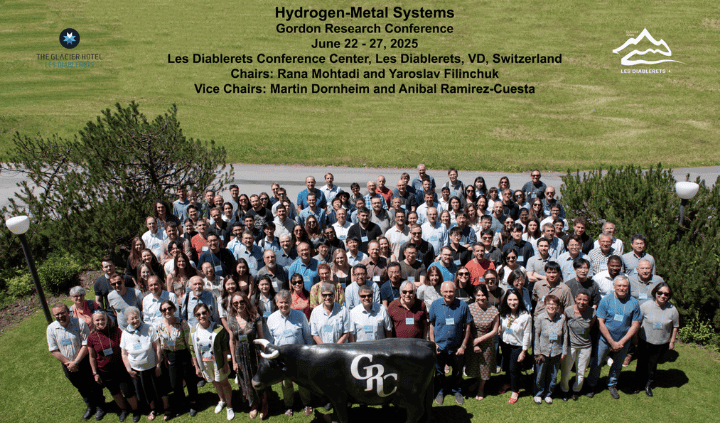
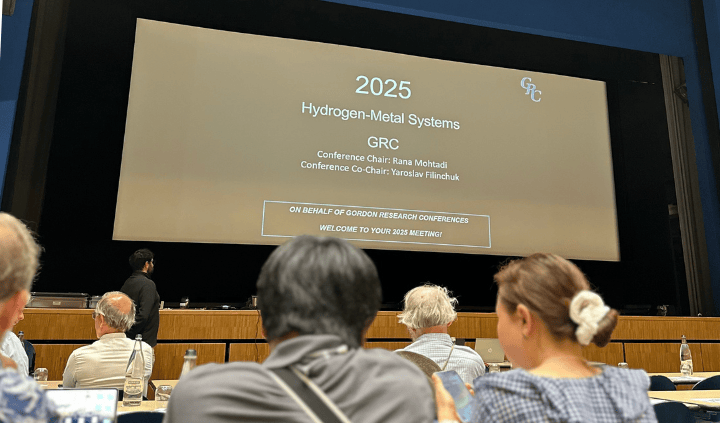
The 7th Hydrogen–Metal Systems Gordon Research Seminar (GRS) and Gordon Research Conference (GRC) took place in Les Diablerets, a quiet alpine village nestled 1,200 metres up in the Swiss Alps near Gstaad and Glacier 3000. The Gordon Research Conference (GRC) series is known for being one of the most selective and respected platforms for scientific exchange, where participation is application-based and discussions are kept deliberately small to encourage open, in-depth dialogue.
Within this series, the Hydrogen–Metal Systems GRC and GRS is considered a flagship meeting in the field, drawing only about 150 participants. Nearly all presentations at the GRS are by graduate students and postdoctoral researchers, creating an atmosphere for early-career scientists to present unpublished work and exchange feedback among peers. The GRC then brings together the broader leadership of the field — from principal investigators to senior researchers — offering a rare opportunity to connect emerging voices with the established community driving hydrogen-metal research and its applications in clean energy.
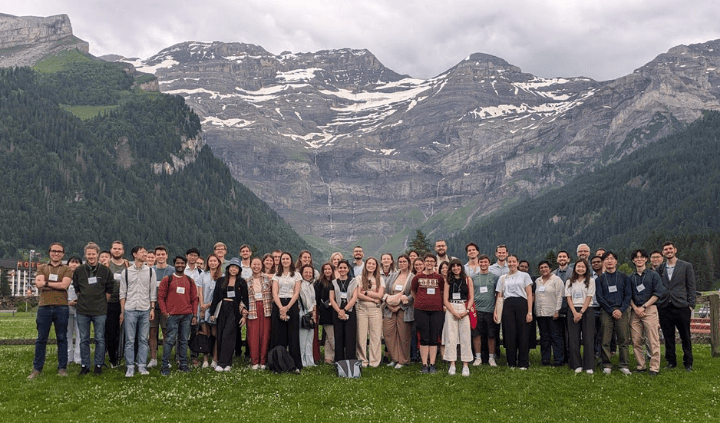
For five days, our schedule was packed with presentations and discussions on hydrogen-based materials — from solid-state systems and nanoporous structures to catalysis, metal hydrides, and energy applications like fuel cells and hydrogen compression. The breadth of topics was immense, spanning both experimental and computational approaches. Listening to such a range of perspectives gave me a clearer understanding of how fundamental materials science connects directly to real-world sustainability challenges.
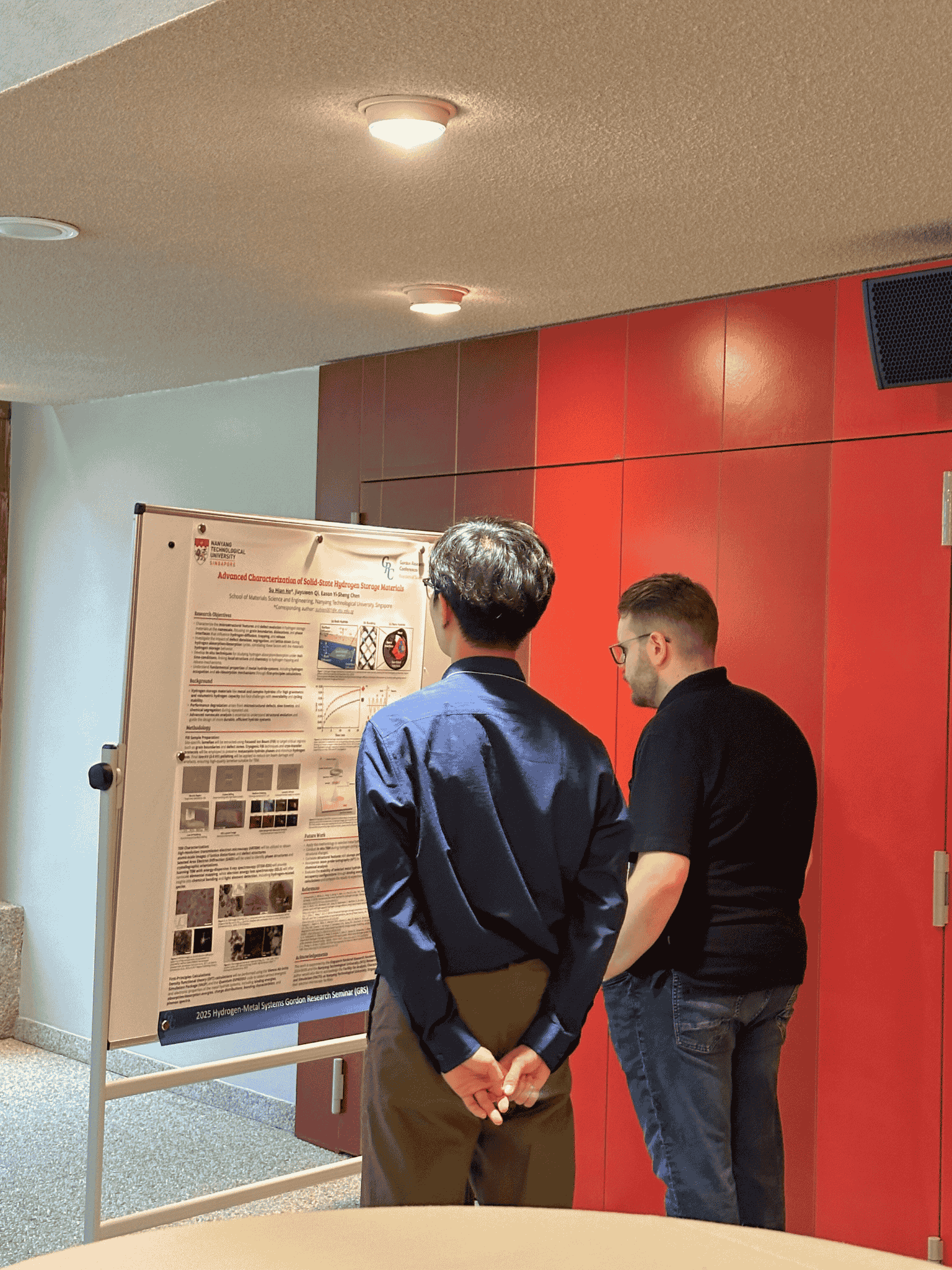
Beyond presenting my own research, I had the opportunity to explore and discuss posters from students around the world. It was inspiring to see the diversity of ideas and methods — and equally encouraging to experience how open and generous everyone was with their feedback. The atmosphere was thoughtful and collaborative, where ideas flowed freely, and learning felt truly collective.
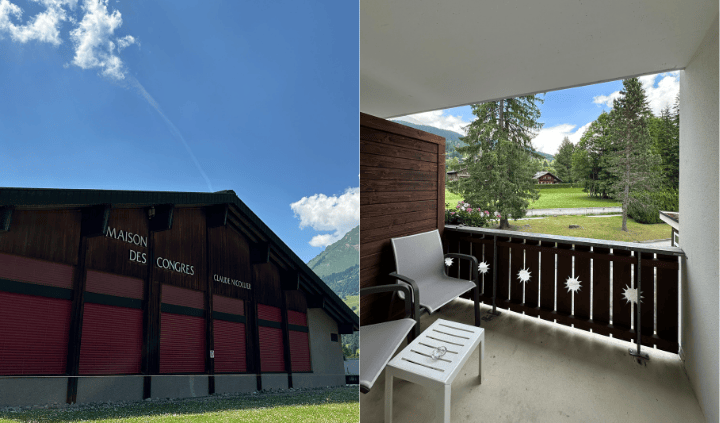
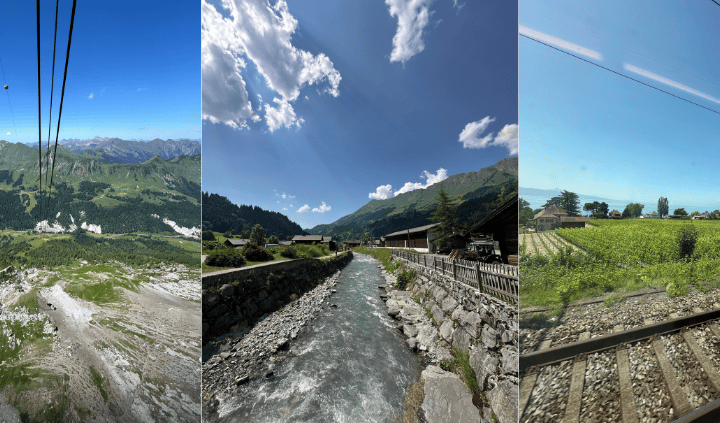
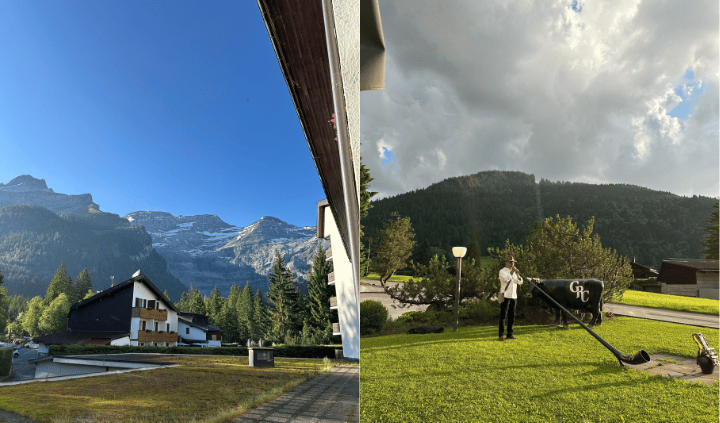
Afternoons offered time to explore the surroundings. The conference’s remote setting was intentional — designed to foster camaraderie. One moment I’d be deep in discussion about hydrogen storage systems, and the next, stepping outside into the crisp mountain air, surrounded by peaks painted in shifting shades of green and gold. Between sessions, I would wander along still lakes or hike towards jagged summits, finding clarity in the quiet. Evenings often ended on the balcony, wrapped in a blanket under a sky densely speckled with stars.
It was the perfect balance of intense intellectual engagement and restorative beauty — a reminder that some of the best learning happens when you have both space to think and the inspiration of an extraordinary setting.
Stepping up to the challenge
Although photography was not allowed during the sessions, the impressions it left were unforgettable. As one of the newer researchers in the room, I approached my first poster session with a mix of anticipation and focus, determined to make the most of the opportunity.
What surprised me was how energising it felt once the session began. Rather than being a test of defending my research, it became an engaging dialogue — a chance to share ideas, answer questions, and exchange perspectives with peers from different backgrounds.
In learning to present my work clearly and accessible to people outside my immediate field, I discovered how central communication is to impactful research. The experience reinforced that being able to connect with diverse audiences is just as important as the science itself.
Finding belonging in a global community
The GRC also featured the “Power Hour”, a program fostering open conversations about professional growth and inclusion in science. Listening to accomplished scientists like Dr Rana Mohtadi (GRC Chair) and Prof Shirley Meng (University of Chicago, and NTU MSE alumna) share candidly about their journeys was deeply inspiring. They spoke about building their careers in research, balancing responsibilities, and finding their voices in traditionally underrepresented spaces.
Their message of resilience and self-advocacy resonated deeply. They encouraged us to remain confident in our abilities, seek out mentors and allies, and view challenges not as deterrents but as opportunities to grow. It was inspiring to hear that even the most accomplished scientists had their own journeys of learning and adaptation — continually evolving and gaining confidence along the way.

I was also fortunate to have the company of Dr Jiayuwen Qi, an experienced postdoctoral researcher from our group, whose support made a world of difference. Her encouragement made all the difference — especially as I prepared for my first-ever international presentation.
Beyond her support, I was inspired by her curiosity and openness to learning across disciplines. Watching how she engaged in scientific discussions, asked thoughtful questions, and connected with researchers from diverse fields was a masterclass in professional growth. Her example — and that of other senior members in our group — reminded me that great researchers pair depth in their specialisation with a genuine eagerness to keep learning broadly.
A surprising highlight: table tennis and friendship
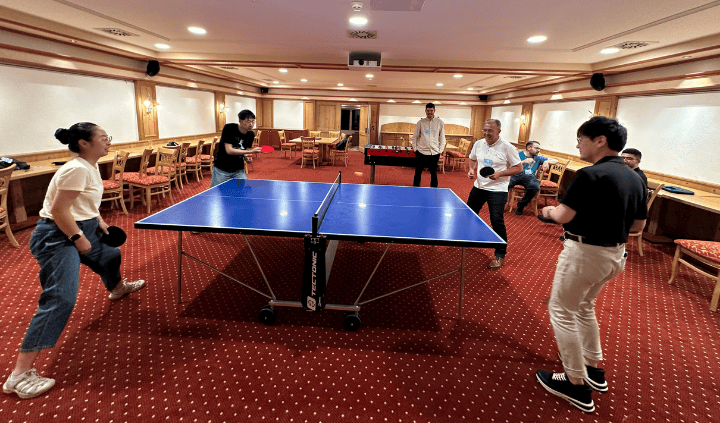
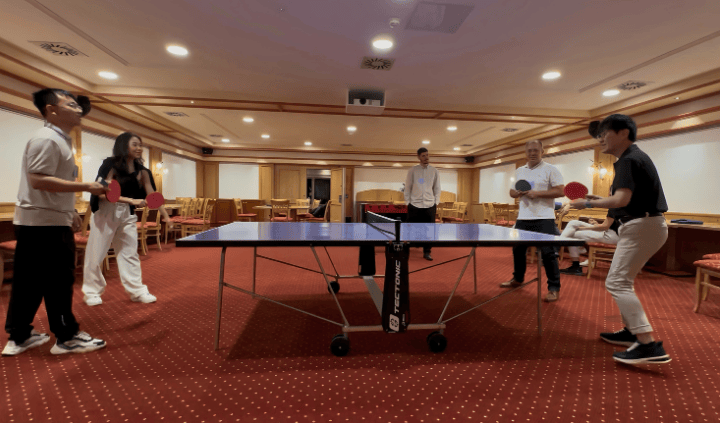
One of the unique things about the GRC is how it creates space for informal connections. In between sessions and after dinner, we would gather for table tennis matches.
What began as a light-hearted game with Dr Vitalie Stavila — a world leader from the US in the field of hydrogen storage and a close collaborator of my supervisor — soon became a daily ritual. Playing alongside researchers I had previously only known from papers made them feel far more approachable. Months later, that spontaneous game has evolved into a genuine passion — a reminder that conferences can shape not just your research journey, but also the friendships and interests that stay with you long after.
Returning with new confidence
Never would I have expected to gain international exposure, let alone participate in a prestigious conference so early in my PhD journey. For that, I am deeply grateful to my supervisor, Prof. Eason (Yi-Sheng) Chen, for his trust and encouragement in urging me to take on this challenge. His confidence in my potential gave me the courage to step into unfamiliar territory.
Prof Eason often reminds us that good conferences are not just for showcasing results, but for engaging in meaningful dialogue that helps shape how we think about our research. His message has always been consistent: show up regularly, build your own community, and learn through conversations. That perspective stayed with me throughout the conference week. The discussions had broadened my perspective on hydrogen-metal systems and sparked new ideas for future collaborations. It also made me aware of the skills I still hope to strengthen — from science communication to technical depth — and gave me a clearer sense of direction in my research. Having now attended my first, I hope to keep returning to this biennial meeting to stay connected and continue growing within the field.
Attending the GRS and GRC offered far more than knowledge; it gave me perspective. I now see how fundamental research underpins technologies that will drive a zero-carbon future. I returned home not only with sharper scientific insights and improved presentation skills, but also with a renewed sense of motivation to contribute meaningfully to the field of hydrogen-metal systems.
Most importantly, I came back with the realisation that growth often begins at the edge of our comfort zones — and sometimes, that edge just happens to be 1,200 metres up in the Swiss Alps.